
Desserts
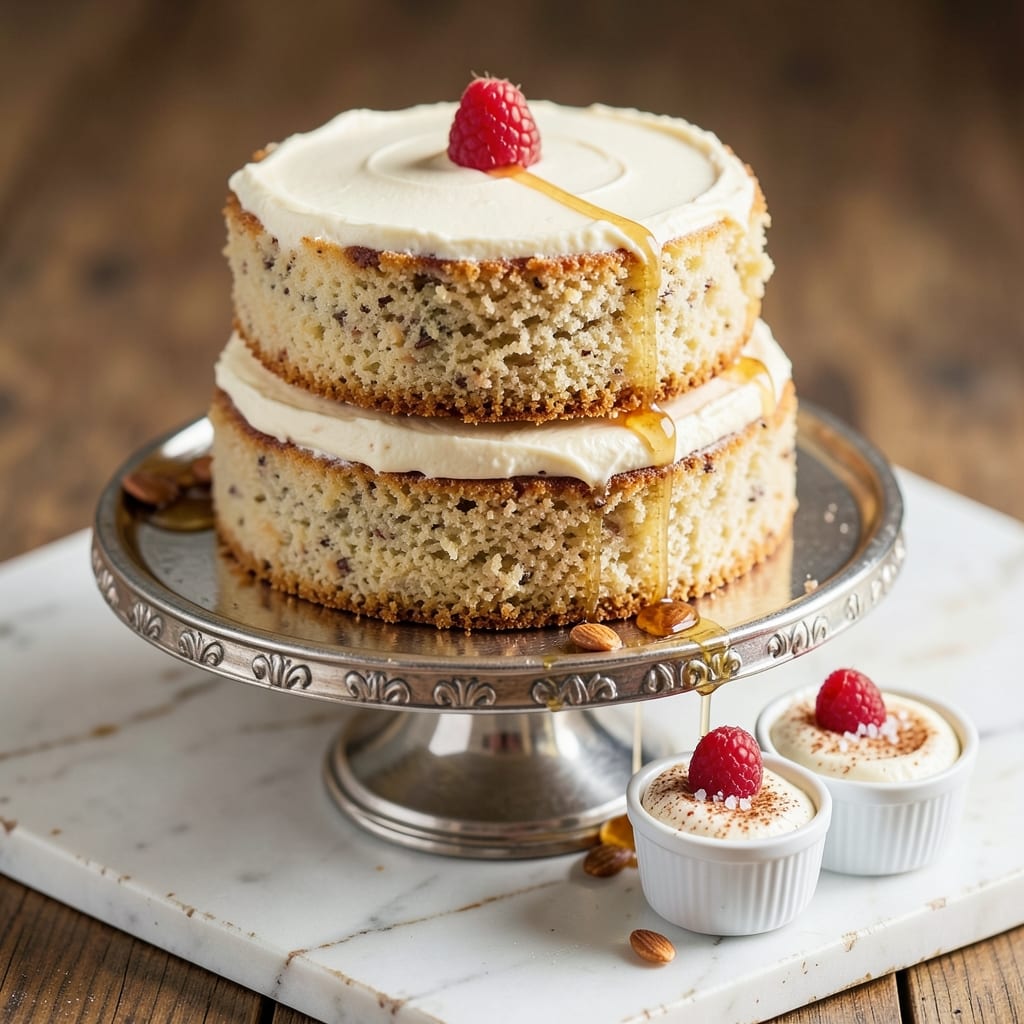
This almond milk vanilla cake recipe delivers ultra-moist layers that defy traditional vegan baking—thanks to a clever almond flour secret. 💛 The combination of almond milk and almond flour creates a tender crumb without eggs or dairy, while a simple syrup infusion guarantees that signature cake moisture. I developed this recipe after years of testing plant-based alternatives, and it finally achieves the perfect balance of richness and lightness.
The foolproof method begins with properly blending the almond flour and almond milk to create a smooth batter, then incorporating a touch of apple cider vinegar to activate natural leavening. This isn't your average dry vegan cake—it bakes up with a fine crumb and just enough structure to hold slices without crumbling. The secret lies in the one-cup almond flour substitution, which adds natural oils that keep the cake tender.
What you'll end up with is a cake that's moist for days, with a delicate vanilla flavor that shines through every bite. The texture is light yet substantial, and it holds its shape beautifully when sliced. This recipe proves that vegan baking can be just as impressive as traditional cakes—without any compromises on taste or texture.
Pair it with a simple vanilla glaze or fresh berries for an elegant finish, or enjoy it plain to let the natural flavors take center stage. The best part? It comes together in under 30 minutes of active prep, with minimal equipment needed. Let's get baking!
Ingredients for almond milk vanilla cake
Eight essential ingredients create a vegan cake with restaurant-quality moisture and texture.
| Ingredient | Amount | Notes |
|---|---|---|
| Almond Flour 🥜 | 1 cup | Blanched, fine grind preferred |
| Almond Milk 🥛 | 1 ½ cups | Unsweetened, unscented preferred |
| Granulated Sugar 🍚 | 1 cup | Organic preferred for cleaner flavor |
| Vanilla Extract 💛 | 2 tbsp | Pure, high-quality vanilla |
| Apple Cider Vinegar 🍎 | 1 tbsp | Activates natural leavening |
| Baking Powder 🧂 | 1 tbsp | Aluminum-free for best results |
| Salt 🧂 | ¼ tsp | Fine sea salt preferred |
| Vegetable Oil 🫒 | ½ cup | Light or canola oil |
| Simple Syrup 🍯 | ½ cup | 1:1 sugar to water ratio |
| Vanilla Bean Seeds 💛 | 1 whole | Scraped from 1 vanilla bean |
| Unsweetened Applesauce 🍎 | ½ cup | Replaces eggs for moisture |
| Vanilla Sugar 🍚 | 1 tbsp | Optional for extra flavor |
The almond flour is non-negotiable here—Bob's Red Mill or Anthony's Goods brands are my go-tos for that ultra-fine grind that creates tender layers. Unsweetened almond milk is critical; brands like Silk or Califia Farms work perfectly, but avoid vanilla or sweetened versions. For the vanilla, Madagascar bourbon vanilla extract adds depth, though pure vanilla works too. The vanilla bean seeds? Trader Joe's sells them pre-scraped in little jars—game changer if you're not up for splitting pods. The almond flour should be blanched (not almond meal) for that silky texture.
No almond flour? Substitute with 1 cup all-purpose flour plus 2 tbsp cornstarch, but texture will differ. Vanilla extract out? Vanilla sugar at 1 tbsp plus 1 tsp almond extract works in a pinch. The simple syrup can be made ahead—just boil equal parts sugar and water until dissolved, then cool. For the applesauce, unsweetened is key—sweetened versions add unwanted moisture. The baking powder must be fresh; if your container's been open over 6 months, test it in a small batch of pancakes first. Need more richness? Add 2 tbsp melted coconut oil to the batter.
This cake keeps beautifully—4-5 days in an airtight container at room temperature, or up to 2 weeks refrigerated. For longer storage, slice and freeze portions between parchment for 3 months. The simple syrup infusion means it stays moist even after days, but for the freshest texture, bake only what you'll eat in 3 days. Wrap tightly in foil if storing longer than 2 days. To revive slightly dried slices, warm in a 200°F oven for 5-10 minutes with a damp paper towel on top.
Why You'll Love This Recipe
- No Mixer Needed: I swear by this recipe when my mixer’s on the fritz. The almond flour and almond milk blend so smoothly with just a whisk—no lumps, no stress, just a few minutes of effort for a cake that’s lighter than it looks.
- Vanilla Overload (In a Good Way): That apple cider vinegar trick? It’s magic. The cake rises perfectly, and the vanilla extract—paired with the nutty depth of almond flour—tastes like a bakery’s secret. Honestly, I’ve caught myself sneaking extra bites straight from the pan.
- Weeknight Dessert, No Guilt: This cake keeps beautifully for days, so I bake one on Sunday and enjoy slices all week. It’s my go-to for birthdays, potlucks, or just because—no one ever asks for seconds too soon, but they always do.
- Budget-Friendly Luxury: Almond flour might seem pricier, but it stretches further than regular flour, and the almond milk adds richness without breaking the bank. Plus, the vinegar and vanilla are pantry staples, so you’re not chasing down obscure ingredients. Frugal but feels fancy.
Step-by-step instructions for almond milk vanilla cake
Here's how to achieve that signature ultra-moist texture using almond flour and natural leavening.
👨🍳 Step 1: Whisk Dry Ingredients for Perfect Texture
In a medium bowl, sift together the 1 cup almond flour, 1 cup granulated sugar, 1 tbsp baking powder, and 0.25 tsp salt. Whisk vigorously for 30 seconds to aerate the almond flour—this creates tiny air pockets that help the cake rise properly. I use a fine-mesh sieve for this step to prevent any lumps from forming in the almond flour, which can lead to dense spots in your cake.
Set the dry mixture aside. The reason we whisk the almond flour first is that it's naturally dense and can absorb moisture unevenly. This pre-mixing ensures everything combines smoothly when we add the wet ingredients later. Keep your bowl nearby as we'll need it in the next step.
👨🍳 Step 2: Combine Wet Ingredients for Maximum Moisture
In a separate large bowl, combine the 1.5 cups almond milk, 0.5 cup vegetable oil, 0.5 cup unsweetened applesauce, 1 tbsp apple cider vinegar, and 2 tbsp vanilla extract. Whisk until fully incorporated—you should see a smooth, homogenous mixture. The applesauce replaces eggs here, providing moisture and structure without adding egg flavor.
Next, add the 1 whole vanilla bean seeds and 1 tbsp vanilla sugar (if using) to the wet mixture. The vanilla bean seeds add depth of flavor that regular extract can't match, while the vanilla sugar enhances the overall vanilla profile. Mix gently to dissolve the vanilla sugar completely. This mixture should be thick but pourable—if it's too thin, your cake might be dense.
🥘 Step 3: Gently Fold Wet and Dry Together
With a rubber spatula, gently fold the dry ingredients into the wet mixture in three additions. After each addition, use a figure-eight motion to combine thoroughly but avoid overmixing. You're looking for a smooth batter with just a few streaks of flour remaining—this prevents developing gluten, which would make your cake tough. The batter will be thick but should still hold its shape when spooned.
Here's the thing—almond flour batters are naturally thicker than wheat flour batters. Don't be tempted to add more liquid. The natural oils in the almond flour and vegetable oil provide enough moisture for a perfectly moist cake. If you're concerned about the thickness, you can add 1-2 tablespoons more almond milk, but only if absolutely necessary.
🍳 Step 4: Bake with Precision for Even Doneness
Preheat your oven to 350°F and grease two 8-inch round cake pans thoroughly with vegetable oil or line them with parchment paper. Divide the batter evenly between the pans. Tap each pan gently on the counter to release any air bubbles that might have formed during mixing.
Bake for 25-30 minutes until a toothpick inserted in the center comes out clean with just a few moist crumbs clinging to it. The edges should be golden brown, but the top might still look slightly underdone—this is normal with almond flour cakes. The cake will continue cooking slightly as it cools. Don't overbake; almond flour cakes dry out quickly once removed from the oven.
⏰ Step 5: Cool and Enhance with Simple Syrup
Remove the cakes from the oven and let them cool in the pans for 10 minutes. Then transfer to a wire rack to cool completely. While they're cooling, prepare the 0.5 cup simple syrup by heating it in a small saucepan until just warm (about 160°F). This warm syrup will infuse the cakes with moisture and enhance their vanilla flavor.
Once the cakes are completely cool, poke holes all over the surface with a skewer or toothpick. Using a pastry brush, gently brush the simple syrup over the entire surface of each cake layer. Let them sit for 5 minutes to absorb the syrup completely. This step is what makes this cake truly ultra-moist—it replenishes any moisture lost during baking and creates that signature tender crumb.
Pro Tips For Making Almond Milk Vanilla Cake
- Mix Almond Flour Wet: Almond flour refuses to behave like regular flour—it’s finicky. Instead of dry-mixing it into the wet ingredients, whisk it into the almond milk first to prevent clumping. I learned this after scraping gummy bits off my beaters for the third time.
- Chill the Batter: This isn’t just some vague "let it rest" nonsense—pop the batter in the fridge for 20 minutes before baking. The almond milk and vinegar need time to fully react, and cold batter rises more evenly. Trust me, your cake’s crumb will thank you.
- Skip the Overmixing: Almond flour cakes turn dense when you beat them like a smoothie. Mix just until the sugar dissolves—about 30 seconds—then stop. Overworking it develops gluten (there’s none in almond flour, but your muscles won’t know that).
- Use Room-Temp Almond Milk: Cold almond milk throws off the whole equation. Warm it slightly (not hot—just to body temp) so it blends smoothly with the vinegar and sugar. Cold milk curdles the vinegar, and your cake will taste sour instead of tangy-sweet.
Wine and beer pairings for this almond milk vanilla cake
Light White Wine
This delicate cake pairs beautifully with crisp white wines that complement its vanilla notes without overpowering. I love a Sauvignon Blanc from New Zealand—its bright acidity and citrus undertones cut through the richness of the almond flour while enhancing the vanilla flavors. Look for a wine with 12-13% ABV and notes of lime and green apple. The Kim Crawford Sauvignon Blanc is my go-to for this pairing. 🍷
Sparkling Rosé
For a festive touch, a dry sparkling rosé adds effervescence that cleanses your palate between bites. The bubbles help reset your taste buds, allowing you to appreciate the cake's subtle vanilla and almond flavors. I recommend a Prosecco or Spanish Cava with 11-12% ABV. The La Marca Prosecco is a reliable choice that won't clash with the cake's delicate profile. This pairing works especially well for celebrations or when serving the cake chilled.
Light Beer Options
If you prefer beer, opt for a crisp lager or wheat beer that won't compete with the cake's sweetness. A Belgian Witbier like Hoegaarden adds a refreshing citrus note that complements the vanilla beautifully. For a darker option, try a light German Pilsner such as Warsteiner. The subtle maltiness in these beers enhances the cake's nutty undertones without overpowering it. Serve both cake and beer slightly chilled for the best experience. 🍺
Fruit-Infused Liqueurs
For a more decadent pairing, consider serving the cake with a small glass of vanilla-infused liqueur like Giffard Amaretto or Disaronno Amaro. The almond notes in the liqueur mirror the cake's almond flour, creating a harmonious flavor connection. Alternatively, a raspberry-infused liqueur like Chambord adds a fruity contrast that brightens the cake's vanilla profile. Serve these in 1-ounce portions to complement rather than overpower the dessert.
Nutrition facts
Frequently asked questions
Can I substitute regular milk for almond milk in this recipe?
While you can technically use regular milk, it won't yield the same texture or flavor. The almond milk creates a lighter, more delicate crumb thanks to its natural oils and lower fat content. For best results, stick with unsweetened almond milk—it's what makes this cake uniquely moist and tender. If you're out of almond milk, oat milk is the next best dairy-free alternative.
Why does my cake turn out dense instead of moist?
Overmixing the batter or using old baking powder are the most common culprits. Always whisk the dry ingredients first to aerate the almond flour, and fold wet ingredients gently in three additions. Also ensure your baking powder is fresh (test it by making pancakes if unsure). Another trick: don't overbake—almond flour cakes continue cooking slightly after removal from the oven.
How do I make this cake gluten-free?
This recipe is already gluten-free since it uses almond flour! However, if you're using a different gluten-free flour blend, you may need to add 1 extra tbsp of baking powder per cup of flour to compensate for lost lift. Test your blend first in small batches—some require more moisture. The simple syrup step remains crucial for maintaining moisture in gluten-free baked goods.
Can I bake this in a different pan size?
Yes, but adjust the baking time accordingly. For a 9-inch round pan, bake 20-25 minutes—the cake will be slightly thinner but still moist. For a 6-inch pan, increase time to 30-35 minutes. Always check doneness with a toothpick. Pro tip: Grease pans thoroughly or use parchment paper to prevent sticking, especially with almond flour's natural oils.
What's the best way to store leftovers?
Wrap individual slices tightly in plastic wrap or store the whole cake in an airtight container with a slice of bread to absorb moisture. It stays fresh for 4-5 days at room temperature or up to 1 week refrigerated. For longer storage, freeze slices between parchment paper for 3 months. To revive slightly dried slices, warm in a 200°F oven for 5 minutes with a damp paper towel on top.