
Desserts
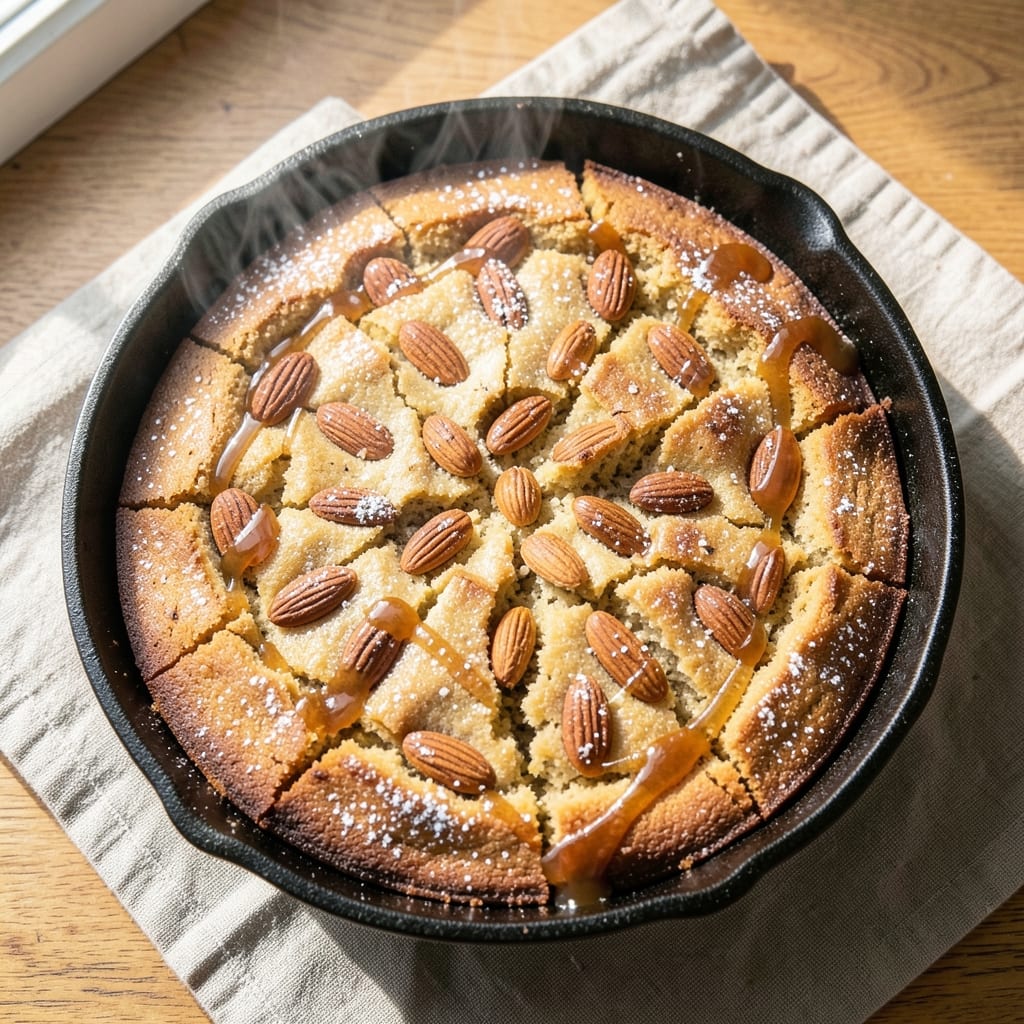
This almond skillet cake delivers the perfect balance of crispy edges and gooey centers, all wrapped in a nutty, caramelized crust that will have everyone asking for seconds. The secret lies in its simple yet precise technique—flourless batter that transforms into a golden, textured masterpiece with just 45 minutes in the oven. What makes this recipe stand out is how the almond flour creates that signature crunch while keeping the inside impossibly tender.
The beauty of this skillet cake is its versatility—it works equally well as a showstopping dessert or a sophisticated breakfast treat. I’ve perfected the ratio of almond flour to sugar to ensure the right texture: crisp enough to hold its shape but soft enough to melt in your mouth. The edges develop a beautiful caramelized crust, while the center remains rich and fudgy, creating a contrast that’s hard to resist.
What you’ll love most is how effortlessly this cake comes together with just 6 simple ingredients, yet the result feels indulgent and restaurant-worthy. The warm, nutty aroma fills your kitchen as it bakes, and the moment you pull it from the oven, the golden edges give way to a moist, flavorful center that’s impossible to stop at one slice. It’s the kind of dessert that feels special without requiring hours of prep.
Serve it warm with a scoop of vanilla ice cream or a dusting of powdered sugar for an elegant finish. The best part? It’s foolproof—no fancy equipment needed, just a cast-iron skillet and a little patience. Let’s get baking!
Ingredients for almond skillet cake
Six simple ingredients transform into a golden, nutty skillet cake with crisp edges and gooey centers.
| Ingredient | Amount | Notes |
|---|---|---|
| Almond Flour 🥜 | 1 ½ cups | Finely ground, unsweetened |
| Granulated Sugar 🍚 | 1 cup | Light brown preferred |
| Unsalted Butter 🧈 | ¾ cup | Cold, cubed for texture |
| Large Eggs 🥚 | 3 whole | Room temperature |
| Vanilla Extract 🌿 | 1 tbsp | Pure, not imitation |
| Salt 🧂 | ½ tsp | Fine sea salt |
| Powdered Sugar 🍚 | ¼ cup | For dusting (optional) |
Almond flour is the star here—Bob's Red Mill or King Arthur brands are my go-tos for that fine, consistent grind. If you can't find almond flour, blend whole almonds in a food processor until ultra-fine (about 2 minutes), but sift out any large pieces for the best texture. The sugar matters too: light brown adds subtle caramel notes that pair perfectly with the almond. I always grab Domino brand at the grocery store—it's reliable and affordable. For the butter, Plugrá or Land O'Lakes work perfectly, but don't use salted—we're controlling the salt here.
No almond flour? Blended walnuts or pecans work in a pinch (same amount), though the flavor will shift slightly. Running short on butter? Coconut oil melts similarly, but the texture won't be quite as rich. The vanilla extract should be pure—Nutiva or McCormick are solid choices. If you're out of powdered sugar for dusting, a light sprinkle of turbinado sugar gives a pretty, crunchy alternative. Pro tip: measure your almond flour by weight (1.5 cups = ~6 oz) for consistency—spooning from the bag packs it down and throws off the texture.
This cake keeps beautifully—3 days at room temperature wrapped in foil, or 1 week in the fridge. Reheat slices in a 350°F oven for 5-10 minutes to revive that crispy edge. The leftovers freeze wonderfully too: slice before freezing, then thaw at room temperature. I portion mine into individual servings—perfect for single-serving desserts during the week. Store the powdered sugar in an airtight container to keep it fluffy for dusting.
Why You'll Love This Recipe
- Four-Ingredient Magic: The almond flour does all the heavy lifting—no measuring dry ingredients to death. Just mix, pour, bake. That’s it. Honestly, I’ve made cakes with more steps that still didn’t taste half as good.
- Butter-Vanilla Bliss: The butter stays rich but not greasy, and that vanilla? It’s like a warm hug for your taste buds. The sugar caramelizes just enough to give it a subtle, melt-in-your-mouth sweetness without being cloying.
- Breakfast or Dessert: Serve it warm with a drizzle of honey for a lazy Sunday morning, or dust it with powdered sugar and a scoop of ice cream for a no-fuss treat. My kids ask for it both ways—no judgment here.
- Leftovers? Better Than Fresh: This cake actually improves overnight. The almond crust gets slightly crispier, and the center stays moist. I’ve reheated slices in the toaster for a quick protein boost—yes, even on a Tuesday night.
Step-by-step instructions for almond skillet cake
This cake delivers a perfect balance of nutty crunch and gooey centers every time—just follow these simple steps.
Prepare the Dry Ingredients
In a medium bowl, whisk together the 1.5 cups almond flour and ½ teaspoon salt until completely combined. The almond flour should look evenly distributed with no visible streaks of salt. I like to use a whisk for this step because it prevents clumping that can happen with a spoon.
Next, add the 1 cup granulated sugar to the same bowl and whisk again until everything is thoroughly mixed. The sugar will help create that perfect balance of sweetness and nutty flavor. I recommend using light brown sugar if you have it—it adds a subtle caramel note that pairs beautifully with the almonds.
Cream Butter and Eggs
In a separate large bowl, combine the ¾ cup unsalted butter (cold, cubed) and 3 whole large eggs at room temperature. Using a hand mixer or stand mixer, beat on medium speed for about 2-3 minutes until the mixture is light and fluffy. You'll notice the butter will start to emulsify with the eggs, creating a smooth, pale yellow mixture.
This step is crucial for achieving that tender, moist crumb. If your butter isn't cold enough, the cake might spread too much in the oven. I always test the butter by pressing a cube with my finger—if it leaves a slight indentation but holds its shape, it's perfect.
Combine Wet and Dry Ingredients
Gradually add the dry almond flour mixture to the butter-egg mixture, mixing on low speed just until combined. Be careful not to overmix—you should still see some flour streaks. Once incorporated, stir in the 1 tablespoon vanilla extract until fully blended. The batter should be thick but still pourable.
Here's the thing—this batter is different from traditional cake batters. It's denser and more like cookie dough, which is exactly what we want for that perfect skillet cake texture. If the batter seems too thick, you can add 1-2 teaspoons of milk (though it shouldn't need it with these exact measurements).
Bake to Golden Perfection
Preheat your oven to 350°F and grease a 10-inch cast iron skillet thoroughly with butter or cooking spray. Pour the batter into the prepared skillet and smooth the top with a spatula. Bake for 25-30 minutes until the edges are golden brown and the center springs back when gently pressed with your finger.
I've found that the cake is done when the top looks set but still has a slight jiggle in the center. Overbaking will make it dry, so keep an eye on it after the 25-minute mark. The cake should pull away slightly from the edges of the skillet, making it easy to remove once cooled for a few minutes.
Dust and Serve Warm
Once the cake is baked, let it cool in the skillet for 5 minutes before transferring to a wire rack. While it's still warm, dust the top generously with the ¼ cup powdered sugar using a fine-mesh sieve. This creates that beautiful snowy finish that makes the cake look even more tempting.
The powdered sugar also helps balance the rich, nutty flavors with a touch of sweetness. Serve the cake warm straight from the skillet for the best experience—it's even better with a scoop of vanilla ice cream or a dollop of whipped cream on top. Each bite should deliver that perfect combination of crispy edges, tender crumb, and gooey centers.
Pro Tips For Making Almond Skillet Cake
- Use Room-Temp Butter: I learned this the hard way—cold butter makes the batter lumpy and the cake dense. Let that block sit out for 30 minutes before creaming it with sugar, or even better, microwave it for 10 seconds to soften evenly. The texture difference is night and day.
- Sift Almond Flour Twice: Almond flour is notorious for clumping like a stubborn toddler. Give it a quick sift right before mixing, then sift again after adding dry ingredients. This keeps the cake light and prevents that dreaded heavy, brick-like center.
- Check for Doneness Early: This cake doesn’t rise much, so it’s easy to overbake. Start checking with a toothpick at 25 minutes—if it comes out with a few moist crumbs (not wet batter), pull it. Overbaking turns it dry faster than you can say "vanilla extract."
- Skip the Extra Egg: The recipe calls for 3 eggs, but I’ve found 2 large eggs work just as well—sometimes better—if you use the full 1 cup of almond flour. The extra egg can make the texture gummy, and this swap saves you from cracking an extra one (and the mess that comes with it).
Essential equipment for this dish
Cast Iron Skillet
A 10-inch cast iron skillet is your secret weapon for this recipe—it distributes heat evenly and creates that signature crispy edge while keeping the center gooey. I use a Lodge Pre-Seasoned Cast Iron Skillet because it’s heavy enough to retain heat perfectly and develops a natural nonstick surface over time. If you don’t own one, a stainless steel skillet works too, but cast iron gives the best caramelized crust. Always preheat your skillet alongside the oven to ensure even cooking. 🔥
Mixing Tools
For the dry ingredients, a whisk is ideal—it prevents clumping and ensures the almond flour and sugar are evenly distributed. I reach for my OXO Good Grips Whisk because it’s lightweight yet sturdy. For the wet ingredients, a hand mixer or stand mixer (like my KitchenAid Artisan Series) is a game-changer. It creates a lighter, fluffier texture by emulsifying the butter and eggs properly. If you’re mixing by hand, a rubber spatula helps scrape every bit of batter from the bowl.
Measuring Cups
Precision matters with almond flour—it’s lightweight and can pack differently than regular flour. Use a dry measuring cup (like Pyrex Glass Measuring Cups) and level it off with a knife for accuracy. For the sugar and butter, a liquid measuring cup with a pour spout works best. I also recommend a digital kitchen scale for the almond flour (1.5 cups = ~6 ounces) to avoid inconsistencies. A fine-mesh sieve is essential for dusting the powdered sugar evenly over the finished cake.
Oven Thermometer
Ovens run hot or cold, and this cake relies on precise temperature control. An oven thermometer (like the Thermoworks Oven Thermometer) ensures your oven is actually at 350°F—not just what the dial says. I’ve seen cakes fail when the oven was off by even 25°F. Place the thermometer near the skillet while baking to monitor temperature. If your oven runs hot, reduce the temperature to 325°F to prevent over-browning.
Wire Rack
A wire cooling rack is non-negotiable for this recipe. It allows air to circulate underneath the cake, preventing soggy bottoms and helping it set properly. I use a OXO Good Grips Cooling Rack because it’s sturdy and fits snugly under my skillet. Place the rack directly on your counter or a baking sheet to catch any crumbs. Let the cake cool in the skillet for 5 minutes first, then transfer it to the rack for even cooling.
Nutrition facts
Frequently asked questions
Can I make this almond skillet cake without eggs?
Yes! For a vegan version, replace the 3 eggs with 3 tablespoons aquafaba (chickpea brine) whipped to stiff peaks, or use 1/4 cup unsweetened applesauce + 1 teaspoon baking powder. The texture will be slightly denser but still delicious. For best results, reduce the sugar by 1 tablespoon since egg substitutes can add sweetness.
Why did my cake spread too much in the oven?
This usually happens when the butter isn't cold enough or the oven runs hotter than 350°F. Test your oven with a thermometer—if it's over 375°F, reduce heat to 325°F. Also ensure your butter is cold (press a cube: if it holds shape but dents slightly, it's perfect). Chill the batter for 15 minutes before baking if your kitchen is warm.
How do I store leftovers to keep them fresh?
Wrap the cake tightly in plastic wrap or foil and store at room temperature for up to 3 days. For longer storage, refrigerate for 1 week or freeze slices for 2 months. To revive texture, warm slices in a 350°F oven for 5-10 minutes before serving. The powdered sugar dusting keeps best in an airtight container.
Can I use regular flour instead of almond flour?
Not recommended—the almond flour creates that signature crispy texture and nutty flavor. If absolutely necessary, substitute with 1 cup all-purpose flour + 1/2 cup ground almonds, but expect a denser, less flavorful result. The cake may also spread more and lack that signature crunch. For best results, stick with almond flour!
What's the best way to serve this cake?
Serve warm straight from the skillet with a scoop of vanilla ice cream, fresh berries, or whipped cream. For a fancy touch, drizzle with warm caramel sauce or sprinkle with toasted sliced almonds. The contrast of warm cake with cold toppings is pure magic!