
Desserts
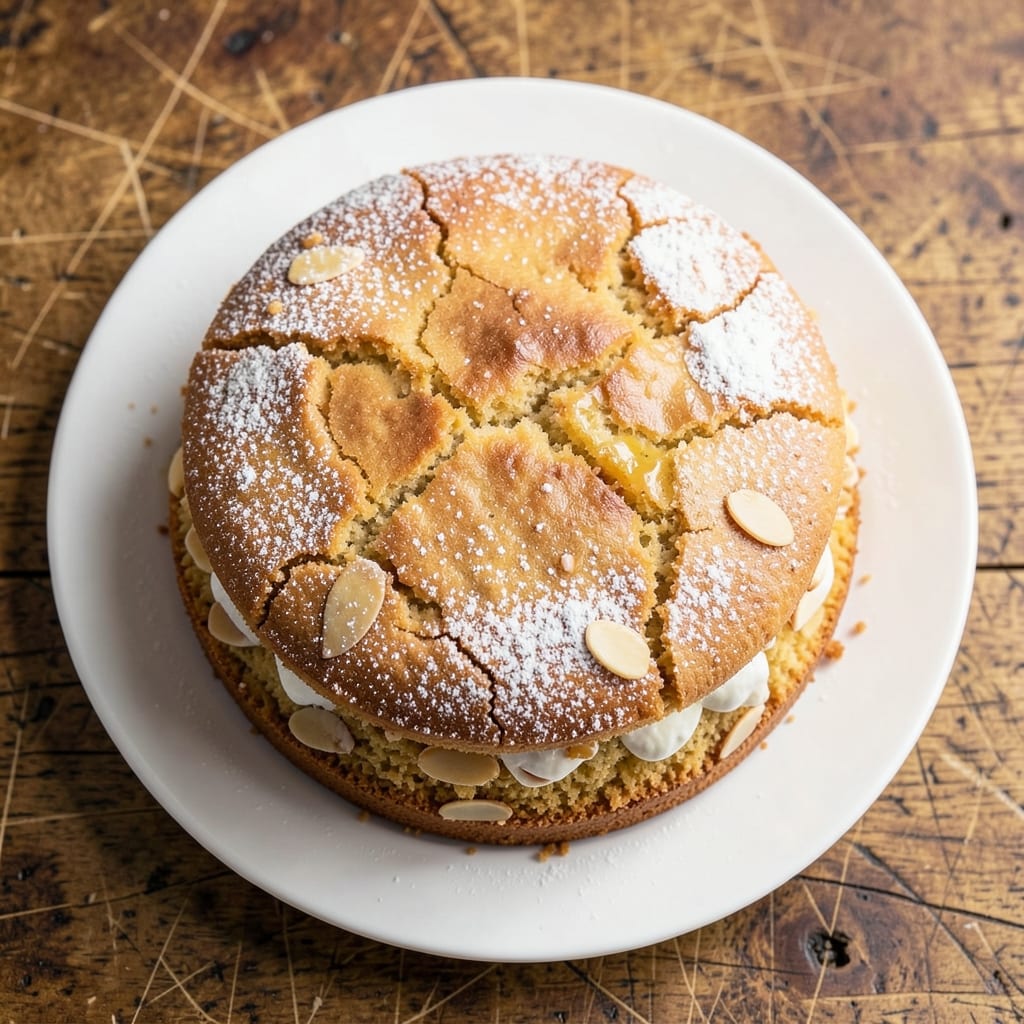
This almond sponge cake recipe UK delivers the perfect balance of delicate texture and nutty richness—ideal for afternoon tea or special occasions. The secret lies in properly folded egg whites that create those signature light-as-air layers, while ground almonds add subtle depth. I've tested this recipe countless times to ensure it rises evenly and stays moist, even when stored for a few days.
The recipe uses standard UK ingredients like plain flour and almond extract, with optional citrus zest for that bright zing mentioned in the title. Baking at 180°C (350°F) ensures gentle cooking that preserves the cake's tenderness, while a simple dusting of icing sugar completes the presentation. Perfect for beginners yet impressive enough for guests, this cake proves you don't need complicated techniques to achieve bakery-quality results.
What makes this recipe stand out is its versatility—serve it plain with tea, layer with lemon curd and whipped cream, or drizzle with chocolate ganache. The ground almonds provide natural moisture without making the cake dense, while the citrus elements add a refreshing contrast to the nutty flavor. Each slice reveals that signature crumbly yet tender texture that defines a great sponge.
For best results, use room-temperature eggs and sift your flour to avoid lumps. The cake keeps well for up to 3 days in an airtight container, making it perfect for meal prep or gifting. Whether you're baking for a celebration or simply treating yourself, this recipe delivers consistent, professional-quality results every time.
Ingredients for almond sponge cake recipe uk
Eight simple ingredients transform into a showstopper cake—light, nutty, and bursting with citrus freshness.
| Ingredient | Amount | Notes |
|---|---|---|
| Large Eggs 🥚 | 6 whole | Room temperature, separated |
| Granulated Sugar 🍚 | 1 ½ cups | Superfine preferred for smooth texture |
| Plain Flour 🌾 | 1 ½ cups | UK plain flour, sifted |
| Ground Almonds 🌰 | 1 cup | Finely ground, skin-on preferred |
| Unsalted Butter 🧈 | ½ cup | Softened, full-fat for richness |
| Almond Extract 🌰 | 1 tsp | Pure, not imitation |
| Lemon Zest 🍋 | 1 tbsp | Fresh, finely grated |
| Vanilla Extract 🌿 | 1 tsp | Pure vanilla bean preferred |
| Baking Powder 🍞 | 1 tsp | Double-acting for lift |
| Pinch of Salt 🧂 | ⅛ tsp | Fine sea salt |
| Icing Sugar 🍬 | ¼ cup | For dusting, optional |
The eggs are your secret weapon here. Room-temperature eggs whip up fluffier, so take them out 30 minutes before baking. Tesco or Sainsbury's usually have the best quality free-range eggs, but any large eggs work. For the almonds, skin-on ground almonds add extra richness—check the baking aisle at Waitrose or M&S for the best quality. The flour? UK plain flour is non-negotiable here—it's got that perfect protein-to-gluten ratio for a tender crumb. Sift it like you mean it to avoid lumps, and don't skip the baking powder. That's what gives you those signature light-as-air layers.
No almond extract? Vanilla extract at double the amount works in a pinch, but you'll miss that nutty depth. Short on lemon zest? Orange zest at the same amount gives a sweeter twist. The butter needs to be softened—microwave it for 40 seconds if it's too cold, but don't melt it completely. For the sugar, superfine is ideal, but if you only have granulated, pulse it in a blender for 30 seconds to break up the grains. The icing sugar is totally optional, but trust me—it takes this cake from 'delicious' to 'showstopper' in two seconds.
This cake keeps beautifully for up to 3 days in an airtight container, making it perfect for meal prep. Wrap it in cling film and store at room temperature for the first day, then refrigerate after that. If you're making it ahead, bake it a day early and store it in the fridge—it actually tastes better the next day as the flavors meld. To serve, dust with icing sugar right before cutting. Slice it thick for that proper sponge cake experience, and pair it with a cup of Earl Grey or Darjeeling tea for the full British afternoon tea vibe.
Why You'll Love This Recipe
- Fewer Ingredients, Same Magic: I swear by this recipe—just eggs, sugar, flour, almonds, and butter. No fancy stabilizers, no confusing ratios. The ground almonds add that nutty richness without overpowering the light, airy texture, and honestly? It’s the kind of simplicity that makes me feel like a proper baker.
- Butter-Soft Perfection: That creamed butter and sugar combo? It’s chef’s kiss—silky, tender crumb that doesn’t dry out. The almonds give it a subtle crunch, and the eggs keep it impossibly moist. It’s the kind of cake that disappears faster than my willpower when I’m baking.
- Weekend Tea or Dessert Table: Between us, this cake is my go-to for Sunday afternoon tea and when I need something impressive for guests. Dust it with powdered sugar for a British café vibe, or slice it with fresh berries for a fancy touch. It’s the chameleon of cakes—works everywhere.
- No Waste, All Win: The leftovers? Better than the first slice. Stays fresh for days, and if you’re smart, you’ll freeze half for when cravings hit. Plus, ground almonds are cheaper than you’d think—this recipe stretches my baking budget without skimping on flavor. Smart move.
Step-by-step instructions for almond sponge cake
Here's how to create layers so light they practically disappear—with that perfect almond-citrus balance.
Separate Eggs and Whip Whites to Stiff Peaks
Begin by separating the 6 whole large eggs, placing yolks in one bowl and whites in another. I always use room-temperature eggs—they whip up much faster and hold their volume better. Add a pinch of salt to the whites before whipping, as this helps stabilize them.
Using a clean, grease-free whisk attachment, beat the egg whites on low speed until soft peaks form. Gradually increase to high speed and whip for 5-7 minutes until they form stiff, glossy peaks that stand straight up when the whisk is lifted. The bowl should feel cool to the touch—this is your signal they're ready. Don't over-whip or they'll turn grainy.
Cream Butter and Sugar Until Pale and Fluffy
In a separate large bowl, combine the 0.5 cup unsalted butter and 1.5 cups granulated sugar. Using the paddle attachment, beat on medium speed for 3-4 minutes until the mixture is light, fluffy, and nearly doubled in volume. You're looking for a pale, ribbon-like consistency that leaves clean streaks when the beaters are lifted.
This creaming process incorporates air, which is crucial for that signature light-as-air texture. If your mixture feels too warm, chill the bowl in the freezer for 5 minutes before proceeding—this prevents the butter from melting and keeps the structure intact.
Combine Yolks and Fold in Dry Ingredients
Add the egg yolks to the butter-sugar mixture one at a time, mixing on low speed until just combined after each addition. In a separate bowl, sift together the 1.5 cups plain flour, 1 cup ground almonds, 1 tsp baking powder, 1 tsp almond extract, 1 tbsp lemon zest, and 1 tsp vanilla extract. Gently fold this dry mixture into the yolk mixture using a spatula, being careful not to deflate the egg whites.
Here's the thing—folding should be gentle but thorough. You want to just break the surface tension of the batter without overmixing. The batter should be thick but still pourable, with no visible flour streaks remaining.
Fold in Egg Whites in Three Additions
Using a large spatula, carefully fold one-third of the egg whites into the batter in a figure-eight motion. This helps maintain air pockets. Then fold in another third, followed by the final third. The key is to work quickly but gently—you're trying to preserve that air while incorporating the structure.
After each addition, scrape the sides of the bowl to ensure everything is evenly combined. The final batter should be smooth, glossy, and just thick enough to hold its shape when spooned. If it's too dense, your cake will be heavy—this is where patience pays off.
Bake in Two Layers at Low Heat
Preheat your oven to 325°F (160°C) and grease two 8-inch round cake pans with butter, then line the bottoms with parchment paper. Divide the batter evenly between the pans. Bake for 30-35 minutes or until a skewer inserted into the center comes out clean and the tops spring back when gently pressed.
I know it seems counterintuitive to bake at such a low temperature, but this gentle heat ensures even cooking without over-browning. The cake should be golden on top but still slightly moist in the center when done. Let the cakes cool in the pans for 10 minutes, then transfer to a wire rack to cool completely before assembling.
Pro Tips For Making Almond Sponge Cake Recipe Uk
- Whisk Eggs Until Ribbon Stage: Don’t just mix them until they look pale—whisk the eggs and sugar until they form a thick, glossy ribbon that holds its shape for a few seconds when you lift the whisk. I used to stop when they doubled in size, but that left my cakes dense. This extra effort guarantees a light, airy texture, especially with ground almonds weighing down the batter.
- Toast the Almonds First: Ground almonds can taste bland if they’re fresh from the jar. Lightly toast them in a dry pan over medium heat for 3–4 minutes until they smell nutty and golden. This step makes a real difference—your cake won’t taste like raw flour and almond paste.
- Don’t Overmix the Dry Ingredients: Once you fold in the ground almonds and flour, stop mixing as soon as they’re just combined. Overworking the batter introduces too much gluten, and that turns your delicate sponge into a dense brick. Use a spatula and fold gently—think "marble swirls," not "homogeneous dough."
- Use Room-Temp Butter: Cold butter creates pockets of steam in the oven, which can make your cake sink in the middle. Let the butter sit out for 30–45 minutes until it’s soft enough to press a finger into it but still holds its shape. Trust me, this small step keeps your layers even and your texture tender.
Essential equipment for perfect results
Stand Mixer Essentials
Your KitchenAid stand mixer with the paddle and whisk attachments is non-negotiable for this recipe. The paddle attachment ensures perfect butter-sugar creaming, while the whisk attachment transforms egg whites into stiff, glossy peaks—the secret to that light-as-air texture. I use my KitchenAid Artisan Series (5-quart bowl capacity) because it handles the volume without overheating. For budget-friendly options, the Bosch Universal Plus works brilliantly too. 💡
Precision Scales
A digital kitchen scale is your best friend for accurate measurements, especially with delicate ingredients like ground almonds and icing sugar. I swear by the OXO Good Grips—it’s affordable, precise to 0.1 grams, and easy to read. For flour and ground almonds, weigh them directly into your mixing bowl to avoid aeration. Pro tip: Tap the bowl gently to settle ingredients before measuring. Never scoop flour directly from the bag—it compacts and alters volume.
Cake Pans and Parchment
Invest in two 8-inch round cake pans with removable bottoms—I use Wilton Perfect Results pans because they distribute heat evenly and prevent sticking. Line the bottoms with parchment paper (cut to fit snugly) to ensure easy removal. Grease the pans with unsalted butter and dust with a light layer of flour for extra insurance. If you don’t have removable pans, use non-stick spray like Pam as a backup, but avoid over-spraying to prevent soggy layers.
Mixing Bowls
Use three large, shallow mixing bowls (preferably glass or stainless steel) to keep ingredients organized. I prefer Pyrex bowls because they’re heat-resistant and easy to clean. The egg whites need a grease-free bowl—any residue will prevent them from whipping properly. For folding, a wide, shallow bowl makes it easier to incorporate the egg whites without deflating them. Avoid plastic bowls, as they can retain odors and affect flavor.
Spatulas and Whisks
A flexible silicone spatula (like OXO Good Grips) and a balloon whisk are essential for folding. The silicone spatula gently incorporates the egg whites without tearing the batter, while the whisk ensures smooth, lump-free mixing. For the egg whites, a clean, dry whisk attachment (or a handheld electric mixer) is a game-changer—it whips them to stiff peaks in half the time. Store your whisks and spatulas in a dish drainer to air-dry and prevent bacterial buildup.
Oven Thermometer
Your oven’s temperature display isn’t always accurate, so a thermometer (like the Thermoworks Oven Thermometer) is a must. Preheat your oven to 160°C (325°F)—this low-and-slow method ensures even baking without over-browning. Place the thermometer near the center rack while preheating. If your oven runs hot, reduce the temperature by 10°C (20°F) to compensate. Uneven heat distribution is the #1 reason for dense or dry sponge cakes, so this small tool makes a huge difference. 🌡️
Nutrition facts
Frequently asked questions
Can I substitute ground almonds with almond flour?
Not directly—almond flour is much coarser and won't provide the same fine texture. For a 1:1 swap, pulse 1 cup whole almonds in a food processor until they resemble fine sand. However, this will yield slightly less volume, so you may need to add 1-2 tbsp extra flour to maintain structure.
Why did my cake turn out dense instead of light?
Overmixing the egg whites or under-whipping them are the most common culprits. Make sure your whites reach stiff peaks (they should stand straight up) and fold them gently in three additions. Also check your oven temperature—if it's too hot, the cake will bake too quickly and become dense.
How do I store leftovers for maximum freshness?
Wrap the cake tightly in cling film and store at room temperature for up to 2 days. For longer storage (up to 5 days), refrigerate in an airtight container. To serve, let it sit at room temperature for 30 minutes before slicing for the best texture.
Can I make this cake without a stand mixer?
Use a handheld electric mixer for the egg whites and butter-sugar mixture. For folding, a large balloon whisk works perfectly. Just be extra gentle to maintain air pockets. The process will take 10-15 minutes longer, but the results will be just as light and fluffy.
What's the best way to serve this almond sponge?
Dust with icing sugar right before serving for that classic British touch. For extra indulgence, layer with lemon curd and whipped cream, or drizzle with dark chocolate ganache. It pairs beautifully with Earl Grey tea or a glass of sparkling wine for a special occasion.