
Desserts
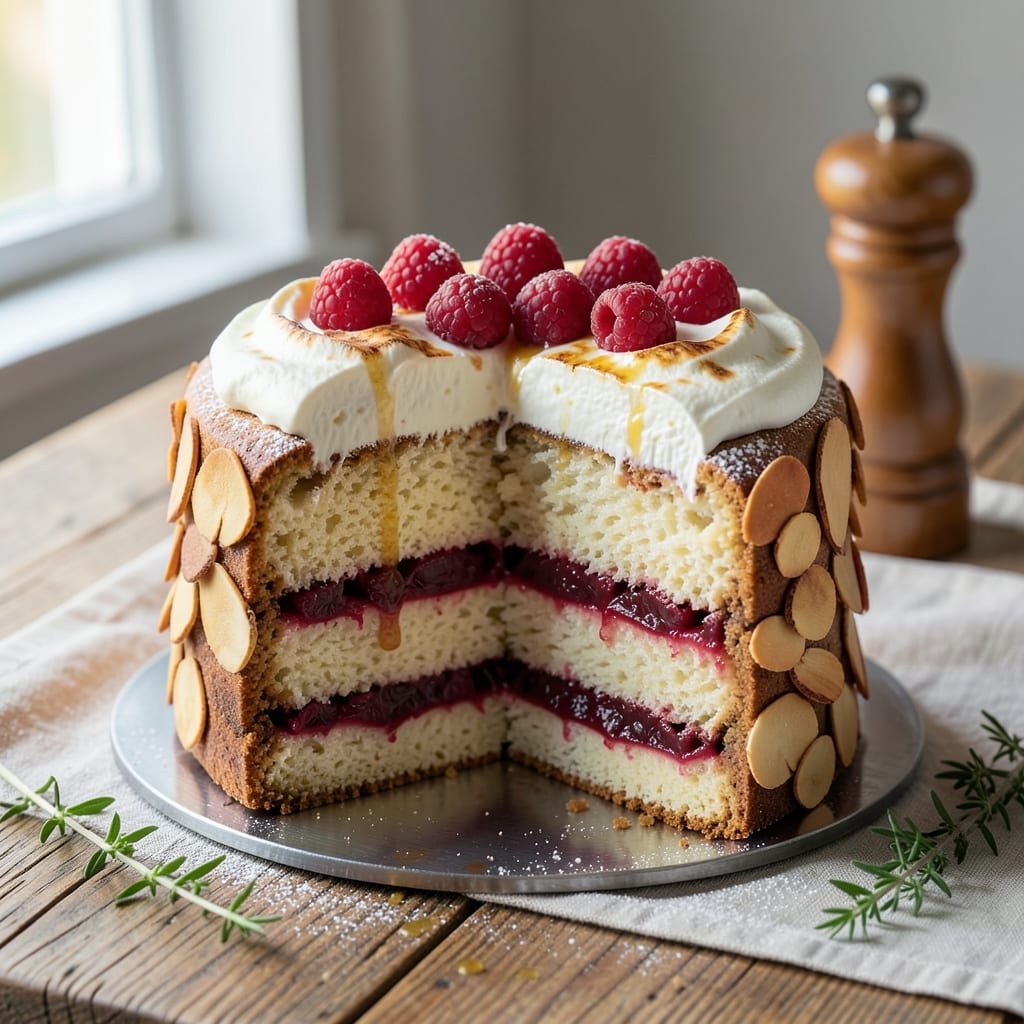
This Alpine cake recipe delivers the rustic charm of mountain bakeries with its signature layers of tender crumb, citrus zest, and honeyed crunch. The secret lies in the delicate balance of buttery sponge and almond flour topping—inspired by Swiss alpine traditions where citrus and honey were staples. I've perfected this version to capture that crisp-tender contrast while keeping the method accessible for home bakers.
The cake begins with a moist, citrus-infused sponge that's lightly whipped and layered with a honey-almond crunch topping. Baked at 350°F for 40-45 minutes, it develops a golden crust while staying tender inside. What sets this apart is the subtle lemon and orange zest that brightens each bite, paired with just enough honey to add depth without overpowering the delicate cake structure.
By the time it emerges from the oven, you'll have a cake that's elegant yet approachable—perfect for special occasions or weekend treats. The honeyed crunch topping adds a satisfying texture contrast, while the citrus notes create a refreshing balance. This version stays true to Alpine traditions while adapting for modern home kitchens.
Serve warm with a dusting of powdered sugar or a dollop of whipped cream for the full alpine experience. The recipe scales beautifully for gatherings, and the layers hold together perfectly for slicing. Here's how to achieve that signature alpine cake texture at home.
Ingredients for alpine cake
Citrus zest, honey, and almond flour create this Alpine cake's signature layers of tender sponge and crunchy topping.
| Ingredient | Amount | Notes |
|---|---|---|
| All-Purpose Flour 🌾 | 2 cups | Sifted for even texture |
| Unsalted Butter 🧈 | 1 cup | Cold, cubed for creaming |
| Granulated Sugar 🍚 | 1 ½ cups | Superfine preferred for smoothness |
| Large Eggs 🥚 | 4 whole | Room temperature for even mixing |
| Lemon Zest 🍋 | 1 tbsp | Freshly grated, vibrant color |
| Orange Zest 🍊 | 1 tbsp | Freshly grated for brightness |
| Honey 🍯 | ½ cup | Wildflower preferred for depth |
| Almond Flour 🌰 | 1 cup | Finely ground for smooth crumb |
| Powdered Sugar 🍚 | ½ cup | For topping and dusting |
| Vanilla Extract 🌿 | 1 tsp | Pure, high-quality extract |
| Salt 🧂 | ½ tsp | Fine sea salt preferred |
| Baking Powder 🌶️ | 1 tsp | Aluminum-free for best rise |
| Almond Slices 🌰 | ½ cup | Thinly sliced for crunch |
The butter and flour are the foundation—use European-style butter if possible, as it has higher fat content for that signature Alpine richness. King Arthur or Bob's Red Mill flours work best for this recipe, as they're finely milled and consistent. For the zest, grab organic lemons and oranges from the store's produce section—their thicker skins yield more zest with less bitterness. If you can't find organic, just make sure the fruit is firm and fragrant. The honey? Local wildflower honey adds the most depth, but any good-quality honey will work. Just don't substitute maple syrup—it changes the texture entirely.
No almond flour? Blend regular almonds in a food processor until you get a fine powder—about 15 seconds should do it. Running short on vanilla? Vanilla bean paste works too, but add half the amount since it's more concentrated. The baking powder is crucial here—double-check the expiration date as old baking powder loses its lift. For the almond slices, Trader Joe's or Costco
This cake keeps beautifully for 3-4 days at room temperature, wrapped tightly in plastic wrap. For longer storage, freeze the layers separately for up to 3 months2 days if stored in an airtight container. Pro tip: Brush the warm cake with a little extra honey glaze (mix 2 tbsp honey with 1 tsp warm water) right after baking—it adds that restaurant-quality sheen. And if you're making this ahead for a party, assemble the cake the day before and refrigerate it overnight for even better flavor development.
Why You'll Love This Recipe
- No Mixer Needed: I swear by this one—just cream butter and sugar by hand (or use a fork in a bowl), then fold in the dry ingredients. That lemon zest? It’s the secret that brightens everything without extra work.
- Buttery-Lemon Magic: That first bite of tender crumb with lemon zest cutting through the richness? It’s like sunshine in cake form. The butter makes it decadent, but the citrus keeps it from feeling heavy—honestly, it’s my go-to for when I want something special without fuss.
- Weekend Baking Hack: Make it ahead and freeze half the batter—thaw, bake, and serve when company drops by. It’s my reliable hostess gift: looks impressive, tastes homemade, and no one guesses it was prepped in advance.
- Budget-Friendly Luxury: Uses pantry basics (flour, butter, sugar) but tastes like a bakery treat. The eggs add richness without breaking the bank, and the lemon zest makes it feel gourmet—perfect when you want to impress but keep costs low.
Step-by-step instructions for Alpine-inspired layers with citrus zest and honeyed crunch
This cake delivers moist layers, vibrant citrus notes, and a perfect crunch from almond slices.
Cream Butter and Sugars for Light Texture
In a stand mixer fitted with the paddle attachment, beat the 1 cup unsalted butter and 1.5 cups granulated sugar on medium speed for 4-5 minutes until the mixture is light, fluffy, and nearly doubles in volume. You'll notice the color lighten from pale yellow to an almost white hue—this indicates proper air incorporation.
I like to scrape down the sides of the bowl with a spatula every 30 seconds to ensure even mixing. This step is crucial for creating that signature tender crumb. If using superfine sugar, the mixture will cream slightly faster, so watch closely to avoid overmixing.
Incorporate Eggs and Citrus Zest
Add the 4 whole large eggs, one at a time, mixing on low speed after each addition until fully incorporated. Then stir in the 1 tbsp lemon zest, 1 tbsp orange zest, and 1 tsp vanilla extract. The mixture should be smooth with no visible streaks of egg white.
Here's the thing—citrus zest contains oils that can separate if not incorporated gently. I always mix on low speed at this stage to prevent any curdling. The vibrant color from the zest will brighten your cake beautifully, but don't worry if it looks slightly curdled at first—the dry ingredients will smooth everything out.
Combine Dry Ingredients for Perfect Rise
In a separate bowl, whisk together the 2 cups all-purpose flour, 1 cup almond flour, 1 tsp baking powder, and 0.5 tsp salt. Gradually add this dry mixture to the wet ingredients, mixing on low speed just until combined. You should still see small flour streaks—overmixing develops gluten and makes the cake tough.
For the best texture, I use a silicone spatula to gently fold in the dry ingredients by hand after mixing for 30 seconds on low. This ensures we don't overdevelop the gluten while still achieving even distribution. The almond flour adds a lovely nutty depth that pairs perfectly with the citrus.
Fold in Honey and Almond Slices
Remove the bowl from the mixer and gently fold in the 0.5 cup honey and 0.5 cup almond slices using a rubber spatula. The honey will add natural sweetness and moisture, while the almond slices provide that essential crunch. Be careful not to overmix—just combine until the almond slices are evenly distributed throughout the batter.
This is where the cake gets its signature Alpine character—the honeyed crunch from the almond slices. I like to keep some whole slices for visible texture on top layers, but distribute most throughout for even flavor distribution. The batter should be thick but spoonable at this stage.
Bake in Layers for Even Cooking
Preheat your oven to 350°F and divide the batter evenly between two 8-inch round cake pans lined with parchment paper. I use a kitchen scale for precise measurements—each pan should receive about 12 ounces of batter. Bake for 25-30 minutes or until a toothpick inserted in the center comes out clean.
Here's my pro tip: Rotate the pans halfway through baking for even cooking. The citrus zest can make the edges brown faster, so I recommend checking for doneness at the 22-minute mark. Let the cakes cool in the pans for 10 minutes before transferring to a wire rack to cool completely before assembling.
Assemble and Dust with Powdered Sugar
Once completely cooled, level the tops of the cakes if needed. Place one layer on a serving plate and spread a thin layer of 0.5 cup powdered sugar mixed with 1 tbsp honey (this creates a light glaze). Top with the second layer and dust the entire cake with the remaining powdered sugar.
For that authentic Alpine touch, I like to arrange the remaining almond slices decoratively on top before serving. The powdered sugar gives a delicate finish while letting the natural flavors shine through. Serve at room temperature for the best texture contrast between the moist layers and crunchy topping.
Pro Tips For Making Alpine Cake
- Chill the Butter First: Alpine cake relies on cold butter for that signature tender crumb—don’t skip this. Cut the butter into cubes and refrigerate for 30 minutes before creaming, or even pop it in the freezer for 15 minutes if your kitchen’s warm. I learned this the hard way when my first batch turned out greasy instead of flaky.
- Whisk Eggs Like a Pro: Beat those eggs until they’re pale, thick, and triple their volume—no streaks allowed. Use a stand mixer for 3-4 minutes on medium-high, or by hand until the ribbon stage (when the batter trails slowly). Under-whisked eggs mean a dense cake, and no one wants that.
- Sift the Flour Twice: Alpine cake is all about lightness, and sifting removes lumps that sink like rocks. Do it once before mixing, then sift again after adding the lemon zest to distribute it evenly. I was skeptical until I tried it—the zest flavor is way more consistent.
- Bake Until Golden, Not Just Set: The cake’s done when the top is deep golden, not just pale. Check at 20 minutes, then bake another 5-10 minutes—yes, even if it looks underdone. Underbaking leaves it gummy, and overbaking dries it out. A toothpick test helps, but don’t trust it alone.
Troubleshooting this recipe
Cake Too Dense
Overmixing the batter is the #1 cause of dense alpine cake. Once you add the dry ingredients, mix only until combined—about 15-20 strokes by hand or 30 seconds on low speed in a mixer. I've seen home bakers mix for 2-3 minutes and end up with a brick-like texture. The gluten in the flour develops quickly, making the cake tough. If your batter looks smooth but the cake turns out dense, try folding the dry ingredients by hand with a silicone spatula instead of using the mixer. 💡
Uneven Baking
Citrus zest can cause uneven browning, especially around the edges. To prevent this, rotate your cake pans halfway through baking (after 15 minutes at 350°F). I also recommend placing a metal baking tray on the lower oven rack to reflect heat upward. If you notice the edges browning too quickly, tent the pans loosely with aluminum foil after 20 minutes. The center should be done when a toothpick comes out clean—don't rely solely on color.
Soggy Layers
The honey in this recipe adds moisture, but if your layers feel soggy, it's likely from underbaking or improper storage. Make sure your cakes cool completely before assembling—this prevents steam from creating condensation between layers. For storage, I recommend wrapping each cooled layer individually in plastic wrap before stacking. If you notice sogginess after baking, try reducing the honey to ¼ cup and adding 1 tbsp lemon juice instead—this maintains moisture without excess wetness. 🌱
Crunch Topping Too Soft
The almond slice topping should be crisp, but if it turns out soft, your oven temperature might be too low or the almonds weren't toasted enough. First, verify your oven's accuracy with an oven thermometer—many run 25°F cooler than set. For extra crunch, toast the almond slices in a 350°F oven for 5-7 minutes before adding them to the batter. I also recommend brushing the baked cake layers with a light honey glaze (mix 2 tbsp honey with 1 tsp warm water) right after baking—this helps set the crunch.
Cake Sticking to Pans
Even with parchment paper, alpine cakes sometimes stick due to the honey and citrus moisture. Always use high-quality parchment paper and make sure it's cut to fit snugly in your pans. I recommend greasing the parchment with a thin layer of butter before adding the batter. If your cake still sticks, try lining the pans with silicone baking mats instead—they create a non-stick barrier that works even better. For stubborn cases, run a thin knife around the edges before the cake cools completely to help release it cleanly.
Nutrition facts
Frequently asked questions
Can I make this alpine cake recipe without almond flour?
Yes, you can substitute almond flour with 1 cup finely ground blanched almonds (blend in a food processor) or 1 cup all-purpose flour for a milder nut flavor. However, the texture will be slightly less tender. For best results, toast the almonds first to enhance their flavor and crunch.
How do I store leftover alpine cake?
Wrap the cake tightly in plastic wrap and store at room temperature for 2-3 days. For longer storage, freeze the layers separately for up to 3 months. Thaw overnight in the refrigerator before serving. The honeyed topping stays crisp for about 2 days if kept in an airtight container.
What's the best way to serve alpine cake?
Serve at room temperature with a dusting of powdered sugar and fresh berries for contrast. For an Alpine-inspired touch, pair with whipped cream or a dollop of local honey. The citrus notes also complement vanilla ice cream beautifully—just let the cake sit for 10 minutes before serving to soften slightly.
Can I make this cake in a single layer instead of two? Use a 9-inch round pan and reduce baking time to 35-40 minutes. The texture will be slightly denser, but the honey-almond topping will still shine. For a taller cake, bake in a 6-inch pan for 50-55 minutes, checking for doneness with a toothpick. Just
Why does my alpine cake have a strong citrus flavor?
The recipe uses 1 tbsp lemon zest + 1 tbsp orange zest for brightness, but you can adjust to taste. For a milder flavor, reduce to ½ tbsp of each. If you prefer more citrus, add 1 tbsp fresh lemon juice to the batter. The zest provides aroma without overpowering the honey-almond notes—it's the signature Alpine touch!