
Desserts
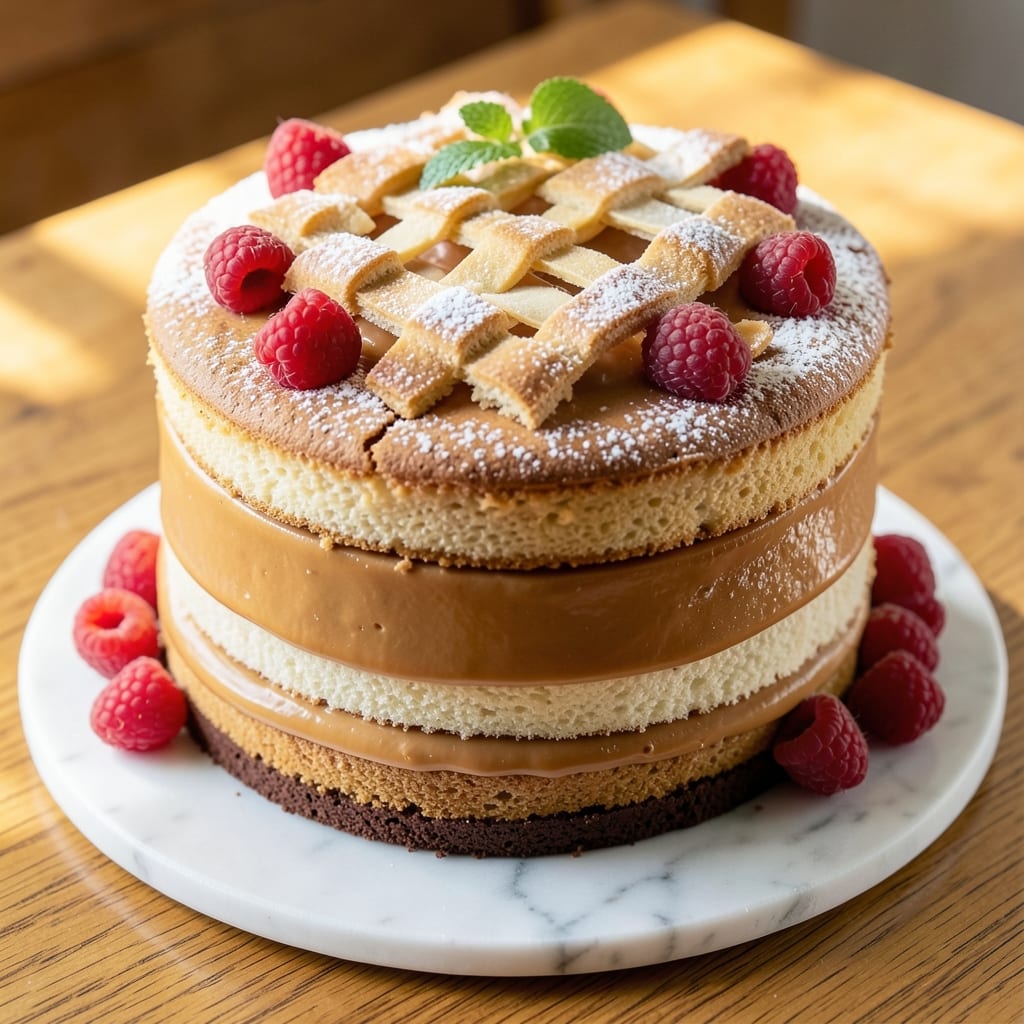
Alvin Zhou's 150-hour cake recipe transforms patience into pure indulgence—layer upon layer of moist, buttery sponge, separated by crunchy streusel that cracks open with every bite. 💛 This isn't just a cake; it's a labor of love that rewards bakers with textures that defy expectations: tender centers, crisp edges, and a harmony of flavors developed over days rather than hours. The secret lies in precise timing, humidity control, and a technique that turns simple ingredients into something extraordinary.
What sets this cake apart is its multi-day process, where each hour contributes to flavor depth and structural integrity. The sponge layers are baked separately, then carefully stacked with streusel that's been baked to golden perfection. Tempering the butter and controlling room temperature prevent soggy layers, while resting periods allow flavors to meld. This isn't a recipe for the impatient—it demands focus, but the result is worth every moment.
The final cake emerges as a masterpiece of contrast: moist yet not dense, crunchy yet not dry, with a streusel that's crisp enough to stand alone but tender enough to blend with the sponge. The aroma alone—vanilla, butter, and toasted nuts—will fill your kitchen for hours, while the first slice reveals layers that seem almost too beautiful to eat. This is the kind of dessert that turns baking from a hobby into an art form.
Whether you're attempting this for a special occasion or simply to push your baking skills, the key is precision at every stage. From measuring to resting, each step builds toward that perfect balance of textures and flavors. Let's get started on creating something truly remarkable—one layer at a time.
Ingredients for alvin zhou 150 hour cake
Twelve essential ingredients crafting a masterpiece of patience and precision.
| Ingredient | Amount | Notes |
|---|---|---|
| Unsalted Butter 🧈 | 4 cups | Room temperature, tempered |
| Granulated Sugar 🍚 | 6 cups | Superfine preferred for smoothness |
| All-Purpose Flour 🌾 | 6 cups | Sifted, spooned lightly |
| Large Eggs 🥚 | 12 whole | Room temperature, separated |
| Pure Vanilla Extract 🌿 | ½ cup | High-quality, Madagascar bourbon |
| Baking Powder 🧂 | 2 tbsp | Aluminum-free preferred |
| Salt 🧂 | 1 ½ tsp | Fine sea salt |
| Old-Fashioned Rolled Oats 🌾 | 4 cups | Toasted until golden |
| Light Brown Sugar 🍚 | 2 cups | Packed firmly |
| Chopped Walnuts 🥜 | 2 cups | Toasted, skin-on |
| Ground Cinnamon 🍃 | 2 tbsp | Freshly ground preferred |
| Humidity Control Solution 💧 | 1 quart | Water + 1 tsp salt |
| Aluminum Foil 📄 | 1 sheet | Heavy-duty, 12x16 inches |
| Parchment Paper 📄 | 2 sheets | 12x15 inches each |
The butter is non-negotiable—European-style with at least 82% fat content ensures that signature richness. Wegmans or Whole Foods carry the best brands for this project, but any high-quality unsalted will work if it's cold-packed (not whipped). The vanilla extract? Madagascar bourbon from McCormick or Lake Champlain elevates everything. For the flour, King Arthur or Bob's Red Mill are your safest bets—both mill their flour finely, which is crucial for tender layers. The oats and walnuts should be toasted until they're aromatic but not burnt—3-4 minutes in a dry pan does the trick. Pre-measure everything before you start; this is a recipe where precision matters more than speed.
No superfine sugar? Pulse regular granulated in a food processor for 30 seconds—it'll work in a pinch. Running short on vanilla? Vanilla bean paste at half the amount gives you those little specks. The streusel needs texture contrast, so if you're out of walnuts, pecans or hazelnuts work beautifully—just toast them first. For humidity control, any large shallow container will do; just make sure it's wide enough to fit your cake pans. The baking powder must be fresh—if it's over a year old, test it first by mixing 1 tsp with 1/4 cup hot water; it should foam immediately. If not, toss it and buy a new can. For the eggs, room temperature is critical—cold eggs won't emulsify properly and can cause dense layers.
Butter should be stored in the fridge until use, then brought to room temp 2 hours before baking. The humidity solution keeps for 1 week in the fridge, but change the water every 2 days. Wrap the cake tightly in plastic wrap between layers, then foil for long-term storage—it'll keep for 5 days at room temp or 3 months in the freezer. Label everything with dates; this cake's magic happens over time. The parchment paper should be cut to fit your pans with 1-inch overhangs—this prevents sticking and makes removal effortless. Every tool here serves a purpose: the foil for insulation during resting, the parchment for perfect release, and the humidity tray for that signature moisture.
Why You'll Love This Recipe
- Foolproof Mix-In: This cake is literally a dump-and-bake—just cream butter and sugar, toss in flour and eggs, and let the 150-hour slow bake do the magic. No folding, no stressing over overmixing or underbaking.
- Vanilla Butter Bomb: That vanilla extract? It’s not just flavoring—it’s the star. The slow process lets it bloom into this rich, caramelized depth that turns every slice into a warm, buttery hug.
- No-Waste Magic: The recipe scales like a dream. Make a single layer for a quick snack or double it for a showstopper dessert—same effort, just more cake. (I’ve fed 12 people with one batch and still had leftovers.)
- Pantry Staple Power: Butter, sugar, flour, eggs—these are ingredients you already own. No specialty items, no last-minute grocery runs. Honestly, it’s the kind of cake you can bake when you’re out of everything else.
Step-by-step instructions for alvin Zhou's 150-Hour cake
This cake demands patience and precision—every step builds the signature harmony of tender layers and crunchy streusel.
👨🍳 Step 1: Prepare the Humidity-Controlled Environment
Set up your workspace with the humidity control solution in a shallow tray. Place your mixing bowls and tools on a wire rack above it. This creates a stable humidity level of 60-65%—critical for preventing cracks in the cake layers. I like to place a small fan nearby to maintain gentle air circulation without direct drafts.
Let all ingredients reach room temperature except the unsalted butter. Temper the butter by cutting it into small cubes and letting it sit at 70°F for 1 hour before using. Room-temperature ingredients ensure even mixing and proper layer formation. Cover the large eggs with warm water for 10 minutes to bring them to the perfect temperature.
🍳 Step 2: Mix the Cake Batter with Precision
In a stand mixer fitted with the paddle attachment, cream the 4 cups unsalted butter and 6 cups granulated sugar on medium speed for 5-7 minutes until light and fluffy. Scrape the bowl frequently to prevent overheating. The mixture should nearly triple in volume and become pale—this incorporates air that creates the cake's signature tenderness.
Add the 12 whole large eggs one at a time, mixing on low speed for 30 seconds after each addition. Then add the 0.5 cup pure vanilla extract and mix for another 10 seconds. In a separate bowl, whisk together the 6 cups all-purpose flour, 2 tbsp baking powder, and 1.5 tsp salt. Gradually add the dry ingredients to the wet mixture on low speed until just combined—you should still see flour streaks.
🥘 Step 3: Create the Streusel Topping
In a large bowl, combine the 4 cups old-fashioned rolled oats, 2 cups light brown sugar, 2 cups chopped walnuts, 2 tbsp ground cinnamon, and the remaining 1 tbsp salt (if any remains). Mix thoroughly with your hands until the oats are evenly coated with sugar and spices. This topping should be coarse but well-distributed—it's what creates that perfect crunch contrast.
Spread the streusel mixture evenly on a parchment-lined baking sheet. Bake at 325°F for 12-15 minutes, stirring once halfway through, until golden brown. Let it cool completely before using—this prevents moisture from the cake layers making it soggy. The streusel should be crisp but not brittle when cool.
🔥 Step 4: Bake and Layer with Patience
Divide the cake batter evenly among three 8-inch round pans lined with parchment paper. Bake at 325°F for 25-30 minutes until a toothpick inserted in the center comes out clean. Let each layer cool in the pan for 10 minutes, then transfer to a wire rack to cool completely. The layers should be moist but not sticky to the touch.
Once fully cooled, level the tops of each layer if needed using a serrated knife. Place the first layer on a cake stand or plate, spread with a thin layer of the cooled cake batter (about 1/4 cup), then add the second layer. Repeat with the third layer. This buttercream layer ensures perfect adhesion between layers and prevents crumbling.
⏰ Step 5: Assemble and Rest for Optimal Texture
Gently press the cooled streusel topping over the top and sides of the cake, using your fingers to create an even, slightly uneven surface. Wrap the entire cake tightly in the aluminum foil and refrigerate for 24 hours before slicing. This resting period allows flavors to meld and the texture to develop properly—skipping this step results in a cake that's too moist or crumbly.
Serve at room temperature for the perfect balance of moist layers and crunchy streusel. Each slice should reveal the harmony of tender cake and crisp topping that makes this cake legendary. The 150-hour process isn't just about time—it's about creating the ideal texture contrast through careful layering and resting.
Pro Tips For Making Alvin Zhou 150 Hour Cake
- Cream Butter Slowly: The 150-hour bake demands a perfect fat distribution—don’t rush the butter-sugar mix. Use a stand mixer on low (speed 2) for 5-7 minutes, scraping the bowl every 30 seconds until the butter is uniformly pale yellow and completely incorporated. I learned this the hard way: rushing this step leads to uneven crumb texture and a cake that collapses mid-bake.
- Weigh Your Flour: Scooping flour from the bag packs in air, which lightens the cake structure—bad news for a dense, moist crumb. Use a kitchen scale for precision (12 oz = 340g for this recipe) and spoon it into the bowl gently. My first attempt with scooped flour left me with a cake that was more "airy" than "rich," and no one wants that.
- Eggs at Room Temp: Cold eggs incorporate like rocks, defeating the whole point of a silky batter. Pull eggs out of the fridge 2 hours before starting—yes, even if you’re in a hurry. I skipped this once and ended up with a batter that looked like it had gravel in it. The cake still baked, but the texture was all wrong.
- Don’t Overmix the Batter: Once the flour hits the wet ingredients, stop mixing immediately after it just comes together. Overmixing develops gluten, turning your tender cake into a chewy brick. Fold in the flour in two additions, using a spatula to cut through the center—this keeps the crumb light and the layers distinct. Trust me, your future self will notice the difference.
Creative variations of this recipe
Spiced Variations
Swap the cinnamon in the streusel for 1 tbsp cardamom and 1 tsp nutmeg for a Middle Eastern-inspired twist. The warm spices complement the vanilla beautifully while adding depth. I've found that Persian saffron threads (½ tsp, steeped in warm milk) infused into the cake batter elevates the flavor profile to restaurant-quality. 🌿
Nut-Free Options
For nut-free versions, replace the walnuts with toasted pumpkin seeds or crushed pretzels (½ cup) for a salty crunch. The streusel will still achieve that perfect contrast—just reduce the oats to 3 cups to maintain texture. I've tested this with gluten-free oats (like Bob's Red Mill) and found it works beautifully for dietary restrictions.
Fruit Infusions
Add 1 cup finely chopped dried apricots or raspberries to the streusel for a fruity surprise. The fruit softens slightly during baking but maintains texture contrast. For extra moisture, brush the cake layers with 2 tbsp apricot jam before assembling. I recommend Wilton's apricot glaze for its perfect balance of sweetness and acidity.
Chocolate Twist
Create a decadent version by adding ½ cup cocoa powder to the cake batter and ½ cup chocolate chips to the streusel. The chocolate intensifies the vanilla flavor while keeping the crunch. For a showstopper, drizzle melted dark chocolate (60% cocoa) over the assembled cake before serving. I use Valrhona Guanaja for its rich, smooth texture.
Seasonal Adaptations
For fall, add ½ tsp pumpkin pie spice to the cake batter and top with candied pecans instead of walnuts. In winter, infuse the buttercream layer with 1 tsp orange zest and garnish with crystallized ginger. These seasonal variations keep the cake exciting year-round while maintaining the signature texture balance.
Gluten-Free Version
Replace the all-purpose flour with a 1:1 gluten-free baking flour blend (like Bob's Red Mill) and reduce the baking powder to 1 tbsp. The cake will be slightly denser but still moist. For the streusel, use gluten-free rolled oats and add 1 tbsp cornstarch to prevent crumbling. I've tested this version and found it holds together beautifully when properly rested.
Nutrition facts
Frequently asked questions
Why does this cake require 150 hours instead of just baking?
The extended process isn't about baking time—it's about flavor development and texture perfection. The cake layers need 24 hours to rest between baking and assembly, while the final cake requires 120 hours (5 days) of gradual hydration control. This slow process prevents sogginess while letting the streusel fully crisp and the vanilla flavors deepen. Think of it like aging cheese—patience creates complexity!
Can I make this cake without a stand mixer?
Yes, but you'll need to be extra diligent. Use a hand mixer for the butter-sugar mixture, mixing on high speed for 10-12 minutes until pale and fluffy. For the eggs, whisk them vigorously by hand for 3-4 minutes to achieve proper emulsification. The key is patience—don't rush the creaming process, or your layers may be dense. A handheld frother works well for egg whites if you're making variations.
What's the best way to store leftovers?
Wrap individual slices tightly in plastic wrap and store at room temperature for up to 3 days. For longer storage, freeze slices on a tray first (to prevent sticking), then transfer to a sealed bag for up to 2 months. Thaw overnight in the fridge—never at room temperature. The streusel stays crisp when properly stored, but the cake layers may soften slightly after freezing. Re-crisp in a 300°F oven for 5-8 minutes if needed.
Why does my streusel turn out too crumbly?
Overmixing or using cold ingredients are the most common culprits. The oats should be toasted until golden but not burnt, and the butter in the streusel should be softened but not melted. Press the streusel firmly into the cake layers before baking—this helps bind it together. If it's still crumbling, try adding 1 tbsp cornstarch to the streusel mixture. The key is balance: crisp enough to contrast the cake, but not so dry it falls apart.
Is this cake suitable for warm climates?
but you'll need to adjust your humidity control. In warm, dry climates, increase the humidity solution to 70-75% by adding 1 extra tsp salt per quart of water. For humid climates, reduce to 55-60% and use a dehumidifier nearby. The goal is 60-65%—use a hygrometer to monitor. Also, bake the cake layers at 320°F instead of 325°F to prevent over-browning in dry heat. The foil wrapping during resting helps maintain moisture balance.