
Desserts
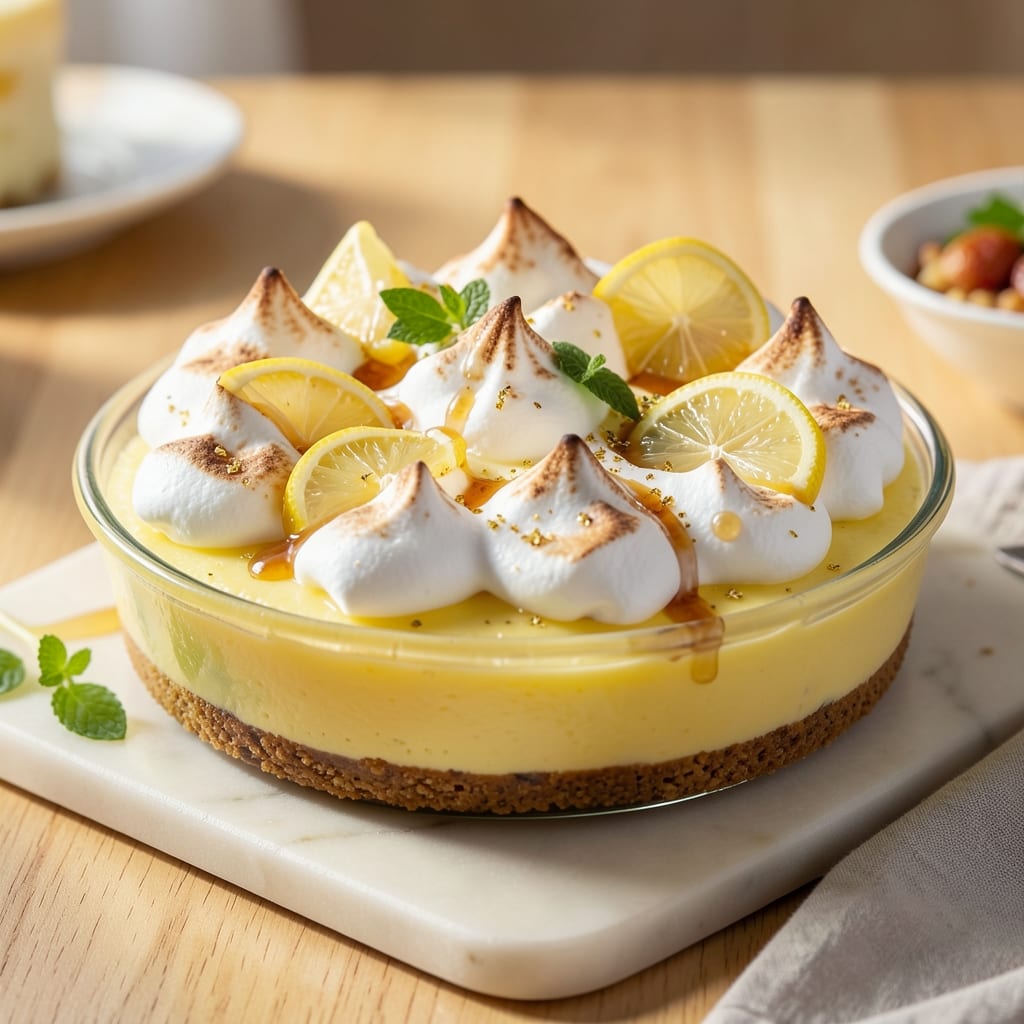
This Amalfi lemon meringue cheesecake delivers the perfect balance of tangy lemon curd, velvety cheesecake filling, and golden torch meringue—all baked to golden perfection. The secret lies in using authentic Amalfi lemons for their intense citrus flavor, paired with a crisp graham cracker crust that anchors every rich bite. I've perfected this recipe through years of trial and error, ensuring the meringue stays crisp while the filling remains silky smooth.
The process begins with a buttery graham cracker crust, pressed firmly into the pan to create a sturdy base. A layer of homemade lemon curd infuses the cheesecake with bright, zesty flavor that cuts through the richness of the cream cheese filling. What sets this recipe apart is the water bath technique, which prevents cracking while allowing the cheesecake to set gradually for a silky texture.
Once baked, the golden meringue topping transforms into a crisp, caramelized shell that contrasts beautifully with the creamy layers beneath. The torch technique adds that signature restaurant-quality finish, creating a dessert that looks as impressive as it tastes. Each bite delivers layers of flavor—tangy lemon, sweet cream cheese, and airy meringue—making it the ultimate showstopper for any occasion.
Perfect for celebrations or when you want to impress, this cheesecake requires patience but delivers results worth every minute. The gradual cooling process ensures a flawless texture, while the lemon curd adds a refreshing twist that keeps it from feeling too heavy. Let's get started on creating this citrus-kissed masterpiece!
Ingredients for amalfi lemon meringue cheesecake
Authentic Amalfi lemons and velvety cream cheese create this showstopping citrus dessert masterpiece.
| Ingredient | Amount | Notes |
|---|---|---|
| Graham Crackers 🍪 | 2 cups | Crushed into fine crumbs |
| Unsalted Butter 🧈 | ½ cup | Melted for crust binding |
| Granulated Sugar 🍚 | 2 cups | For crust and meringue |
| Amalfi Lemons 🍋 | 4 whole | Zest and juice only (about 0.5 cup juice) |
| Egg Yolks 🥚 | 5 large | Room temperature preferred |
| Egg Whites 🥚 | 5 large | Room temperature, no yolks |
| Cream Cheese 🧀 | 3 packages (8 oz each) | Full-fat, room temperature |
| Heavy Whipping Cream 🥛 | 1 cup | Full-fat for best texture |
| All-Purpose Flour 🌾 | ¼ cup | For lemon curd stability |
| Vanilla Extract 🌿 | 1 tbsp | Pure vanilla preferred |
| Salt 🧂 | ½ tsp | Fine sea salt preferred |
| Cornstarch 🍞 | 2 tbsp | For meringue stability |
| Turbinado Sugar 🍚 | 1 cup | For meringue topping |
The lemons are everything here. Amalfi lemons have that signature intense flavor—if you can't find them, Meyer lemons are the next best thing. I grab mine from Whole Foods or specialty Italian markets (they're worth the hunt!). For the cream cheese, Philadelphia brand is my go-to—it's the most consistent. The graham crackers? Honey Maid works best, but any sturdy graham cracker will do. Pro tip: crush them into fine crumbs for that perfect texture.
No Amalfi lemons? Regular Eureka lemons with extra zest will work, but you'll need about twice as much. Running low on cornstarch? Arrowroot powder at the same amount is a perfect swap. The meringue is fussy—use room-temperature egg whites and make sure your bowl is spotless. Any grease or yolk traces will kill the volume. For the crust, if you don't have enough butter, coconut oil works in a pinch—just know it'll have a slightly different flavor.
This cheesecake needs patience—let it cool gradually in the oven after baking. The meringue will keep for 2 days at room temperature if stored in an airtight container, but honestly, it disappears faster than that. For the lemons, store them in the fridge and use within 1 week of purchase. The crust mixture can be prepped ahead and kept in the fridge for 2 days—just press it into the pan when you're ready to bake.
Why You'll Love This Recipe
- No-Zero-Effort Crust: I crush graham crackers and butter—literally five minutes of pressing with my fingers—then bake it while I mix the filling. No food processor, no fuss, just that perfect buttery crunch.
- Zesty Lemon Magic: That Amalfi lemon zest? It’s like sunshine in every bite—bright, floral, and just sweet enough to make your taste buds dance. The meringue topping caramelizes into a golden cloud that’s crisp outside, pillowy inside.
- Weekend or Weeknight: Slice it for a fancy dessert after dinner, or pack individual portions for lunchboxes—kids love the sweet-tart combo. Honestly, I’ve served it at brunch, potlucks, and even as a midnight snack (no judgment).
- Leftovers? Best Part: This keeps for days—if it lasts that long—and tastes just as good reheated (yes, even the meringue!). Between us, I’ve had it cold, at room temp, and slightly warmed, and it’s always a win. Budget-friendly too—uses pantry staples plus one special ingredient.
Step-by-step instructions for Amalfi lemon meringue cheesecake
Here's how to build a showstopper with bright citrus layers and a torch-kissed meringue crown.
Prepare the Crust with Perfect Texture
Preheat your oven to 325°F and melt the 0.5 cup unsalted butter in a small saucepan over low heat. Once fully melted, remove from heat and whisk in 0.5 cup granulated sugar from the total amount until smooth. Let it cool for 5 minutes—it should be warm but not hot to the touch.
In a food processor, pulse the 2 cups graham crackers into fine crumbs. Transfer to a large bowl and mix with the melted butter-sugar mixture until evenly combined. Press this mixture firmly into the bottom of a 9-inch springform pan, creating an even layer. Bake for 10 minutes to set the crust, then let it cool while you prepare the filling.
Make the Lemon Curd Filling
Zest and juice the 4 whole Amalfi lemons, yielding about 0.5 cup juice. In a medium saucepan, whisk together the 5 large egg yolks, 1 cup granulated sugar, 0.25 cup all-purpose flour, 0.5 tsp salt, 1 tbsp vanilla extract, and the lemon juice and zest. Cook over medium heat, stirring constantly, until the mixture thickens enough to coat the back of a spoon—about 5-7 minutes.
Strain the mixture through a fine-mesh sieve into a clean bowl to remove any zest bits. Let it cool to room temperature, then stir in the 1 cup heavy whipping cream until smooth. This creates a silky, tangy base that will blend seamlessly with the cheesecake filling.
Whip the Cream Cheese Filling
In a large mixing bowl, beat the 3 packages (8 oz each) cream cheese on medium speed until completely smooth and creamy. Gradually add the remaining 1 cup granulated sugar and continue beating until fully incorporated. Scrape down the sides of the bowl as needed to ensure even mixing.
Add the cooled lemon curd mixture and beat again until fully combined. In a separate bowl, whip the 5 large egg whites with an electric mixer until soft peaks form. Gently fold the egg whites into the cream cheese mixture to lighten the texture. Pour this filling over the cooled crust and smooth the top with a spatula.
Bake the Cheesecake to Perfection
Place the springform pan in a water bath by setting it inside a larger roasting pan filled with hot water (about halfway up the sides of the springform). Bake at 325°F for 50-55 minutes until the edges are set and the center still has a slight wobble—it will continue setting as it cools. Turn off the oven, crack the door open, and let the cheesecake sit inside for 1 hour to prevent cracking.
Remove the cheesecake from the water bath and cool to room temperature. Once completely cooled, refrigerate for at least 4 hours or overnight. This chilling step is crucial for creating clean slices and allowing flavors to meld.
Create the Torch-Kissed Meringue Topping
In a clean mixing bowl, beat the 5 large egg whites again until they form stiff peaks. Gradually add the 1 cup turbinado sugar and 2 tbsp cornstarch, beating on high speed until the meringue is glossy and holds its shape when lifted with a spatula. Spread this meringue evenly over the top of the chilled cheesecake.
Use a kitchen torch to gently brown the meringue, working in small sections until it develops a golden, toasted appearance. For a quicker method, broil for 1-2 minutes on low heat, watching closely to avoid burning. Let the cheesecake sit for 10 minutes after torching to set the meringue completely. Serve chilled for the perfect balance of creamy, tangy, and crispy textures.
Pro Tips For Making Amalfi Lemon Meringue Cheesecake
- BAKE CRUST UNTIL GOLDEN: I learned this the hard way—skipping the extra 2-3 minutes on the crust leads to a soggy bottom, no matter how long you bake the filling. Pull it when the edges are just starting to brown, then let it cool completely before adding the lemon curd. (Yes, even if you're impatient like me.)
- ZEST LEMONS FRESH, NOT FROM A BOTTLE: Amalfi lemons are all about that bright, complex flavor, and jarred zest just can’t cut it. Grate the peel yourself—about 1 tablespoon—and sift out the bitter pith. If you’re using dried zest, rehydrate it in warm water for 10 minutes first to wake up the oils.
- TEMPER YOLKS BEFORE MIXING: Cold egg yolks straight into hot sugar? That’s a surefire way to scramble them. Whisk the yolks and sugar together first, then gently warm the mixture over a double boiler until it reaches 160°F (71°C). This keeps the curd silky and prevents graininess in the filling.
- WRAP AND CHILL OVERNIGHT: I skip this when I’m lazy, but the dish is noticeably better when I don’t. After baking, let the cheesecake cool to room temp, then wrap it tightly in plastic and refrigerate for at least 12 hours. The meringue sets properly, the crust stays crisp, and the lemon flavor deepens—no one will guess you rushed it.
Regional styles of these flavors
Amalfi Coast Origins
The Amalfi region of Italy is famous for its vibrant citrus groves, particularly the prized Amalfi lemons—small but intensely flavorful fruits with a thick, fragrant zest. This cheesecake variation pays homage to the coastal tradition of using limoncello and lemon-infused desserts, but with a modern twist. The original Italian dessert, torta al limone, often features lemon curd, and this recipe elevates it with the signature torched meringue technique popularized in French patisseries. 🍋
Southern Italian Adaptations
In Southern Italy, cheesecakes often incorporate ricotta instead of cream cheese for a lighter texture, but this version keeps the rich, velvety quality of Philadelphia cream cheese—a nod to American baking traditions. The graham cracker crust replaces traditional Italian biscuit crusts, blending regional flavors with global techniques. For an authentic touch, some Italian bakers use almond flour in the crust, but graham crackers add a satisfying crunch that feels familiar yet elevated. 🌟
Modern Twists on Classics
While traditional Amalfi desserts focus on simplicity—think lemon granita or ricotta with honey—this recipe merges lemon curd with meringue for a layered experience. The water bath technique ensures a crack-free bake, a method borrowed from French cheesecake à la cuillère, while the torch finish adds a dramatic, restaurant-worthy element. It’s a fusion of old-world citrus flavors and contemporary baking science, perfect for impressing guests without sacrificing ease. ✨
Regional Ingredient Swaps
If you’re in Florence, swap Amalfi lemons for Sorrento lemons, which are slightly sweeter but still packed with zest. In Sicily, ricotta cheesecakes dominate—replace the cream cheese with whole-milk ricotta and add a splash of orange liqueur to the lemon curd. For a Neapolitan touch, fold basil leaves into the meringue for a fragrant twist. Each region’s ingredients add unique depth while keeping the citrus-forward spirit intact. 🗺️
Seasonal Variations
Spring and summer are ideal for this cheesecake, when Amalfi lemons are at their peak. In winter, boost the lemon flavor by adding 1 tsp lemon zest to the meringue or infusing the cream cheese with lemon extract. For a holiday twist, fold candied citrus peel into the crust or top with white chocolate shavings and edible gold leaf—a nod to Italian festive desserts like panettone. 💛
Authentic Serving Traditions
In Amalfi, desserts are often served chilled with a side of limoncello or espresso to balance the sweetness. For a modern touch, pair this cheesecake with sparkling rosé or blood orange soda—the effervescence cuts through the richness. Serve slices on woven trays with fresh berries for a rustic presentation, or dust with powdered sugar for a classic Italian finish. Every bite should feel like a taste of the coast! 🍷
Nutrition facts
Frequently asked questions
Can I substitute regular lemons for Amalfi lemons in this recipe?
Yes, but you'll need more zest! Amalfi lemons are intensely flavorful, so use 2 regular lemons (about 1 cup juice) plus 1 extra tablespoon zest to match the brightness. For best results, choose Meyer lemons or Eureka lemons—their sweeter flavor pairs well with the meringue.
Why does my meringue sometimes collapse or weep?
This usually happens from humidity or improper mixing. Make sure your egg whites are room temperature and your bowl is completely grease-free. Add the cornstarch to stabilize the meringue, and avoid overmixing after adding sugar. For extra insurance, bake the cheesecake at 300°F instead of 325°F to prevent steam from weakening the meringue.
How long can I make the lemon curd ahead of time?
The lemon curd keeps beautifully for 3 days in the fridge in an airtight container. For best texture, stir in the heavy cream just before using it in the cheesecake filling. You can also freeze the curd for up to 1 month—thaw it overnight in the fridge before incorporating into the recipe.
Can I bake this cheesecake without a water bath?
Technically yes, but the water bath prevents cracking by creating a gentle steam environment. Without it, your cheesecake may develop surface cracks or sink slightly. If you skip the water bath, reduce the baking time by 5-10 minutes and check frequently to avoid overbaking.
What's the best way to store leftovers?
Keep the cheesecake in an airtight container in the fridge for up to 4 days. The meringue topping stays crisp for 2 days at room temperature if covered, but it's best enjoyed fresh. For longer storage, freeze the entire cheesecake (without torching) for up to 2 months—thaw overnight in the fridge before serving.