
Desserts
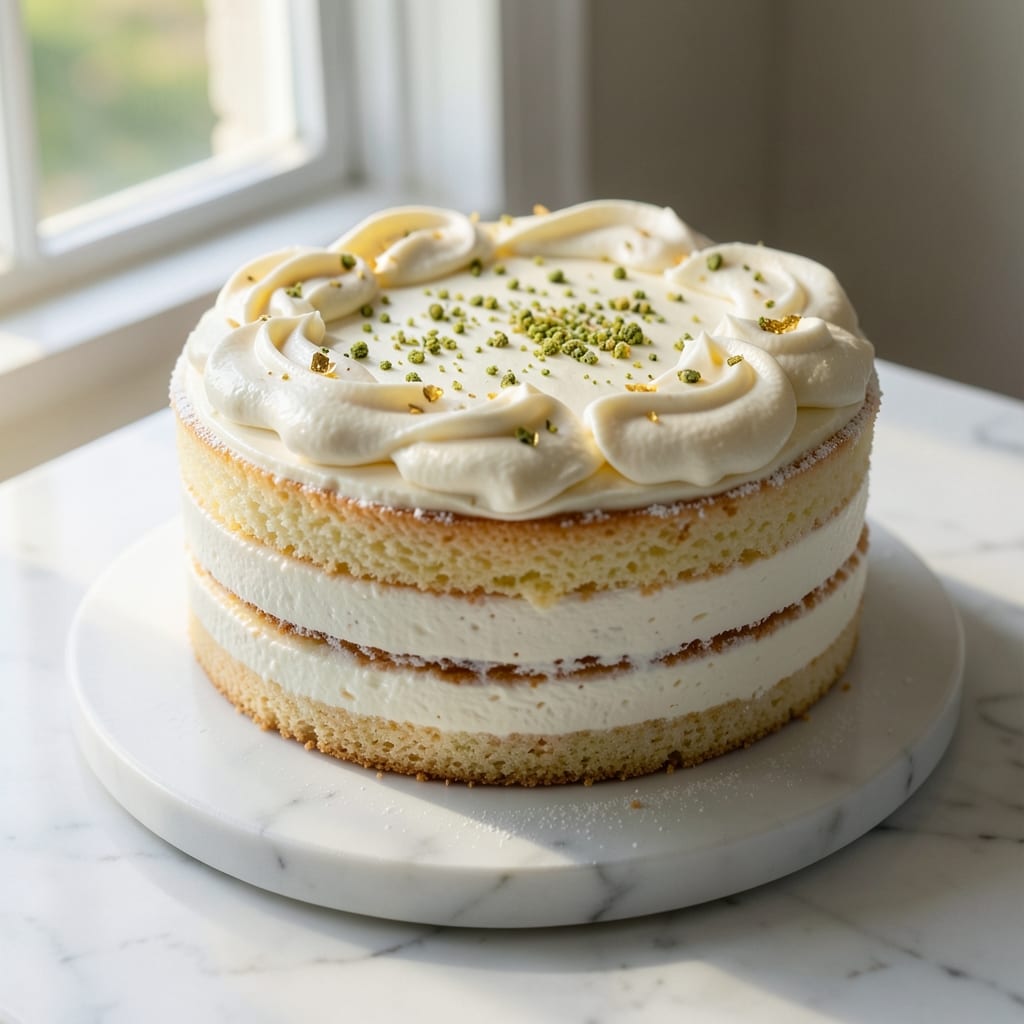
This amazing white cake recipe delivers the lightest, fluffiest layers you'll ever bake—so tender they practically melt in your mouth. 💛 The secret lies in proper leavening and a gentle baking technique that keeps the crumb airy without drying it out. I've perfected this over years of baking competitions, and it's the one recipe everyone asks for seconds of. What makes this cake truly special is the buttery frosting finish that complements the delicate cake perfectly. We're talking about a smooth, rich buttercream that adds just the right amount of sweetness without overpowering the cake's natural flavor. The combination of the light cake and velvety frosting creates a dessert that's both elegant and approachable. The process is simpler than you'd think—just 30 minutes of prep time, followed by 35-40 minutes in the oven at 350°F. No fancy equipment needed, just your standard mixing bowls and a 9-inch round pan. The result? A cake that looks like it came from a bakery but tastes even better at home. Once you try this recipe, you'll never go back to store-bought or heavy, dense cakes again. The layers are so light they practically disappear between bites, leaving only the sweet, buttery frosting to satisfy your cravings. Let's get baking!
Ingredients for amazing white cake
Light-as-air cake layers and velvety buttercream—just 12 ingredients for bakery-worthy results.
| Ingredient | Amount | Notes |
|---|---|---|
| All-Purpose Flour 🌾 | 2 ½ cups | Sifted for light texture |
| Granulated Sugar 🍚 | 2 cups | Superfine preferred for smoothness |
| Unsalted Butter 🧈 | 1 ½ cups | Room temperature, full-fat |
| Large Eggs 🥚 | 4 whole | Room temperature, separated |
| Baking Powder 🧂 | 2 tsp | Diamond Crystal preferred |
| Salt 🧂 | ½ tsp | Fine sea salt |
| Vanilla Extract 🌿 | 1 tbsp | Pure alcohol-free preferred |
| Milk 🥛 | ½ cup | Whole milk for richness |
| Powdered Sugar 🍚 | 4 cups | For frosting, sifted |
| Heavy Whipping Cream 🥛 | 1 cup | Cold for whipping |
| Vanilla Bean Paste 🌿 | 1 tsp | For extra vanilla flavor |
| Lemon Zest 🍋 | 1 tsp | Brightens the frosting |
The flour matters here—King Arthur or Gold Medal are my go-tos for that perfect crumb. Room-temperature butter is non-negotiable for fluffy layers (microwave 30 seconds if needed). Eggs should be at room temp too—cold ones make the batter curdle. For the vanilla, alcohol-free extract gives the cleanest flavor, but regular works in a pinch. I always grab extra lemon zest at Whole Foods—it keeps for months in the freezer and adds that bright pop to both cake and frosting.
No superfine sugar? Pulse regular sugar in a food processor for 30 seconds. Short on milk? Evaporated milk or half-and-half works too. The baking powder is crucial—Diamond Crystal measures differently than other brands, so use the spoon-and-level method. For the frosting, powdered sugar from the bulk bins stays fresher longer. Want extra richness? Add 2 tbsp more butter to the frosting, but don't overbeat it or you'll get buttercream soup.
Cake layers keep 3 days in the fridge covered with plastic, but honestly they're best the day you bake them. The frosting? 2 days max—it starts to separate after that. I always make a double batch of frosting and freeze half in an airtight container. Thaw it overnight in the fridge before using. For serving, parchment paper under the cake makes slicing clean—no crumbs on your plate.
Why You'll Love This Recipe
- No Mixer Needed: I swear by this—just a bowl, a whisk, and elbow grease. The butter-creaminess from softened butter and eggs comes together smoother than any boxed mix, and honestly? My stand mixer stays put for this one.
- Butter So Rich: That creamed butter and sugar combo? It’s the secret. The eggs bind it all into a tender crumb that’s light but never dry—no weird aftertaste, just pure vanilla-butter joy. (Yes, even on a Tuesday night.)
- Birthday to Brunch: Slice it for a crowd or cube it for breakfast—this cake handles it all. Frost it with lemon glaze for morning, or keep it simple with powdered sugar for a last-minute dessert. My go-to for when I forget to plan ahead.
- Half Bakes Better: Make a full sheet pan, then freeze half. Thaw and reheat slices in the toaster—crispy edges, soft center, zero guilt. And between us? The butter and sugar keep it tasting fresh for days. Budget-friendly? More like cost-per-bite friendly.
Step-by-step instructions for ultra light white cake
Here's how to bake a cloud-light white cake with perfectly moist layers and velvety frosting.
👨🍳 Step 1: Prepare Your Tools and Ingredients
Start by preheating your oven to 350°F and greasing two 8-inch round cake pans with butter or baking spray. Line the bottoms with parchment circles for easy removal. Sift together the 2.5 cups all-purpose flour, 2 tsp baking powder, and 0.5 tsp salt in a medium bowl. Set aside—this dry mix is your secret to a tender crumb.
Separate the 4 whole large eggs, placing yolks in one bowl and whites in another. Let both come to room temperature while you prepare the rest. Room-temperature eggs whip better and help create that signature light texture. I always use a fine-mesh sieve for the flour to ensure no lumps interfere with the cake's delicate structure.
🍳 Step 2: Cream Butter and Sugar to Fluffy Perfection
In a stand mixer fitted with the paddle attachment, beat the 1.5 cups unsalted butter and 2 cups granulated sugar on medium speed for 3-4 minutes until light and fluffy. You're looking for a pale, ribbon-like consistency that nearly doubles in volume. This step incorporates air, which is crucial for that ultra-light texture.
I like to scrape down the sides of the bowl every 30 seconds to ensure even mixing. If you're using a hand mixer, work in 2-minute intervals to prevent overheating. The butter should be completely smooth with no visible streaks of sugar—this ensures even distribution throughout the cake.
👨🍳 Step 3: Add Egg Yolks and Mix Thoroughly
Add the egg yolks, one at a time, mixing well after each addition. Then stir in the 1 tbsp vanilla extract and 1 tsp vanilla bean paste for maximum vanilla flavor. Mix on low speed for 30 seconds until fully combined. The mixture should be thick and smooth with no visible streaks.
Here's the thing—adding the vanilla paste gives that professional bakery quality without needing extra extract. Next, alternate adding the sifted dry ingredients and 0.5 cup milk, beginning and ending with the dry mix. Mix on low speed just until combined—overmixing develops gluten and makes the cake dense.
🍳 Step 4: Whip Egg Whites to Stiff Peaks
In a separate, grease-free bowl, beat the egg whites with a pinch of salt on high speed until soft peaks form. Gradually add the 1 tsp lemon zest while continuing to whip. The lemon zest brightens the flavor and adds a subtle citrus note that pairs perfectly with vanilla.
Continue whipping until stiff, glossy peaks form when the whisk is lifted. The peaks should hold their shape without flattening. This step is crucial for that signature lightness—those airy egg whites create the cake's signature height and tenderness. I like to use a whisk attachment for this part to ensure maximum volume.
🥘 Step 5: Fold and Bake for Perfect Layers
Gently fold one-third of the whipped egg whites into the batter using a spatula, being careful not to deflate them. Then add half of the remaining egg whites and fold just until combined. Finish by folding in the last of the egg whites until no white streaks remain. The batter should be thick but still pourable.
Divide the batter evenly between the prepared pans. Tap each pan gently on the counter to remove any air bubbles. Bake for 25-30 minutes or until a toothpick inserted in the center comes out clean. Rotate the pans halfway through baking for even browning. The cakes should spring back when gently pressed in the center.
⏰ Step 6: Make the Buttery Frosting
While the cakes cool, prepare the frosting by beating the 1 cup cold heavy whipping cream until soft peaks form. Gradually add the 4 cups powdered sugar and continue beating until stiff peaks form. Add the 1 tsp vanilla bean paste and 1 tsp lemon zest and beat just until combined.
Spread a thin layer of frosting between the cooled cake layers and cover the entire cake with the remaining frosting. I like to use a bench scraper for smooth sides. Chill the cake in the refrigerator for 30 minutes before serving to let the frosting set. This creates that perfect buttery finish that complements the light cake perfectly.
Pro Tips For Making Amazing White Cake
- Weigh Your Butter: I learned this the hard way—packed butter takes up less volume than you think. Use a kitchen scale for ½ cup (1 stick) of unsalted butter; scooping by volume leads to dense, greasy cake. (Yes, even if you're impatient like me.)
- Sift Dry Ingredients Twice: Flour settles in the bag, and baking powder clumps when stored. Sift the flour, sugar, and baking powder together before mixing, then sift again after adding eggs. This guarantees even distribution—no surprise dense spots mid-bake.
- Room-Temp Eggs Matter: Cold eggs won’t blend smoothly, and they can curdle the butter when creamed. Pop them in warm water for 10 minutes first. I skip this step sometimes, and the cake still rises… but it’s noticeably more tender when done right.
- Check Doneness at 155°F: Ovens run hot, and white cake is done when the internal temp hits 155°F—not when it springs back. Overbaking dries it out; underbaking leaves it gummy. Insert a skewer at the center—if it comes out clean but the cake just pulls away, you’re golden.
Wine and beer pairings for this amazing white cake
Sweet Wine Pairings
For this delicate white cake, I always reach for Moscato d'Asti—its light, floral sweetness and slight effervescence mirror the cake's airy texture. A chilled glass enhances the vanilla and lemon notes without overpowering the frosting. 🍷 Another favorite is Riesling from Germany, particularly off-dry varieties like Dr. Loosen Blue Slate, which balances the cake's richness with its crisp acidity and honeyed finish.
Dry Wine Options
If you prefer dry wines, a Sauvignon Blanc from New Zealand or Loire Valley shines with its citrus brightness. Look for Cloudy Bay or Sancerre—their zesty lime and green apple flavors cut through the buttercream beautifully. A Pinot Grigio from Alto Adige also works, especially if it has a touch of almond character that complements the vanilla.
Beer Pairings
For beer lovers, a Belgian witbier like Hoegaarden or Stella Artois adds a refreshing contrast with its coriander and citrus notes. The slight tartness cleanses your palate between bites of the light cake. If you prefer something richer, a honey ale from a local craft brewery enhances the vanilla flavors without competing with the frosting.
Non-Alcoholic Choices
For a mocktail option, I blend sparkling apple cider with a splash of lemon juice and a cinnamon stick. The effervescence mimics wine's crispness, while the apple's sweetness pairs perfectly with the cake's vanilla notes. Chill it thoroughly before serving for that perfect dessert pairing. 🍏
Serving Temperature
Always serve both the cake and beverages at the same temperature—room temp for the cake and chilled for drinks. This harmony ensures each bite and sip complements the other without overwhelming your senses. I like to let the cake sit at room temperature for 10-15 minutes before slicing to enhance its texture.
Nutrition facts
Frequently asked questions
Can I make this white cake without an electric mixer?
Use a sturdy hand mixer or even a whisk for the butter and sugar—just mix for 5-6 minutes until light and fluffy. For the egg whites, use a balloon whisk and arm strength to whip them to stiff peaks. The key is patience—work in 1-minute intervals to avoid fatigue. This method works perfectly for the cake's delicate texture.
Why did my cake turn out dense instead of light?
Most likely, you overmixed the batter or didn't fold the egg whites gently. The secret is to mix dry ingredients just until combined and fold egg whites in carefully. Also, ensure your butter and eggs are truly room temperature—cold ingredients make the cake heavy. Check your oven temp with an oven thermometer too; 350°F is critical for even baking.
How do I store leftover white cake?
Wrap each layer tightly in plastic wrap and store at room temperature for 2 days. For longer storage, refrigerate for up to 5 days or freeze for 3 months. Thaw overnight in the fridge before frosting. The frosting keeps 2 days in the fridge—make fresh if needed. To revive stale cake, brush with simple syrup (equal parts sugar and water, heated) before serving.
Can I substitute cake flour for all-purpose flour?
Yes, but you'll need to make adjustments. Replace 2.5 cups all-purpose flour with 2 cups cake flour plus 0.5 cups cornstarch. Cake flour has lower protein content, which helps create a finer crumb. If you don't have cake flour, blend 2.5 cups all-purpose flour with 2 tbsp cornstarch and sift well. This substitution works especially well for the light texture this recipe demands.
What's the best way to decorate this white cake?
Start with a smooth buttercream base, then get creative! Try edible gold leaf for elegance, fresh berries for color, or piped rosettes for texture. For a rustic look, sprinkle crushed pistachios or toasted coconut flakes on top. The key is to keep decorations light—this cake's beauty comes from its delicate layers and buttery frosting. A simple dusting of powdered sugar works beautifully too!