
Desserts
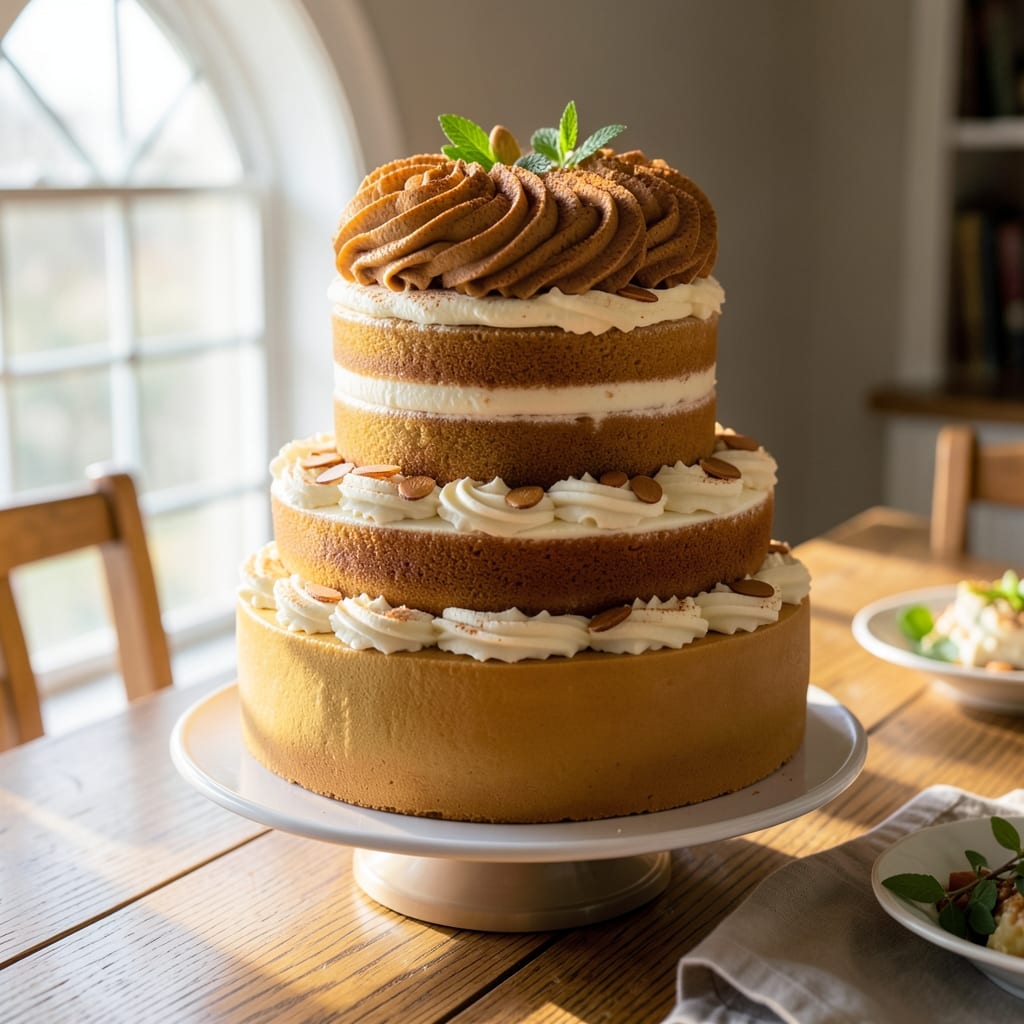
This Amish wedding cake recipe brings timeless simplicity and rich tradition to your celebration, crafted with old-order techniques that honor heritage. The secret lies in layers of tender vanilla bean cake, spiced with warm cinnamon and nutmeg, creating a dessert that feels both rustic and refined. Every slice carries the essence of Amish craftsmanship—handcrafted, heartfelt, and designed to impress without fuss.
The foundation begins with a foolproof vanilla bean cake batter, where butter and sugar are creamed to perfection, and eggs are incorporated gently to maintain a light, airy texture. Baked in layers, the cake develops a golden crust while staying moist inside, ready to be filled with homemade vanilla buttercream that ties every bite together. The spice blend—cinnamon, nutmeg, and a hint of clove—adds depth that makes this cake unforgettable.
What sets this recipe apart is its balance of tradition and elegance. The cake is simple yet stunning, with a classic frosting technique that creates clean, smooth sides perfect for tiered presentation. Whether you're baking for a small gathering or a grand wedding, this recipe delivers a dessert that feels special without sacrificing authenticity. The aroma alone—vanilla, spice, and buttery richness—will have guests anticipating every bite.
Perfect for celebrations where tradition meets celebration, this cake is as much about the process as the result. The layers of flavor, the handcrafted appeal, and the warm spices all come together to create a dessert that’s both comforting and impressive. Let’s begin with the ingredients that will bring this Amish classic to life.
Ingredients for amish wedding cake
Twelve ingredients, timeless tradition—where rustic warmth meets refined elegance in every layer.
| Ingredient | Amount | Notes |
|---|---|---|
| Unsalted Butter 🧈 | 2 cups | Cold, cut into small cubes |
| Granulated White Sugar 🍚 | 3 ½ cups | Superfine preferred for smooth texture |
| Large Eggs 🥚 | 6 whole | Room temperature, separated |
| All-Purpose Flour 🌾 | 5 cups | Sifted, plus extra for pans |
| Vanilla Bean 🌿 | 2 whole | Seeds scraped, pods reserved |
| Ground Cinnamon 🌶️ | 2 tsp | Freshly ground preferred |
| Ground Nutmeg 🌿 | 1 tsp | Freshly grated from nut |
| Ground Cloves 🌶️ | ½ tsp | Lightly toasted for warmth |
| Salt 🧂 | 1 ½ tsp | Diamond Crystal kosher salt |
| Heavy Whipping Cream 🥛 | 2 cups | Full-fat for stability |
| Vanilla Extract 💧 | 2 tbsp | Pure bourbon vanilla preferred |
| Powdered Sugar 🍚 | 4 cups | Sifted for smooth frosting |
| Unflavored Gelatin 🍬 | 1 tbsp | Bloomed in 3 tbsp cold water |
| Whole Milk 🥛 | ½ cup | For cake layers only |
The butter and sugar form the cake's soul—European-style unsalted butter (like Plugrá or Land O'Lakes Cultured) creates layers of tender crumb, while superfine sugar ensures a silky texture. For the vanilla, Madagascar bourbon beans from Burlap & Barrel deliver that signature depth, but a quality grocery-store bean works too. The spice blend—cinnamon, nutmeg, and cloves—must be freshly ground for authentic Amish flavor; pre-ground spices lose potency quickly. If your local grocery doesn't carry whole spices, Penzeys or bulk bins at Whole Foods are reliable sources. The flour should be sifted to avoid dense layers, and King Arthur or Gold Medal brands are ideal for their consistent protein content.
No vanilla bean? Pure Madagascar bourbon extract (like McCormick Pure) works in a pinch, though it lacks the speckled seeds that define this cake. Substituting powdered sugar for the frosting? Confectioners' sugar is non-negotiable—regular granulated won't dissolve smoothly. For the gelatin, unflavored powder (like Great Value) is perfect, but avoid pre-bloomed varieties. The heavy cream must be full-fat—whipped cream with stabilizers (like Cool Whip) won't hold its shape. Eggs should be room temperature to emulsify properly; separate yolks and whites for the buttercream and cake separately. If your recipe calls for more structure, add 1 tbsp cornstarch to the flour for stability, especially in humid climates.
Store cake layers in an airtight container between parchment paper for up to 3 days at room temperature, or freeze for 3 months wrapped tightly. The buttercream keeps 5 days refrigerated in a sealed container, or 3 months frozen. For tiered presentation, assemble the day of serving—room temperature layers prevent crumbling. If transporting, keep layers separate until assembly to avoid sogginess. The frosting can be tinted with gel food coloring (like AmeriColor) for a polished look, but traditional Amish cakes often rely on natural vanilla hue. Always bring components to room temperature before assembling to ensure clean, professional layers.
Why You'll Love This Recipe
- Butter-Soft Magic: I swear by that first creamy layer—rich butter and sugar whipped into eggs until it’s lighter than a Sunday morning. The vanilla bean? That’s the secret handshake here, giving it that warm, homey depth that tastes like nostalgia.
- No-Fuss Layers: Mix the batter, fold in the flour, bake, repeat. Three simple layers, no fancy piping bags or temperamental fondant. Honestly, my kids could help (and usually do—with varying degrees of flour everywhere).
- Crowd-Pleaser Always: This cake disappears at birthdays, potlucks, or even a quiet weeknight dessert. Between us, I’ve served it cold with whipped cream or warm with a drizzle of honey—both win. It’s the kind of cake that makes guests think you slaved for hours.
- Budget-Friendly Luxury: Real butter and vanilla might sound fancy, but it stretches further than store-bought. Leftovers? Toast the slices for French toast the next morning—trust me, they’ll vanish faster than you can say “second helping.”
Step-by-step instructions for Amish wedding cake
This classic Old-Order recipe delivers layers of tender vanilla spice cake with velvety buttercream.
Prepare the Cake Layers
Preheat your oven to 350°F and grease three 9-inch round cake pans with the 2 cups unsalted butter, coating the bottom and sides thoroughly. Line the bottoms with parchment circles for easy removal. I use a pastry brush to ensure no spots are missed—this prevents sticking and makes unmolding effortless.
In a stand mixer fitted with the paddle attachment, cream together the 2 cups unsalted butter and 3.5 cups granulated white sugar on medium speed for 5-7 minutes until light and fluffy. This step is non-negotiable—proper creaming incorporates air, creating that signature tender crumb. Scrape down the sides of the bowl with a spatula to ensure even mixing.
Add the 6 whole large eggs, one at a time, mixing well after each addition. Then incorporate the 2 tbsp vanilla extract and the scraped seeds from the 2 whole vanilla beans. Reserve the vanilla bean pods for another use—they're too precious to discard. In a separate bowl, whisk together the 5 cups all-purpose flour, 2 tsp ground cinnamon, 1 tsp ground nutmeg, 0.5 tsp ground cloves, and 1.5 tsp salt. Sift this mixture directly into the wet ingredients to prevent gluten development.
Mix on low speed just until combined—you should still see streaks of flour. Overmixing develops gluten, which makes the cake dense rather than tender. Divide the batter evenly among the prepared pans, filling each about two-thirds full. Bake for 25-30 minutes or until a toothpick inserted in the center comes out clean. Rotate the pans halfway through baking for even browning. Let the cakes cool in the pans for 10 minutes before transferring to a wire rack to cool completely.
Prepare the Buttercream Frosting
In a medium saucepan, combine the 2 cups heavy whipping cream and the scraped 1 tbsp unflavored gelatin that's been bloomed in 3 tbsp cold water. Warm over medium heat, stirring constantly, until the gelatin dissolves completely. Remove from heat and let cool to room temperature—this prevents the butter from melting when combined.
In a separate large bowl, beat the 2 cups unsalted butter (yes, we're using the remaining butter) with an electric mixer until smooth and creamy. Gradually add the cooled cream mixture, mixing on low speed until incorporated. Then sift in the 4 cups powdered sugar and mix on medium speed until light and fluffy. Add the 2 tbsp vanilla extract and mix well. This buttercream should be thick enough to hold peaks when piped but still spreadable—adjust consistency with a splash of 0.5 cup whole milk if needed.
Here's the thing—Amish wedding cakes often have a distinct flavor profile. The combination of cinnamon, nutmeg, and cloves in the cake pairs beautifully with the vanilla-forward buttercream. Taste the frosting and adjust seasoning if necessary—this is your chance to ensure the flavors harmonize perfectly.
Assemble and Decorate the Cake
Once the cake layers are completely cool, level the tops if necessary using a serrated knife. Place the first layer on a cake stand or plate, then spread a generous layer of buttercream on top. I use an offset spatula for smooth, even coverage—press gently to ensure no gaps where filling might leak out. Place the second layer on top and repeat the process. Finally, add the third layer and cover the entire cake with a thin crumb coat of buttercream.
Chill the cake in the refrigerator for 30 minutes to firm up the crumb coat. This step is crucial—it prevents crumbs from mixing into the final layer of frosting. After chilling, apply the final layer of buttercream, smoothing it evenly with the offset spatula. For a classic Amish look, use a piping bag fitted with a star tip to create rosettes or swirls around the edges. Dust the top lightly with powdered sugar for a delicate finish.
Let the cake rest at room temperature for at least 1 hour before slicing. This allows the flavors to meld and the frosting to set properly. The final result should be layers of moist, spiced cake with a velvety buttercream that's neither too sweet nor too rich—just perfectly balanced. Serve with pride at your wedding celebration!
Pro Tips For Making Amish Wedding Cake
- CREAM BUTTER ROOM TEMP: Mix your butter and sugar until it’s just pale yellow—no need to overwork it into a paste. I learned this the hard way: beating it too long turns the cake dense, and no one wants a wedding cake that feels like a brick.
- SCRAPE THE BOWL: After adding eggs, scrape down the sides of the bowl before folding in flour—this keeps the batter light and even. I used to rush this, and the cake would end up lumpy. Two minutes extra now saves you from a sad, uneven crumb later.
- DON’T OVERMIX THE FLOUR: Once you fold in the flour, stop as soon as it’s just combined—no streaks, no flour piles. Overmixing develops gluten and makes the cake tough. Think "damp sand" texture, not dough.
- USE A SPRINKLE OF SALT: Even though the recipe calls for unsalted butter, add a pinch of salt (¼ tsp) to the flour before mixing. The Amish version relies on vanilla and sugar for flavor, so a little salt balances the sweetness without overpowering it. Trust me, it makes a real difference.
Storing and reheating your amish wedding cake
Room-Temp Storage
Keep your assembled cake at room temperature in an airtight container wrapped with plastic wrap for up to 3 days. The buttercream stays stable in warm conditions, but avoid direct sunlight or heat sources that could melt the frosting. I store mine in a cool pantry (around 70°F) to preserve freshness. For a rustic Amish touch, cover the cake with a linen cloth instead of plastic—it adds elegance while keeping crumbs contained. ✨
Refrigerator Refresh
If you need to store the cake for 4-5 days, refrigerate the fully frosted cake in an airtight container with parchment paper between layers. The cold temperature firms up the buttercream, making it easier to slice. Let it sit at room temperature for 30-45 minutes before serving to soften the texture. I’ve found that refrigerated cakes hold their shape better for tiered presentations, but the frosting may develop a slight sheen—just part of the charm!
Freezer Prep Tips
For long-term storage, freeze the unfrosted cake layers (wrapped individually in plastic wrap) and the buttercream (in a sealed container) separately for up to 3 months. Thaw the layers overnight in the fridge, then reassemble with thawed buttercream. Never freeze a fully frosted cake—the moisture from the frosting can create ice crystals that ruin the texture. To reheat, I place the cake in a 200°F oven for 10-15 minutes to revive the buttercream’s creaminess. 🧊
Transportation Tricks
When moving the cake to a wedding venue, transport the unfrosted layers and buttercream separately in insulated coolers with ice packs. Assemble on-site for a flawless presentation. For tiered cakes, use a cake board with dowels to support each layer during transport. I’ve even used cardboard cake carriers lined with plastic wrap for extra stability. Always keep the cake upright to prevent frosting from sliding off during transit.
Reheating for Perfection
If your cake sits too long and the buttercream hardens, reheat the whole cake in a 200°F oven for 10-15 minutes to restore its silky texture. For individual slices, place them on a parchment-lined baking sheet and warm in the oven for 5-7 minutes. Avoid microwaving—it can make the frosting grainy. A quick trick: Brush a light layer of milk over the frosting before reheating to keep it smooth and glossy. 💫
Nutrition facts
Frequently asked questions
Why does this recipe use vanilla beans instead of extract?
The vanilla beans add depth and speckled flecks that make this cake truly special. Authentic Amish recipes often use real vanilla beans for that signature flavor—extract lacks the complex aroma and visual appeal. If you must substitute, use high-quality bourbon vanilla extract, but expect a slightly different texture and taste.
Can I make this cake in smaller pans?
Yes! Use 8-inch pans instead of 9-inch and reduce baking time by about 5 minutes. Just adjust the batter quantity proportionally—you’ll need roughly 2/3 of the original batter per pan. The layers will be thicker, so reduce frosting slightly to maintain balance.
How do I achieve the classic Amish cake texture?
The secret lies in creaming the butter and sugar properly and not overmixing. Mix just until combined (flour streaks should remain visible) to avoid dense layers. Also, let the cake cool completely in the pans before removing—this prevents cracking. The spice blend (cinnamon, nutmeg, cloves) enhances moisture retention too!
Is this cake gluten-free?
No, this traditional recipe uses all-purpose flour, which isn't gluten-free. For a GF version, substitute with a 1:1 gluten-free flour blend (like Bob's Red Mill) and add 1 tsp xanthan gum to the dry ingredients. Note: texture may differ slightly—GF cakes tend to be denser.
Can I make this cake ahead of time?
Assemble the cake 1 day ahead and store it in an airtight container at room temperature. The flavors meld beautifully overnight. For longer storage, freeze unfrosted layers (up to 3 months) and buttercream separately—thaw and reassemble before serving.