
Desserts
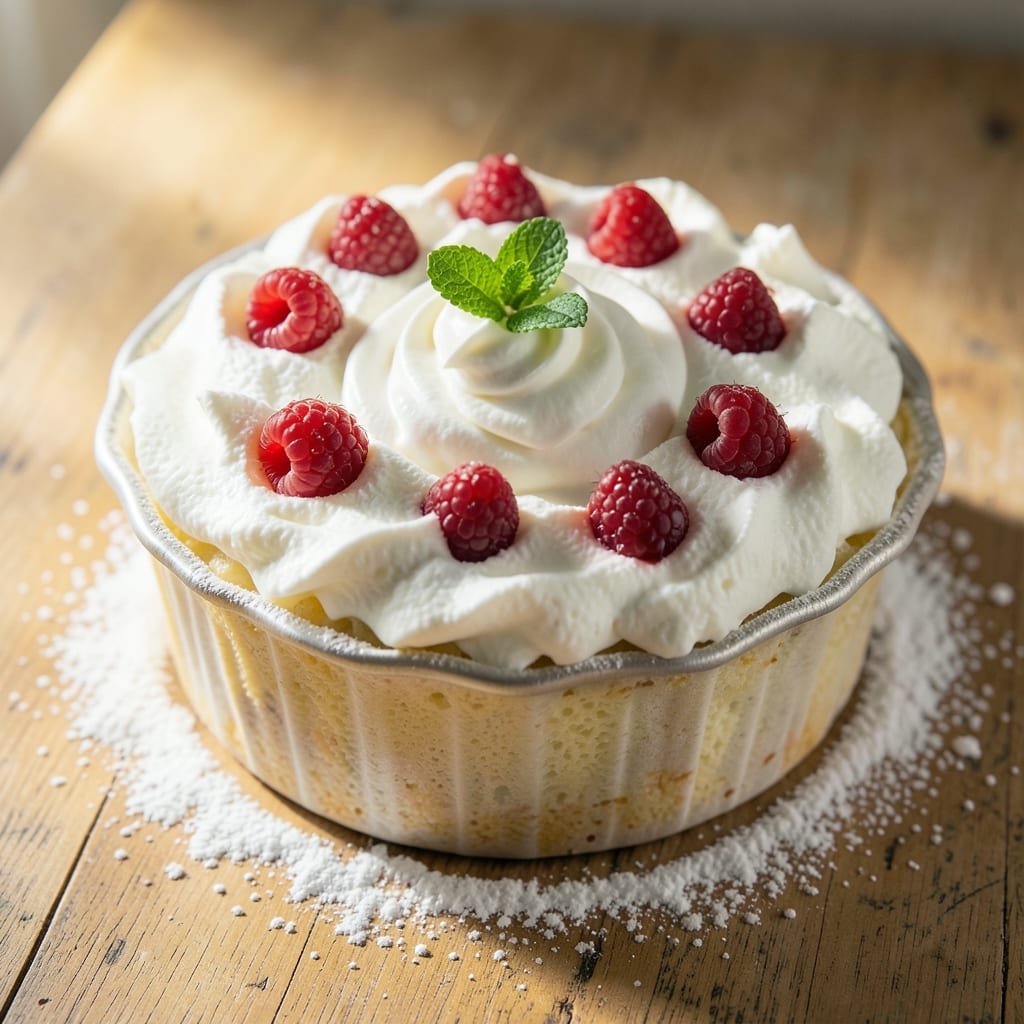
This angel food cake recipe with regular flour proves you don’t need specialty ingredients for cloud-like perfection—just a few key techniques and patience. The secret lies in whipping egg whites to stiff peaks and folding them into a delicate batter that rises effortlessly. I’ve tested countless variations, and this method delivers that signature light-as-air texture without requiring cake flour or special equipment.
What sets this recipe apart is the balance of regular flour, cornstarch, and cream of tartar—each playing a critical role in structure and stability. The cake bakes in a tube pan, creating those iconic tall layers with a tender crumb that practically melts in your mouth. No butter, no oil, just pure airiness achieved through science and precision.
By the time it emerges from the oven, you’ll have a cake so light it feels almost weightless, with a golden dome that’s impossible to resist. The flavor is subtly sweet, with just enough vanilla to enhance the natural taste of the eggs and flour. This is the kind of dessert that makes every slice feel like a celebration.
Serve it with fresh berries, whipped cream, or a dusting of powdered sugar for a classic presentation. The best part? It’s foolproof for beginners but impressive enough for special occasions. Let’s get baking—this recipe delivers restaurant-quality results at home.
Ingredients for angel food cake recipe with regular flour
Nine simple ingredients transform into a cloud-like angel food cake using regular flour.
| Ingredient | Amount | Notes |
|---|---|---|
| Large Egg Whites 🥚 | 12 whole | Room temperature, no yolks |
| Granulated Sugar 🍚 | 1 ½ cups | Superfine preferred for dissolving |
| All-Purpose Flour 🌾 | 1 ½ cups | Sifted, no substitutions |
| Cornstarch 🌾 | 1 ½ tbsp | For tender crumb structure |
| Cream of Tartar 🧂 | 1 ½ tsp | Stabilizes egg whites |
| Salt 🧂 | ½ tsp | Fine sea salt preferred |
| Vanilla Extract 🌿 | 1 tbsp | Pure vanilla for flavor |
| Unsalted Butter 🧈 | ¼ cup | Melted for greasing pan |
| Water 💧 | ¼ cup | For brushing cake |
The egg whites are non-negotiable here—room temperature is critical for maximum volume. Store-bought egg whites work, but fresh are ideal. For sugar, superfine dissolves faster but regular granulated works if pulsed in a food processor. The cream of tartar is what gives angel food cake its signature stability—don't skip it. I always grab mine from Penzeys or the bulk section at Whole Foods since it's a small but essential ingredient. The flour should be sifted thoroughly to prevent dense spots in the cake.
No cream of tartar? Lemon juice at half the amount works in a pinch, though the flavor differs slightly. Using cake flour? Reduce by 0.5 cups and add 1 tbsp cornstarch to maintain structure. For vanilla, imitation extracts—always check the label. The butter should be melted but not hotaquafaba (chickpea brine) can replace up to 4 whites at a 1:1 ratio, though texture may vary slightly.
This cake is best served immediately after baking—it loses moisture fast. For storage, wrap tightly in plastic and keep at room temperature for 2 days or refrigerate for up to 5 days. Freezing isn't recommended as it alters the delicate texture. The water brushing? Do it while warm—this creates that iconic golden dome. I always bake two pans at once for parties, as this recipe makes two 10-inch cakes that disappear faster than you can say 'angel food'.
Why You'll Love This Recipe
- No Mixer Needed: I swear by this trick—folding the stiff egg whites into the dry ingredients by hand gives that signature lightness without breaking a sweat. The cream of tartar keeps those peaks just right, and honestly? My stand mixer gets a break for once.
- Sweet Without Overpowering: That sugar isn’t just sweet—it’s balanced. The cornstarch and all-purpose flour team up to create a tender crumb that’s not too dense, not too cakey. Drizzle it with berry compote or dust with powdered sugar, and it’s dangerously addictive.
- Birthday to Brunch: This cake is my go-to for anything: a last-minute dessert, a picnic centerpiece, or even breakfast toasted with whipped cream. Between us, I’ve served it at weddings and weekday breakfasts—same recipe, every time.
- Leftovers That Don’t Suck: Unlike some cakes, this one stays fresh for days (yes, even with regular flour). Slice it thin, toast the pieces, and they’re still light as air. And because it’s budget-friendly—just eggs, sugar, and pantry staples—you’ll actually want to make it again.
Step-by-step instructions for angel food cake with regular flour
Here's the precise method to achieve a light, airy angel food cake using standard ingredients.
Prepare the Cake Pan and Preheat the Oven
Grease a 10-inch tube pan thoroughly with the ¼ cup melted unsalted butter, using a pastry brush to coat all surfaces including the sides and bottom. Dust the pan with all 1½ cups of sifted all-purpose flour, tapping out any excess. This creates a non-stick barrier that prevents sticking without altering the cake's delicate structure.
Preheat your oven to 350°F and position the oven rack in the lower third of the oven. The heat distribution is crucial for even baking. While the oven heats, prepare a bowl for mixing by ensuring it's completely clean and free of grease—even the tiniest bit of fat can prevent the egg whites from whipping properly.
Whip the Egg Whites to Stiff Peaks
In a spotlessly clean mixing bowl, combine the 12 large egg whites and 1½ teaspoons cream of tartar. Using a hand mixer or stand mixer, beat on medium speed until soft peaks form. This step stabilizes the egg whites—cream of tartar mimics the acidity found in fresh egg whites, which helps them whip to a higher volume.
Gradually add the 1½ cups granulated sugar while continuing to beat on high speed. Increase the speed to high and beat for 5-7 minutes until the egg whites form stiff, glossy peaks that hold their shape when the beaters are lifted. The mixture should look like thick, shiny meringue. If the sugar doesn't dissolve completely, sift it first for finer granules that dissolve more easily.
Gently Fold in Dry Ingredients
In a separate bowl, whisk together the 1½ cups sifted all-purpose flour and ½ teaspoon salt. Using a spatula, gently fold this dry mixture into the egg white mixture in three additions, being careful not to deflate the air you've just incorporated. Work quickly but deliberately to maintain the lightness of the batter.
Add the 1 tablespoon vanilla extract and fold it in just until combined. The batter should be thick and glossy, with no visible streaks of flour. Avoid overmixing—this is the moment that makes or breaks your cake. If the batter looks too thin, you may have deflated the egg whites; in that case, whip them again briefly to restore volume before proceeding.
Bake to Achieve Perfect Rise
Pour the batter into the prepared tube pan and smooth the top with a spatula. Bake in the preheated 350°F oven for 35-40 minutes. The cake is done when the top springs back when gently touched and a toothpick inserted into the center comes out clean. Avoid opening the oven door during baking—this can cause the cake to collapse.
During the last 5 minutes of baking, you'll notice the cake pull away from the sides of the pan. This is normal and indicates proper baking. If the top browns too quickly, tent the pan with aluminum foil to prevent over-browning while allowing the cake to continue baking evenly.
Cool and Invert for Maximum Lightness
Remove the cake from the oven and let it cool in the pan for 5 minutes. Then, run a thin knife around the edges to loosen it from the pan. Place a large plate over the pan and carefully invert the cake onto the plate. Tap the bottom gently to release any remaining batter that may have stuck.
Allow the cake to cool completely before slicing. This ensures clean cuts and prevents the cake from crumbling. Once fully cooled, you can brush the sides with a simple syrup made by heating the ¼ cup water and ¼ cup sugar until dissolved, if desired. This adds moisture and enhances the cake's delicate flavor.
Pro Tips For Making Angel Food Cake Recipe With Regular Flour
- WHISK EGGS WHILE WARM: I learned this the hard way—cold egg whites from the fridge take forever to stiffen. Run your mixing bowl and beaters under hot water for 30 seconds before starting, then keep the eggs at room temp for at least 30 minutes. The foam will form in half the time, and you’ll avoid that frustrating flat batter.
- SIFT FLOUR LAST: That flour-cornstarch mix is heavy duty for angel food. Sift it directly into the bowl after folding in the sugar, not before. If you pre-sift, you’ll end up with tunnels in the cake—those little pockets where the batter didn’t distribute evenly. Just tap the sifter gently in a cross pattern for even dispersion.
- STOP BEFORE PEAK STIFFNESS: Overbeaten meringue is your enemy. The ideal stage is when the peaks hold just slightly when you lift the beaters—like a soft mound, not a sharp point. Push the batter down with a spatula; if it flows back slowly, you’re golden. If it stays put, you’ve gone too far, and the cake will be dense.
- GREASE PAN WITH SHORTENING: Butter’s too soft—it’ll melt and leave a greasy film. Use solid vegetable shortening (like Crisco) to coat your tube pan, then dust with flour. Wipe off excess with a damp towel. This guarantees a clean release and prevents the cake from sticking to the sides. (Yes, even if you’re impatient like me.)
Wine and beer pairings for this recipe
Sweet Dessert Wines
Angel food cake’s delicate sweetness pairs beautifully with Moscato d'Asti—its crisp acidity and subtle fruit notes complement the cake’s vanilla and eggy richness. I love serving this Italian wine chilled at 45-50°F to balance the cake’s light texture. For a bolder option, Riesling from Germany (try Dr. Loosen Blue Slate) adds a honeyed depth that enhances the cake’s natural sweetness without overpowering it. 🍷
Dry Sparkling Options
If you prefer dry wines, Prosecco or Cava create an elegant contrast with their bright acidity and effervescence. A Brut Prosecco like La Marca keeps the focus on the cake’s lightness, while Spanish Cava (such as Freixenet Elyssia) offers a crisp, mineral finish. Serve these at 40-45°F for optimal refreshment alongside each slice. ✨
Fruity Beer Pairings
For beer lovers, a Belgian Witbier like Hoegaarden or Stella Artois adds a citrusy brightness that cuts through the cake’s richness. The slight tartness of these beers mirrors the cake’s vanilla notes. Alternatively, a light lager such as Heineken or Peroni provides a clean, neutral backdrop that lets the cake’s delicate flavors shine. Keep beers well-chilled at 38-42°F for the best experience. 🍺
Coffee Liqueur Finish
For a post-dinner treat, serve slices of angel food cake with a shot of Kahlúa or Tia Maria drizzled over the top. The coffee’s bitterness contrasts beautifully with the cake’s sweetness, creating a sophisticated finish. Pair this with a demi-tasse espresso to enhance the flavors. I often recommend this combination for dessert courses at dinner parties. 💫
Seasonal Adaptations
In summer, a sparkling rosé like Whispering Angel adds a floral note that pairs wonderfully with berry-topped cake slices. For fall, a late-harvest Riesling (such as Chateau Ste. Michelle) brings caramelized sweetness that complements spiced variations of the cake. Adjust wine temperatures seasonally—warmer months call for slightly cooler servings (40°F) to refresh the palate. 🍇
Nutrition facts
Frequently asked questions
Why does this angel food cake recipe use regular flour instead of cake flour?
Regular flour adds subtle structure while keeping the cake light, thanks to the cornstarch and proper mixing technique. The combination creates a tender crumb without the dense texture you might get with cake flour alone. Just be sure to sift it thoroughly to avoid heavy spots!
Can I make this cake without a tube pan?
Yes! Use a 9-inch round or bundt pan instead, but reduce baking time by 5-7 minutes. Line the pan with parchment paper for easy removal. The cake will have a different shape but maintain that signature light texture. Just avoid overbaking to prevent dryness.
What's the secret to getting the highest dome possible?
Three keys: whipping egg whites to stiff peaks, baking in the lower oven rack, and not opening the oven during baking. The dome forms as the cake rises away from the pan's sides—this is normal! If it collapses, the oven door was opened too soon or the batter wasn't folded gently.
How do I store leftovers to keep them fresh?
Wrap the cake tightly in plastic wrap and store at room temperature for up to 2 days. For longer storage, refrigerate for 5 days max—but avoid freezing as it destroys the delicate texture. Always serve at room temperature for the best experience.
Why did my cake turn out dense instead of light?
Most likely, the egg whites weren't whipped enough or fat (like grease) got into the bowl. Always use a spotlessly clean bowl and whip until stiff peaks form. Also check your oven temp—too high heat can cause the cake to set too quickly. Try reducing to 325°F next time.