
Desserts
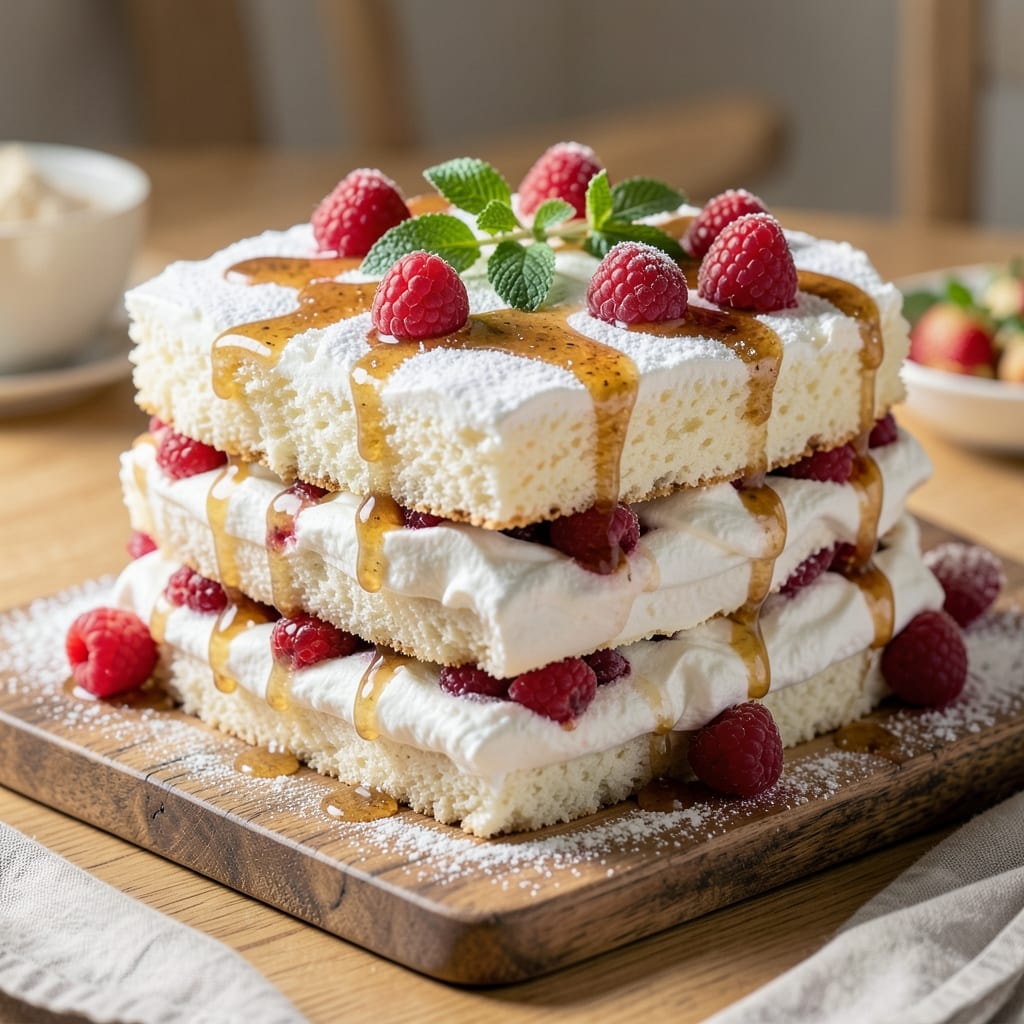
This angel food sheet cake recipe transforms a classic into a modern, foolproof dessert that's light enough to float on air. The secret lies in properly folded egg whites and precise baking techniques that create fluffy, tender layers without a single drop of butter. I've perfected this method after years of trial and error—no more dense, dry angel food cake that falls apart at the slightest touch.
The beauty of this recipe is its simplicity: just a few ingredients (flour, sugar, egg whites, and cream of tartar) combine to create a cake that's naturally gluten-free and rich in protein. The sheet pan method eliminates the need for specialized equipment, making it accessible for home bakers. What you'll end up with is a cake that's impossibly light, with a delicate crumb and subtle sweetness that lets the natural flavor of the cake shine.
This angel food sheet cake bakes up with a golden top and crisp edges, yet remains tender and moist inside. The texture is unlike any other cake—almost ethereal, with a gentle snap when cut. Perfect for special occasions or when you want a dessert that feels luxurious but requires minimal effort, this recipe delivers restaurant-quality results in your own kitchen.
Serve it with fresh berries, a dusting of powdered sugar, or a dollop of whipped cream for a dessert that's as beautiful as it is delicious. The possibilities for variations are endless—add lemon zest for brightness or fold in vanilla extract for depth. Let's get started on creating your perfect angel food sheet cake.
Ingredients for angel food sheet cake
Five core ingredients create this ethereal cake—no butter, no heavy cream, just light-as-air perfection.
| Ingredient | Amount | Notes |
|---|---|---|
| Large Egg Whites 🥚 | 12 whole | Room temperature, no yolks |
| Granulated Sugar 🍚 | 1 ½ cups | Superfine preferred for even dissolving |
| All-Purpose Flour 🌾 | 1 ½ cups | Sifted, light and airy |
| Cream of Tartar 🧂 | 1 ½ tsp | Essential for stabilizing egg whites |
| Salt 🧂 | ½ tsp | Fine sea salt preferred |
| Vanilla Extract 🌿 | 1 tbsp | Pure vanilla for authentic flavor |
| Unsalted Butter 🧈 | ¼ cup | For greasing sheet pan only |
| Vegetable Oil 🫒 | 1 tbsp | For greasing pan and brush |
| Powdered Sugar 🍚 | ¼ cup | For dusting finished cake |
Egg whites are the foundation here—room temperature is non-negotiable for proper volume. Store-bought cartons work fine, but avoid any with yolks mixed in. The cream of tartar stabilizes the whites, so don't skip it. For sugar, superfine dissolves faster, but regular granulated works if pulsed in a food processor. I always grab my flour from Bob's Red Mill—it's sifted and light, perfect for angel food. The vanilla should be pure, nothing artificial. Pro tip: If your whites aren't holding their peaks, add an extra 1/8 tsp cream of tartar.
No cream of tartar? Lemon juice works at half the amount—just 3/4 tsp. Short on vanilla? Almond extract at 1/2 tsp adds depth without overpowering. The butter and oil are only for the pan—use a pastry brush to coat thoroughly. For powdered sugar, Domino brand is my go-to—it's fine and dissolves beautifully. If you're baking at high altitude, reduce sugar by 1/4 cup to prevent dryness. And trust me, don't overmix the batter—fold just until combined.
Egg whites lose volume fast, so beat them last minute. The batter should be thick but pourable—like heavy cream. Line your sheet pan with parchment, but leave edges bare for crisp edges. Bake immediately after mixing. Once cooled, store in an airtight container for up to 3 days—though it's best fresh. For freezing, wrap tightly in plastic and keep for up to 2 months. Reheat slices briefly in the oven to restore crispness.
Why You'll Love This Recipe
- No-Fuss Mixing: I swear by the food processor for this one—just dump in the egg whites, sugar, and flour, hit pulse, and you’re done. No messy bowls or overmixing to stress about.
- Light & Sweet Magic: That cloud-like texture? Pure egg whites and sugar do the work—no heavy butter or grease, just airy perfection with a whisper of vanilla if you add it.
- Birthday or Brunch: Slice it for a crowd’s dessert or stack it with fruit for breakfast—it’s the same effort, different occasions. My go-to for potlucks when I don’t want to haul a heavy cake.
- Pantry-Friendly Leftovers: No frosting needed, so it stays fresh for days. I’ll wrap slices in parchment and freeze them—still tastes amazing reheated with a sprinkle of powdered sugar.
Step-by-step instructions for angel food sheet cake
This method delivers perfectly light, fluffy layers every time—no special equipment beyond a mixer.
Prepare the Pan and Ingredients
Preheat your oven to 350°F and position a rack in the center position. Generously brush a 12x17-inch half-sheet pan with the 1 tablespoon vegetable oil, coating every surface thoroughly. This creates a nonstick barrier that prevents sticking without adding grease to the cake.
Line the pan with parchment paper, leaving an overhang on all sides for easy removal. Lightly butter the parchment with the ¼ cup unsalted butter using a pastry brush, then dust with ¼ cup powdered sugar and tap out any excess. This butter-powdered sugar combo ensures crisp edges and effortless unmolding.
Whip Egg Whites to Stiff Peaks
In a spotlessly clean, grease-free mixing bowl, combine the 12 whole large egg whites, 1½ teaspoons cream of tartar, and ½ teaspoon salt. Using a stand mixer fitted with the whisk attachment, beat on medium speed until frothy. Gradually add the 1½ cups granulated sugar—about 1 tablespoon at a time—while increasing speed to high.
Continue beating for 8-10 minutes until the meringue forms glossy, stiff peaks that hold their shape when the whisk is lifted. The mixture should be thick enough to hold a peak that stands straight up without collapsing. This step is critical—underbeaten meringue collapses in the oven, while overbeaten meringue becomes grainy.
Fold in Flour and Vanilla
Gently fold in the 1½ cups sifted all-purpose flour using a spatula, working from the bottom up to maintain air incorporation. Add the 1 tablespoon vanilla extract and fold just until combined—overmixing deflates the delicate structure. The batter should resemble thick, glossy frosting with no visible flour streaks.
Divide the batter evenly between two 8x8-inch pans or spread it into the prepared half-sheet pan. Smooth the top with an offset spatula, creating a slightly domed center. This shape helps the cake rise evenly and develop those signature high peaks.
Bake Until Golden and Springy
Bake for 25-30 minutes until the top is golden brown and the edges pull away from the pan. Tap the center lightly—it should spring back immediately. Rotate the pan halfway through baking for even browning. The cake is done when the internal temperature reaches 210°F.
Remove from the oven and let cool in the pan for 10 minutes before inverting onto a wire rack. The cake will continue rising slightly as it cools, so don't invert too soon or it may fall. Once completely cooled, carefully peel away the parchment and slice into 8 equal layers for serving.
Pro Tips For Making Angel Food Sheet Cake
- Whip Whites to Stiff Peaks: Use a stand mixer with the whisk attachment—no hand-whisking here. Fold in the sugar gradually while mixing on high, or you’ll end up with a sad, flat cake. I learned this the hard way when I dumped all the sugar at once and got a pancake instead of a cloud.
- Sift Flour Like Your Cake Depends on It: Angel food cake is all about aeration, so don’t skip sifting that flour—three times if you’re feeling extra. Cold flour works better, too; it’s less likely to clump and steal air from your egg whites. (Yes, even if you’re impatient like me.)
- Bake Until the Center Springs Back: That cake’s done when the top springs back immediately when you press it, not after a slow bounce. Overbaking dries it out; underbaking leaves it gummy. Pull it when the edges are golden, and let it cool upside-down—fully—before flipping. (Your future self will thank you.)
- Grease the Pan with Shortening, Not Butter: Butter burns and leaves residue; shortening stays cool and creates a nonstick barrier. Brush it on the pan and line it with parchment cut to fit—no sticking, no tears. I was skeptical until I tried it, and now I won’t go back.
Regional styles of this dish
Southern Classic
In the American South, angel food cake became a staple at Sunday dinners and family gatherings, often served with fresh peach slices and whipped cream. The traditional Southern version calls for 1 teaspoon lemon juice instead of vanilla, adding a bright citrus note that pairs beautifully with berries. I remember my grandmother always dusted the cake with powdered sugar and served it with a side of blackberry cobbler—the contrast of warm cobbler and cool cake was pure magic. 🍑
Midwest Homestyle
Midwestern bakers often adapt angel food cake into a layer cake by baking it in two 9x13-inch pans instead of a sheet pan. They typically serve it with strawberry sauce or chocolate ganache, reflecting the region's love for fruit-forward desserts. A common trick? Adding 1/4 teaspoon almond extract to the batter for a subtle nutty depth. I've seen this version topped with toasted coconut flakes for a tropical twist that feels cozy yet festive.
Florida Citrus Twist
Florida's sunny climate inspired a grapefruit-infused angel food cake variation, where 2 tablespoons grapefruit zest and 1 tablespoon grapefruit juice replace vanilla. The tangy citrus cuts through the sweetness, making it perfect for summer brunch. Locals often serve it with orange marmalade or a passionfruit coulis. I tried this version at a Key West bakery—it was so refreshing that I started making it every Memorial Day weekend. 🍊
Pacific Northwest Berry Fusion
In the Pacific Northwest, bakers incorporate raspberry or blackberry purée into the batter, creating a swirled berry cake that's both elegant and rustic. The purée adds moisture and a subtle tartness that balances the sweetness. A common serving style? Layering the cake with whipped cream and fresh saskatoon berries (a local favorite). I once made this version with blueberry compote—the deep purple layers looked stunning and tasted incredible. 💜
New England Spiced Version
New England bakers often add 1/2 teaspoon ground cinnamon and 1/4 teaspoon nutmeg to the batter, creating a warm, aromatic cake that feels like a hug in dessert form. This version pairs perfectly with apple cider glaze or maple whipped cream. I've seen it served at fall fairs with candied pecans on top—it's like a cross between angel food cake and apple pie. The spices add warmth without overpowering the delicate texture. 🍁
Modern Minimalist
Urban bakers are reimagining angel food cake as a naked cake—no frosting, just dusted with powdered sugar and topped with edible flowers or fresh herbs like mint or basil. This style highlights the cake's natural beauty and lightness. I've seen this version served at vegan restaurants with drizzled agave and toasted almonds—it's simple, elegant, and perfect for small gatherings. The focus is purely on the cake's ethereal texture. 🌸
Nutrition facts
Frequently asked questions
Why does angel food cake need to be baked in an ungreased pan?
Grease prevents the cake from forming proper "legs" or edges that help it rise. The ungreased pan creates a thin barrier that allows the cake to climb up the sides, giving it that signature dome shape. Just be sure to use parchment paper for easy removal!
Can I make this cake without a stand mixer?
Yes! Use a hand mixer or even a whisk with strong arm muscles. Beat the egg whites for 10-12 minutes until stiff peaks form. The key is patience—go slower than you think you need to. For extra stability, add 1/4 teaspoon cornstarch with the flour.
How do I tell when the cake is fully baked?
Look for three signs: golden brown top, edges pulling away from the pan, and a springy center when tapped gently. The internal temperature should reach 210°F. If unsure, bake 2-3 minutes longer—angel food cake won't overbake if properly baked.
Why did my angel food cake collapse?
Most likely, the egg whites weren't whipped enough (soft peaks instead of stiff) or the oven temperature varied. Also check for overmixing after adding flour. For next time, try baking at 325°F instead of 350°F to slow the rise slightly.
Can I make this cake vegan?
Traditional angel food cake requires egg whites, but you can substitute with aquafaba (chickpea brine) or a commercial vegan meringue powder. Use 1/2 cup aquafaba per egg white and add 1/2 teaspoon xanthan gum to stabilize. The texture will be slightly denser but still light and fluffy!