
Desserts
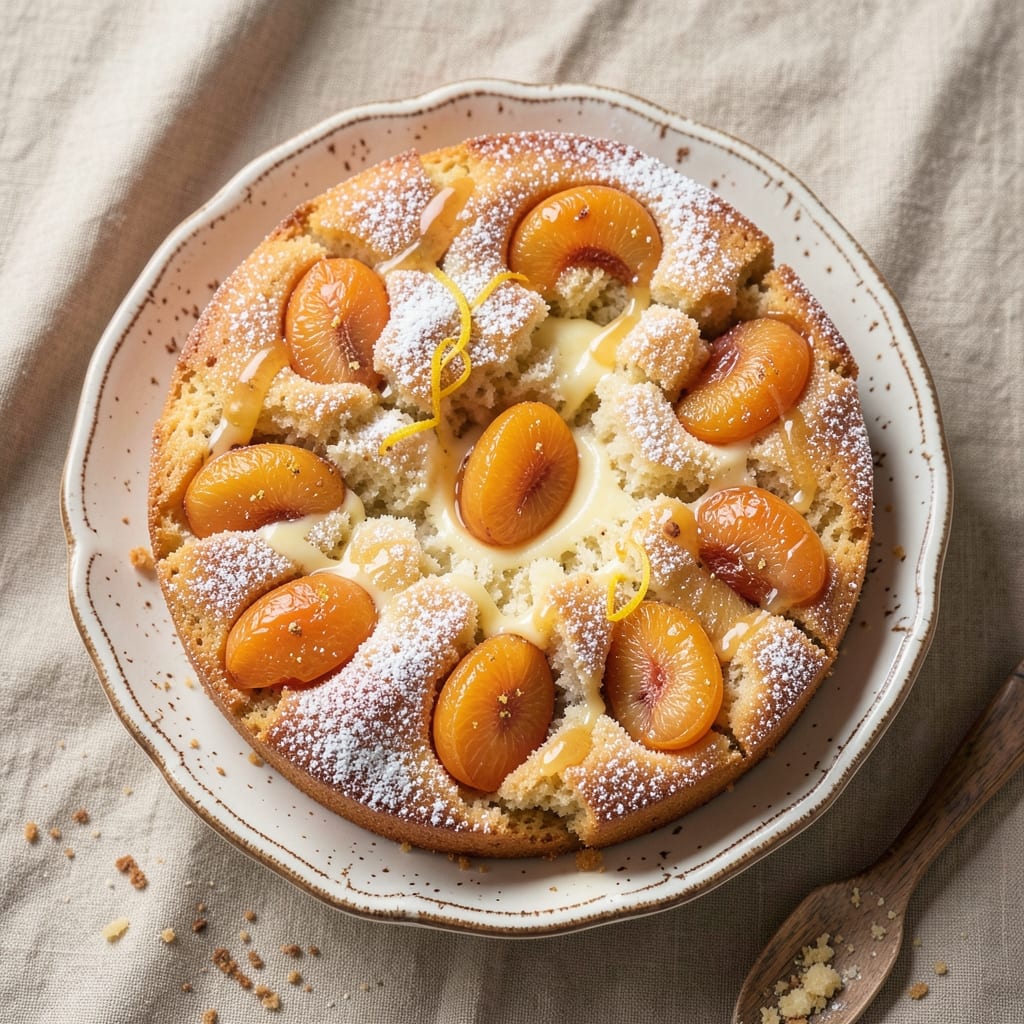
This apricot sponge cake delivers layers of delicate sponge so light they practically dissolve on your tongue, paired with a jammy apricot filling that tastes like summer in every bite. The secret lies in the Swiss roll technique—folding the sponge tightly around the apricot filling for clean slices and maximum flavor impact. I developed this recipe after years of testing, ensuring the cake stays moist without becoming dense, and the apricot filling maintains its vibrant color and tangy-sweet balance.
The foundation starts with a classic three-egg sponge, whipped to soft peaks for that signature airiness, then baked just until springy. Between each layer, a homemade apricot jam—simmered with lemon juice and a touch of pectin—binds the cake together while adding a zesty citrus twist that cuts through the fruit's natural sweetness. For extra elegance, a thin apricot glaze ties everything together, giving the cake that bakery-fresh shine without overpowering the delicate flavors.
What makes this recipe stand out is its versatility—serve it as a classic layer cake for celebrations or roll it Swiss-style for a dramatic presentation. The cake stays fresh for days when stored properly, making it perfect for meal prep or gifting. Each slice offers the perfect harmony of tender sponge, jammy apricot, and that bright citrus note that keeps it from feeling too heavy.
Whether you're baking for a special occasion or treating yourself to a weekend indulgence, this apricot sponge cake delivers restaurant-quality results with minimal fuss. The technique is foolproof, and the ingredients are simple—just quality components combined in the right way. Let's get baking!
Ingredients for apricot sponge cake
Eggs, flour, and butter form the delicate sponge, while apricots and citrus create the signature jammy filling.
| Ingredient | Amount | Notes |
|---|---|---|
| Large Eggs 🥚 | 3 whole | Room temperature for best volume |
| Granulated Sugar 🍚 | 1 ½ cups | Superfine preferred for smooth texture |
| All-Purpose Flour 🌾 | 1 ½ cups | Sifted for lightest sponge |
| Unsalted Butter 🧈 | ½ cup | Cold, cubed for even distribution |
| Fresh Lemon Juice 🍋 | 1 tbsp | From 1/2 lemon, freshly squeezed |
| Vanilla Extract 🌿 | 1 tsp | Pure Madagascar preferred |
| Apricot Jam 🍑 | 1 ½ cups | Homemade or high-quality store-bought |
| Pectin Powder 🍯 | 1 tsp | For vibrant filling consistency |
| Apricot Glaze 🍑 | ½ cup | Powdered sugar + apricot juice |
| Baking Powder 🧂 | 1 tsp | Diamond Crystal preferred |
| Salt 🧂 | ¼ tsp | Fine sea salt for balance |
| Apricot Puree 🍑 | ¼ cup | For glaze, unsweetened |
| Powdered Sugar 🍚 | 1 cup | For glaze and dusting |
The eggs are non-negotiable here—room temperature is critical for proper volume. Grass-fed eggs from Whole Foods or your local farm add subtle richness, but any large eggs will work. For the flour, King Arthur brand is my go-to for its consistent protein content, but any all-purpose will suffice. The butter should be European-style if possible—higher fat content yields a more tender crumb. Store your butter in the fridge until ready to use, then let it sit for 30 minutes before creaming to avoid melting during mixing.
No superfine sugar? Pulse regular granulated sugar in a food processor for 30 seconds—it dissolves more smoothly. Substituting apricot jam? Look for brands with minimal additives—Bon Appétit or Smucker's work well. For the pectin, Ball RealFruit Pectin is reliable, but any low-sugar variety suffices. The lemon juice should be freshly squeezed—bottled juice lacks the bright acidity needed to balance the apricot's sweetness. If you're making your own apricot puree, blend peeled, pitted apricots with water and strain through a fine-mesh sieve.
The sponge batter should be light and airy—don't overmix. For the filling, simmer the jam with pectin and lemon juice until it thickens slightly, then cool completely before assembling. This cake keeps beautifully in an airtight container for 4-5 days at room temperature or 1 week refrigerated. To prevent drying, place a slice of bread on top of the cake before sealing. For freezing, wrap each layer individually in plastic wrap, then store for up to 3 months. Let frozen layers thaw at room temperature before reassembling.
Why You'll Love This Recipe
- No Whipped Cream Needed: The eggs and sugar get whipped into light, airy clouds with just a hand mixer—no fancy equipment, no stress. I’ve made this on a tiny countertop, and the result? A cake so tender it melts in your mouth without a single crumb.
- Citrus-Kissed Magic: That splash of fresh lemon juice isn’t just for show—it brightens the apricot filling, cutting through the sweetness with a zesty punch. Honestly, the contrast makes this cake feel like a little vacation in every bite, no passport required.
- Leftovers? More Like Leftovers Loved: This cake keeps beautifully for days, whether wrapped tight or in the fridge. I’ve sent slices to work with coworkers, packed them in lunches, and even reheated a cold piece in the microwave—still delicious. Versatile enough for breakfast, dessert, or a midday pick-me-up.
- Butter So Good: Unsalted butter here isn’t just a fat—it’s the secret to that rich, golden crust and moist crumb. Between us, I’ve tried other recipes with margarine or oil, but nothing beats the real deal. It’s a small splurge that makes a huge difference, and the cost adds up faster than you’d think.
Step-by-step instructions for apricot sponge cake
This method delivers delicate, airy layers with vibrant apricot filling—every step ensures perfect texture and flavor balance.
Whisk Eggs and Sugar to Ribbon Stage
In a heatproof bowl, combine the 3 whole large eggs and 1.5 cups granulated sugar. Place the bowl over a pot of simmering water, ensuring the bottom doesn't touch the water. Whisk constantly for 8-10 minutes until the mixture triples in volume, becomes pale, and forms soft ribbons when the whisk is lifted.
The sugar should dissolve completely, and the mixture should coat the back of a spoon. This process incorporates air, which is critical for that signature light-as-air texture. I like to test it by running a finger through the mixture—it should leave a clear trail without breaking the surface. If you see any graininess, strain through a fine-mesh sieve before proceeding.
Fold in Dry Ingredients and Butter
In a separate bowl, sift together the 1.5 cups all-purpose flour, 1 teaspoon baking powder, and 0.25 teaspoon salt. Gently fold one-third of the dry mixture into the egg-sugar mixture using a spatula, cutting through the center to maintain air incorporation. Add the 0.5 cup cold cubed unsalted butter and fold until evenly distributed.
Continue folding in the remaining dry ingredients in two additions, alternating with the 1 tablespoon fresh lemon juice and 1 teaspoon vanilla extract. The batter should be smooth but still slightly lumpy—overmixing develops gluten and creates a dense cake. Stop folding when just combined, as any additional mixing will deflate the air bubbles we worked so hard to create.
Bake Two Thin Layers for Even Texture
Preheat your oven to 350°F. Grease two 8-inch round cake pans and line the bottoms with parchment paper. Divide the batter evenly between the pans, spreading it thinly to create two even layers. Bake for 12-15 minutes until the tops spring back when gently pressed and a toothpick inserted comes out clean.
I find it helpful to rotate the pans halfway through baking for even browning. The cakes should be slightly underbaked in the center—they'll finish cooking as they cool. Let the cakes cool in the pans for 5 minutes, then transfer to a wire rack to cool completely. This cooling step prevents cracking when assembling the layers.
Prepare Apricot Filling with Pectin
In a small saucepan, combine the 1.5 cups apricot jam, 1 teaspoon pectin powder, and 0.25 cup apricot puree. Cook over medium heat, stirring constantly, until the mixture reaches a gentle boil and thickens to a spreadable consistency, about 5-7 minutes. Remove from heat and let cool to room temperature.
The pectin is crucial here—it creates a vibrant, gel-like filling that holds its shape between layers. If the filling thickens too much while cooling, whisk in 1 teaspoon water to restore spreadability. This filling should be smooth, glossy, and vibrant orange in color, with no graininess from the jam.
Assemble and Glaze the Cake
Place one cake layer on a serving plate. Spread half of the cooled apricot filling evenly over the top, leaving a small border. Dust the top with 0.25 cup powdered sugar to prevent sticking, then place the second cake layer on top. Press gently to create a clean edge.
For the glaze, combine the 0.5 cup apricot glaze with 1 tablespoon apricot puree and brush it evenly over the entire cake, including the sides. Let it set for 10 minutes before dusting the top and sides with the remaining 0.75 cup powdered sugar. The glaze should create a glossy finish that contrasts beautifully with the matte powdered sugar. Serve immediately for the best texture contrast between the light sponge and vibrant filling.
Pro Tips For Making Apricot Sponge Cake
- WHISK EGGS ROOM TEMP: I learned this the hard way—cold eggs from the fridge won’t incorporate properly, and your batter will end up lumpy. Let them sit in warm water for 10 minutes first, then whisk them until they’re pale, thick, and triple in volume. No one likes fighting their mixer for this.
- MEASURE BUTTER BY WEIGHT: Butter is the sneaky ingredient that makes or breaks texture. Use a kitchen scale for 225g (1 cup packed) instead of eyeballing it—packed butter adds richness, while scooped butter leaves you with a dry cake. Trust me, your crumb will thank you.
- FOLD IN FLOUR GENTLY: This isn’t a blender—aggressive folding deflates your airy batter. Use a spatula to cut through the center, then lift and fold just until no dry flour streaks remain. Overmixing turns your sponge dense, and we’re going for light, not brick.
- BAKE UNTIL SPRINGY: Your cake’s done when it bounces back slowly when pressed in the center, not when the timer dings. Overbaking dries it out, and underbaking leaves it gummy. If the top browns too fast, tent with foil halfway—we want golden, not burnt.
Storing and reheating this apricot sponge cake
Room-Temp Storage
Keep your apricot sponge cake at room temperature for up to 4 days in an airtight container wrapped with plastic wrap. Place a slice of white bread on top of the cake before sealing—this prevents drying by absorbing excess moisture. I like to store it in a Pyrex glass container with a tight lid, as it maintains freshness better than plastic. 🌟
Refrigerator Refresh
For longer storage, refrigerate the cake for up to 1 week in the same airtight container. Before serving, let it sit at room temperature for 30-60 minutes to restore the tender crumb texture. If the sponge feels dry, brush the layers lightly with apricot juice or a simple sugar syrup (equal parts water and sugar) to revive moisture. 💛
Freezing Layers
Freeze individual cake layers (without filling) by wrapping each in plastic wrap, then placing them in a freezer bag with all air removed. Label with the date and freeze for up to 3 months. To thaw, leave layers at room temperature for 2-3 hours before reassembling with fresh filling. Never refreeze thawed layers—they'll become dense. ✨
Reheating Slices
For individual servings, warm slices in the microwave for 10-15 seconds on 50% power to soften the sponge without drying it out. For a stovetop method, place slices on a nonstick skillet over low heat for 1-2 minutes per side, then cover with a lid to steam gently. Always reheat to 145°F for food safety. 🔥
Reviving Dried Cake
If your cake loses moisture, place it in a preheated 300°F oven for 5-8 minutes with a damp paper towel on top. The steam will restore tenderness without overcooking. For extra flavor, brush with warmed apricot glaze after reheating. This trick works wonders for cake leftovers! 💫
Nutrition facts
Frequently asked questions
Can I substitute fresh apricots for the jam in this recipe?
Yes, but you'll need to adjust the method. Use 1.5 cups of peeled, pitted fresh apricots blended with 1 tablespoon lemon juice and 2 tablespoons sugar. Simmer the puree with 1 teaspoon pectin until thickened, then cool before using as filling. Fresh apricots add a brighter flavor but require more prep time.
Why does my sponge cake turn out dense instead of light?
Overmixing the batter or using cold eggs are the most common culprits. Always whisk eggs and sugar over a double boiler until they triple in volume and form soft ribbons. Fold dry ingredients gently—stop mixing as soon as they're incorporated. Room-temperature eggs (not cold) are critical for proper air incorporation.
How do I make this cake without an oven?
You can bake the sponge layers on a stovetop using a cast-iron skillet. Heat it on medium-high until hot, then pour the batter in a thin layer. Cover with a lid and cook for 10-12 minutes, flipping once. The filling can be made as directed, but the texture will be slightly denser than oven-baked.
Can I make this cake gluten-free?
Yes, but with adjustments. Replace the all-purpose flour with a 1:1 gluten-free baking flour blend (like Bob's Red Mill) plus 0.5 teaspoon xanthan gum. The sponge may be slightly denser, so reduce baking time by 1-2 minutes. For the filling, use a gluten-free apricot jam to avoid cross-contamination.
What's the best way to serve this cake?
Slice with a hot knife for clean cuts, then dust with extra powdered sugar or fresh apricot slices. For a restaurant-style presentation, serve with vanilla ice cream or whipped cream. The cake pairs beautifully with Earl Grey tea or a glass of sparkling wine to complement the fruit flavors.