
Desserts
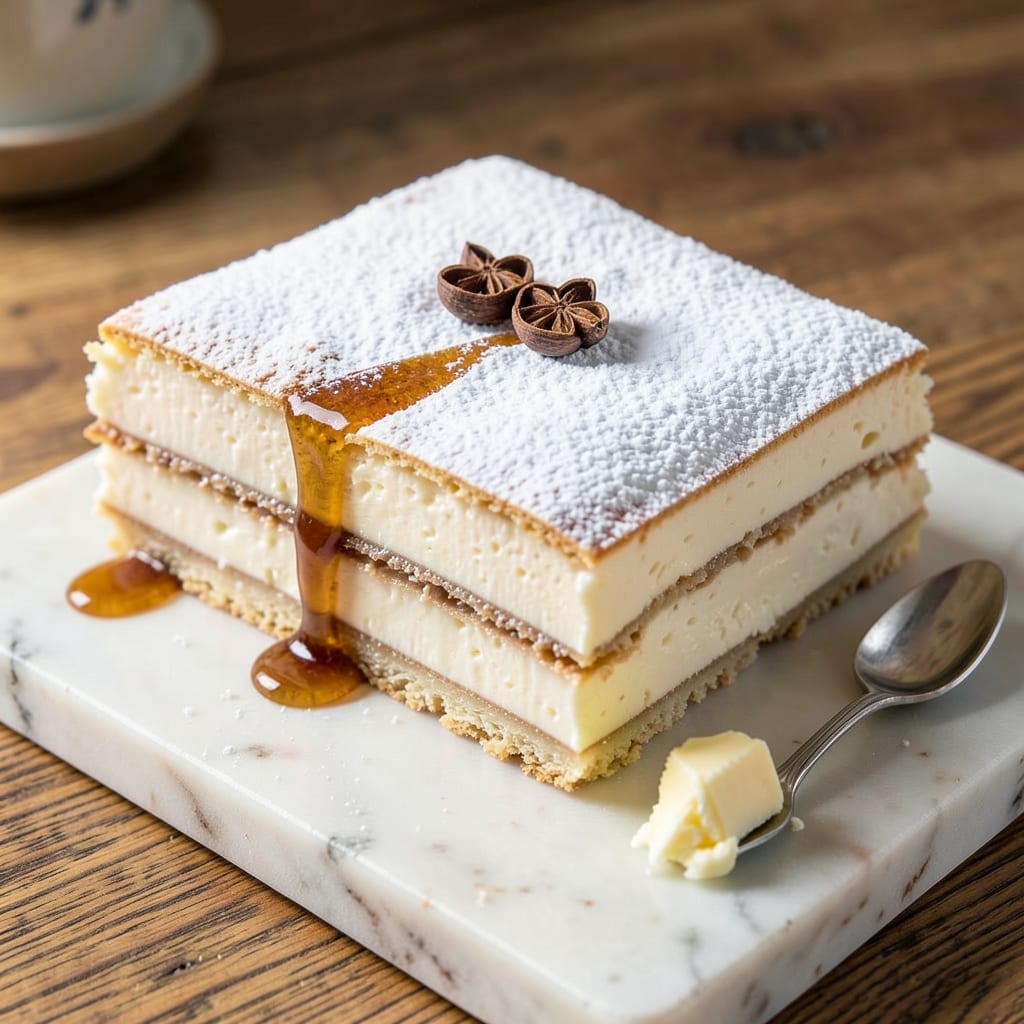
This Arabic milk cake recipe brings the delicate flavors of the Middle East into your kitchen with its signature silky texture and fragrant cardamom-rosewater essence. 🌸 The secret lies in the slow-cooked milk base, which transforms into a velvety custard that's light yet rich—a dessert that feels both luxurious and comforting. I've perfected this version to balance traditional techniques with home-cook accessibility, ensuring you achieve that signature tender crumb without specialized equipment.
The cake's magic comes from three key elements: ground cardamom for its warm, aromatic depth, rosewater for its floral brightness, and a touch of baking powder for that signature melt-in-your-mouth texture. Unlike dense cakes, this one relies on a gentle baking process that creates a fine, almost soufflé-like consistency. The recipe uses simple pantry staples but delivers restaurant-quality results that taste like a piece of Arab heritage.
What makes this recipe truly special is its versatility—serve it plain for an elegant dessert or dust with powdered sugar and fresh pistachios for a festive touch. The cake's mild sweetness pairs beautifully with strong black coffee or mint tea, making it perfect for afternoon gatherings or celebratory occasions. With just 15 minutes of prep and 45 minutes of baking, you'll have a dessert that feels like it took hours to prepare.
For those new to Middle Eastern baking, don't worry—the recipe includes foolproof techniques for achieving the perfect texture, including how to properly temper the eggs and when to stop baking for that signature tender crumb. Whether you're making it for family, friends, or just to enjoy yourself, this cake is a labor of love that always delivers.
Ingredients for arabic milk cake
Simple pantry staples transform into a luxurious Middle Eastern dessert with cardamom's warmth and rosewater's floral notes.
| Ingredient | Amount | Notes |
|---|---|---|
| All-Purpose Flour 🌾 | 2 ½ cups | Sifted for light texture |
| Granulated Sugar 🍚 | 1 ½ cups | Superfine for smoothness |
| Unsalted Butter 🧈 | 1 cup | Cold, cubed for layers |
| Large Eggs 🥚 | 6 whole | Room temperature for blending |
| Whole Milk 🥛 | 2 ½ cups | Full-fat for richness |
| Ground Cardamom 🌿 | 1 ½ tbsp | Freshly ground for aroma |
| Rosewater 🌸 | 1 tbsp | Pure, food-grade quality |
| Baking Powder 🍞 | 1 tsp | Double-acting for lift |
| Salt 🧂 | ½ tsp | Fine sea salt |
| Vanilla Extract 🌺 | 1 tbsp | Pure vanilla bean |
| Powdered Sugar 🍚 | ½ cup | For dusting, optional |
| Pistachios 🌰 | ½ cup | Chopped, toasted for garnish |
The cardamom and rosewater are non-negotiable here—Penzeys Spices or bulk bins at Middle Eastern markets are your best bets for authentic flavor. Look for green cardamom pods and grind them fresh; pre-ground loses potency fast. Rosewater should be pure, food-grade, and labeled for culinary use—Al Wadi or Nabatean brands are reliable. The milk needs to be full-fat for that signature richness, so skip the skim. For the pistachios, Kirkland Signature or Trader Joe's have great prices, but toast them yourself for extra flavor. If you can't find pistachios, toasted almonds work too, though they lack that signature Middle Eastern touch.
No cardamom? Cinnamon at half the amount gives warmth but misses the floral depth. Swap rosewater for orange blossom water—it's close, though harder to find. Running low on vanilla? Almond extract at half the quantity mimics the sweetness. The baking powder is crucial for that tender crumb, but if you're out, baking soda plus cream of tartar works in a pinch. For the butter, if you must use margarine, vegetable-based without additives keeps it close to dairy. The eggs should be large and fresh—older eggs won't blend as smoothly, and the cake may not rise properly.
This cake keeps beautifully—3 days at room temperature covered, or 1 week in the fridge. For long-term storage, slice and freeze portions for up to 3 months. The texture actually improves after a day or two as the flavors meld. I like to make a double batch and freeze half—perfect for last-minute gatherings. To reheat, pop slices in a 200°F oven for 5-10 minutes to restore that warm, just-baked appeal. The powdered sugar and pistachios are best added fresh, so store them separately until serving.
Why You'll Love This Recipe
- No Mixer Needed: I swear by this—just whisk the eggs and sugar until thick, then fold in the butter and milk. The batter’s so simple, you’ll wonder why you ever baked anything fancier.
- Milk-Soaked Magic: That first bite? Pure custardy perfection. The milk and eggs create this velvety texture that’s not too sweet, not too rich—just right, with a hint of vanilla warmth.
- Weeknight or Celebration: Same recipe, two vibes. Serve it warm with tea for a cozy night in, or chill it for a showstopper dessert at a brunch. No one will guess it’s this effortless.
- Budget-Friendly Indulgence: Uses pantry basics—flour, sugar, butter—so it’s cheap to make but feels like a treat. Leftovers stay moist for days, and the cost per serving? Less than fancy pastries. Win.
Step-by-step instructions for silky cardamom and rosewater cake
This cake comes together in layers of delicate flavors and perfect texture—let's build it right.
👨🍳 Step 1: Prepare the Dry Ingredients with Precision
In a medium bowl, sift together the 2.5 cups all-purpose flour, 1.5 tbsp ground cardamom, 1 tsp baking powder, and 0.5 tsp salt. I like to use a fine-mesh sieve for the flour to ensure no lumps remain—this creates that signature light, airy texture. Whisk gently to distribute the cardamom evenly throughout the flour mixture.
Set this bowl aside. The cardamom's aromatic oils need to mingle with the flour before meeting the wet ingredients, which will amplify that classic Middle Eastern fragrance. Don't skip sifting—those tiny lumps can make your cake dense instead of tender.
🍳 Step 2: Create the Flavorful Base Mixture
In a large mixing bowl, combine the 1.5 cups granulated sugar and 1 cup cold, cubed unsalted butter. Using an electric mixer on medium speed, beat for 3-4 minutes until the mixture becomes pale and fluffy. This process incorporates air, which is crucial for that signature lightness. I always use cold butter here—it creates better layers and prevents the cake from becoming greasy.
Once the butter and sugar are fully combined, add the 6 room-temperature large eggs one at a time, mixing well after each addition. Then stir in the 1 tbsp rosewater and 1 tbsp vanilla extract. The rosewater should blend seamlessly—if you detect any distinct floral notes, it means you're using high-quality, pure rosewater. This is where the cake gets its signature floral aroma.
🥘 Step 3: Combine Wet and Dry Ingredients Gently
With the mixer on low speed, gradually add the dry ingredient mixture to the wet ingredients. Mix just until combined—you should still see small streaks of flour. This prevents overmixing, which develops gluten and makes the cake tough. Here's the thing—overmixing is the #1 reason this cake can turn out dense instead of light and airy.
Next, pour in the 2.5 cups whole milk all at once and mix on low speed until just incorporated. The batter should be smooth but slightly thicker than traditional cake batters. This richness from the whole milk is what gives the cake its luxurious, moist texture. If you notice any lumps, gently fold them out with a spatula—don't overmix at this stage.
🔥 Step 4: Bake in Layers of Perfection
Preheat your oven to 350°F and grease two 8-inch round cake pans (or line them with parchment paper). Divide the batter evenly between the pans. Bake for 25-30 minutes, or until a toothpick inserted in the center comes out clean. I always check at the 25-minute mark—your oven might run hot, so start checking early.
While the cakes are baking, toast the 0.5 cup chopped pistachios in a dry skillet over medium heat for 3-4 minutes until fragrant and lightly golden. This adds a beautiful crunch and nutty depth to the final presentation. Let the cakes cool in their pans for 10 minutes before transferring to a wire rack to cool completely.
🍽️ Step 5: Assemble with Confidence
Once completely cool, level the tops of the cakes if needed. For the filling, whisk together 0.5 cup powdered sugar with 2 tablespoons milk until smooth. This creates a delicate, floral-infused cream that complements the cake's flavors perfectly. Spread this filling evenly between the layers.
To finish, dust the top and sides with additional powdered sugar for that classic Arabic cake presentation. Sprinkle the toasted pistachios evenly over the top. The contrast between the soft cake, creamy filling, and crunchy pistachios makes each bite unforgettable. Serve at room temperature for the best texture and flavor experience.
Pro Tips For Making Arabic Milk Cake
- Use Room-Temperature Butter: I learned this the hard way—cold butter makes the batter clump like a glue trap. Let the butter sit out for 30 minutes before creaming, or even better, microwave it in 10-second bursts until soft but not melted. The batter will be silky, not greasy, and the cake will slice cleanly.
- Whisk Eggs Until Ribbon Stage: Skip the lazy whisking and take the eggs to ribbon stage—when the mixture coats the whisk and leaves a clear trail that holds for a few seconds. This ensures the cake’s signature lightness. (Yes, it takes longer, but the difference is worth it.)
- Don’t Overmix the Batter: The second you add the flour, stop mixing the moment it’s just combined. Overmixing develops gluten, and that’s the fast track to a dense, chewy cake. A few lumps? Doesn’t matter—this isn’t pancakes.
- Bake Until Slightly Underdone: The cake will look set before it actually is. Pull it out when the edges are golden but the center still jiggles very gently. It’ll firm up as it cools, and cutting it too soon is how you end up with a gummy mess. (Trust me, I’ve done it.)
Pro cooking tips for this dish
Egg Temperature Matters
Room-temperature eggs blend smoothly into the batter, creating a lighter texture. I pull mine from the fridge 30 minutes before mixing—they should feel slightly warm to the touch but not hot. Cold eggs can cause streaks in the batter and prevent proper emulsification with the butter. If you forget, place eggs in warm water for 10 minutes to speed up the process. 🌡️
Butter Cubing Technique
Cut the 1 cup cold butter into ½-inch cubes for even distribution in the batter. Larger cubes melt unevenly, creating greasy pockets, while smaller cubes incorporate too quickly. I use kitchen shears for this—clean cuts every time. Store butter in the freezer for 15 minutes before cubing if your kitchen runs warm. This ensures the butter stays firm during mixing.
Baking Powder Activation
Double-acting baking powder needs two rises: once when wet, again when heated. Whisk it into the dry ingredients first to distribute evenly. For extra insurance, I sift the baking powder with the flour. If your cake flops in the center, it's likely underbaked or the baking powder lost potency—replace it with fresh. Store baking powder in an airtight container away from moisture. 🍞
Milk Infusion Trick
Warm the 2.5 cups whole milk to 110°F before adding to the batter. This helps dissolve the sugar more evenly and creates a silkier texture. I microwave milk in 30-second bursts, stirring between each, until just warm to the touch. Never boil it—hot milk can cook the eggs and make the cake dense. This small step makes a noticeable difference in moisture.
Toothpick Test Timing
Check for doneness at 25 minutes—your oven's hot spots can cause uneven baking. Insert the toothpick in the center and thickest part of the cake. It should come out with a few moist crumbs, not wet batter. If it's clean too soon, the cake might collapse. For extra insurance, tap the pan—it should sound hollow when done. Let cakes cool 10 minutes in pans before removing to prevent cracking.
Layer Assembly Secret
Use a serrated knife to level the cake tops if needed—this creates an even surface for filling. I dip the knife in hot water between slices for clean cuts. Spread the powdered sugar filling ⅛-inch thick between layers to prevent sogginess. Chill the assembled cake in the fridge for 1 hour before serving to let flavors meld and the filling set slightly. This makes slicing cleaner and presentation more impressive. 💫
Nutrition facts
Frequently asked questions
Why does this cake need both cardamom and rosewater?
Cardamom adds warm, earthy depth while rosewater brings delicate floral brightness—together they create the signature aromatic profile of Middle Eastern desserts. The cardamom's heat balances the sweetness, while the rosewater adds complexity that plain vanilla can't match. This combo is traditional in many Arab cakes like basbousa or ka'ak.
Can I make this cake in a single layer instead of two?
For a single 9-inch round cake, reduce the batter by ⅓ and bake at 350°F for 35-40 minutes. The texture will be slightly denser but still delicious. Just increase the filling to ⅓ cup powdered sugar mixed with 3 tbsp milk for spreading on top. This works great for small gatherings or when you want a simpler presentation.
What's the best way to store leftover cake?
Wrap tightly in plastic wrap and store at room temperature for 3 days or refrigerate for 1 week. For longer storage, slice and freeze portions for up to 3 months. To reheat, warm slices in a 200°F oven for 5-10 minutes—this restores that fresh-baked appeal while keeping the texture tender. The cake actually improves after 24 hours as flavors meld!
Can I substitute rosewater with something else?
Yes, but with limitations. For floral notes, try orange blossom water (½ tbsp) or vanilla bean paste (1 tbsp). For warmth, ½ tsp cinnamon works but lacks the floral dimension. Avoid artificial extracts—they can overpower the delicate balance. If using vanilla, increase to 2 tbsp to compensate for the missing floral depth.
Why did my cake turn out dense instead of light?
Most likely from overmixing or old baking powder. Mix just until combined (small flour streaks are fine) and use fresh baking powder. Also check: eggs weren't room temp, butter was too soft, or the cake baked too long. For extra lightness, sift all dry ingredients together and fold them gently into the wet mixture. The batter should be thick but pourable, not stiff.