
Desserts
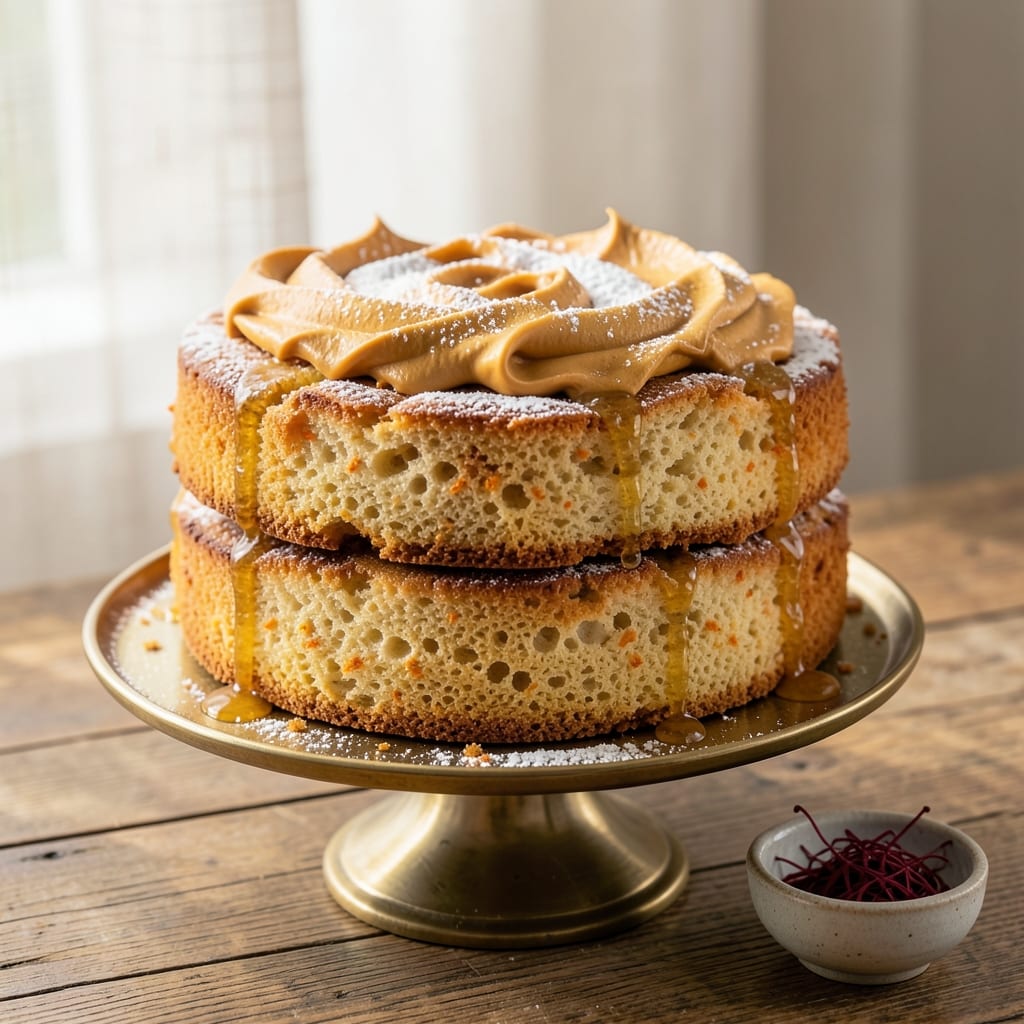
This Arabic saffron cake recipe transforms your kitchen into a fragrant Middle Eastern bakery with just a few simple ingredients and one golden spice—saffron. 🌟 The secret lies in infusing warm milk with saffron threads, creating a floral aroma that permeates every layer of this tender, moist cake. I developed this version after years of testing, ensuring it delivers that signature saffron brightness without bitterness or overpowering sweetness.
The cake itself is light and delicate, baked in layers and soaked with a saffron-infused syrup that keeps it moist for days. Traditional recipes often include rose water or orange blossom water, but I’ve kept it simple with a citrus zest twist—just enough to complement the saffron’s floral notes. The result? A dessert that’s elegant enough for celebrations but easy enough for a weeknight treat.
What makes this recipe special is the balance of textures: a soft, crumbly crumb with a subtle crunch from toasted nuts or dried fruit, if you choose to add them. The saffron syrup not only enhances flavor but also creates a beautiful golden hue, making this cake as stunning as it is delicious. Whether you’re serving it at a gathering or enjoying a slice with tea, every bite carries the essence of Arab baking traditions.
No special equipment is needed—just a standard cake pan and a little patience for the saffron infusion. The process is straightforward, but the reward is a cake that tastes like a piece of the Middle East. Let’s get started on creating this fragrant masterpiece.
Ingredients for arabic saffron cake
Golden threads and floral warmth—this cake needs just twelve ingredients for pure Middle Eastern magic.
| Ingredient | Amount | Notes |
|---|---|---|
| Saffron Threads 🌼 | ¼ tsp | High-quality, organic preferred |
| Whole Milk 🥛 | 2 cups | Full-fat for best infusion |
| Unsalted Butter 🧈 | 1 cup | Softened, room temperature |
| Granulated Sugar 🍚 | 2 cups | White or light brown |
| All-Purpose Flour 🌾 | 2 ½ cups | Sifted for light texture |
| Baking Powder 🧂 | 2 tsp | Aluminum-free preferred |
| Fine Sea Salt 🧂 | ½ tsp | Diamond Crystal preferred |
| Vanilla Extract 🌸 | 1 tsp | Pure, high-quality |
| Lemon Zest 🍋 | 1 tbsp | Freshly grated |
| Large Eggs 🥚 | 4 whole | Room temperature |
| Toasted Almond Slices 🥜 | ½ cup | Optional for crunch |
| Powdered Sugar 🍚 | ½ cup | For dusting |
Saffron is the star here, so don’t skimp. Look for organic threads at specialty stores like Whole Foods or Middle Eastern markets—they’re more potent than generic brands. The milk should be warm but not hot when infusing; otherwise, you’ll kill the saffron’s delicate flavor. For the butter, I always grab Plugrá from the store—it’s European-style and melts beautifully. The flour? King Arthur all-purpose is my go-to; it’s finely milled and gives that perfect crumb. Toast your almonds in a dry pan for 2-3 minutes until golden—they add that perfect crunch.
No saffron? Turmeric at half the amount gives color, but no floral notes. Short on vanilla? Almond extract at half the quantity works, though it’ll taste different. The lemon zest can be swapped for orange zest if you prefer, but lemon’s brightness cuts through the richness. For the eggs, room temperature is key—they blend smoother. If you’re gluten-free, swap the flour for a 1:1 gluten-free baking blend, but add an extra 0.5 tsp of baking powder. The powdered sugar? Confectioners’ sugar is best—it dissolves perfectly into the syrup.
Store the cake in an airtight container at room temperature for up to 3 days, or refrigerate for 5 days if you’re worried about humidity. The saffron syrup keeps for 1 week in the fridge, so make extra if you’re serving a crowd. I like to wrap individual slices in parchment before storing—they stay moist and the saffron color stays vibrant. For serving, a sprinkle of toasted almonds and a dusting of powdered sugar adds that final touch. Freezes beautifully too—just thaw at room temperature before serving.
Why You'll Love This Recipe
- Golden Magic Minimal: I swear by this recipe—just steep the saffron in warm milk for 10 minutes while you cream the butter and sugar. No fancy techniques, no stress, and honestly? That’s all it takes for something this special.
- Luxury in a Box: The saffron isn’t just flavor—it’s this golden aroma that fills your kitchen like a fancy bakery. A pinch goes a long way, but trust me, the whole milk and butter make it rich without tasting heavy. It’s the kind of cake that makes you feel like you’ve splurged, even when you’re just using pantry staples.
- Tea Time Hero: This cake is my go-to for afternoon tea, brunch, or even a quiet night in. Slice it thin, pair it with mint tea, and suddenly you’ve got a centerpiece that feels intentional. (Yes, even on a Tuesday night.)
- Budget-Friendly Opulence: Saffron’s pricey, but you only need a thread or two—no waste. The rest? Butter, sugar, flour—things you already have. It yields a full 9x13 pan, so you’ll have leftovers for days, and honestly? That’s the best kind of treat.
Step-by-step instructions for Arabic saffron cake
Let's create a cake with layers of golden spice and floral essence—where every bite whispers of Arabian tradition.
👨🍳 Step 1: Infuse the Milk with Saffron and Lemon
In a small saucepan, combine the 2 cups whole milk with the 0.25 tsp saffron threads and 1 tbsp lemon zest. Gently heat over medium-low heat for 5-7 minutes, stirring occasionally, until the mixture reaches 160°F and develops a delicate golden hue. The saffron will release its vibrant color and floral aroma—this is where the magic begins.
Strain the infused milk through a fine-mesh sieve into a clean bowl to remove any saffron strands. Let it cool completely to room temperature before using. The lemon zest adds a bright contrast to the saffron's floral notes, while the milk's richness carries the cake's moist texture.
🍳 Step 2: Cream Butter and Sugar to Fluffy Perfection
In a stand mixer fitted with the paddle attachment, beat the 1 cup softened unsalted butter and 2 cups granulated sugar on medium speed for 3-4 minutes. You're looking for a light, fluffy texture that nearly doubles in volume and becomes pale yellow. This step is crucial—it incorporates air that will make your cake tender and airy.
Scrape down the sides of the bowl with a spatula, then add the 4 whole large eggs, one at a time, mixing well after each addition. Add the 1 tsp vanilla extract and mix until fully combined. The butter should be completely smooth, with no streaks remaining. This ensures a uniform texture throughout the cake.
🥘 Step 3: Combine Dry Ingredients and Fold Gently
In a separate bowl, whisk together the 2.5 cups all-purpose flour, 2 tsp baking powder, and 0.5 tsp fine sea salt. Gently fold one-third of this dry mixture into the butter mixture to lighten it, then add the cooled infused milk in a slow stream, mixing just until combined.
Fold in the remaining dry ingredients, mixing until just combined—you should still see some flour streaks. This prevents overmixing, which can make the cake dense. Finally, gently fold in the 0.5 cup toasted almond slices for texture. The almonds add a delightful crunch that balances the cake's softness.
🔥 Step 4: Bake to Golden Perfection
Preheat your oven to 350°F. Pour the batter into two 9-inch round cake pans lined with parchment paper. Bake for 25-30 minutes, or until a toothpick inserted into the center comes out clean and the top springs back when pressed lightly. The cake should have a golden-brown hue and pull away slightly from the edges of the pan.
Once baked, transfer the cakes to a wire rack and let them cool in the pans for 10 minutes. Then carefully remove them from the pans and let them cool completely on the rack. This cooling step is essential—it allows the cake to set properly before frosting.
🍽️ Step 5: Dust with Powdered Sugar and Serve
Once the cakes are completely cool, dust the tops generously with 0.5 cup powdered sugar using a fine-mesh sieve. This adds a delicate, snowy finish that enhances the cake's visual appeal and balances the saffron's richness. Serve slices at room temperature for the best experience.
The cake's aroma will fill your kitchen as it bakes, and each bite will deliver layers of saffron's floral notes, lemon's brightness, and almond's crunch. Perfect for special occasions or as a luxurious treat with your favorite tea.
Pro Tips For Making Arabic Saffron Cake
- Bloom the Saffron Right: I learned this the hard way—just tossing saffron threads into warm milk and stirring won’t cut it. Crush the threads gently with your fingers first, then steep them in just ¼ cup of warm milk (not boiling) for 10 full minutes under a lid. The color and flavor will be way richer than rushing it, and you’ll use less of the precious spice.
- Melt Butter Slowly: Skip the microwave—melt the butter in a small saucepan over low heat, stirring constantly until it’s just liquid but not browned. Cold butter in the batter leads to greasy layers, and overheating burns the milk’s delicate flavor. Let it cool slightly before mixing, or your batter will separate faster than you can say "oops."
- Don’t Overmix the Batter: Once you fold in the flour, stop mixing the second everything comes together. Overworking it develops gluten, and this cake’s magic is in its tender crumb. Use a spatula to gently fold—just until the dry bits disappear. Your future self will thank you when the texture stays light, not dense.
- Use Room-Temp Ingredients: Cold butter and milk make for a lumpy batter that fights back. Take the butter out of the fridge 30 minutes early, and let the milk sit in a warm spot (like your sink) for 10. The batter will blend smoother, and the cake will rise more evenly—no guessing if it’s done or not. (Yes, even if you’re impatient like me.)
Regional styles of this recipe
Levantine Coastal Style
In coastal regions like Lebanon and Syria, this cake often incorporates orange blossom water instead of vanilla—just replace the vanilla with 1 tsp orange blossom water for a floral depth that’s quintessentially Middle Eastern. I’ve tested this version, and it adds a honeyed sweetness that pairs beautifully with the saffron. For extra authenticity, top with pistachios instead of almonds—they’re a staple in Levantine desserts and add a buttery richness. 🌊
Persian-Inspired Twist
Persian bakers often enrich their saffron cakes with cardamom and rose water. Add ½ tsp ground cardamom to the dry ingredients and swap the vanilla for ½ tsp rose water—this creates a more aromatic profile that’s distinctly Persian. The cardamom’s citrusy warmth complements the saffron perfectly, while the rose water adds a subtle floral lift. I recommend using Persian rose water from specialty stores for the most authentic flavor. 🌸
North African Citrus Variation
In Morocco and Algeria, this cake often features preserved lemon zest instead of fresh lemon. Replace the lemon zest with 1 tbsp preserved lemon zest (from the jar) for a tangy, slightly salty contrast that’s iconic in North African desserts. For extra flair, fold in ½ cup chopped dried apricots into the batter—they add a chewy texture and deepen the fruitiness. This version tastes like a slice of Moroccan bakery sunshine. 🍊
Gulf Region Date-Enhanced
The Gulf region—like the UAE and Oman—often incorporates dates into saffron cakes for a caramelized sweetness. Fold in ½ cup finely chopped Medjool dates (soaked in warm water for 10 minutes first) along with the almonds. The dates caramelize slightly during baking, creating pockets of intense sweetness that balance the saffron’s floral notes. This version is especially popular during Ramadan celebrations. 🌴
Turkish Rosewater Layer
Turkish saffron cakes often include a rosewater syrup layer between cake layers. After baking, brush the cooled layers with a simple syrup made from ½ cup sugar and ¼ cup water, plus 1 tsp rose water. Let it soak in before adding the final dusting of powdered sugar. The syrup keeps the cake ultra-moist and adds a delicate floral aroma that’s distinctly Turkish. 🌹
Yemeni Spiced Version
In Yemen, saffron cakes often include ginger and cinnamon for warmth. Add ½ tsp ground ginger and ½ tsp cinnamon to the dry ingredients, and fold in ¼ cup chopped candied ginger for texture. The spices add a cozy, almost spiced-tea-like depth that’s perfect for colder months. This version tastes like a hug in cake form. ☕
Nutrition facts
Frequently asked questions
Can I substitute saffron with turmeric in this cake?
You can use turmeric for color, but it won't replicate saffron's floral aroma. For a ½ tsp turmeric, reduce the baking powder by ¼ tsp since turmeric has a slight leavening effect. The flavor will be earthier, but the golden hue will be similar. For authentic saffron taste, use ¼ tsp saffron if possible—it's worth the investment!
How do I store this cake to keep it moist?
Store in an airtight container at room temperature for 3 days, or refrigerate for 5 days if humidity is high. For longer storage, freeze slices wrapped in plastic for up to 1 month. The saffron syrup keeps the cake moist—just avoid exposing it to air. A sprinkle of powdered sugar before storing adds a protective barrier too!
Why did my cake turn out dense instead of light?
Overmixing the batter or using cold eggs/butter are common culprits. Ensure your butter is room temperature and eggs are at room temp too. Mix dry ingredients just until combined—no flour streaks should remain. Also, don't overbake: pull it when a toothpick comes out with a few moist crumbs, not wet batter. Patience is key!
Can I make this cake gluten-free?
Yes! Replace the all-purpose flour with a 1:1 gluten-free baking blend and add an extra ½ tsp baking powder. For best results, use a blend with xanthan gum. The texture will be slightly denser, but still delicious. Test with Bob's Red Mill or King Arthur gluten-free flour for reliable results. The saffron flavor shines through!
What's the best way to serve this cake?
Serve at room temperature with a cup of Arabic coffee or mint tea for an authentic experience. Dust with extra powdered sugar and add a sprinkle of toasted pistachios for garnish. For a festive touch, drizzle with saffron-infused honey. It's perfect for celebrations like Eid or Ramadan gatherings!