
Desserts
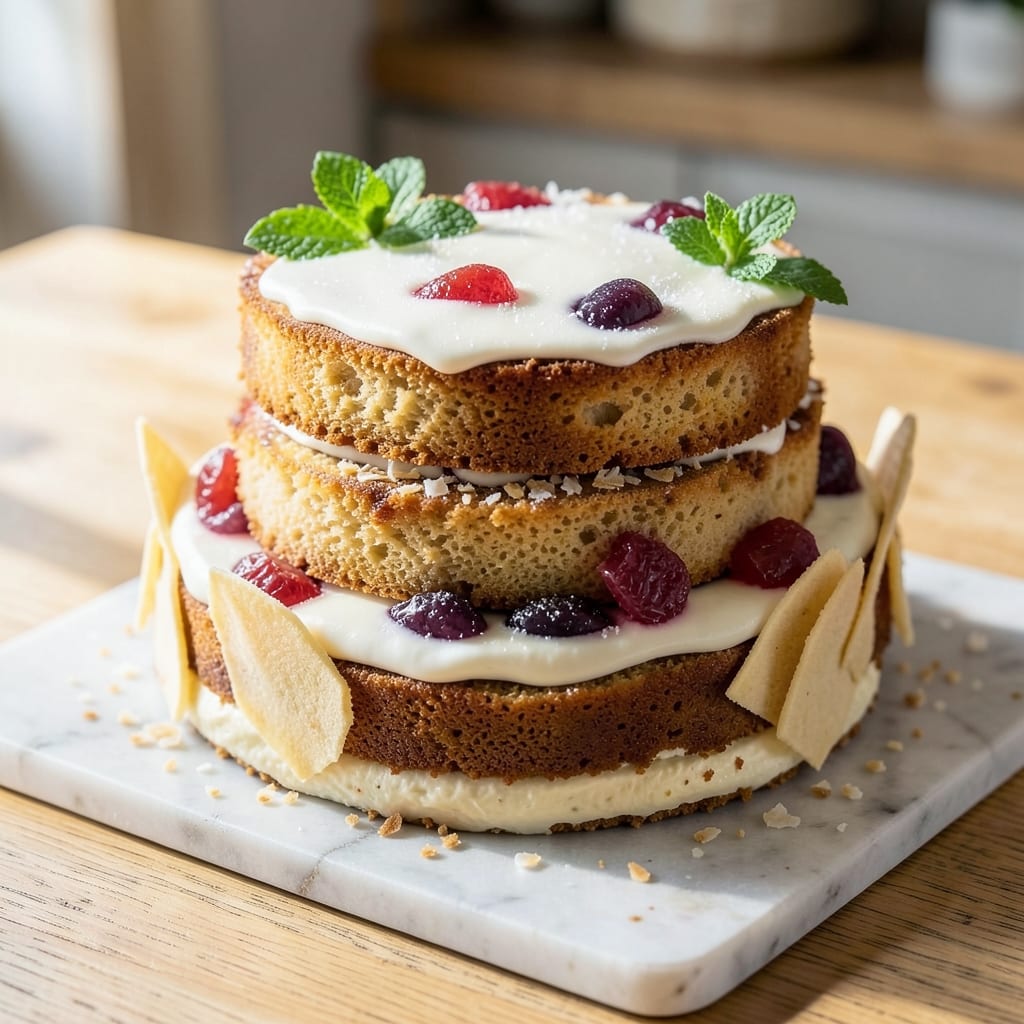
This Asian sponge fruit cake brings together delicate layers of moist sponge cake, vibrant tropical fruit, and a signature crunchy coconut topping—inspired by the rich traditions of Southeast Asian baking. 🌺 The secret lies in balancing light, airy sponge with bursts of candied fruit and a toasted coconut crust that adds irresistible texture. Perfect for celebrations or special occasions, this recipe blends precision with cultural flair, delivering a dessert that’s both elegant and comforting.
What sets this cake apart is the fusion of techniques: a Japanese-inspired sponge baked in layers, filled with a luscious jam or candied fruit mixture, and crowned with a Malaysian kuih-style coconut topping for crunch. The process requires patience—allowing the sponge to bake just until tender, then assembling with care—but the result is a cake that’s impossibly light yet rich, with every bite offering a harmonious blend of textures and flavors. No specialized equipment is needed, just a steady hand and attention to detail.
The final product is a golden, multi-layered masterpiece with a fragrant coconut aroma wafting from the topping, while the fruit filling adds pockets of sweet-tart surprise. Whether you’re serving it at a family gathering or simply treating yourself, this cake delivers restaurant-quality results with a touch of homestyle warmth. The best part? It keeps beautifully for days, making it ideal for meal prep or gifting.
Optional decorative touches—like a dusting of powdered sugar or fresh tropical flowers—elevate the presentation, but the cake’s natural beauty shines even without them. Ready in about 2 hours (including baking and cooling), this recipe proves that homemade desserts can be both impressive and approachable. Let’s get baking!
Ingredients for asian sponge fruit cake
Twelve carefully selected ingredients blend Japanese sponge precision with Southeast Asian coconut-kuih tradition.
| Ingredient | Amount | Notes |
|---|---|---|
| All-Purpose Flour 🌾 | 3 ½ cups | Sifted for light texture |
| Granulated Sugar 🍚 | 2 cups | Superfine preferred for smoothness |
| Unsalted Butter 🧈 | 1 ½ cups | Room temperature, European preferred |
| Large Eggs 🥚 | 6 whole | Room temperature for even mixing |
| Baking Powder 🧂 | 2 tbsp | Aluminum-free for stability |
| Vanilla Extract 🌿 | 1 tbsp | Pure Madagascar preferred |
| Shredded Coconut 🥥 | 2 cups | Sweetened, unsweetened works too |
| Brown Sugar 🍚 | ½ cup | Packed for moisture |
| Mandarin Orange Peel 🍊 | 1 tbsp | Finely minced, organic preferred |
| Lime Zest 🍋 | 1 tbsp | Freshly grated for brightness |
| Lime Juice 🍋 | ¼ cup | Freshly squeezed |
| Mango Puree 🥭 | 1 ½ cups | Homemade or quality jarred |
| Powdered Sugar 🍚 | ½ cup | For dusting |
| Salt 🧂 | ½ tsp | Fine sea salt |
| Vegetable Oil 🫒 | ¼ cup | For greasing pans |
The sponge's lightness hinges on European-style unsalted butter—look for brands like Plugrá or Miyoko's for optimal creaminess. Superfine sugar (or pulse regular sugar in a food processor) prevents graininess, while aluminum-free baking powder ensures reliable rise. For the coconut topping, Trader Joe's sweetened shredded coconut is my go-to—it's finely textured and consistently sweet. The mandarin peel should be organic to avoid wax residue; zest the outer layer only for maximum flavor without bitterness. Lime zest adds a subtle citrus note that brightens the tropical fruit filling.
No superfine sugar? Pulse regular granulated sugar in a food processor for 30 seconds—it works in a pinch. Substitute unsweetened coconut in the topping by adding 1 tbsp brown sugar for sweetness. The mango puree can be swapped for guava or passionfruit for different flavor profiles. Vegetable oil spray works instead of greasing with oil, though butter leaves a richer flavor. For the mandarin peel, if organic isn't available, peel and zest a blood orange for a deeper citrus aroma. The vanilla extract can be replaced with 1 tsp vanilla bean paste for intensity, though pure Madagascar remains ideal.
Store the assembled cake in an airtight container at room temperature for up to 4 days, though it's best enjoyed within 2 days for optimal texture. The coconut topping can be made 3 days ahead and stored separately, toasted fresh before serving. For longer storage, wrap tightly in plastic and refrigerate for up to 1 week, bringing to room temperature before serving. The fruit filling keeps for 5 days in the fridge—stir in 1 tsp lime juice before reusing to prevent mold.
Why You'll Love This Recipe
- No Fuss Mixing: I swear by this sponge’s simplicity—the butter gets whipped with sugar until fluffy (no stand mixer needed), then eggs fold right in. The baking powder does the lifting, so you’re not stressing over layers or steam baths. Honestly, my first attempt turned out fine despite me eyeballing the flour.
- Buttery Sweet Magic: That rich butter-to-sugar ratio? It’s what makes this cake dangerously addictive. The eggs add structure without heaviness, and the crumb stays tender for days. Here’s what sold me—it’s sweet enough to satisfy a dessert craving but not cloying like some fruit cakes.
- Weeknight Workhorse: Slice it warm for breakfast with tea, pack it for lunch, or serve it at dinner with whipped cream. The sponge’s neutral base soaks up fruit compotes or jam perfectly—I’ve used it for everything from birthday celebrations to lazy Sunday mornings. (Yes, even on a Tuesday night.)
- Budget-Friendly Luxury: Five ingredients, no specialty items—this cake costs pennies but tastes like a bakery treat. The leftovers? They last a week, and the slices reheat beautifully. Between us, I’ve fed a crowd of 10 for under $15 with this recipe. That’s a win.
Step-by-step instructions for tropical layers with crunchy coconut topping
Here's the precise method for creating a perfectly layered Asian sponge cake with vibrant tropical flavors.
👨🍳 Step 1: Prepare the Cake Batter Foundation
Preheat your oven to 350°F and grease two 9-inch round cake pans with the 0.25 cup vegetable oil, then line the bottoms with parchment paper. Sift together the 3.5 cups all-purpose flour and 2 tbsp baking powder in a large bowl to eliminate any lumps.
In a separate large mixing bowl, beat the 1.5 cups unsalted butter and 2 cups granulated sugar together on medium speed until light and fluffy—about 3-4 minutes. This step is crucial for creating air pockets that give the cake its signature sponge texture. Add the 6 whole large eggs one at a time, mixing well after each addition.
🍳 Step 2: Incorporate Wet Ingredients and Zest
Combine the 1 tbsp vanilla extract, 0.25 cup lime juice, 1 tbsp lime zest, and 1 tbsp mandarin orange peel in a small bowl, then mix into the butter-egg mixture. The citrus zest adds a bright, aromatic quality that balances the sweetness perfectly.
Gradually add the dry ingredients to the wet mixture, alternating with the 1.5 cups mango puree. Begin and end with the dry ingredients, mixing on low speed just until combined. Overmixing develops gluten and makes the cake dense, so stop as soon as everything is incorporated. The batter should be smooth and slightly thick.
🥘 Step 3: Layer and Bake the Cakes
Divide the batter evenly between the prepared cake pans. Tap each pan firmly on the counter to remove any air bubbles. Bake for 25-30 minutes or until a toothpick inserted into the center comes out clean. The cakes should be golden brown on top and spring back when gently pressed.
Allow the cakes to cool in the pans for 10 minutes, then transfer them to a wire rack to cool completely. This cooling period is essential for setting the structure before layering. While the cakes cool, prepare the coconut topping by mixing the 2 cups shredded coconut and 0.5 cup brown sugar in a bowl.
⏰ Step 4: Assemble the Layers
Once the cakes are completely cool, level the tops if necessary. Place the first cake layer on a serving plate and spread a thin layer of the 1.5 cups mango puree evenly over the top. This puree acts as a natural glaze and binding agent for the layers.
Dust the top of the mango layer with 0.25 cup powdered sugar to create a smooth surface. Place the second cake layer on top and repeat the process with another layer of mango puree and powdered sugar. Finally, spread the remaining coconut mixture evenly over the top layer, pressing gently to adhere.
🍽️ Step 5: Rest and Serve
Let the assembled cake rest at room temperature for at least 1 hour before slicing. This resting period allows the layers to fully set and the flavors to meld together. The coconut topping will firm up slightly, creating a delightful crunchy contrast to the soft sponge layers.
Slice the cake into 12 equal portions and serve at room temperature. Each slice should reveal the vibrant layers of mango puree and the crisp coconut topping. The cake's texture should be light yet moist, with a perfect balance of sweetness and citrus brightness.
Pro Tips For Making Asian Sponge Fruit Cake
- Whisk Eggs Like You Mean It: Beat those eggs on high for a solid 5 minutes until they’re pale, thick, and triple in volume—no streaks allowed. I learned this the hard way when my cake turned dense; the extra air is what makes this sponge light and airy.
- Cream Butter and Sugar Slowly: Mix the butter and sugar at medium speed until it’s fluffy and pale, then switch to low for the last 2 minutes. Rushing this step traps air, and your cake will end up compact instead of tender. (Yes, even if you’re impatient like me.)
- Sift Dry Ingredients Together: Whisk baking powder and flour in a separate bowl before folding it into the wet mix—this prevents lumps and ensures even distribution. Skipping this step gives you a cake with uneven texture, and nobody wants that.
- Don’t Overmix After Adding Flour: Once you fold in the dry ingredients, stop mixing as soon as everything’s combined—just 10-12 strokes max. Overmixing develops gluten, and your cake will turn tough instead of staying soft and moist. (Your future self will thank you.)
Pro cooking tips for this recipe
Cake Pan Prep
Grease your 9-inch round cake pans with 0.25 cup vegetable oil and line the bottoms with parchment paper—this prevents sticking and ensures clean slices. For extra insurance, I dust the sides with a light coating of all-purpose flour after greasing. Preheat your oven to 350°F while preparing the batter, as this ensures even baking from the moment the cakes go in. 🌡️
Batter Consistency
The key to a light sponge is not overmixing—stop as soon as the dry ingredients are just incorporated. Your batter should look smooth but slightly thick, like heavy pudding. If it feels too thin, add 1 tbsp more flour. I use a hand mixer on low speed to avoid developing gluten, which would make the cake dense. Room-temperature eggs and butter are non-negotiable for proper emulsification. 🥚
Citrus Zest Trick
Use a microplane to zest the lime and mandarin orange peel—this captures fine, flavorful particles without the bitter white pith. For extra brightness, I add 1 tsp lime juice to the coconut topping before baking. The zest infuses the sponge with aromatic depth, balancing the sweetness of the mango puree and coconut. Store-bought zest blends often contain fillers, so fresh is always better. 🍋
Layering Like a Pro
Level your cake layers with a serrated knife if needed—uneven layers lead to wobbly cakes. Spread the mango puree thinly (about ¼ inch) to avoid sogginess. Dust each layer with powdered sugar to create a smooth surface for stacking. Press the coconut topping gently but firmly to ensure it adheres to the top layer. 🍰
Coconut Toasting
For a deeper flavor, toast the coconut topping in a 350°F oven for 5-7 minutes before pressing it onto the cake. This caramelizes the sugars slightly, adding a nutty aroma. If you prefer extra crunch, sprinkle 1 tbsp toasted coconut flakes on top after assembling. Store any leftover topping in an airtight container for up to 3 days. 🥥
Resting Period
Never skip the 1-hour rest before slicing—this lets the layers set and the flavors meld. The coconut topping will firm up slightly, creating that perfect crunch contrast. If you're short on time, chill the cake in the fridge for 20 minutes before serving, but room temperature is ideal for texture. 🕒
Nutrition facts
Frequently asked questions
Can I substitute mango puree with another fruit?
For a similar tropical flavor, try guava puree or passionfruit pulp. If you prefer berries, use raspberry jam (thinned with a little water) for a tangy twist. Just ensure your substitute is well-drained to avoid a soggy cake.
Why does my coconut topping turn mushy?
Overmixing the coconut and brown sugar creates moisture, making it stick together. For extra crunch, toast the mixture in the oven for 5-7 minutes at 350°F before pressing it onto the cake. Press firmly to help it set properly.
How do I make this cake gluten-free?
Replace the 3.5 cups all-purpose flour with a 1:1 gluten-free baking flour blend (like Bob's Red Mill) and add 1 tsp xanthan gum to mimic gluten's structure. Reduce baking powder to 1.5 tbsp to prevent over-rising. Test the blend first in a small batch.
Can I bake this cake in a different pan size?
Yes, but adjust baking time accordingly. For 8-inch pans, bake 20-25 minutes (check at 20 minutes), and for 10-inch pans, bake 30-35 minutes. Use the toothpick test to confirm doneness. Smaller pans may require slightly less batter per layer.
How do I store leftovers?
Keep the cake in an airtight container at room temperature for up to 4 days. For longer storage, refrigerate for up to 1 week, but bring it to room temperature before serving. The coconut topping stays crispy when stored separately and toasted fresh.