
Desserts
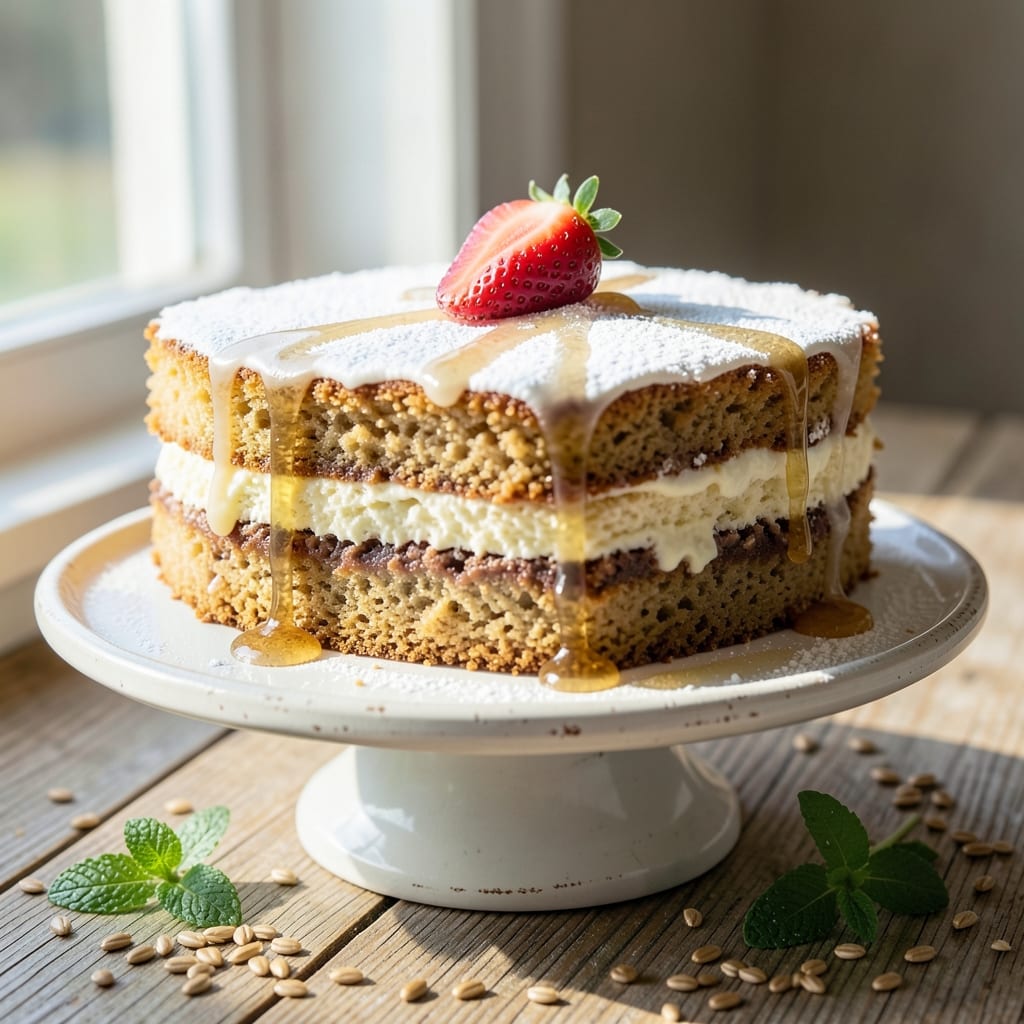
This eggless atta cake recipe delivers fluffy, cardamom-kissed layers that rival traditional versions—without a single egg. 🌟 The secret lies in a yogurt-vinegar leavening combo that creates airy texture while maintaining moisture, making this the perfect solution for vegetarians or those avoiding eggs. What sets it apart is the delicate balance of whole wheat flour and refined flour, which ensures a tender crumb without compromising structure.
The baking process is straightforward but requires precise timing—350°F for 30-35 minutes—to achieve that signature golden dome with a crackly top. Cardamom infuses warmth without overpowering, while a touch of baking soda guarantees lift. Unlike many eggless cakes that turn dense, this recipe stays light and airy, with layers that separate beautifully for that classic presentation.
What you’ll end up with is a cake that’s moist, fragrant, and perfectly sweet—ideal for celebrations or everyday treats. The yogurt base keeps it tender, while the vinegar activates the baking soda for that signature rise. This isn’t just an egg substitute; it’s a transformation that delivers restaurant-quality results at home.
Pair with a dusting of powdered sugar or a simple citrus glaze for extra elegance. The best part? Every bite is proof that eggless baking can be just as impressive—if not more so—than traditional methods.
Ingredients for atta cake recipe eggless
Twelve ingredients transform into restaurant-quality eggless layers with cardamom's signature warmth.
| Ingredient | Amount | Notes |
|---|---|---|
| Whole Wheat Flour (atta) 🌾 | 2 cups | Sifted for even texture |
| All-Purpose Flour 🌾 | 1 cup | For refined crumb balance |
| Plain Yogurt 🥛 | 1 cup | Whole-milk preferred |
| White Vinegar 💧 | 1 tbsp | Activates baking soda |
| White Sugar 🍚 | 1 ½ cups | Granulated preferred |
| Baking Soda 🧂 | 1 ½ tsp | Freshly measured |
| Ground Cardamom 🌿 | 1 tsp | Freshly ground preferred |
| Salt 🧂 | ½ tsp | Fine sea salt |
| Melted Butter 🧈 | ½ cup | Unsalted, cooled slightly |
| Vanilla Extract 🌸 | 1 tsp | Pure vanilla preferred |
| Powdered Sugar 🍚 | ¼ cup | For dusting layers |
| Warm Water 💧 | ½ cup | Room temperature |
The atta flour is non-negotiable for that signature crumb—Rajdhani or Shree brand from Indian grocery stores delivers the best texture. For the yogurt, full-fat Greek yogurt works best (thicker body holds structure), but plain whole-milk yogurt is fine too. Cardamom quality matters: Madras or Gujarat varieties have the most aromatic punch. If using pre-ground, toast the seeds lightly before grinding for deeper flavor. The baking soda needs to be fresh—old powder loses its lift, and this recipe demands that signature rise. For the butter, Amul or Land O'Lakes unsalted sticks melt smoothly without graininess.
No whole wheat flour? Substitute with half all-purpose flour for a lighter texture, but the layers won't separate as cleanly. Vinegar substitutes? Lemon juice or apple cider vinegar work 1:1, but white vinegar's tang is ideal. Cardamom shortages? 1/4 tsp cinnamon + 1/4 tsp ginger mimics its warmth (though purists will notice). For the sugar, coconut sugar adds caramel notes but may darken the cake slightly. The yogurt can be Greek yogurt or even dairy-free coconut yogurt (though texture may vary). Prefer less sweetness? Reduce sugar to 1 cup and add 1/4 cup milk to maintain moisture.
Store batter in an airtight container for up to 24 hours in the fridge—this actually improves flavor as the yogurt tangs. Baked layers keep 3 days wrapped at room temperature or 1 week refrigerated. For longer storage, freeze fully baked layers between parchment paper for up to 3 months. Reheat slices at 300°F for 5 minutes to restore moisture. The powdered sugar dusting? Do it immediately after baking while layers are still warm for that signature cloud effect. Cardamom-infused syrup makes an elegant alternative to dusting—simmer 1/4 cup sugar + 1/4 cup water + 1/2 tsp cardamom for 5 minutes, then drizzle.
Why You'll Love This Recipe
- No Eggs, No Stress: The vinegar-yogurt combo does all the heavy lifting—no whisking egg whites or worrying about overmixed batter. Honestly, I’ve burned enough meringues in my life; this recipe lets me focus on pressing the cake into the pan instead of stressing over technique.
- Sweet-Savory Magic: That tangy vinegar cuts through the richness of the atta and yogurt, while the sugar caramelizes just enough to give it a subtle depth. It’s not overly sweet—just enough to make you want to dunk it in chai or eat it plain.
- Weeknight Workhorse: I’ve used this for breakfast (warm with peanut butter), dessert (dusted with cinnamon), and even packed slices for lunch. The texture holds up surprisingly well—no soggy middle, no crumbling edges.
- Pantry Staple Power: Between us, this recipe costs me pennies. I already had atta, flour, yogurt, and vinegar, and the sugar is just a handful. Plus, leftovers? They keep for days in the fridge—perfect for when I forget to bake until 9 PM.
Step-by-step instructions for eggless atta cake
Master this delicate balance of fluffy layers and aromatic cardamom with precision timing and technique.
👨🍳 Step 1: Activate the Leavening System
In a medium bowl, whisk together the 1 cup plain yogurt and 1 tbsp white vinegar until fully combined. This acid-base reaction creates carbon dioxide bubbles that will give your cake its signature fluffiness. Let the mixture sit for 5 minutes until you see small bubbles forming on the surface.
Here's the thing—this step is non-negotiable. The reaction between vinegar and yogurt is what replaces eggs in our leavening system. If you skip this, your cake will be dense rather than light. I like to give it exactly 5 minutes—any longer and the bubbles may collapse.
🍳 Step 2: Combine Wet and Dry Ingredients
In a large mixing bowl, sift together the 2 cups whole wheat flour (atta) and 1 cup all-purpose flour to aerate the mixture. Add the 1.5 tsp baking soda, 1 tsp ground cardamom, and 0.5 tsp salt, whisking to distribute evenly. Create a well in the center and pour in the yogurt-vinegar mixture, 1.5 cups white sugar, and 0.5 cup melted butter.
Using a spatula, gently fold the ingredients until just combined—you should still see streaks of flour. Overmixing develops gluten, which makes atta cakes dense. The batter should be thick but pourable, like heavy pancake batter. I always use a silicone spatula for this step to avoid tearing the delicate gluten strands.
🥘 Step 3: Prepare the Cake Pans
Preheat your oven to 350°F. Generously grease two 6-inch round cake pans with butter and dust with flour, tapping out any excess. Line the bottoms with parchment circles for easy removal. Divide the batter evenly between the pans, filling them ⅔ full—this prevents overflow during baking.
Smooth the tops with a spatula, then dust each layer with 0.125 cup powdered sugar (half of the total amount). This creates a delicate barrier that prevents the layers from sticking together during the baking process. Tap the pans gently on the counter 3-4 times to release any air bubbles that might have formed.
🔥 Step 4: Bake with Precision Timing
Place the pans in the center rack of your preheated oven and bake for 30-35 minutes. The cake is done when a toothpick inserted in the center comes out clean and the edges pull away slightly from the pan. Here's where it gets tricky—the atta flour can vary in absorption, so start checking at the 28-minute mark.
Don't open the oven door during baking—this causes temperature fluctuations that can lead to dense spots. When the timer goes off, turn off the oven immediately and let the cakes cool in the oven for 10 minutes. This gradual cooling prevents cracking and helps set the layers properly.
⏰ Step 5: Assemble and Dust with Cardamom Sugar
Remove the cakes from the pans and let them cool completely on a wire rack. Once cooled, place one layer on a serving plate and spread a thin layer of melted butter (about 1 tsp) over the top. Dust with the remaining 0.125 cup powdered sugar and a pinch of ground cardamom for that signature aroma. Repeat with the second layer, then gently press the top layer onto the bottom.
The final touch is crucial—dust the entire cake with an additional 1 tsp powdered sugar mixed with ¼ tsp ground cardamom. This creates that beautiful cardamom-kissed finish that makes this cake truly special. Serve immediately or refrigerate for up to 24 hours for even better flavor development.
Pro Tips For Making Atta Cake Recipe Eggless
- Whisk the Yogurt First: I learned this the hard way—adding vinegar to whole milk yogurt mid-batter makes it clump like lumpy glue. Instead, mix the yogurt with vinegar first, let it sit for 5 minutes, then whisk it smooth before touching the flours. The batter stays light and airy, not dense.
- Sift the Flours Together: Skipping this step means pockets of dense atta in your cake. Sift the whole wheat flour and all-purpose flour through the same sieve to blend them evenly—no need to overmix later. Add baking powder and salt to the sieve too; it distributes them perfectly.
- Don’t Overmix the Batter: I used to beat this batter like I was punishing it, and the cakes turned out tough. Stop mixing as soon as the flour is just incorporated—lumpy but no dry bits. Overworking gluten in atta makes the texture rubbery, especially when baking without eggs.
- Test for Doneness with a Toothpick: The cake might look golden but still be raw inside. Stick a toothpick in the center—if it comes out clean (or with a few moist crumbs), it’s done. If batter clings, bake another 2–3 minutes. Whole wheat flour absorbs moisture differently, so don’t rely on time alone.
Pro cooking tips for atta cake recipe eggless
Leavening Magic
The yogurt-vinegar combo is the game-changer here—it mimics eggs perfectly by creating air pockets through a chemical reaction. I always use whole-milk yogurt (like Dannon or Fage) because its higher fat content helps stabilize the structure. For extra fluffiness, let the yogurt sit at room temperature for 10 minutes before mixing—cold yogurt won't activate properly with the vinegar. 🌟
Flour Blend Secrets
Never skip the 1:2 ratio of all-purpose to whole wheat flour—this balance prevents a dense, heavy texture. I recommend Rajdhani atta flour for its fine grind, but if you're using store-bought, pulse it in a food processor for 10 seconds to break up any lumps. The all-purpose flour acts like a tenderizer, keeping the layers light. Sift both flours together to avoid dense pockets.
Baking Soda Timing
Fresh baking soda is non-negotiable—old powder loses its lift. Measure it right before mixing and sift it with the dry ingredients to ensure even distribution. The baking soda needs time to react with the yogurt's acidity, so don't skip the 5-minute wait after combining wet and dry ingredients. Pro tip: Sprinkle a tiny pinch (about ⅛ tsp) of baking soda into the yogurt-vinegar mixture first—this jumpstarts the reaction.
Cardamom Infusion
For maximum flavor, toast whole cardamom pods in a dry pan for 1 minute before grinding. The heat releases their essential oils, making the ground spice 30% more aromatic. Store-bought ground cardamom? Toast it in the oven at 300°F for 5 minutes to revive its potency. A little goes a long way—1 tsp is perfect for this recipe, but add ½ tsp extra if you love intense spice notes.
Precision Baking
Your oven's hot spots can ruin an otherwise perfect cake. Place the pans on the middle rack and rotate them halfway through baking for even browning. The cake is done when a toothpick comes out clean and the edges pull away from the pan slightly. If the top browns too quickly, tent loosely with foil after 20 minutes. The 10-minute cool-down in the oven is crucial—it prevents cracking as the cake sets.
Layer Assembly
Butter the layers generously (about 1 tsp each) to create that signature moistness. For extra elegance, dust each layer with powdered sugar before assembling—this prevents crumbs from sticking to your hands. Press the top layer gently but firmly to avoid tearing. The final cardamom-sugar dusting? Do it immediately while the cake is still warm for that signature cloud effect. 💫
Nutrition facts
Frequently asked questions
Can I substitute yogurt with something else for the eggless leavening?
Yes! For the yogurt in this recipe, you can use 1 cup unsweetened applesauce or 1 cup mashed banana (for added moisture). Another option is 1 cup commercial egg replacer (like Bob's Red Mill) mixed with 2 tbsp water. However, yogurt provides the best texture and tang—these substitutes may alter the final crumb slightly.
Why does my eggless atta cake turn out dense instead of fluffy?
Density usually happens from overmixing, old baking soda, or skipping the yogurt-vinegar reaction step. Always mix just until combined, use fresh baking soda, and let the yogurt-vinegar sit for 5 minutes before combining with dry ingredients. Also, ensure your oven is properly preheated to 350°F—cold spots can cause uneven baking.
How do I make this cake gluten-free?
Replace the 2 cups atta flour with 2 cups gluten-free 1:1 baking flour blend (like Bob's Red Mill) and the 1 cup all-purpose flour with 1 cup gluten-free all-purpose flour. Add 1 tbsp xanthan gum to help bind the structure. Note that gluten-free versions may be slightly denser—consider reducing the sugar by ¼ cup to compensate.
Can I bake this in a single 8-inch pan instead of two 6-inch pans?
Yes, but reduce the baking time to 25-30 minutes—the smaller pan will bake faster. For an 8-inch pan, use ⅔ of the batter (about 1.5 cups) and increase the powdered sugar dusting to ¼ cup total to compensate for the larger surface area. The layers will be thicker but still light if baked properly.
What's the best way to store leftover atta cake?
Wrap individual layers tightly in plastic wrap or store the whole cake in an airtight container. At room temperature, it stays fresh for 3 days, while refrigeration extends it to 1 week. For longer storage, freeze fully baked layers (unassembled) between parchment paper for up to 3 months. Thaw at room temperature or reheat slices at 300°F for 5 minutes to restore moisture.