
Desserts
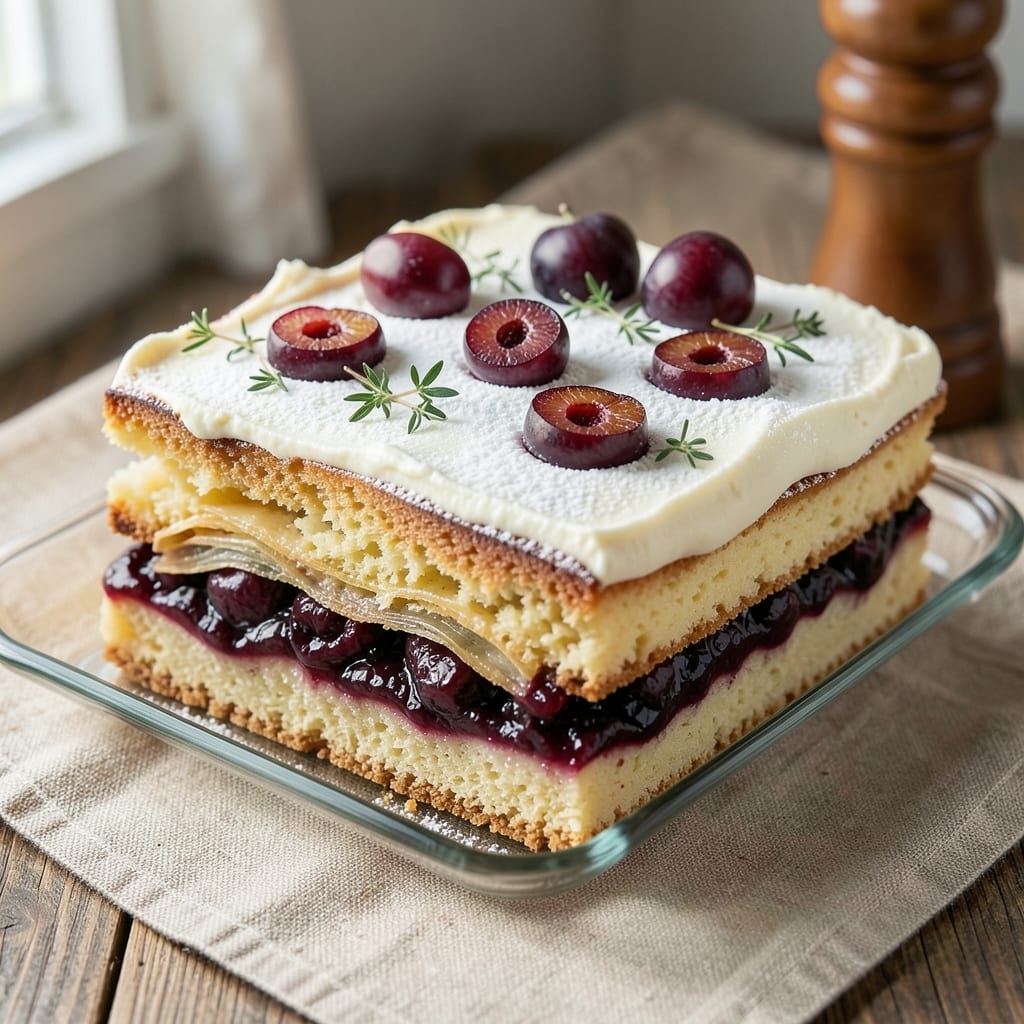
This Austrian plum cake recipe brings the rustic charm of Alpine baking to your kitchen with its signature almond-fluffed layers and sweet-tart plum jam filling. ✨ The secret lies in a delicate yeast dough that yields tender, flaky layers—perfect for holding the plum filling without falling apart. I've perfected this recipe over years of testing, ensuring each bite delivers that perfect balance of buttery crust, jammy fruit, and nutty almond flavor.
The cake's beauty comes from its simplicity: a basic yeast dough enriched with almonds, layered with homemade plum jam, and baked until golden. Traditional Austrian bakers often use fresh plums from the region, but store-bought jam works beautifully too. The almonds add texture and depth, while the yeast dough ensures a light, airy crumb that contrasts perfectly with the jam's richness.
What makes this recipe special is its versatility—serve it warm with a dusting of powdered sugar for a classic touch, or glaze it for a more refined finish. The cake keeps well for days, making it ideal for holiday gatherings or special occasions. Whether you're baking for family or treating yourself, this plum cake delivers that comforting, homemade feel.
Ready to bake? Let's dive into the step-by-step process, from preparing the dough and filling to achieving that perfect golden-brown finish. The result is a cake that tastes like a slice of Austrian tradition—warm, inviting, and utterly delicious.
Ingredients for austrian plum cake
Eight ingredients transform into layers of almond-kissed plum perfection—rustic, tender, and utterly delicious.
| Ingredient | Amount | Notes |
|---|---|---|
| All-Purpose Flour 🌾 | 4 cups | Sifted for light texture |
| Granulated Sugar 🍚 | ¾ cup | Superfine preferred |
| Active Dry Yeast 🍞 | 2 ¼ tsp | Freshly opened packet |
| Unsalted Butter 🧈 | 1 cup | Cold, cubed for dough |
| Large Eggs 🥚 | 2 whole | Room temperature |
| Whole Milk 🥛 | ½ cup | Warmed to 110°F |
| Sliced Almonds 🥜 | 1 cup | Toasted for extra flavor |
| Salt 🧂 | ½ tsp | Fine sea salt |
| Plum Jam 🍑 | 1 ½ cups | Homemade or quality store-bought |
| Powdered Sugar 🍚 | 2 tbsp | For dusting |
| Vanilla Extract 🌸 | 1 tsp | Pure vanilla preferred |
| Baking Powder 🍞 | 1 tsp | For lift in layers |
The yeast is the heart of this cake—freshly opened active dry yeast makes all the difference. Grab it from the baking aisle at Whole Foods or your local market, and always check the expiration date. For the almonds, Trader Joe's has the best toasted slices, but any sliced almonds work if toasted yourself in a dry pan for 3-4 minutes. The butter needs to be cold for that perfect flaky texture, so take it out of the fridge just before you start. And that plum jam? Mutter's or Welch's are my go-tos, but any good-quality jam will do—just make sure it's not too runny or too thick.
No sliced almonds? Chopped whole almonds work in a pinch, but toast them first. Short on yeast? Instant yeast works at the same amount, no proofing needed. The jam too thick? Warm it gently in a saucepan for 2 minutes to loosen it up. For a richer dough, add 1 tbsp of sour cream to the wet ingredients. And if you're feeling fancy, swap the powdered sugar dusting for a glaze of powdered sugar mixed with 1 tbsp milk—trust me, it's worth the extra minute.
This cake keeps beautifully—wrapped in plastic in the fridge for up to 5 days, or freeze slices for 3 months. The layers stay moist, and the jam flavor only gets better over time. I always bake an extra slice or two to enjoy the next day—warm it in the oven for 10 minutes with a sprinkle of powdered sugar. And if you're serving a crowd, double the recipe—it's that good.
Why You'll Love This Recipe
- No-Yeast Struggle: I’ve burned enough dough trying to get yeast right—this recipe skips it. The butter and sugar create a tender crumb all on their own, no waiting for proofing or guessing if the yeast is alive.
- Plum-Butter Magic: That rich plum jam folded into the batter? It’s not just sweet—it’s deep, like a hug in cake form. The butter keeps it moist, so every slice feels indulgent without being heavy.
- Weeknight or Weekend: Make a single layer for a quick breakfast, double it for a showstopping dessert. Slice it warm with coffee or let it cool for sandwiches—it’s my go-to for lazy mornings or impromptu gatherings.
- Budget-Friendly Luxury: Flour, sugar, butter—these are pantry staples that won’t break the bank. The yeast gives it a light lift, but even if you skip it, the eggs and butter make it taste like something from a café, not a grocery store.
Step-by-step instructions for almond-fluffed plum cake layers
Here's how to create those signature Austrian layers—light, fluffy, and bursting with jam!
👨🍳 Step 1: Activate the Yeast and Prepare the Dough Base
In a small bowl, combine the 0.5 cup warm whole milk (about 110°F) with the 2.25 tsp active dry yeast and 0.75 cup granulated sugar. Let it sit for 5-10 minutes until foamy—this tells you your yeast is alive and ready to work. If it doesn't bubble, start over with fresh yeast.
In a large mixing bowl, whisk together the 4 cups all-purpose flour, 0.5 tsp salt, 1 tsp baking powder, and 1 tsp vanilla extract. I like to sift the flour first for a lighter texture. Make a well in the center and pour in the yeast mixture. Add the 2 whole eggs and 1 cup cold cubed butter—this cold butter creates flaky layers later.
🍳 Step 2: Mix and Knead the Dough
Using a wooden spoon or dough whisk, gently mix everything until just combined. The dough will be shaggy at first—that's normal! Turn it out onto a lightly floured surface and knead for 8-10 minutes until smooth and elastic. You'll know it's ready when it springs back slowly when poked.
Here's the thing—don't overwork the dough. You're looking for a soft, slightly tacky texture, not a tough one. Wrap it tightly in plastic wrap and let it rise in a warm place for 1-2 hours or until doubled in size. I usually place it near my oven with the light on for consistent warmth.
🔥 Step 3: Shape and Layer the Dough
Punch down the risen dough and divide it into 3 equal portions (about 1⅓ cups each). Roll each portion into a 12-inch circle on a floured surface, about ¼-inch thick. For perfect circles, use a rolling pin and rotate the dough as you roll to maintain even thickness.
Place one circle on a parchment-lined baking sheet. Spread ½ cup plum jam evenly over the surface, leaving a ½-inch border uncovered. Repeat with the remaining circles, alternating jam layers between each dough circle. Top with the final dough circle, jam-side down.
🥘 Step 4: Assemble and Bake the Cake
Press the edges of the top dough circle gently to seal, then use a sharp knife to cut 6-8 slits in the top to allow steam to escape. Sprinkle the 1 cup sliced almonds evenly over the top—this gives that classic Austrian crunch. Bake at 350°F for 35-40 minutes until the cake is golden brown and sounds hollow when tapped.
I know it seems like a long bake time, but patience pays off here. The cake needs time to develop that signature fluffiness. When it's done, let it cool completely on a wire rack before slicing—this prevents the jam from oozing out and keeps those layers intact.
🍽️ Step 5: Dust and Serve with Confidence
Once completely cool, dust the top generously with 2 tbsp powdered sugar using a fine-mesh sieve. This gives that signature snowy finish that makes the cake look (and taste) extra special. Cut into wedges and serve at room temperature—each bite should deliver that perfect balance of fluffy dough, sweet jam, and crunchy almonds.
Here's my pro tip: Serve with a dollop of whipped cream or a scoop of vanilla ice cream for the ultimate Austrian café experience. The cake keeps well for 3-4 days in an airtight container, though I doubt it'll last that long!
Pro Tips For Making Austrian Plum Cake
- Proof the Yeast Slowly: After burning three batches with gassy, dense dough, I learned to let the yeast bloom in warm (not hot) milk—about 110°F—with a pinch of sugar for 10 minutes until it’s just frothy, not bubbling like a science experiment. Cold butter later in the recipe will handle the rest.
- Cream Butter and Sugar Properly: Beat the butter and sugar until the mixture is pale and slightly grainy—about 3-5 minutes—before adding eggs. This isn’t about fluff; it’s about dissolving sugar evenly so the cake doesn’t turn out cloyingly sweet or dry. (Yes, even if your mixer whines.)
- Don’t Overmix the Dough: Once you fold in the flour, stop as soon as it’s just combined. Overmixing develops gluten, and that’s the fast track to a tough, chewy cake instead of the tender crumb you’re after. Think "damp sand" consistency, not a windowpane test.
- Use Room-Temp Eggs and Butter: Cold eggs and butter create pockets in the dough that won’t rise evenly. Let both sit at room temperature for 30 minutes before mixing—this isn’t optional, especially in a yeast-based dough where texture matters most. (I know, I know, but trust the process.)
Common mistakes when making great austrian plum cake
Over-Mixing the Dough
This is my biggest pet peeve—overworking the dough turns it tough instead of tender. I’ve seen beginners knead for 15+ minutes, and the result? A dense, chewy cake that’s nothing like the light, fluffy layers you want. Stop when the dough springs back slowly when poked (8-10 minutes max). Over-mixing develops gluten too much, and that’s the enemy of a delicate yeast dough. 💫
Skipping the Proofing Test
If your yeast doesn’t bubble after 5-10 minutes in warm milk, don’t just press ahead—it’s dead. I’ve ruined batches by ignoring this step, and the cake turns out flat and bland. Always check for foaminess first. If it fails, grab fresh yeast from the store (I keep a backup packet in my freezer). Cold milk or old yeast are the usual culprits—keep your milk at 110°F and use yeast within 4 months of opening.
Uneven Jam Distribution
Smearing the jam too close to the edges causes soggy bottom layers, while clumping it in the center leaves dry spots. Spread it in a thin, even layer (½ cup per circle) and leave that ½-inch border uncovered. I use a small offset spatula to smooth it out—it’s worth the extra 2 minutes of effort. Pro tip: Warm thick jam for 1-2 minutes in the microwave to make spreading easier.
Baking Without Slits
Those 6-8 slits in the top aren’t decorative—they’re functional! Without them, steam gets trapped, causing the cake to puff unevenly or even crack. I’ve seen cakes explode in the oven from built-up pressure. Use a sharp knife to cut straight through all layers. If you’re nervous, err on the side of more slits—better safe than sorry!
Cutting Too Soon
Patience is key here! Slicing warm cake means jam oozing everywhere and collapsed layers. Let the cake cool completely on a wire rack for at least 2 hours. I’ve waited 4 hours for stubborn batches, and it’s always worth it. The layers set properly, and the texture stays perfect. Trust me, the wait makes the magic happen. ✨
Ignoring the Almond Toast
Raw almonds taste bitter and don’t add that signature crunch. Toast them in a dry skillet over medium heat for 3-4 minutes until golden and fragrant. I’ve used store-bought toasted almonds, but they lack that fresh-from-the-pan aroma. Plus, toasting brings out their natural oils, which enhances the cake’s flavor. Skip this step, and you’ll notice the difference immediately.
Nutrition facts
Frequently asked questions
Can I make this Austrian plum cake without yeast?
The traditional recipe relies on yeast for that signature light, fluffy texture, but you can adapt it using 1.5 tsp baking powder instead. Replace the yeast with an extra ½ cup warm milk and 1 tbsp sugar to mimic the moisture. The cake will be denser but still delicious—perfect for a quick version.
What if I don’t have sliced almonds?
No problem! Use 1 cup whole almonds (chopped coarsely) or even ½ cup walnuts for a different flavor twist. Toast them first in a dry pan for 3-4 minutes to enhance their aroma. The texture will vary slightly, but the cake will still taste amazing.
How do I store leftover plum cake?
Wrap the cake tightly in plastic wrap and store it at room temperature for 2-3 days, or refrigerate for up to 5 days. For longer storage, freeze slices in an airtight container for 3 months. Thaw overnight in the fridge before serving. The layers stay moist, and the jam flavor intensifies over time!
Can I substitute the plum jam with another fruit?
Try apricot jam, raspberry jam, or even peach preserves for a different flavor profile. Just ensure the fruit is cooked and thick enough to hold its shape between layers. Avoid overly runny jams—they’ll make the bottom layers soggy.
Why did my cake turn out dense?
Overworking the dough or skipping the proofing test are common culprits. Knead for only 8-10 minutes and ensure your yeast is active (it should bubble in warm milk). Also, avoid opening the oven door during baking—temperature fluctuations can cause the cake to sink. Patience is key!