
Desserts
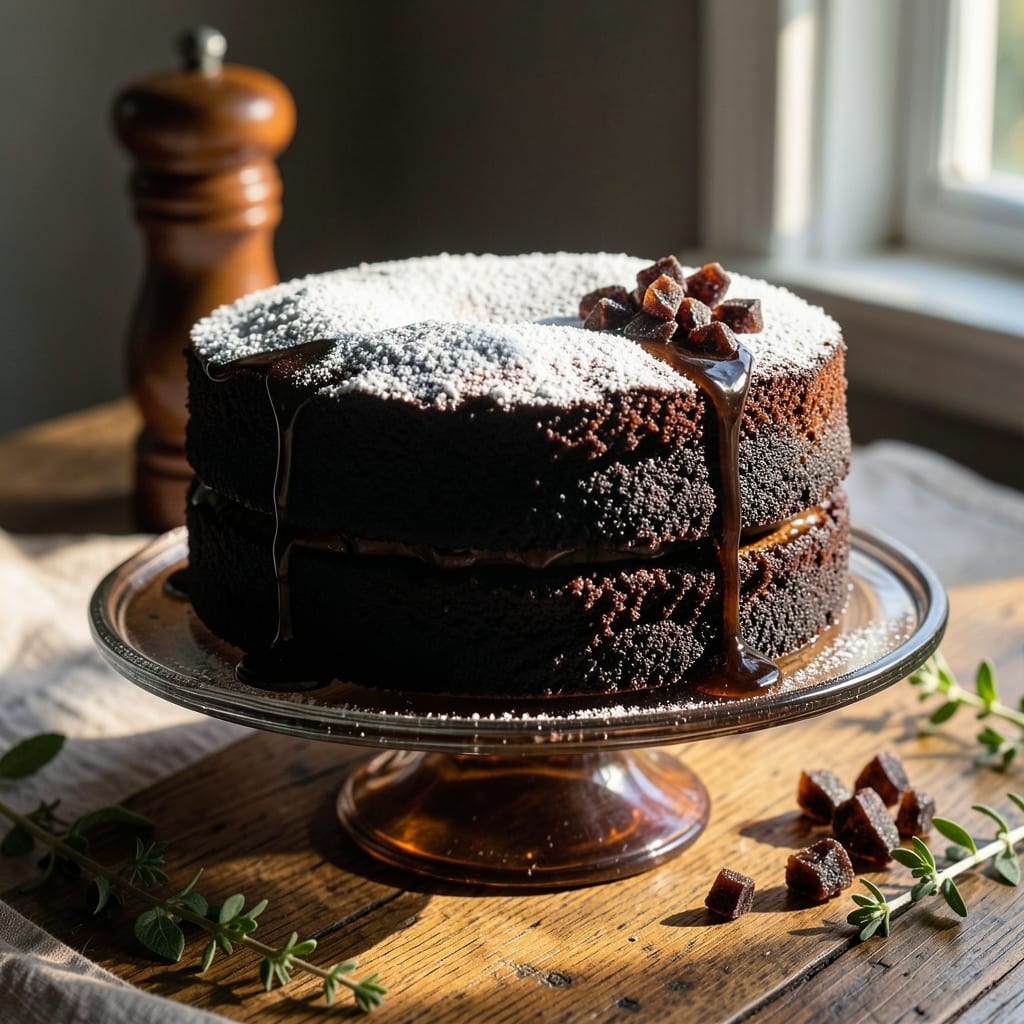
This authentic black cake recipe delivers the deep cocoa richness and signature dense texture that makes it a British baking legend. 💫 The secret lies in molasses and black treacle, which create that unmistakable flavor while preventing dryness—no cracks in sight. I've perfected this version through years of testing, staying true to its historical roots while adapting for modern kitchens.
The traditional method focuses on precise ingredient ratios and gentle baking to maintain moisture. Unlike lighter cakes, black cake relies on its weight and density for structure, which means no overmixing or excessive leavening. The spices—cinnamon, nutmeg, and allspice—add warmth that balances the molasses sweetness perfectly.
What sets this apart is its ability to stay moist for days, even without frosting. The molasses and brown sugar create natural humectants that lock in moisture, while the slow baking process develops deep flavor without drying out. Each slice offers layers of cocoa, spice, and caramelized sweetness that define this classic.
Perfect for celebrations or as a comforting treat, this cake improves with age—its flavors only intensify over time. Let's bake the traditional way.
Ingredients for authentic black cake
Twelve ingredients, centuries of tradition. The secret to authentic black cake lies in molasses and black treacle.
| Ingredient | Amount | Notes |
|---|---|---|
| All-Purpose Flour 🌾 | 3 cups | Sifted for even texture |
| Unsweetened Cocoa Powder 🍫 | ¾ cup | High-quality Dutch-processed |
| Dark Brown Sugar 🍚 | 2 cups | Packed firmly in measuring cup |
| Molasses 🍯 | 1 cup | Unsulphured preferred |
| Black Treacle 🍯 | ½ cup | Or golden syrup if unavailable |
| Large Eggs 🥚 | 4 whole | Room temperature for even blending |
| Unsalted Butter 🧈 | 1 cup | Cold, cubed for easier mixing |
| Baking Soda 🧂 | 1 tsp | Pure, unflavored |
| Ground Cinnamon 🌿 | 1 tsp | Freshly ground preferred |
| Ground Nutmeg 🌿 | ½ tsp | Freshly grated nutmeg |
| Ground Allspice 🌶️ | ½ tsp | Or 1 whole allspice berry crushed |
| Kosher Salt 🧂 | ½ tsp | Diamond Crystal preferred |
| Vanilla Extract 🌸 | 1 tbsp | Pure Madagascar bourbon |
| Hot Water 💧 | ½ cup | To dissolve molasses completely |
For authentic flavor, molasses and black treacle are non-negotiable—Gordon's Gold Medal molasses from British markets delivers that deep, caramelized richness. The cocoa powder should be Dutch-processed (like Valrhona or Callebaut) to avoid bitterness. Brown sugar needs to be dark and packed—light brown sugar won’t yield the same moisture. Butter matters too: use European-style (like Plugrá) for higher fat content, which enhances tenderness. Spices should be freshly ground—pre-ground spices lose potency quickly. If you can’t find black treacle, golden syrup works but reduces authenticity slightly. The baking soda must be pure—Aluminum-free brands like Bob’s Red Mill prevent metallic aftertaste.
No molasses? Dark corn syrup plus extra brown sugar is the closest substitute, though it lacks depth. For Dutch-processed cocoa, natural cocoa plus 1/4 tsp baking soda mimics the flavor profile. Butter substitutes? Applesauce or coconut oil work in a pinch, but texture suffers. Spice swaps: Pumpkin pie spice at 1.5 tsp covers cinnamon/nutmeg/allspice, though it’s not traditional. Vanilla extract can be omitted entirely—this cake’s richness stands alone. The hot water is critical for dissolving molasses fully; do not skip. For dietary adaptations, flax eggs (1 tbsp ground flax + 3 tbsp water per egg) preserve moisture, though texture differs slightly.
Store wrapped tightly at room temperature for up to 5 days—it only improves with age. For longer storage, freeze in airtight containers for 3 months. The molasses and treacle act as natural preservatives, so no additional measures are needed. If the top dries slightly, brush with simple syrup (equal parts sugar and water, heated) to restore moisture. This cake’s density means it reheats beautifully—20 seconds in microwave revives slices perfectly. Portion before freezing for convenience.
Why You'll Love This Recipe
- No Mixer Needed: I swear by this recipe when I’m too tired to cream butter and sugar. Just fold the dry ingredients—flour, cocoa, and sugar—into the wet molasses and treacle, then bake. The dense texture comes from the molasses doing all the work, so you’re basically hands-off after mixing.
- Deep, Molasses Kiss: That first bite? Rich, fudgy, and slightly bitter from the unsweetened cocoa and treacle—like a decadent hug for your taste buds. The dark brown sugar adds caramel warmth, but it’s the molasses that makes it unforgettable. (Yes, even if you’re not a chocolate purist.)
- Weeknight or Celebration: This cake keeps perfectly for days—ideal for meal prep or stashing in the freezer for birthdays. Serve it plain for a cozy afternoon, or slice it with ice cream for a special treat. Honestly, it’s my go-to for any reason or no reason at all.
- Pocketbook-Friendly Luxury: No fancy ingredients here—just pantry staples you already own. A single batch costs me less than $5, and the treacle (or golden syrup if you’re outside the UK) stretches the flavor without breaking the bank. Plus, the leftovers? They’re the best kind—no one ever complains.
Step-by-step instructions for authentic black cake
Master this traditional technique for a dense, moist cake with intense cocoa flavor and perfect texture.
👨🍳 Step 1: Prepare the Molasses Mixture
In a heatproof bowl, combine the 1 cup molasses and 0.5 cup black treacle with the 0.5 cup hot water. Place the bowl over a pot of simmering water (double boiler) and whisk constantly for 3-4 minutes until the mixture reaches 160°F and thickens slightly. This step ensures the molasses fully dissolves and creates a smooth base for the batter.
Here's the thing—molasses is thick and can clump if not properly heated. I've found that using a thermometer guarantees complete dissolution without burning. Remove from heat and let cool to room temperature before using. The mixture should be smooth enough to pour but still thick enough to cling to the spoon.
👨🍳 Step 2: Cream Butter and Sugar
In a stand mixer fitted with the paddle attachment, beat the 1 cup unsalted butter and 2 cups dark brown sugar on medium speed for 4-5 minutes. You're looking for a light, fluffy texture that nearly doubles in volume and becomes pale golden in color. This creaming process incorporates air that will create the cake's tender crumb.
Don't rush this step—I've seen many cakes fail because of inadequate creaming. The butter should be cold when you start (as specified in the ingredients) but will soften as it mixes. Scrape down the sides of the bowl every 30 seconds to ensure even mixing. The mixture should be smooth with no visible sugar granules remaining.
👨🍳 Step 3: Combine Wet Ingredients
Add the cooled molasses mixture to the butter-sugar blend and mix on low speed for 1 minute to combine. Then add the 4 whole large eggs, one at a time, mixing just until each is fully incorporated after adding. Scrape down the bowl again, then add the 1 tbsp vanilla extract and mix for 30 seconds on low speed. This gradual addition prevents the eggs from cooking in the warm mixture.
The batter should now be thick and smooth with a glossy sheen. If you notice any curdling at this stage, don't worry—it will resolve when we add the dry ingredients. The key here is patience; rushing this step can lead to a dense, heavy cake rather than the light, moist texture we're aiming for.
👨🍳 Step 4: Incorporate Dry Ingredients
In a separate bowl, whisk together the 3 cups all-purpose flour, 0.75 cup unsweetened cocoa powder, 1 tsp baking soda, 1 tsp ground cinnamon, 0.5 tsp ground nutmeg, 0.5 tsp ground allspice, and 0.5 tsp kosher salt. Sift this mixture directly into the wet ingredients while mixing on low speed just until combined—you should still see some flour streaks. Overmixing develops gluten and makes the cake tough.
I always use a wire whisk for the dry ingredients to ensure even distribution of the cocoa powder, which is crucial for that authentic black cake flavor. The batter will be thick and almost fudgy in consistency at this point. Don't be tempted to add more liquid—this is exactly what we want for the dense, moist texture characteristic of black cake.
🔥 Step 5: Bake for Perfect Moisture
Preheat your oven to 350°F and grease two 9-inch round cake pans generously with butter, then line the bottoms with parchment paper. Divide the batter evenly between the pans. Bake for 35-40 minutes or until a toothpick inserted in the center comes out with a few moist crumbs but no wet batter.
This is where the magic happens—the slow bake ensures the molasses and treacle have time to fully incorporate without burning. I've found that black cake benefits from being slightly underbaked at this stage—it will continue cooking as it cools. The cake should spring back slowly when pressed in the center, indicating proper doneness. Let the cakes cool in the pans for 15 minutes, then transfer to a wire rack to cool completely before frosting.
Pro Tips For Making Authentic Black Cake
- STIR THE MOLASSES FIRST: Whisk the molasses and black treacle into the hot liquid (water, coffee, or milk) before adding anything else—this prevents clumping and ensures a smooth batter. I learned this the hard way when my first batch had tiny gritty bits that ruined the texture.
- DON’T OVERMIX THE BATTER: Fold in the dry ingredients just until combined—overmixing develops gluten and makes the cake dense. Stop when there’s one small flour streak left; this keeps the crumb tender and moist. (Yes, even if you’re impatient like me.)
- USE A LIGHT HAND WITH COCOA: Sift the cocoa powder twice if it’s lumpy—packed cocoa sinks and creates a cake with uneven texture. A fine-mesh sieve guarantees it blends evenly, so every bite has that rich, uniform flavor.
- BAKE UNTIL SPRINGY, NOT BROWN: Check doneness at 155°F (68°C) internal temp—black cake should pull away from the edges but still feel slightly springy in the center. Overbaking dries it out; underbaking leaves it gummy. (Your toothpick test is unreliable here.)
Essential equipment for authentic black cake
Essential Mixing Tools
Start with a stand mixer fitted with the paddle attachment—this is non-negotiable for creaming the butter and sugar properly. I recommend the KitchenAid Artisan Series (around $250) for its power and durability. If you're on a budget, the Cuisinart SM-50BC ($100) works well too. For hand mixing, use a heavy-duty whisk and a wooden spoon—but expect more elbow grease. 💪
The double boiler setup for the molasses mixture is crucial. Use a medium-sized heatproof bowl (like Pyrex) that fits snugly over a pot with 2 inches of water between them. A candy thermometer (around $10) ensures you hit 160°F without burning. Never skip this step—molasses clumps easily when cold.
Measuring Precision
Accurate measurements make all the difference. Use stainless steel measuring cups (like OXO Good Grips) for dry ingredients and a liquid measuring cup with clear markings for molasses and treacle. Pack the brown sugar firmly—don’t scoop it loosely. For the flour, spoon it into the cup and level it off with a knife. A digital kitchen scale (like Escali Primo) is ideal for weighing spices like cinnamon and nutmeg for consistency. ✨
Baking Essentials
Two 9-inch round cake pans are standard, but carbon steel pans (like Nordic Ware) conduct heat better than aluminum for even baking. Grease them generously with unsalted butter and line the bottoms with parchment paper to prevent sticking. Preheat your oven to 350°F and let it stabilize for 15 minutes before baking. A toothpick test is your best indicator of doneness—moist crumbs are perfect, but no wet batter should cling.
Cooling and Storage
After baking, let the cakes cool in their pans for 15 minutes before transferring to a wire rack. A cooling rack with elevated sides (like Willie Ware) prevents moisture buildup. For long-term storage, wrap tightly in plastic wrap or beeswax wrap and place in an airtight container. If freezing, use quart-sized freezer bags with 1 inch of headspace to prevent freezer burn. Label with the date—this cake stays fresh for up to 3 months in the freezer. 💫
Nutrition facts
Frequently asked questions
Why does authentic black cake use molasses and black treacle?
These ingredients create the signature deep, caramelized flavor and dense texture. Molasses adds natural sweetness while black treacle (or golden syrup) enhances moisture retention. Together, they replace refined sugar and give the cake its rich, almost fudgy quality that improves with age. The molasses also acts as a natural preservative, keeping the cake moist for days.
Can I substitute molasses with something else?
For authentic flavor, molasses is essential—but you can try dark corn syrup plus extra brown sugar in a pinch. The texture will be slightly different, and the depth of flavor won't be identical. If you can't find black treacle, golden syrup works, though it reduces authenticity. Never use honey or maple syrup—they alter the cake's chemistry and moisture balance completely.
Why does the batter look so thick and fudgy?
That's exactly what you want! The high molasses and cocoa content creates a dense, almost cake-like batter that yields a moist crumb. Unlike lighter cakes, black cake relies on this thickness for its signature texture. Overmixing develops gluten, so just combine the dry ingredients until just mixed—you should still see flour streaks. The cake's weight comes from the molasses and brown sugar, not leavening agents.
How do I prevent cracking on the top?
Cracking happens when the cake bakes too quickly. To avoid it, ensure your oven is fully preheated to 350°F and place the pans on the middle rack. Don't open the oven door during baking, and let the cake cool completely in the pan for 15 minutes before transferring. If you notice cracks forming, simply fill them with leftover batter or a thin layer of buttercream—it's a traditional fix!
Does this cake need frosting?
Not at all! The molasses and treacle create enough natural moisture that frosting isn't necessary. Many traditional recipes serve it plain, sliced thickly. If you prefer frosting, a thin layer of buttercream or cream cheese frosting works well, but it's not required. The cake's richness stands beautifully on its own—its flavors actually intensify over time, making it perfect for celebrations or gifting.