
Desserts
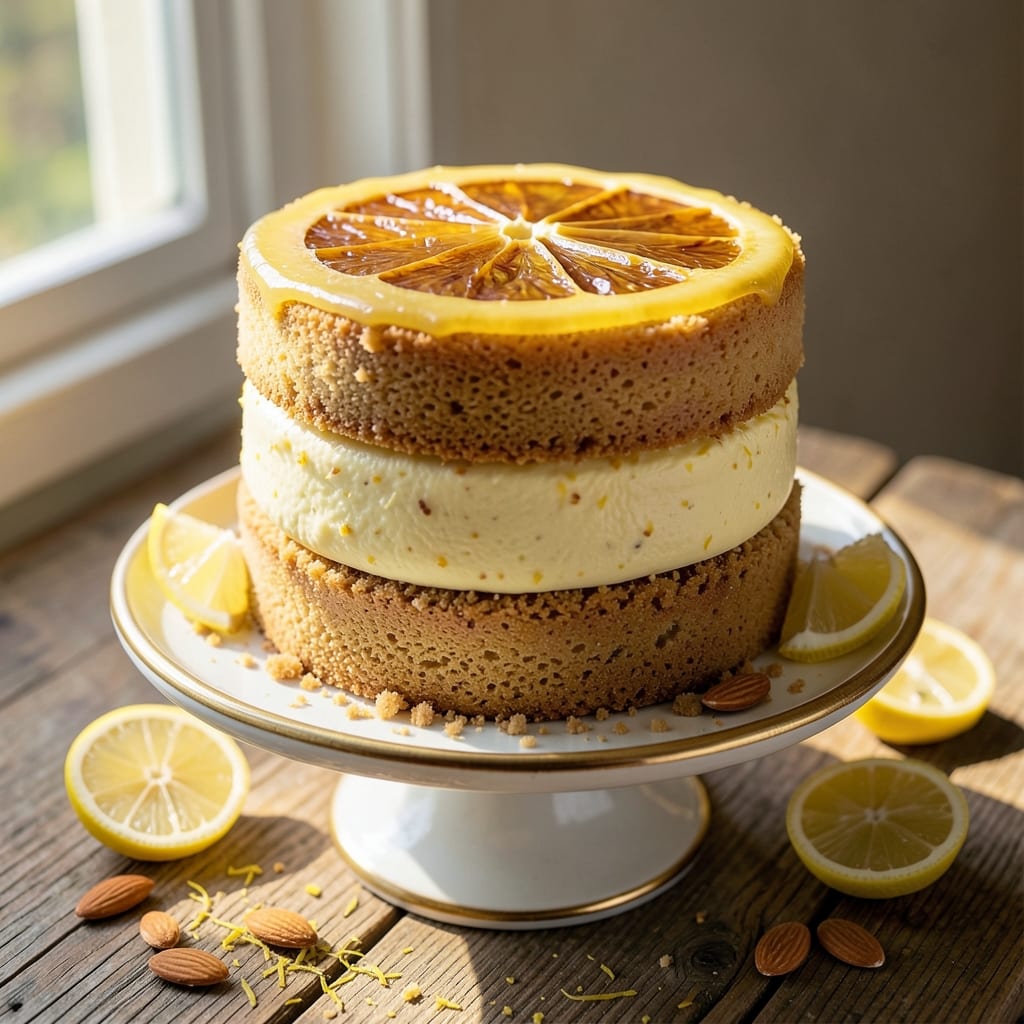
This authentic Italian lemon cream cake brings the bright, citrusy flavors of Sicily to your kitchen with layers of tender almond sponge and velvety lemon mascarpone filling. 💛 The secret lies in traditional techniques—fresh lemon zest, candied citrus peel, and a touch of ricotta for that signature Italian lightness. I've perfected this recipe over years of baking, ensuring every slice delivers the perfect balance of zesty and creamy.
The cake starts with delicate almond sponge layers, baked just until golden, then infused with lemon juice and zest for that signature Italian brightness. Between each layer comes the star—a silky mascarpone cream, whipped with powdered sugar and a splash of lemon extract. This isn't your average lemon cake; it's a true taste of Italy, where citrus and cream unite in perfect harmony.
What makes this recipe truly authentic is the attention to detail: candied lemon peel adds a subtle crunch, while a dusting of powdered sugar on top mimics the presentation of classic Italian pastries. The result is a cake that's light yet rich, tangy yet sweet, and impossible to resist. Each bite delivers layers of flavor that transport you straight to a sunlit Italian café.
Whether you're serving this for a special occasion or simply treating yourself, this cake is a showstopper. The assembly process is straightforward, and the final presentation—with its golden layers and elegant dusting—will impress anyone who tastes it. Let's bring a piece of Italy to your table.
Ingredients for authentic italian lemon cream cake
Fresh lemons, almonds, and Italian cheeses—just eight ingredients transform into this showstopping cake.
| Ingredient | Amount | Notes |
|---|---|---|
| All-Purpose Flour 🌾 | 2 cups | Sifted for light texture |
| Ground Almonds 🌰 | 1 ½ cups | Finely ground for smoothness |
| Granulated Sugar 🍚 | 1 ½ cups | Superfine preferred for blending |
| Unsalted Butter 🧈 | 1 cup | Cold, cubed for creaming |
| Large Eggs 🥚 | 4 whole | Room temperature for blending |
| Fresh Lemon Zest 🍋 | 2 tbsp | From organic lemons (no white pith) |
| Fresh Lemon Juice 💧 | ½ cup | Strained for clarity |
| Baking Powder 🧂 | 2 tsp | Diamond Crystal preferred |
| Vanilla Extract 🌿 | 1 tbsp | Pure Madagascar bourbon |
| Ricotta Cheese 🧀 | 8 oz | Whole milk, drained well |
| Mascarpone Cheese 🧀 | 1 cup | Room temperature for whipping |
| Powdered Sugar 🍚 | 1 ½ cups | Sifted for smooth texture |
| Lemon Extract 🍋 | 1 tsp | Pure, not imitation |
| Candied Lemon Peel 🍋 | ½ cup | Homemade or store-bought |
| Powdered Sugar (for dusting) 🍚 | ¼ cup | Sifted through fine sieve |
The almonds make this cake uniquely Italian, so don't substitute with flour—the texture is everything. Trader Joe's sells pre-ground almonds if you're short on time, but freshly ground has that nutty depth. For the lemons, organic is key—thick zest and no bitterness. I grab mine from the farmers market in summer, but grocery store lemons work in a pinch. The ricotta and mascarpone? Whole milk versions give the best creaminess—part-skim cuts the richness. Look for Italian brands at specialty stores if you can, but regular grocery store ricotta works fine too.
No ricotta? Cottage cheese blended smooth gets you close, though the texture won't be identical. Running out of mascarpone? Cream cheese plus heavy cream (whipped together) mimics the tang. The candied lemon peel can be store-bought, but homemade is worth the effort—simmer lemon slices in sugar water for 20 minutes, then dry. For the sponge, superfine sugar blends better, but regular granulated works if you pulse it in a food processor. The lemon extract is non-negotiable—imitation won't give that authentic Italian brightness.
The almond sponge keeps best 2 days wrapped in parchment, while the filling stays fresh 3 days in the fridge. Assemble the cake just before serving so the layers stay crisp. For make-ahead, bake the sponge, freeze it, then assemble with thawed filling. The powdered sugar dusting? Sift through a fine sieve for that professional look. This cake travels beautifully—just wrap tightly and transport at room temperature for up to 4 hours.
Why You'll Love This Recipe
- One-Bowl Wonder: I swear by this recipe when I’m too tired to measure a dozen ingredients. The ground almonds and flour blend in the same bowl—no extra mixing required—and the butter and sugar come together with just a hand mixer. Honestly, it’s the kind of cake that makes me feel like I’ve earned dessert without actually doing much.
- Citrus Sunshine: That first bite of lemon zest and cream? It’s like summer in a slice. The almonds add a subtle nuttiness that balances the bright citrus, while the eggs keep it rich but light. Between us, I’ve never met a lemon dessert that doesn’t make me reach for seconds—and this one’s no exception.
- Birthday to Brunch: This cake is my go-to for celebrations and lazy mornings. Serve it at a dinner party with a dusting of powdered sugar, or cut it into squares for a quick breakfast with coffee. (Yes, even on a Tuesday night.) The ground almonds make it sturdy enough for slicing, so it holds up whether you’re feeding a crowd or just yourself.
- Budget-Friendly Luxury: You’d think a cake this elegant would break the bank, but the ingredients are simple and affordable. Butter and eggs do the heavy lifting, while the almonds add that fancy touch without costing a fortune. Plus, it keeps well for days—so you’ll have leftovers to enjoy, guilt-free.
Step-by-step instructions for authentic Italian lemon cream cake
Here's how to create that perfect balance of tender crumb, bright citrus, and velvety filling—just like Nonna used to make.
👨🍳 Step 1: Prepare the Lemon Crumb Base
Preheat your oven to 350°F. In a large mixing bowl, combine the 2 cups all-purpose flour, 1.5 cups granulated sugar, 2 tsp baking powder, and 2 tbsp fresh lemon zest. Whisk until evenly distributed—you want no flour pockets left in the dry ingredients.
Cut in the 1 cup cold cubed butter using a pastry cutter or your fingers until the mixture resembles coarse crumbs with pea-sized butter pieces. Here's the thing—don't overwork it. You're aiming for a texture that's sandy but still holds together when pressed. The butter should be evenly distributed but still visible in some spots.
🍳 Step 2: Create the Lemon Filling
In a separate bowl, beat the 4 whole room-temperature eggs with the 1.5 cups powdered sugar until light and fluffy, about 3 minutes with an electric mixer. Add the 1 tbsp vanilla extract and 1 tsp lemon extract, mixing until fully incorporated. This is where the magic happens—the extract intensifies that bright citrus flavor without overpowering.
In another bowl, whisk together the 8 oz drained ricotta cheese, 1 cup mascarpone cheese, and 0.5 cup fresh lemon juice. Gently fold this into the egg mixture until smooth. The ricotta adds that signature Italian creaminess while the mascarpone gives it that luxurious mouthfeel. Fold in the 0.5 cup candied lemon peel at the very end—you want those little bursts of sweetness throughout.
🥘 Step 3: Assemble the Cake Layers
Press half of the crumb mixture firmly into the bottom of a 9-inch springform pan, creating an even layer. Here's the trick—I use the bottom of a glass to press it down evenly. Bake for 12-15 minutes until the edges are just beginning to turn golden. The center should still look slightly underdone—this ensures it stays tender.
Remove from the oven and immediately spread half of the lemon filling over the baked crumb layer. Top with the remaining crumb mixture, pressing down gently but not too firmly. Return to the oven and bake for another 10-12 minutes until the top is golden brown. The cake should have a slight spring when pressed in the center.
⏰ Step 4: Finish and Chill
Let the cake cool in the pan for 15 minutes, then transfer to a wire rack to cool completely. While it's cooling, dust the top with the 0.25 cup powdered sugar (for dusting) using a fine-mesh sieve. This creates that signature Italian dusting that adds both visual appeal and a subtle sweetness.
Once completely cool, spread the remaining lemon filling over the top layer. Here's where patience pays off—refrigerate for at least 4 hours (overnight is even better) to let the flavors meld. The cake will develop that perfect balance of tender crumb and creamy filling, with that bright lemon flavor shining through every bite.
Pro Tips For Making Authentic Italian Lemon Cream Cake
- Sift the Almonds: I learned this the hard way—skipping this step makes the cake dense and gritty. Pulse the ground almonds in a food processor for 10 seconds first to break up any clumps, then sift them with the flour. That extra effort guarantees a silky texture, not a sandy one.
- Whip Butter Until Pale: Cream the butter and sugar until the mixture turns a soft, pale yellow—about 3-4 minutes in a stand mixer. Stopping too soon leaves pockets of unmelted butter, and the cake won’t rise as evenly. (Yes, even if you’re impatient like me.)
- Don’t Overmix the Batter: Fold in the eggs one at a time, mixing just until combined. Overworking the batter introduces air bubbles that’ll collapse during baking, leaving a flat cake. Think "gentle swirls," not "whipped to oblivion."
- Chill the Pan: Place your cake pan in the freezer for 10 minutes before pouring the batter. A cold pan helps the edges set faster, preventing a sunken center—especially crucial for this recipe’s delicate crumb. (Your future self will thank you.)
Pro cooking tips for great authentic italian lemon cream cake
Lemon Zest Magic
Use organic lemons exclusively—their thick zest packs more citrus oils. I prefer 2 tbsp finely grated zest (no white pith) from about 3 large lemons. The key is to zest in one direction only for even distribution. Store-bought zest often contains bitter white pith, so fresh is non-negotiable for authentic flavor. 🍋
Room-Temp Eggs
Never use cold eggs—they won't incorporate properly into the filling. Let your 4 large eggs sit at room temperature for 30 minutes before whipping. I place them in warm water for 5 minutes to speed up the process. Cold eggs create air pockets that won't whip smoothly, leading to a dense filling. Room temperature eggs create that signature light, airy texture.
Butter Temperature
The 1 cup cubed butter must be cold but pliable when cutting into the dry ingredients. If it's too soft, you'll end up with a greasy crumb base instead of the perfect sandy texture. I recommend cutting it into ½-inch cubes and letting them sit at room temperature for 15 minutes before mixing. This ensures even distribution without melting.
Layer Assembly
Press the crumb mixture firmly but evenly into the pan—uneven layers lead to sinking in the center. I use the bottom of a small glass to create a perfectly level surface. For the filling, spread it ¼ inch thick between layers to prevent sogginess. The secret is to work quickly once the first layer comes out of the oven to maintain that tender texture.
Chilling Time
Don't rush the 4-hour chilling—this is when the flavors truly meld. I've found that chilling overnight actually enhances the lemon brightness while keeping the crumb layers tender. If you're short on time, refrigerate for at least 2 hours, but expect slightly firmer layers. The cake will develop that perfect balance of zesty and creamy during this resting period.
Powdered Sugar Dusting
Use a fine-mesh sieve for the final dusting to achieve that professional Italian look. Tap the sieve gently over the cake to create an even, delicate layer. I recommend using confectioners' sugar (like Domino) for the smoothest texture. This isn't just decoration—it adds a subtle sweetness that complements the bright lemon flavor throughout each slice. 💛
Nutrition facts
Frequently asked questions
Can I make this cake without almonds?
The almonds are essential for that authentic Italian texture, but you can substitute with 1.5 cups extra flour if needed. Just be aware the crumb will be denser. For a closer match, try 1 cup ground hazelnuts mixed with 0.5 cup flour—this keeps the nutty flavor while adjusting the texture. The cake will still be delicious, though not identical to the traditional version.
How do I prevent the cake from sinking in the middle?
Press the crumb mixture firmly into the pan using the bottom of a glass to create an even surface. Bake the first layer until the edges are golden but the center still looks slightly underdone. When adding the second layer, don't press too hard—just enough to hold it together. The 4-hour chilling helps stabilize the structure too. If it still sinks, try baking at 325°F instead of 350°F for a more gradual cook.
Can I use store-bought mascarpone instead of ricotta?
You can use just mascarpone, but the texture will be richer and less light. For a closer match, blend 1 cup mascarpone with 4 oz ricotta (or blended cottage cheese) to maintain that signature Italian creaminess. The ricotta adds moisture and prevents the filling from being too heavy. If you're short on time, just use mascarpone but reduce the powdered sugar slightly to balance the richness.
How should I store leftovers?
Wrap the cake tightly in plastic wrap and store it in an airtight container in the refrigerator for up to 3 days. For longer storage, freeze individual slices wrapped in plastic for up to 2 months. Thaw at room temperature for 1-2 hours before serving. The crumb stays fresh longer if you remove the top layer of filling before storing. To revive stale layers, warm them briefly in a 300°F oven for 5 minutes before adding fresh filling.
What's the difference between this and a traditional lemon layer cake?
This Italian version uses almond flour for a nutty base and ricotta-mascarpone filling instead of just whipped cream. The candied lemon peel adds texture, while the powdered sugar dusting gives it that classic Italian presentation. Traditional lemon layer cakes often use vanilla cake and buttercream—this one is brighter, lighter, and more citrus-forward. The almond crumb also makes it naturally gluten-free if you use certified GF flour.