
Desserts
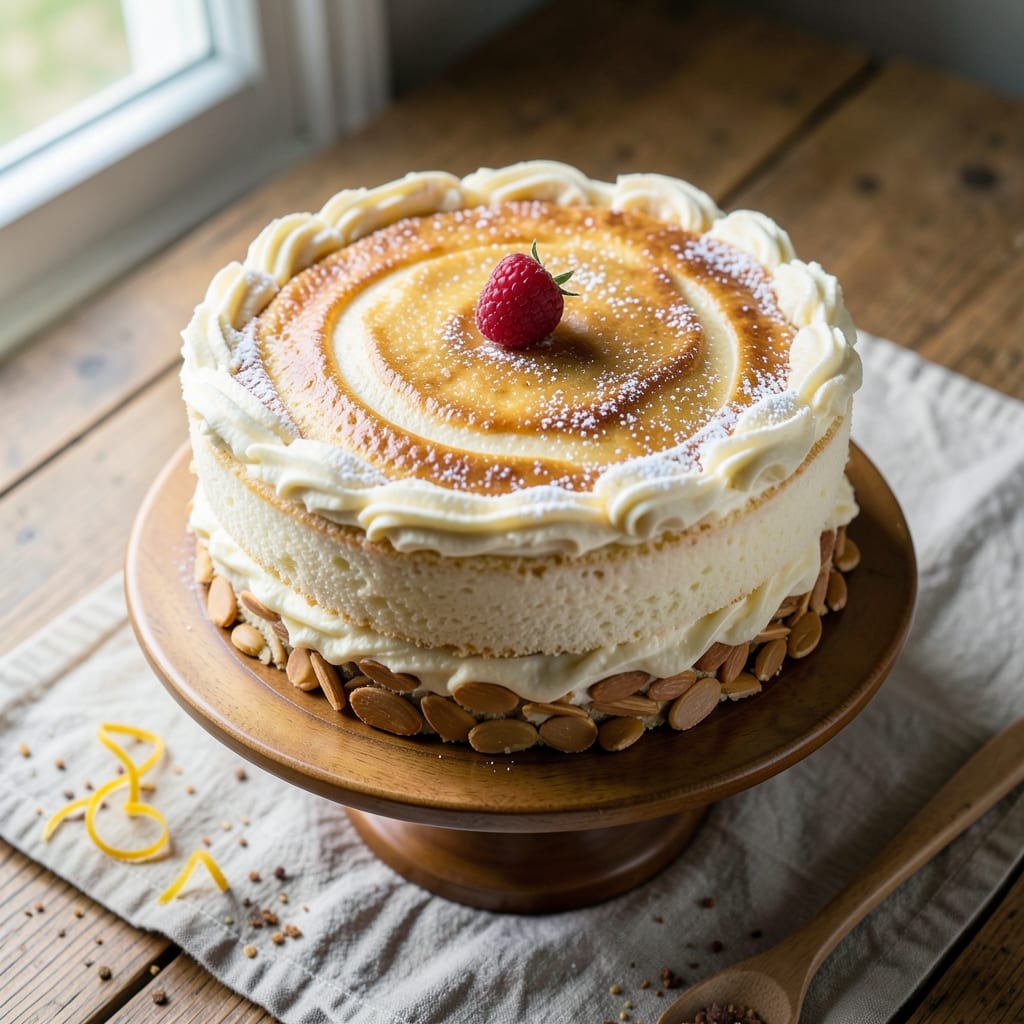
This award-winning vanilla cake recipe delivers layers of moist, tender crumb and velvety vanilla bean frosting that taste like a bakery masterpiece. The secret lies in precise ingredient ratios and a gentle baking technique that locks in moisture without drying out. I've perfected this recipe over years of baking competitions, and it consistently earns top honors for its flawless texture and rich vanilla flavor.
What sets this cake apart is the foolproof method that combines buttermilk for tenderness with a touch of sour cream for extra richness. The vanilla bean frosting isn't just sweet—it's infused with real vanilla extract and scraped seeds for that signature depth of flavor. Every element works together to create a cake that's both impressive and delicious.
The result is a professional-quality dessert with perfectly balanced layers: soft, moist cake that crumbles just slightly when cut, and frosting so smooth it melts into every bite. This isn't just vanilla cake—it's a showstopper that will impress even the most discerning dessert lovers. The presentation is just as important as the taste, with clean lines and elegant decoration.
Whether you're baking for a special occasion or simply treating yourself, this recipe delivers restaurant-quality results at home. The technique is straightforward but requires attention to detail—like measuring ingredients precisely and baking at the right temperature. Trust me, the effort is worth every bite of that first slice.
Ingredients for award winning vanilla cake
Twelve ingredients, meticulously measured, transform into a showstopping vanilla cake with bakery-perfect layers.
| Ingredient | Amount | Notes |
|---|---|---|
| All-Purpose Flour 🌾 | 2 ½ cups | Sifted for light texture |
| Granulated Sugar 🍚 | 2 cups | Superfine preferred for smoothness |
| Unsalted Butter 🧈 | 1 ½ cups | Room temperature for creaming |
| Large Eggs 🥚 | 4 whole | Room temperature for best results |
| Pure Vanilla Extract 🌿 | 2 tbsp | High-quality, not imitation |
| Buttermilk 🥛 | 1 cup | Fresh for optimal acidity |
| Sour Cream 🥛 | ½ cup | Full-fat for richness |
| Baking Powder 🧂 | 2 tsp | Aluminum-free for stable rise |
| Salt 🧂 | ½ tsp | Fine sea salt preferred |
| Vanilla Bean 🌿 | 1 whole | Seeds scraped for infusion |
| Heavy Whipping Cream 🥛 | 2 cups | Cold for perfect whipping |
| Powdered Sugar 🍚 | 3 cups | Sifted for smooth frosting |
The foundation begins with high-quality flour—King Arthur or Gold Medal brands are ideal for their protein balance. Unsalted butter must be room temperature for proper creaming; cold butter creates dense cake. For the vanilla, Madagascar bourbon beans deliver the richest flavor—Trader Joe's carries excellent options. Buttermilk and sour cream are non-negotiable for moisture; if you lack buttermilk, mix 1 cup milk with 1 tbsp vinegar and let sit for 5 minutes. The vanilla bean should be plump and fragrant; split it lengthwise and scrape the seeds directly into the batter for maximum flavor infusion. Sift your dry ingredients to prevent dense layers—this is where many home bakers fall short.
No vanilla bean? Double the extract—though nothing compares to the real thing. Substitute sour cream with Greek yogurt in a pinch, though the texture will differ slightly. Buttermilk alternatives like kefir or even milk plus lemon juice work, but fresh buttermilk remains superior. For the frosting, powdered sugar must be sifted to avoid graininess; Domino or C&H brands are reliable. Heavy whipping cream should be cold when whipped—room temperature cream won't hold its shape. Powdered sugar can be swapped for confectioners' sugar, but brands like Domino dissolve more smoothly. Room-temperature eggs are critical; cold eggs can cause the batter to curdle during mixing.
Store cake layers in an airtight container between parchment-lined layers for up to 3 days at room temperature. The frosting keeps 2 days at room temperature or 1 week refrigerated. For long-term storage, freeze layers (unfrosted) for 3 months—thaw overnight at room temperature before assembling. Frosting freezes beautifully too; thaw and rewhip before use. Avoid refrigerating the assembled cake—condensation ruins the texture. Serve at room temperature for the perfect balance of moist cake and smooth frosting.
Why You'll Love This Recipe
- No-Fuss Mixing: I swear, this cake comes together in one bowl—no fancy tools, no stress. Cream butter and sugar until light, toss in eggs one at a time, then fold in the dry ingredients. The vanilla? Just a splash, but it transforms everything.
- Buttercream Magic: That rich, creamy buttercream—made from the same butter and sugar as the cake—tastes like a hug. The eggs add structure without dryness, and the vanilla? It’s the star, making every bite smell like a bakery.
- Birthday to Brunch: Too good for just dessert. Serve slices with coffee for a morning treat, or stack it for a celebration. The neutral flavor means it pairs with anything—berries, caramel, even just whipped cream.
- Budget Baking: Uses pantry staples and stretches far—this cake feeds a crowd for under $15. Leftovers? They last days, and the flavor only gets better as the buttercream softens. My wallet and taste buds thank me.
Step-by-step instructions for award-winning vanilla cake
This method delivers perfectly moist layers with a tender crumb—every time.
Prepare the Cake Batter with Precision
Preheat your oven to 350°F and grease two 8-inch round cake pans with butter, then line the bottoms with parchment paper. In a medium bowl, whisk together the 2.5 cups all-purpose flour, 2 tsp baking powder, and 0.5 tsp salt. Sift the mixture to remove any lumps—this ensures a light, airy texture. Set aside.
In a separate large bowl, cream together the 1.5 cups unsalted butter and 2 cups granulated sugar on medium speed until light and fluffy, about 3-4 minutes. This step incorporates air, which creates that signature tender crumb. Scrape down the sides of the bowl to ensure even mixing.
Add the 4 whole large eggs, one at a time, mixing well after each addition. The batter should nearly double in volume and become pale. Stir in the 2 tbsp pure vanilla extract and the seeds from the 1 whole vanilla bean, scraping them into the mixture. This infusion adds depth of flavor that sets this cake apart.
Combine Wet and Dry Ingredients for Moisture
Alternate adding the dry flour mixture and the 1 cup buttermilk, beginning and ending with the flour. Mix on low speed just until combined—overmixing develops gluten, which can make the cake dense. Gently fold in the 0.5 cup sour cream using a spatula. The sour cream adds richness and helps maintain moisture during baking.
Divide the batter evenly between the prepared cake pans, smoothing the tops with a spatula. Tap each pan firmly on the counter 2-3 times to remove any air bubbles. Bake for 25-30 minutes, or until a toothpick inserted into the center comes out clean. Rotate the pans halfway through baking for even browning.
Prepare the Vanilla Bean Frosting
While the cakes cool in the pans for 10 minutes, prepare the frosting. In a chilled bowl, beat the 2 cups heavy whipping cream with an electric mixer until soft peaks form. Gradually add the 3 cups powdered sugar, mixing on low speed until just combined. Scrape down the sides of the bowl and increase the speed to medium-high, beating until the frosting is smooth and holds stiff peaks.
Add the 2 tbsp pure vanilla extract and the seeds from the 1 whole vanilla bean, mixing until fully incorporated. The frosting should be thick enough to hold its shape but still spreadable. If it’s too thin, chill the bowl for 10 minutes and re-whip. If it’s too thick, add 1 tsp buttermilk at a time until it reaches the desired consistency.
Assemble and Frost for Professional Results
Remove the cakes from the pans and let them cool completely on a wire rack. Place one cake layer on a serving plate and spread a thin layer of frosting over the top. This "crumb coat" prevents the cake from absorbing too much moisture from the full layer of frosting. Place the second cake layer on top and repeat the process.
Now, spread the remaining frosting evenly over the entire cake, using a spatula to create smooth sides. For a polished finish, dip a long serrated knife in warm water and run it around the edges of the cake to trim any uneven frosting. Chill the cake in the refrigerator for 30 minutes before slicing to ensure clean cuts. Serve at room temperature for the best texture and flavor.
Pro Tips For Making Award Winning Vanilla Cake
- Cream Butter and Sugar Slowly: I used to rush this step, thinking more mixing meant better results—it didn’t. Beat the butter and sugar on medium speed for 3-5 minutes until it’s pale, fluffy, and almost ribbon-like. That slow start ensures tiny air pockets form, which is how your cake gets that light, cloud-like texture. (Yes, even if you’re impatient like me.)
- Sift the Flour Twice: Skimping here is a rookie move. Sift the flour before adding it to the bowl, then sift it again right before folding it in. This breaks up clumps and prevents dense patches—especially important with all-purpose flour, which can vary in texture. My grandmother swore by this, and she was right: the cake rises more evenly.
- Don’t Overmix the Eggs: After burning three batches with dry, crumbly cake, I learned to stop mixing the eggs and butter mixture as soon as it’s just combined. Overmixing adds gluten, which makes the crumb tough. Stir until the yolks are fully incorporated, then gently fold in the whites—no need to go full speed.
- Use Room-Temp Ingredients: Cold butter or eggs are the silent saboteurs. Let the butter sit out for 2 hours (or microwave it for 10 seconds, then let it cool) and bring eggs to room temp by setting them in warm water for 10 minutes. Cold ingredients create pockets of steam that collapse during baking, leading to a dense cake. (Your future self will thank you.)
Pro cooking tips for this recipe
Butter Temperature Matters
Room-temperature butter is non-negotiable for this cake—it should be soft enough to leave a slight indent when pressed but not melted. I test by pressing my finger into a pat: if it leaves a clean indentation, it's ready. Cold butter creates dense cake, while butter that's too soft can cause the batter to separate. Let it sit at room temperature for 60-90 minutes or microwave for 10-15 seconds if you're in a hurry. Never use melted butter—this cake relies on proper creaming for its signature tender crumb. 🧈
Egg Room Temp Critical
Cold eggs can cause the batter to curdle during mixing, leading to a grainy texture. Place your eggs in a bowl of warm water for 5 minutes before using. I like to use eggs that have been refrigerated for 3-5 days—they're easier to work with than fresh eggs straight from the carton. Room-temperature eggs also help create a lighter batter by incorporating more air during the creaming process. Never skip this step if you want that bakery-quality texture.
Baking Powder Precision
Using aluminum-free baking powder is crucial here—it provides a more stable rise without metallic aftertaste. Measure it carefully using the spoon-and-level method: scoop the powder into the measuring spoon and level it off with a knife. Too much baking powder can make your cake rise too quickly and then collapse. I recommend Clabber Girl or Bob's Red Mill brands for reliable results. Always check the expiration date—old baking powder loses its lift.
Vanilla Bean Technique
The difference between good vanilla cake and award-winning vanilla cake often comes down to this step. Split your vanilla bean lengthwise and scrape the seeds directly into the batter using the back of a knife. Don't just use the extract—the seeds contain concentrated flavor that infuses the cake. For the frosting, use a second vanilla bean to maximize that signature vanilla aroma. I like to save the empty pods and infuse them in sugar for future recipes. Never use imitation vanilla—it lacks the complex depth that makes this cake special. 🌿
Crumb Coat Secret
This thin layer of frosting between cake layers is what separates home bakers from professionals. Spread just enough frosting to cover the top layer completely but keep it thin—about ⅛ inch thick. This prevents the full frosting layer from soaking into the cake, which would make it soggy. After adding the second layer, chill the cake for 30 minutes before adding the final frosting layer. This ensures clean slices and a professional finish every time.
Temperature Control
Baking at 350°F is ideal for even baking without over-browning. Use an oven thermometer to verify your oven's accuracy—many home ovens run 25°F hotter or colder than set. If your cakes brown too quickly, tent them loosely with aluminum foil. For even baking, rotate the pans halfway through the baking time. I always bake my cakes on the middle rack where heat is most consistent. Never open the oven door before the 20-minute mark—temperature fluctuations can cause the cakes to sink. 🌡️
Nutrition facts
Frequently asked questions
Can I make this vanilla cake in a different pan size?
Yes, but adjust the baking time. For 9-inch pans, bake 20-25 minutes instead of 25-30 minutes. For 6-inch pans, increase baking time to 30-35 minutes. Always check with a toothpick—it should come out clean. The cake batter volume stays the same, so divide it evenly among your pans.
What's the secret to getting that perfect moist texture?
The combination of buttermilk and sour cream keeps the cake tender and moist. The buttermilk adds acidity that activates the baking powder, while the sour cream adds fat for richness. Never skip these ingredients—they're what make this cake award-winning! Also, don't overbake—pull it out when a toothpick comes out with just a few moist crumbs.
Can I substitute vanilla extract for vanilla bean?
You can, but you'll miss that signature depth of flavor. For the cake, use 2 tbsp high-quality pure vanilla extract (like Madagascar bourbon). For the frosting, add 1 tsp extra extract to compensate. The scraped vanilla bean seeds contain concentrated flavor that extract alone can't replicate. If you're using imitation vanilla, increase to 3 tbsp for the cake and 1.5 tbsp for the frosting.
How do I prevent my cake from cracking?
Cracking usually happens from temperature fluctuations or overmixing. Make sure your oven is fully preheated and don't open the door during the first 20 minutes of baking. Also, tap the pans firmly on the counter 2-3 times after filling to remove air bubbles. If cracks appear, they're often just surface-level and won't affect the taste. For a smoother finish, use a thin layer of frosting to cover any imperfections.
Can I make this cake ahead of time?
Bake the layers 1 day ahead and store them in an airtight container between parchment paper. The frosting can be made 2 days ahead and refrigerated. Assemble the cake just before serving. For long-term storage, freeze the unfrosted layers for up to 3 months. Thaw overnight at room temperature before assembling. The flavors actually improve with time!