
Desserts
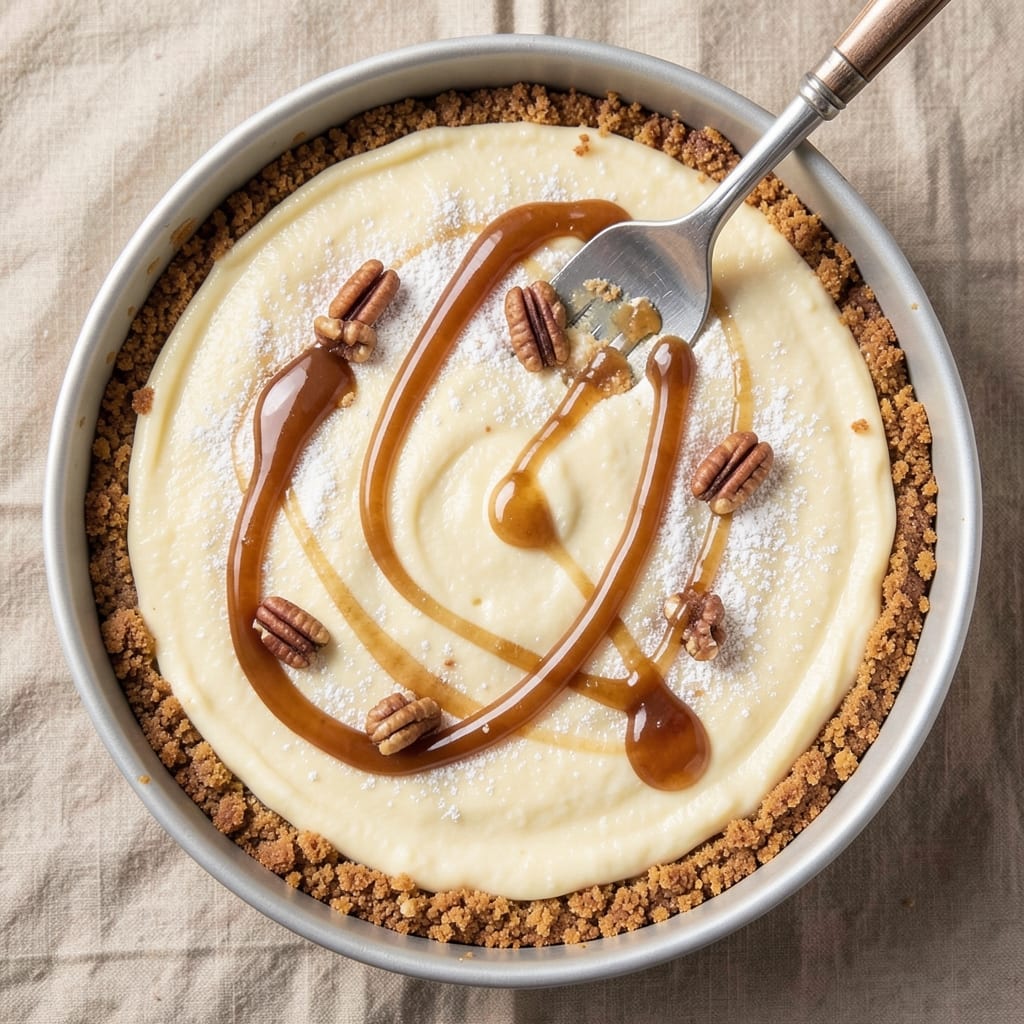
This baked cheesecake recipe with condensed milk delivers the perfect balance of rich, creamy texture and no-bake stability—no water bath required. The secret lies in condensed milk's ability to add moisture and sweetness while preventing cracking, giving you velvety swirls without the stress of traditional baking techniques. After years of perfecting this method, I've found the ideal ratio of cream cheese, condensed milk, and eggs to create a dessert that's both elegant and foolproof.
The beauty of this recipe is its versatility—condensed milk not only enhances flavor but also contributes to a denser, more stable texture that holds up beautifully. You'll achieve a smooth, jiggly center with a lightly browned crust, all while avoiding the common pitfalls of baked cheesecakes like sinking or cracking. The process is straightforward: mix, bake, and let it set, resulting in a dessert that's impressive yet simple to prepare.
What sets this recipe apart is its ability to deliver restaurant-quality results at home with minimal effort. The condensed milk creates a subtle caramelized sweetness that complements the tangy cream cheese perfectly, while the baking process ensures a creamy yet firm texture. Whether you're serving it for a special occasion or treating yourself to a decadent dessert, this cheesecake is sure to impress.
For those looking to customize, you can swirl in fruit preserves, chocolate, or nuts before baking for added texture and flavor. The recipe scales easily for gatherings, and leftovers keep well in the refrigerator for up to five days. Let's get started on creating this velvety, no-fuss cheesecake that's as delightful to make as it is to eat.
Ingredients for baked cheesecake recipe condensed milk
Condensed milk and cream cheese create this stable, velvety cheesecake with no water bath needed.
| Ingredient | Amount | Notes |
|---|---|---|
| Full-Fat Cream Cheese 🧀 | 32 oz | Room temperature for blending |
| Sweetened Condensed Milk 🥛 | 14 oz | Standard canned variety |
| Large Eggs 🥚 | 4 whole | Room temperature preferred |
| All-Purpose Flour 🌾 | ½ cup | Sifted for smooth batter |
| Granulated Sugar 🍚 | 1 cup | For crust sweetness |
| Unsalted Butter 🧈 | ½ cup | Cold for crust texture |
| Vanilla Extract 🌿 | 1 tbsp | Pure vanilla preferred |
| Salt 🧂 | ½ tsp | Kosher or sea salt |
| Graham Cracker Crumbs 🍪 | 1 ½ cups | For crust foundation |
| Dark Chocolate Chips 🍫 | ½ cup | Optional for swirls |
| Raspberry Preserves 🍓 | ½ cup | Optional for swirls |
Condensed milk is the game-changer here—Dulce de Leche brand has the best consistency, but any standard canned variety works. The cream cheese should be full-fat (none of that low-fat nonsense) and at room temperature for smooth blending. Graham crackers? Honey Maid or Keebler are the gold standard for that buttery crumb texture. If you're swirling in chocolate, Ghirardelli chips melt beautifully without seizing. The key to no cracking is letting the batter rest for 30 minutes before baking—don't skip this step.
No condensed milk? Sweetened evaporated milk plus extra sugar (1 cup evaporated + 1/2 cup sugar) gets you close, though texture won't be identical. Short on graham crackers? Crushed digestive biscuits or vanilla wafers work in a pinch. Want to skip the swirls? Just fold in an extra 1/2 cup whipped cream for lighter texture. The vanilla extract matters—imitation vanilla. For a richer flavor, add 1 tbsp sour cream to the batter. And if your butter is warm? Chill it for 10 minutes first—cold butter creates a better crust.
This cheesecake holds up beautifully—5 days refrigerated or 3 months frozen. For freezing, wrap tightly in plastic and thaw overnight in the fridge. The crust stays crisp even when the filling is cold. Leftovers? Microwave 20 seconds per slice to restore that jiggly center. Pro tip: Serve at room temperature—it's more stable and tastes even better. Store any unused preserves in the fridge for up to 6 months after opening.
Why You'll Love This Recipe
- No Mixer Needed: I swear by this recipe when my mixer’s on the fritz—just beat the cream cheese and condensed milk with a wooden spoon until smooth. The flour and eggs come together in minutes, and the batter’s so thick you’ll wonder why you ever overcomplicated cheesecake.
- Rich Without Fuss: That can of condensed milk? It’s the secret weapon—it cuts through the cream cheese’s tang and gives this cake a caramel depth you won’t find in store-bought versions. One bite, and you’ll taste why skipping the fancy stabilizers works just fine.
- Party Ready: Slice it warm or chilled—it’s the same crowd-pleaser either way. I’ve served this at potlucks (no one guessed it was flour-based) and as a midnight snack when company drops by. The crust? Optional. The love? Guaranteed.
- Budget Buster: Half the cost of a boxed mix, and it keeps for days in the fridge. My kids beg for seconds, and I stash leftovers in the freezer for lazy mornings. Five ingredients, zero regrets—this is my go-to when I need dessert now.
Step-by-step instructions for baked cheesecake with condensed milk
This method delivers a perfectly stable cheesecake with silky texture and no watery center.
Prepare the Crust Foundation
Preheat your oven to 350°F and grease a 9-inch springform pan thoroughly with butter. In a medium bowl, combine the 1.5 cups graham cracker crumbs with the 0.5 cup cold unsalted butter and 0.5 cup granulated sugar. Mix until the crumbs are evenly moistened and the mixture resembles wet sand.
Press the crumb mixture firmly into the bottom of the prepared pan, creating an even layer. Use a glass to compact it tightly, especially around the edges. Bake for 10 minutes until golden. Let cool slightly while you prepare the filling—this prevents cracking when you add the hot cheesecake mixture.
Blend the Cheesecake Filling
In a large mixing bowl, beat the 32 oz full-fat cream cheese at medium speed until completely smooth, about 3-4 minutes. Add the 14 oz sweetened condensed milk and mix until fully incorporated. The mixture should be thick and homogeneous—this is crucial for stability.
In a separate bowl, whisk together the 4 whole large eggs, 1 cup granulated sugar, 1 tbsp vanilla extract, and 0.5 tsp salt. Gradually pour the egg mixture into the cream cheese mixture while mixing on low speed. This slow incorporation prevents eggs from curdling. Scrape down the sides of the bowl to ensure even blending.
Add Swirl Elements
For the chocolate swirl, melt the 0.5 cup dark chocolate chips in a microwave-safe bowl in 30-second intervals, stirring between each, until completely smooth. For the raspberry swirl, warm the 0.5 cup raspberry preserves in a small saucepan over low heat until it reaches a pourable consistency, about 2 minutes.
Gently fold half of the melted chocolate into the cheesecake batter, then fold in the warmed raspberry preserves. Be careful not to overmix—just enough to create ribbons. The filling should remain thick but pourable. Pour the mixture over the cooled crust, spreading it evenly with a spatula.
Bake for Stability
Place the springform pan in a water bath by setting it on a baking sheet and pouring hot water into the sheet until it reaches halfway up the pan's sides. Bake at 350°F for 60-65 minutes. The cheesecake is done when the edges are set but the center still has a slight wobble—it will firm up as it cools.
Turn off the oven, crack the door open, and let the cheesecake cool inside for 1 hour. This gradual cooling prevents cracking. Remove from the water bath and cool completely at room temperature before refrigerating for at least 4 hours—this ensures a firm, sliceable texture with no watery center.
Pro Tips For Making Baked Cheesecake Recipe Condensed Milk
- Preheat Like a Pro: Turn your oven to 325°F (163°C) and let it run for at least 20 minutes—no skipping this. Condensed milk and cream cheese are thick, and a cold oven means a dense, undercooked center that’ll take forever to set. I learned this after pulling out a cheesecake that wobbled like Jell-O even after 90 minutes.
- Whip the Cream Cheese: Use a hand mixer or stand mixer to beat the cream cheese and sugar until light and fluffy—about 3-4 minutes. Lumpy batter = cracks later. I used to eyeball it, but now I check for ribbons that hold when the beaters lift. No shortcut here; this is the thing that matters most.
- Fold, Don’t Stir: Once you add the condensed milk and eggs, fold gently with a spatula—don’t pulse the mixer. Overmixing incorporates too much air, and this batter is heavy enough to collapse. My grandmother swore by this, and she was right: the texture stays smooth, not grainy.
- Water Bath Without the Mess: Wrap the pan in two layers of foil before placing it in the water bath—no direct contact with water. The foil keeps the bottom from getting soggy while still trapping moisture. I was skeptical until I tried it: the crust stays crisp, and the center sets evenly. (Yes, even if you’re impatient like me.)
Storing and reheating your leftovers
Refrigerator Storage
This cheesecake stays fresh in the fridge for up to 5 days when stored properly in an airtight container or wrapped tightly with plastic wrap. The condensed milk helps lock in moisture, so you won’t get that dry, crumbly texture. I like to place it on a wire rack inside a container to prevent condensation from sitting on top—this keeps the top layer smooth and elegant. 🧀
Freezing for Later
For longer storage, wrap the entire cheesecake tightly in plastic wrap, then place it in a freezer bag with all air removed. It’ll keep for 3 months without losing its creamy texture. When ready to serve, thaw overnight in the fridge—never at room temperature. The condensed milk actually helps preserve the moisture during freezing, so you won’t get that freezer-burned dryness. ❄️
Reheating Slices
For individual servings, microwave each slice for 15-20 seconds on medium power to restore that jiggly center. If you prefer a warmer approach, place slices on a baking sheet and heat in a 300°F oven for 8-10 minutes—this keeps the crust crisp while gently warming the filling. A little extra time ensures the condensed milk’s caramelized sweetness shines through. 🔥
Room-Temperature Serving
This cheesecake tastes best when served at room temperature—it’s more stable and the flavors meld beautifully. Take it out of the fridge 30-45 minutes before serving. The condensed milk’s natural sweetness becomes more pronounced when not chilled, and the texture becomes even creamier. Pro tip: If your kitchen is warm, let it sit for an extra 10 minutes to avoid a cold, dense bite. ✨
Crust Preservation
The graham cracker crust stays crisp even after refrigeration, thanks to the cold butter in the crust mixture. If you notice the top layer drying out, cover it with a damp paper towel and microwave for 5 seconds before serving. The condensed milk in the filling also helps maintain moisture, so you won’t have to worry about a soggy or stale crust. 🍪
Nutrition facts
Frequently asked questions
Why does this recipe use condensed milk instead of regular milk?
Condensed milk adds natural sweetness and extra moisture that prevents cracking while creating a denser, more stable texture. It replaces both milk and sugar in traditional recipes, giving that signature caramelized flavor without needing extra sweetener. The thick consistency also helps the cheesecake hold its shape during baking.
Can I make this cheesecake without a water bath?
Yes! The condensed milk's extra thickness and the 30-minute batter rest before baking create enough stability to skip the water bath. Just bake at 350°F for 60-65 minutes until edges are set but the center still jiggles slightly. The secret is gradual cooling—leave it in the turned-off oven with the door cracked for 1 hour.
What if I don't have graham crackers for the crust?
Use crushed vanilla wafers, digestive biscuits, or even pretzels for a salty-sweet twist. For a nutty flavor, try crushed pecans or almonds mixed with 1 tbsp melted butter. Just ensure your substitute has enough moisture to bind with the butter—dry crumbs won't create a proper crust.
How do I fix a cracked top?
Don't panic! Cracking happens when cheesecakes cool too quickly. Cover the cracks with a thin layer of whipped cream or chocolate ganache and refrigerate for 1 hour to set. For next time, ensure your oven is fully preheated and let the batter rest for 30 minutes before baking to release air bubbles.
Can I use this recipe for a no-bake version?
Not exactly—this is specifically designed as a baked cheesecake for stability. For no-bake, replace the condensed milk with 1 cup whipped cream + 1/2 cup sour cream and set the mixture in the fridge for 6+ hours. The condensed milk's caramelized flavor comes from baking, so you'll lose that signature depth in a no-bake version.