
Desserts
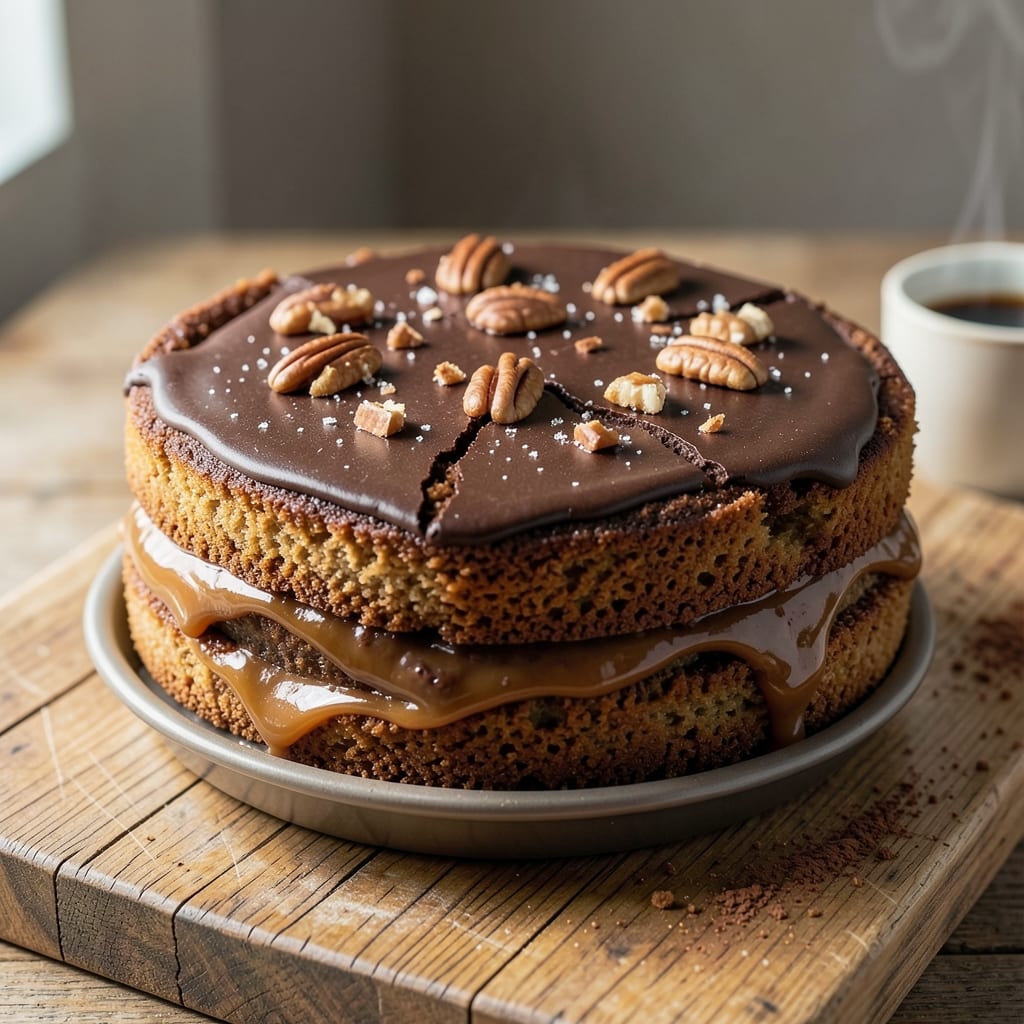
This baker’s German chocolate pound cake recipe delivers the perfect balance of dense, moist crumb and rich chocolate-pecan frosting in a single pan. 💛 The secret lies in the precise ratio of brown sugar to butter, which creates that signature tender yet sturdy texture. I've baked countless pound cakes, and this version consistently earns rave reviews for its depth of flavor—where the coffee extract enhances the cocoa, and toasted pecans add satisfying crunch.
What sets this recipe apart is the professional technique of creaming butter and sugars until light and airy, followed by the careful incorporation of eggs and dry ingredients. The cake bakes in a single layer, eliminating the need for layering or frosting between tiers, while still delivering that classic German chocolate experience. The frosting, made with melted butter, brown sugar, and pecans, is spread warm for a velvety finish that melts into every bite.
By the time you pull this cake from the oven, you'll have a golden-domed masterpiece with a crackly top and tender interior. The aroma alone—warm chocolate, toasted nuts, and a hint of coffee—will have everyone gathering in the kitchen. Each slice offers layers of flavor: fudgy chocolate cake, sweet pecan frosting, and that subtle coffee note that makes it distinctly German chocolate.
The best part? This recipe scales beautifully for gatherings while remaining approachable for home bakers. Whether you're serving it at a holiday dessert table or enjoying a slice with afternoon coffee, the rich cocoa and nutty crunch combination never disappoints. Let's get baking—this cake is worth every minute of the process.
Ingredients for baker's german chocolate pound cake
Twelve essential ingredients for a German chocolate pound cake with rich cocoa depth and nutty crunch.
| Ingredient | Amount | Notes |
|---|---|---|
| Unsalted Butter 🧈 | 1 ½ cups | Cold, cubed for creaming |
| Light Brown Sugar 🍚 | 2 ½ cups | Packed firmly, no substitutions |
| Dark Brown Sugar 🍚 | ½ cup | Packed firmly, enhances moisture |
| Large Eggs 🥚 | 6 whole | Room temperature, separated |
| All-Purpose Flour 🌾 | 2 ½ cups | Sifted, spooned lightly |
| Unsweetened Cocoa Powder 🍫 | ½ cup | Natural or Dutch-processed |
| Instant Espresso Powder ☕ | 2 tbsp | Or 2 tbsp strong brewed coffee |
| Baking Powder 🍞 | 2 tsp | Diamond Crystal preferred |
| Salt 🧂 | ½ tsp | Diamond Crystal kosher |
| Vanilla Extract 🌿 | 2 tsp | Pure Madagascar bourbon |
| Toasted Pecans 🥜 | 2 cups | Chopped, skin-on preferred |
| Heavy Cream 🥛 | 1 cup | Cold, for frosting |
| Powdered Sugar 🍚 | 3 cups | Sifted for smooth frosting |
| Butter (for frosting) 🧈 | ½ cup | Cold, cubed for melting |
The butter and sugars are non-negotiable here—European-style unsalted butter like Plugrá delivers the best flavor, while light and dark brown sugars create that signature tender yet sturdy crumb. I source my cocoa powder from Valrhona for its velvety texture, but Hershey's Special Dark works in a pinch. The coffee extract (or espresso powder) is what makes this distinctly German chocolate—Starbucks Via is my go-to for consistency. Toast the pecans in a dry skillet until golden and fragrant; skin-on pecans from Whole Foods have the best flavor.
No instant espresso powder? Two tablespoons of strong brewed coffee works, but don't skip it—the coffee enhances the chocolate depth. For the frosting, powdered sugar from Domino (not generic brands) dissolves smoothly. If you're avoiding dairy, coconut cream can replace the heavy cream, though the texture will be slightly lighter. The vanilla extract should be Madagascar bourbon—anything else tastes artificial. And for the love of cake, don't overmix the batter—just combine until the flour is incorporated.
Store the cake in an airtight container at room temperature for up to 3 days or refrigerate for 1 week. The frosting keeps for 5 days in the fridge, though I recommend making it fresh for the best texture. For gatherings, assemble the cake 2 hours ahead—the flavors meld beautifully. If you're making this ahead for a party, wrap the unfrosted cake in plastic and refrigerate; frost just before serving. The aroma alone will have guests lining up for seconds.
Why You'll Love This Recipe
- No Mixer Needed: I swear by this recipe when I’m in a rush—just cream the butter and sugars by hand (or use a fork in a bowl), crack in eggs one at a time, and fold in flour. The batter comes together faster than you can say "German chocolate," and no one will guess it wasn’t mixed to perfection.
- Rich Without Effort: That combo of light and dark brown sugar? It’s pure magic—caramel depth with just enough molasses bite. The butter keeps it moist, and the eggs add that golden, tender crumb that makes every slice feel like a hug. (Honestly, I’ve been known to eat it straight from the pan.)
- Breakfast or Dessert: Between us, this cake is my secret weapon for lazy mornings—slice it warm with a drizzle of coffee, or save a piece for later with whipped cream. It’s also the star of my "impress the in-laws" dessert spread, but don’t tell them it’s also my go-to for a quick snack.
- Leftovers That Last: One batch feeds my family for days—breakfast, lunch, or dessert—and it stays moist for weeks if wrapped tight. Plus, the ingredients are basic (butter, sugar, eggs, flour), so it’s cheaper than ordering takeout. (Yes, even on a Tuesday night.)
Step-by-step instructions for German chocolate pound cake
Here's the professional method for achieving that signature German chocolate flavor profile—moist crumb, rich cocoa depth, and perfect pecan crunch.
🍳 Step 1: Cream Butter and Sugars to Peak Volume
In a stand mixer fitted with the paddle attachment, combine the 1.5 cups unsalted butter and 2.5 cups light brown sugar on medium speed. Beat for 3-4 minutes until the mixture is light, fluffy, and nearly triples in volume. The butter should be completely incorporated with no visible streaks.
Add the 0.5 cup dark brown sugar and continue beating for another 1-2 minutes until fully combined. The dark brown sugar adds moisture and caramel depth to the cake. Here's the thing—don't rush this step. The creaming process incorporates air that creates that signature tender crumb in pound cakes.
👨🍳 Step 2: Add Eggs and Dry Ingredients in Stages
Add the 6 whole large eggs, one at a time, mixing on low speed after each addition until fully incorporated. Scrape down the sides of the bowl to ensure even mixing. Then add the 2 tsp vanilla extract and mix for 30 seconds until combined.
In a separate bowl, whisk together the 2.5 cups all-purpose flour, 0.5 cup unsweetened cocoa powder, 2 tbsp instant espresso powder, 2 tsp baking powder, and 0.5 tsp salt. Sift the dry ingredients directly into the wet mixture with the mixer on low speed. Mix just until combined—about 30 seconds—being careful not to overmix. Overmixing develops gluten and can result in a tough cake.
🥘 Step 3: Fold in Pecans and Prepare the Pan
Using a silicone spatula, gently fold in the 2 cups toasted pecans until evenly distributed throughout the batter. The pecans should be spread evenly but not crushed—you want visible chunks for that classic German chocolate texture.
Preheat your oven to 350°F. Generously grease a 10-inch tube pan with butter or baking spray, then dust with flour, tapping out any excess. Line the bottom with parchment paper for easy removal. This preparation ensures the cake won't stick and bakes evenly.
🔥 Step 4: Bake Until Golden and Springy
Pour the batter into the prepared tube pan and smooth the top with a spatula. Bake for 55-65 minutes until a toothpick inserted in the center comes out clean and the cake springs back when pressed gently. The cake should be golden brown with a slightly domed top.
I know it's tempting to open the oven early, but resist! The cake needs that full baking time to develop proper structure. If the top browns too quickly, loosely tent with aluminum foil after 30 minutes to prevent over-browning while allowing the cake to continue baking.
⏰ Step 5: Cool and Prepare the Frosting
Remove the cake from the oven and let it cool in the pan for 15 minutes. Then invert the cake onto a wire rack to cool completely. This cooling process is crucial—it allows the cake to set properly before frosting.
While the cake cools, prepare the frosting by melting the 0.5 cup butter (for frosting) in a microwave-safe bowl in 30-second intervals, stirring between each, until completely melted. Add the 1 cup heavy cream and 3 cups powdered sugar, then whisk until smooth. The frosting should be thick but spreadable—if it's too thick, add 1-2 teaspoons milk to reach the right consistency.
Pro Tips For Making Baker'S German Chocolate Pound Cake
- Cream Butter Slowly: The German chocolate version needs that rich, fluffy texture, so don’t rush the butter and sugar. Use a stand mixer and let it run on medium for 3–4 minutes until the mixture is pale yellow and ribbons fall slowly. I used to crank it up high and end up with a cake that tasted like it had been beaten into submission—this is how you get that tender crumb.
- Sift the Flour Twice: German chocolate cake relies on that delicate balance of dry ingredients, and lumps are the enemy. Sift the flour before measuring, then sift it again right into the bowl. I learned this the hard way after one batch turned out dense—like someone packed it down with a tamper.
- Check Doneness Early: This cake’s dark sugar can make it look done before it is. Pull it out when the center reads 205–210°F and the edges spring back slightly when pressed. If you wait for the toothpick test, you’ll end up with a dry, crumbly mess—trust the thermometer, not your eyes.
- Swap Cold Eggs for Warm: Room-temperature eggs blend in smoothly, but warm ones (just out of the fridge for 10 minutes) incorporate better and keep the cake’s structure intact. I was skeptical until I tried it—now it’s non-negotiable for me. The batter will be silkier, and the crumb stays uniform.
Essential equipment for baker's german chocolate pound cake
Stand Mixer Essentials
The heart of this recipe is your stand mixer—I swear by my KitchenAid Artisan Series with the paddle attachment for creaming butter and sugars. The paddle ensures even incorporation without overmixing, which is critical for that tender pound cake texture. If you don’t have a stand mixer, a hand mixer works, but you’ll need to be extra vigilant about scraping down the bowl sides. Pro tip: Use a spatula with a flexible edge to reach every corner. 🔥
Tube Pan Must-Haves
A 10-inch tube pan is non-negotiable for this recipe—it creates that classic domed shape and even bake. I recommend Wilton’s nonstick tube pans for easy release, but if you’re using a standard pan, grease it generously with European-style butter (like Plugrá) and dust with flour. For extra insurance, line the bottom with parchment paper to prevent sticking. Avoid glass pans—they can cause uneven baking.
Precision Measuring Tools
This recipe demands precision, so invest in a digital kitchen scale (like OXO Good Grips) for accurate measurements of butter and sugars. For dry ingredients, use a spoon-and-level method with a fine-mesh sifter to avoid clumping. I also keep a small offset spatula on hand to ensure no batter clings to the bowl during mixing. Trust me, these small tools make a big difference in texture.
Cocoa and Coffee Gear
For the authentic German chocolate flavor, you need high-quality cocoa powder and espresso powder. I use Valrhona Abinao for cocoa and Starbucks Via for instant espresso—both deliver consistent results. If you’re brewing coffee, a fine-mesh sieve helps strain out any sediment. For toasted pecans, a dry skillet and tongs are essential to achieve that perfect golden-brown color without burning. 🥜
Frosting Tools
The frosting is where the magic happens, so gather a microwave-safe bowl (I use Pyrex) for melting butter and a hand mixer or whisk for smooth consistency. A spatula with a flexible tip helps spread the frosting evenly, and a bench scraper ensures clean edges. For garnish, keep chopped toasted pecans and powdered sugar (like Domino) on hand to dust the top before serving.
Cooling and Storage
Once baked, let the cake cool in the pan for 15 minutes before inverting onto a wire cooling rack. This prevents cracking. For storage, an airtight container (like Rubbermaid Food Storage) keeps the cake fresh for up to 3 days at room temperature. If you’re making it ahead, refrigerate the unfrosted cake and add the frosting just before serving—this keeps the texture perfect. ✨
Nutrition facts
Frequently asked questions
Can I substitute dark chocolate for cocoa powder in this recipe?
You can use dark chocolate, but it requires adjustments. Replace the 0.5 cup cocoa powder with 1 cup chopped dark chocolate (60-70% cocoa), melted and cooled. Reduce the flour by 0.25 cup to maintain proper texture. The chocolate will add richness but may make the cake denser. For best results, use high-quality chocolate like Callebaut or Ghirardelli.
Why does my German chocolate cake taste more like regular chocolate cake?
The coffee extract (or espresso powder) is what makes it distinctly German chocolate! Without it, the chocolate flavor lacks depth. If your cake tastes bland, double-check that you've added the 2 tbsp instant espresso powder. Also ensure you're using high-quality cocoa powder—Dutch-processed cocoa has a milder flavor than natural cocoa. The toasted pecans also contribute to the signature taste—don't skip them!
Can I make this cake in a bundt pan instead of a tube pan?
Yes, but the texture and presentation will differ. A bundt pan creates a hollow center with intricate ridges, but pound cakes are traditionally baked in tube pans for their dense, moist crumb. If using a bundt pan, reduce baking time by 10-15 minutes (check at 45 minutes
How do I fix a cake that's cracked or sunken in the center?
Cracking usually happens from overmixing or opening the oven too soon. For a sunken center, the cake likely needed more baking time. Next time, ensure your oven is properly calibrated (use an oven thermometer) and bake until a toothpick comes out clean. If your cake is already baked this way, don't worry—it's still edible! Cover with extra frosting or serve with whipped cream to mask any imperfections. For future attempts, try baking at 325°F instead of 350°F for a slower rise.
Can I make this cake gluten-free?
Yes, but you'll need a 1:1 gluten-free flour blend designed for baking (like King Arthur Measure for Measure) and an extra 0.5 tsp xanthan gum. Replace the 2.5 cups all-purpose flour with 2.75 cups gluten-free blend. Also increase the baking powder to 2.5 tsp for proper rise. The texture will be slightly different but still delicious. Let the cake cool completely before frosting to prevent crumbling.