
Desserts
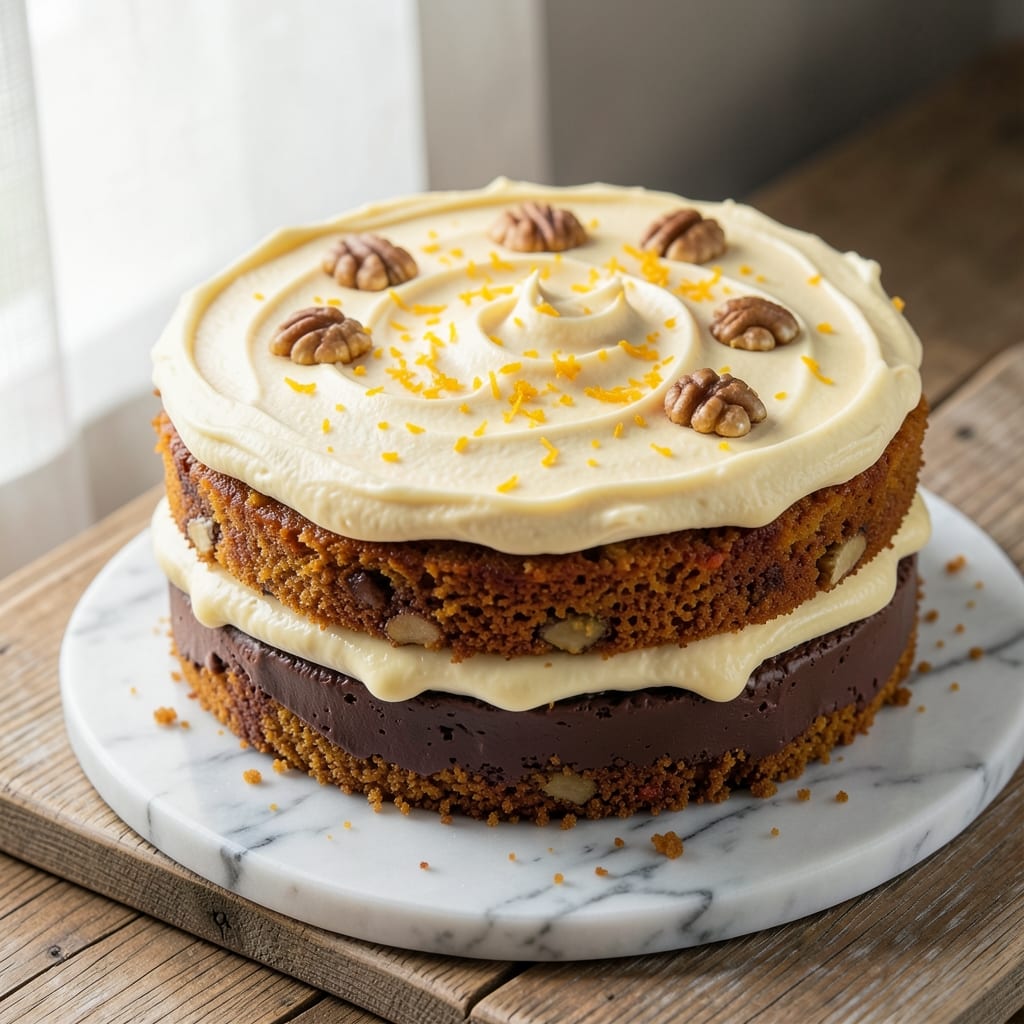
This bakery-style carrot cake recipe delivers layers of moist, spiced carrot cake with a velvety cream cheese frosting that tastes like your favorite dessert shop. 🌟 The secret lies in properly creaming butter and sugar, folding in finely grated carrots, and baking until golden—techniques that transform this classic into something truly special. I've perfected this version over years of baking, ensuring every slice has that perfect balance of sweetness, spice, and texture.
What sets this recipe apart is the attention to detail in both the cake and frosting. The cake batter incorporates warm spices like cinnamon and nutmeg while keeping the texture tender, and the frosting gets its signature tang from fresh cream cheese and a touch of vanilla. The result is a dessert that's visually stunning with its even layers and smooth frosting, but also packed with flavor that keeps people coming back for seconds.
By following these traditional methods with modern convenience in mind, you'll achieve restaurant-quality results at home. The cake stays moist for days, the frosting is perfectly sweet without being overpowering, and the combination of textures—soft cake, creamy frosting, and crunchy walnuts—makes every bite satisfying. This is the kind of dessert that impresses guests and becomes a family favorite.
Whether you're baking for a celebration or just treating yourself, this recipe scales beautifully and delivers consistent results. The techniques are approachable yet professional, making it perfect for bakers of all levels. Let's create something truly memorable in your kitchen.
Ingredients for bakery style carrot cake
Twelve essential ingredients for bakery-style perfection—moist layers, spiced warmth, and velvety frosting magic.
| Ingredient | Amount | Notes |
|---|---|---|
| All-Purpose Flour 🌾 | 2 ½ cups | Sifted for lightness, plus extra for pan |
| Granulated Sugar 🍚 | 2 cups | Superfine for smooth texture |
| Light Brown Sugar 🍚 | 1 cup | Packed firmly, for moisture |
| Unsalted Butter 🧈 | 1 ½ cups | Room temperature, creamed well |
| Large Eggs 🥚 | 4 whole | Room temperature, beaten |
| Pure Vanilla Extract 🍯 | 2 tsp | High-quality for aroma |
| Ground Cinnamon 🌿 | 2 tsp | Freshly ground for warmth |
| Ground Nutmeg 🌿 | ½ tsp | Freshly grated preferred |
| Ground Ginger 🌶️ | 1 tsp | Warm, not spicy |
| Baking Soda 🧂 | 1 tsp | Freshly opened |
| Salt 🧂 | ½ tsp | Kosher or fine sea salt |
| Medium Carrots 🥕 | 3 cups | Finely grated, no water |
| Walnuts 🥜 | 1 ½ cups | Toasted, chopped coarsely |
| Cream Cheese 🧀 | 16 oz | Room temperature, full-fat |
| Powdered Sugar 🍚 | 4 cups | Sifted for smooth frosting |
| Heavy Whipping Cream 🥛 | 1 cup | Cold, whipped to stiff peaks |
The butter and sugars are non-negotiable here. Use European-style butter like Plugrá or Land O'Lakes if you want that restaurant-quality richness, but any good-quality unsalted will do. Room temperature is key—press the butter with your finger and it should leave a slight indent. For the carrots, organic is ideal (no waxy skins), and always grate them fresh. The walnuts? Toast them first—toss with a pinch of salt and roast at 350°F for 8-10 minutes. That extra step makes all the difference in flavor.
No vanilla extract? Seeds from a vanilla bean work beautifully, or even a splash of bourbon for depth. Running short on powdered sugar? Process granulated sugar in a food processor for 30 seconds—it won't be as fine, but it'll work. The cream cheese should be room temperature when mixing with the powdered sugar, or you'll end up with lumps. Pro tip: Whip the cream cheese first, then add the powdered sugar gradually. And if you're worried about the frosting being too sweet, add an extra teaspoon of vanilla or a pinch of salt to balance it out.
This cake keeps beautifully—3 days at room temperature covered loosely with plastic wrap, or 5 days in the fridge for maximum freshness. The frosting can be made 2 days ahead and stored in the fridge, then whipped back to fluffiness before serving. For serving, I like to dust the top with a little extra powdered sugar and garnish with a few extra walnuts. Freeze the whole cake for up to 3 months if you're prepping for a big event—just thaw it at room temperature before slicing.
Why You'll Love This Recipe
- No Mixer Needed: I swear by this recipe when my mixer’s on strike—just cream the butter and sugars by hand (yes, it’s doable) and fold in the flour. The eggs bind everything together like magic, so no extra fuss.
- Moist Without Syrup: That combo of brown and granulated sugar? Chef’s kiss. The cake stays tender and rich for days—no gummy texture, no dry crumb. Honestly, my go-to for birthdays because it actually tastes like a bakery’s.
- Crowd-Pleaser Any Day: Bring it to potlucks or pack slices for work—it’s the one dessert everyone asks for. (Yes, even the "I don’t eat cake" coworker.) The butter-rich crumb cuts cleanly, so no awkward serving struggles.
- Budget Bakery Magic: Uses pantry staples (hello, flour and sugar) and stretches for leftovers. I’ve reheated slices in the oven for breakfast—trust me, they’re just as good the second time around.
Step-by-step instructions for bakery style carrot cake
Here's how to create layers of moist carrot cake with a velvety cream cheese frosting that'll impress any crowd.
👨🍳 Step 1: Prepare the Carrot Cake Batter
Preheat your oven to 350°F and grease two 9-inch round cake pans with butter, then dust with the 2.5 cups all-purpose flour reserved for the pan. Line the bottoms with parchment circles for easy removal. In a large mixing bowl, cream together the 1.5 cups unsalted butter, 2 cups granulated sugar, and 1 cup packed light brown sugar on medium speed until light and fluffy—about 3-4 minutes. This step is crucial for that bakery-style texture.
Add the 4 whole large eggs, one at a time, mixing well after each addition. Then stir in the 2 teaspoons pure vanilla extract and the 2 teaspoons ground cinnamon. In a separate bowl, whisk together the 2.5 cups all-purpose flour, 1 teaspoon baking soda, 0.5 teaspoon salt, 0.5 teaspoon ground nutmeg, and 1 teaspoon ground ginger. Gradually fold the dry ingredients into the wet mixture until just combined.
🍳 Step 2: Incorporate the Carrots and Walnuts
Using a box grater or food processor, finely grate the 3 cups medium carrots—no water needed, as this will make the cake too dense. Fold the grated carrots and 1.5 cups toasted, chopped walnuts into the batter until evenly distributed. Here's the thing—don't overmix. Just until combined ensures tender layers rather than tough ones. Divide the batter evenly between the prepared pans.
Bake in the preheated oven for 25-30 minutes, or until a toothpick inserted into the center comes out clean. I always check at the 25-minute mark because ovens vary. Let the cakes cool in the pans for 10 minutes, then transfer to a wire rack to cool completely. This resting period prevents crumbling when you frost.
🥘 Step 3: Make the Cream Cheese Frosting
While the cakes cool, beat the 16 oz cream cheese and 1.5 cups unsalted butter (softened) together until smooth and creamy. This is where the magic happens—don't rush it. Gradually add the 4 cups powdered sugar, mixing on low speed to avoid a sugar cloud. Once incorporated, beat in the 1 cup cold heavy whipping cream until light and fluffy.
Here's the trick: fold in 1 teaspoon pure vanilla extract and 1 teaspoon ground cinnamon for that signature spiced flavor. The frosting should be thick enough to hold its shape but still pipe smoothly. If it's too thick, add 1-2 tablespoons milk to loosen it. Taste and adjust sweetness if needed—sometimes powdered sugar can vary in sweetness.
🍽️ Step 4: Assemble and Frost the Carrot Cake
Once the cakes are completely cool, level the tops if needed for even layers. Place the first cake layer on a serving plate and spread a generous layer of frosting on top. Here's where it gets fun—add the second cake layer and frost the top and sides completely. For extra bakery flair, pipe swirls or rosettes around the edges using a piping bag fitted with a star tip.
Chill the cake in the refrigerator for at least 1 hour before slicing. This ensures clean cuts and prevents the frosting from sliding off. Serve at room temperature for the best texture. Each slice should reveal moist, spiced carrot cake with a velvety cream cheese frosting that melts in your mouth—worth every minute of the process!
Pro Tips For Making Bakery Style Carrot Cake
- Cream Butter and Sugar Slowly: I used to rush this step, and the batter ended up lumpy or greasy. Beat the butter and both sugars together for 3-4 minutes until it’s pale, fluffy, and looks like wet sand—this incorporates air, which means a lighter crumb. (Yes, even if you’re impatient like me.)
- Sift the Flour Twice: After burning three batches with dense, heavy cake, I learned this: Sift the flour before adding it to the dry ingredients, then sift it again right into the batter. This cuts out lumps and ensures even distribution, so your cake rises smoothly instead of sinking in the middle.
- Don’t Overmix the Batter: The moment the flour disappears into the wet ingredients, stop mixing. Overworking the batter develops gluten, and your cake will turn out tough instead of tender. Use a spatula to gently fold in the carrots and spices—just until combined.
- Test for Doneness at 345°F: Most recipes say 350°F, but I’ve found 345°F gives a more even bake without over-browning the top. Insert a toothpick into the center—it should come out with a few moist crumbs, not wet batter. If it’s done too soon, the middle stays gummy; too late, and the edges dry out.
Troubleshooting great bakery style carrot cake
Dense Cake Texture
If your cake turns out dense instead of light and tender, you're likely overmixing the batter or using too much flour. The key is to fold in the grated carrots and walnuts gently—just until combined. Also, make sure your 3 cups grated carrots are finely shredded and drained well (press them in a clean towel to remove excess moisture). Overmixing develops gluten, which makes the cake tough. 🥕
Cracked Top or Sinking Layers
Cracked tops or sinking layers usually happen when the cake cools too quickly or the oven temperature isn't stable. Let your cakes cool in the pans for 10 minutes before transferring to a wire rack. If your oven runs hot, try placing a baking sheet on the lower rack to create steam, which helps the cake rise evenly. Also, avoid opening the oven door during the first 20 minutes of baking.
Frosting Too Sweet or Not Sweet Enough
The sweetness of your frosting depends on the powdered sugar's quality—some brands are sweeter than others. Taste and adjust by adding 1-2 teaspoons of vanilla extract or a pinch of salt to balance it. If it's too thick, add 1 tablespoon milk at a time until it reaches a smooth, pipeable consistency. For extra tang, add ½ teaspoon lemon juice to cut through the sweetness.
Crumbling When Slicing
Crumbling often happens when the cake isn't fully cooled or the frosting is too soft. Let the cakes cool completely before frosting, and chill the assembled cake in the fridge for at least 1 hour before slicing. If the frosting is too warm, it can melt and cause the cake to fall apart. Use a sharp serrated knife, dip it in hot water, and wipe it dry between slices for clean cuts.
Uneven Baking or Raw Centers
Uneven baking is usually a sign of inconsistent oven heat. Rotate your cake pans halfway through baking to ensure even cooking. If the centers stay raw, your oven might not be hot enough—check the temperature with an oven thermometer. For extra insurance, bake for 5 minutes longer if needed. Always use two 9-inch pans (not 8-inch) to ensure even layers and proper rise.
Frosting Not Holding Shape
If your frosting slides off or doesn't hold its shape, it might be too soft or not chilled long enough. Make sure the cream cheese and butter are room temperature but not warm. Whip the frosting until it's thick but still pipeable, then refrigerate the cake for at least 1 hour before slicing. For extra stability, dust the top with 1 tablespoon powdered sugar before serving to help it set.
Nutrition facts
Frequently asked questions
Can I make this carrot cake in a bundt pan instead of round layers?
Yes, but expect different results! A bundt pan creates a single, decorative cake rather than layers. Reduce the batter by 25% (about 1.5 cups) and bake for 45-55 minutes at 350°F. The texture will be moist but denser since there's no layer separation. For frosting, spread it over the top and drizzle down the sides for a bakery-style finish.
How do I store leftovers to keep them fresh?
Cover loosely with plastic wrap at room temperature for 2 days, or refrigerate for up to 5 days. For longer storage, freeze the whole cake (unfrosted or wrapped tightly) for 3 months. Thaw overnight in the fridge before frosting. Pro tip: Refrigerate for 30 minutes before serving to set the frosting perfectly.
What can I substitute if I don't have walnuts? Use 1.5 cups pecans or 1 cup chopped almonds instead—they add similar crunch. For nut-free, try ½ cup shredded coconut (toasted lightly) or omit them entirely. Just
Can I make this cake gluten-free?
Yes, but use a 1:1 gluten-free flour blend (like Bob's Red Mill) and add ½ teaspoon xanthan gum to the dry ingredients. Reduce baking powder by ¼ teaspoon and expect slightly denser texture. Test the blend first in small batches to ensure proper rise. For frosting, regular powdered sugar works fine—just ensure your cream cheese is gluten-free.
Why does my frosting sometimes taste bland?
It's likely missing acidity or flavor depth. Boost it with 1 teaspoon lemon juice or ½ teaspoon orange zest to brighten the taste. For warmth, add ¼ teaspoon extra cinnamon. If using store-bought vanilla, swap for 1 teaspoon bourbon or almond extract instead. Always taste before final assembly!