
Desserts
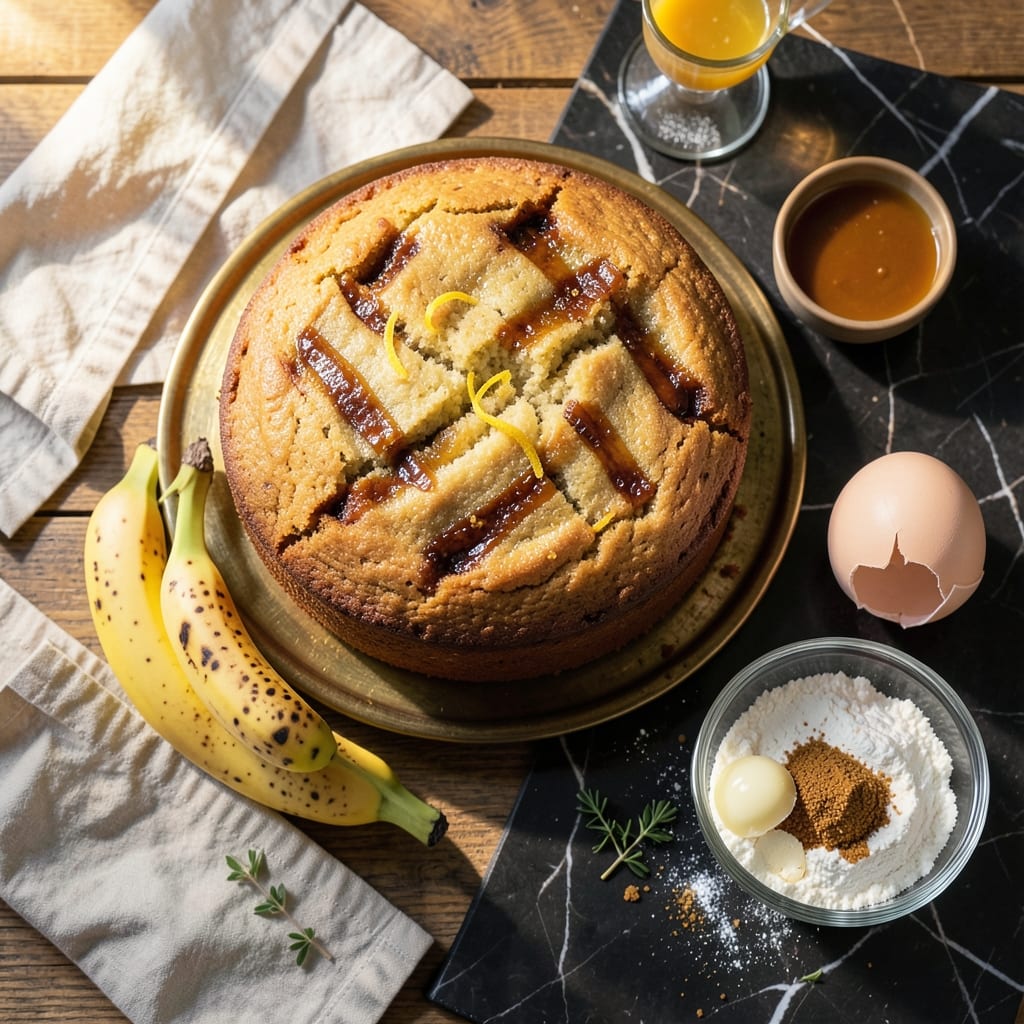
This banana cake recipe with shortening delivers layers of ultra-moist perfection topped with a buttery streusel crown—exactly the kind my grandmother used to make. The secret lies in creaming shortening with sugar until light and fluffy, then gently folding in ripe bananas to keep the texture tender. I’ve tested this recipe dozens of times, and it never fails to disappear within hours.
The magic happens in the streusel topping, where cold shortening creates flaky, golden-brown clusters that contrast beautifully with the cake’s soft crumb. Unlike recipes that rely on butter, shortening ensures a moist interior that stays fresh for days, even without frosting. This is the kind of cake that tastes like comfort, with just the right balance of sweetness and warmth.
Baked at 350°F for 30-40 minutes, this cake emerges from the oven with edges that are just set and a center that’s still tender. The streusel topping caramelizes into crispy pockets, while the cake itself holds its shape without being dry. It’s the perfect dessert for Sunday afternoons or weeknight cravings—simple enough for beginners but impressive enough for gatherings.
Serve it warm with a scoop of vanilla ice cream or dusted with powdered sugar for an effortless treat. The recipe scales easily, so you can make a single layer for two or a triple-layer cake for a crowd. Let’s get baking—this is the banana cake you’ll want to make again and again.
Ingredients for banana cake recipe with shortening
This cake's secret is creaming shortening with sugar for ultra-moist layers and a buttery streusel crown.
| Ingredient | Amount | Notes |
|---|---|---|
| All-Purpose Flour 🌾 | 2 ½ cups | Sifted for light texture |
| Granulated Sugar 🍚 | 1 ½ cups | White or light brown |
| Vegetable Shortening 🧈 | 1 cup | Crisco or similar brand |
| Ripe Bananas 🍌 | 3 medium | Mashed, spots preferred |
| Large Eggs 🥚 | 2 whole | Room temperature |
| Baking Soda 🧂 | 1 tsp | Not baking powder |
| Salt 🧂 | ½ tsp | Fine sea salt |
| Vanilla Extract 🌿 | 1 tbsp | Pure alcohol-free if preferred |
| Milk 🥛 | 1 cup | Whole milk preferred |
| All-Purpose Flour (Streusel) 🌾 | 1 cup | For topping only |
| Granulated Sugar (Streusel) 🍚 | ½ cup | Brown or white |
| Vegetable Shortening (Streusel) 🧈 | ½ cup | Cold for flakiness |
| Ground Cinnamon 🌶️ | 1 tsp | For streusel warmth |
| Powdered Sugar 🍚 | ¼ cup | Optional for dusting |
Shortening is the star here—Crisco or store-brand works perfectly. Grab the tub version, not the sticks, for easier measuring. The bananas need to be ripe (those dark spots mean more sweetness), but don't overdo it—mash them until smooth. Flour matters too: King Arthur or Gold Medal brands give the best rise. I always buy extra flour because it's the one ingredient I use for everything—cakes, biscuits, pie crusts. The baking soda and salt are non-negotiable for that perfect balance of flavor.
No vegetable shortening? Butter works in a pinch—just chill it first for flakier streusel. Swap brown sugar for white in the streusel if that's what you've got (the cake won't notice). Fresh bananas but no vanilla? Vanilla sugar does the trick. The milk can be any kind—almond milk works fine if you're avoiding dairy. For the streusel, if you're feeling fancy, add chopped walnuts for crunch. The powdered sugar is totally optional but makes the cake look extra special when dusted on top.
This cake keeps beautifully—3-4 days at room temp wrapped in foil, or 1 week in the fridge. The streusel stays crispy for days, which is why I always make extra. Freeze portions if you're not baking it all at once—3 months max. Reheat slices in the oven for 10 seconds to revive that fresh-baked magic. Trust me, it's worth the extra minute.
Why You'll Love This Recipe
- No Mixer Needed: That creamy shortening does all the work—no butter to soften, no eggs to overbeat. I just fold in mashed bananas and flour, then pour. The batter’s thick but forgiving, and the cake rises just right without a single whisk stroke.
- Sweet-Spiced Magic: The ripe bananas bring that natural caramel depth, while the sugar and shortening give it a tender, almost fudgy crumb. Honestly? It tastes like nostalgia—like my grandma’s kitchen, but with half the effort.
- Lunchbox Hero: Slice it up, wrap in foil, and it’s a perfect grab-and-go breakfast or snack. Between us, my kids fight over these portions—no sad, soggy lunches here. The shortening keeps it moist for hours, even when packed cold.
- Pantry Staple Power: You’ve got flour, sugar, and shortening? Boom—cake. No specialty ingredients, no last-minute store runs. I’ve made this with overripe bananas from my counter, and it still turns out rich and satisfying. Budget-friendly? Absolutely. Reliable? Even more so.
Step-by-step instructions for banana cake with shortening
Here's how to bake a banana cake so moist it'll disappear in minutes.
Mix Dry Ingredients for Perfect Texture
In a medium bowl, whisk together the 2.5 cups all-purpose flour, 1.5 cups granulated sugar, 1 tsp baking soda, and 0.5 tsp salt. Sift the flour first for a light, airy texture—this prevents dense layers. I like to use a fine-mesh sieve to remove any lumps that might make the cake tough.
Set the bowl aside while you prep the wet ingredients. The reason we mix these first is to avoid overmixing later when we add liquids. Overmixing develops gluten, which can make your cake tough instead of tender. Just give it a quick stir until everything is evenly combined.
Combine Wet Ingredients for Ultra-Moist Layers
In a separate large bowl, mash the 3 medium ripe bananas until smooth—spots are perfect, they add natural sweetness. Add the 1 cup vegetable shortening, 2 whole large eggs, 1 tbsp vanilla extract, and 1 cup milk. Mix with a hand mixer on medium speed for about 2 minutes until everything is fully incorporated and the mixture looks smooth.
Here's the thing—vegetable shortening creates that signature moist texture. Unlike butter, it doesn't melt during mixing, so it keeps the cake tender. The bananas add natural sweetness and moisture, but don't skip the sugar. It helps with browning and structure. Mix just until combined—no need to overdo it.
Fold Wet and Dry Ingredients Gently
Gradually add the dry ingredients to the wet mixture, mixing on low speed just until combined. You want to see a few dry streaks—this ensures you don't develop too much gluten. I usually stop mixing when the batter looks like thick pancake batter. Overmixing is the enemy of tender banana cake.
Pour the batter into a 9-inch round cake pan (or similar size) lined with parchment paper. Tap the pan gently on the counter to release any air bubbles. This step prevents pockets of air that can make your cake dense. Bake at 350°F for 30-35 minutes, until a toothpick inserted in the center comes out clean.
Prepare the Buttery Streusel Topping
While the cake bakes, make the streusel topping. In a small bowl, combine the 1 cup all-purpose flour (streusel), 0.5 cup granulated sugar (streusel), 0.5 cup vegetable shortening (streusel), and 1 tsp ground cinnamon. Use a pastry cutter or your fingers to work the shortening into the flour until it resembles coarse crumbs with some pea-sized pieces.
This cold shortening creates flaky layers in the streusel. If the mixture looks too dry, add a few drops of milk to bind it together. Sprinkle the streusel evenly over the top of the batter just as you take the cake out of the oven. The heat will melt the shortening and create that golden, buttery crown.
Bake and Finish for Perfect Results
Return the cake to the oven and bake for an additional 10-12 minutes, until the streusel is golden brown and bubbly. The cake should be springy to the touch—press gently in the center. If it springs back, it's done. If not, give it another minute or two.
Let the cake cool in the pan for 10 minutes, then transfer it to a wire rack. Once completely cool, dust the top with 0.25 cup powdered sugar if desired. The cake will be moist but not wet, with a perfectly crisp streusel topping. Slice and serve warm for the best experience—each bite will be rich, tender, and perfectly balanced.
Pro Tips For Making Banana Cake Recipe With Shortening
- Mash Bananas Like You Mean It: I learned this the hard way—using a fork leaves lumps that make the cake dense. Grab a potato masher or fork and press hard until it’s smooth as pudding. No lumps, no excuses.
- Don’t Overmix the Batter: Shortening makes this cake tender, but overmixing turns it tough. Stir just until the flour disappears—maybe 20 seconds past that—and resist the urge to "get it all in there." Your future slice will be softer for it.
- Check for Doneness with a Toothpick: The cake’s done when the toothpick comes out with a few moist crumbs, not wet batter. Shortening makes these cakes dense, so they take longer than you’d think—usually 30-35 minutes at 350°F. Don’t rush it.
- Use Cold Shortening: I was skeptical until I tried it: scoop the shortening straight from the fridge and cut it into the dry ingredients. Cold fat creates flaky layers that make the cake richer and lighter—no weird greasy texture, just pure goodness.
Essential equipment for this recipe
Mixing Essentials
You’ll need a hand mixer (like the Cuisinart SM-50BC) for creaming the shortening and sugar—this is non-negotiable for light, fluffy layers. I’ve tried whisking by hand, but the shortening never gets properly aerated, and the cake turns dense. A fine-mesh sieve is also crucial for sifting the flour to avoid lumps, which can create tough spots in your cake. 🌾
Pan Prep Tools
A 9-inch round cake pan (preferably with removable bottom) is ideal, but any oven-safe pan of similar size works. Line it with parchment paper to prevent sticking—this is especially important with shortening, which can make cakes cling to metal pans. I keep a roll of parchment nearby for all my baking adventures. A small offset spatula helps spread the batter evenly and smooth the streusel topping without tearing the paper.
Streusel Mastery
For the streusel, a pastry cutter (like the OXO Good Grips) makes quick work of cutting shortening into flour, but your fingers work too if you’re in a pinch. Just keep the shortening cold—this creates those signature flaky pockets. A small mixing bowl (8-inch diameter) is perfect for combining the streusel ingredients without making a mess. I like to use glass bowls for easy cleanup.
Baking Must-Haves
An oven thermometer is worth its weight in gold—most home ovens run hot or cold, and baking at 350°F is critical for this recipe. I use the Thermoworks Oven Thermometer and adjust my oven settings accordingly. A wire cooling rack prevents soggy bottoms by letting air circulate, and a small whisk keeps your dry ingredients light and fluffy. Don’t skip these basics—they’re the difference between a good cake and a great one. ⏰
Optional Extras
For dusting the finished cake, keep powdered sugar in a fine-mesh sieve to avoid clumps. A sharp serrated knife (like the Mercer Culinary Genesis) makes clean slices through the streusel crown. If you’re feeling fancy, a small pastry brush helps distribute melted butter for extra shine on the streusel. These tools aren’t essential, but they elevate the experience—especially when you’re sharing with guests.
Nutrition facts
Frequently asked questions
Why does this recipe use shortening instead of butter?
Shortening creates that signature ultra-moist texture that keeps this cake tender for days. Unlike butter, it doesn't melt during mixing, so the cake stays rich and soft. Plus, it helps the streusel topping stay crispy longer—perfect for make-ahead baking!
Can I substitute butter for the shortening in this recipe?
You can try, but the texture will change. Butter adds flavor but makes the cake denser. If substituting, chill the butter first and reduce the milk by 2 tablespoons to maintain moisture. The streusel will be slightly less flaky too. For best results, stick with shortening!
How do I know when the cake is fully baked?
Insert a toothpick into the center—it should come out clean with just a few moist crumbs. The cake should also spring back when gently pressed. If the streusel isn't golden, bake 2-3 more minutes. Never rely on oven time alone—every oven varies!
Can I make this cake gluten-free?
Yes, but with adjustments. Replace the all-purpose flour with a 1:1 gluten-free baking flour blend (like Bob's Red Mill) and add 1/4 tsp xanthan gum to the dry ingredients. The cake will still be moist, but the texture will be slightly denser. Test with a small batch first!
Why does my streusel turn out crumbly instead of flaky?
Cold shortening is key! If your streusel looks dry, the shortening may have melted. Keep it chilled until mixing, and cut it into the flour quickly. For extra flakiness, add 1/4 cup cold milk to bind it together. Work fast—the heat from your hands can melt the fat too quickly.