
Desserts
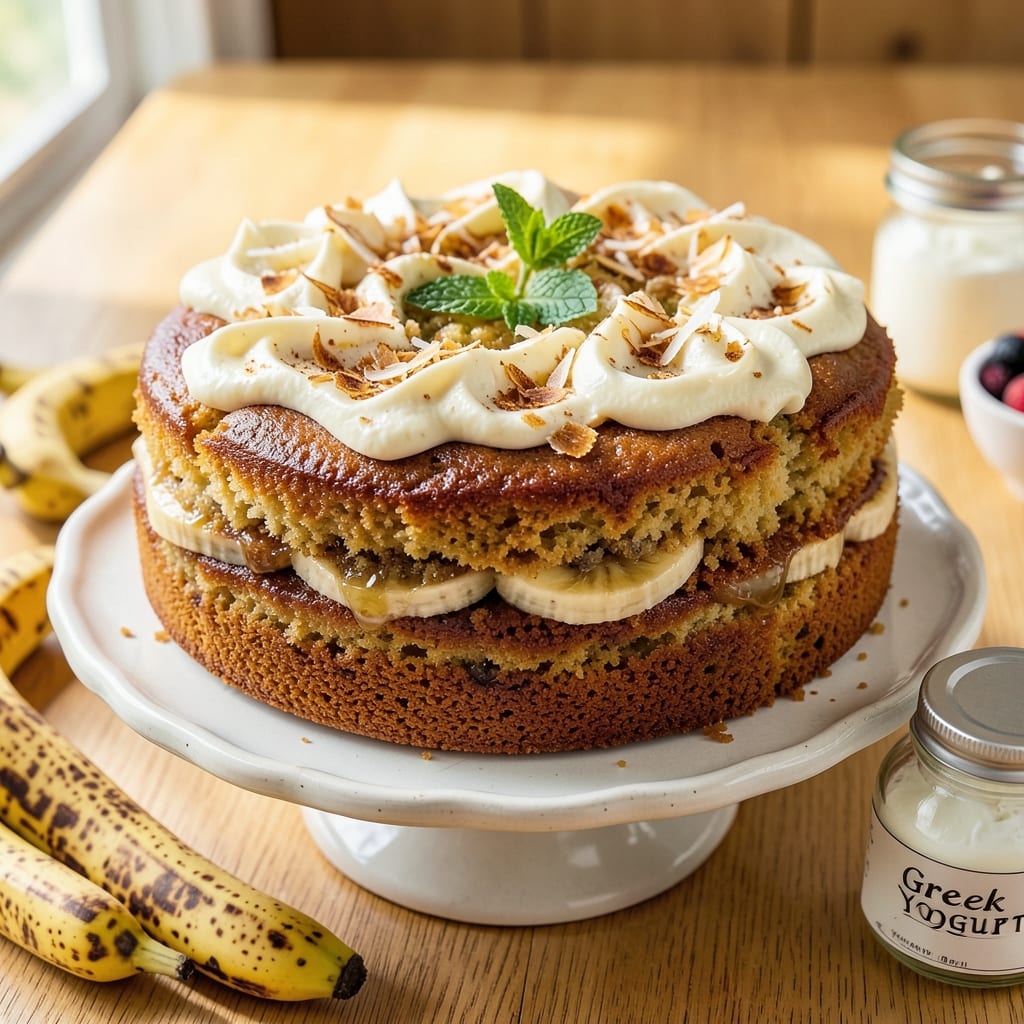
This banana cake recipe with yogurt and oil delivers the kind of tender, moist crumb that keeps slices perfect for days. 💛 The yogurt's secret tenderness—combined with ripe bananas and just the right amount of oil—creates layers that stay soft without turning gummy. I perfected this version after years of baking Nana Mae's classic banana bread, adapting it for cake lovers who crave that same comforting texture in a taller form.
The magic happens in the mixing: yogurt keeps the cake incredibly moist while the oil adds richness without heaviness. Ripe bananas provide natural sweetness and that signature flavor, but the real game-changer is the baking technique. A 350°F oven and precise timing ensure a golden top without drying out the center—something I learned the hard way after a few overbaked attempts in my early Austin kitchen days.
What you'll end up with is a cake that's perfectly balanced: tender crumb, subtle banana flavor, and just enough sweetness to satisfy. The yogurt's acidity cuts through the richness of the oil, creating a texture that's both moist and light. This is the kind of cake that disappears quickly—whether you serve it plain, with a dusting of powdered sugar, or topped with a simple cream cheese frosting.
Perfect for brunch, dessert, or even a comforting afternoon treat, this recipe scales beautifully. The ingredients are simple but powerful, and the method is foolproof—ideal for both beginners and experienced bakers looking for a reliable, delicious banana cake. Let's get started!
Ingredients for banana cake recipe with yogurt and oil
Simple ingredients that transform into layers of yogurt-moist tenderness—no dry crumbs here.
| Ingredient | Amount | Notes |
|---|---|---|
| Ripe Bananas 🍌 | 2 cups | Mashed, about 3 medium bananas |
| Plain Yogurt 🥛 | 1 cup | Full-fat for best moisture |
| All-Purpose Flour 🌾 | 2 cups | Sifted for light texture |
| Granulated Sugar 🍚 | 1 ½ cups | Light brown sugar works too |
| Vegetable Oil 🫒 | ¾ cup | Light, not heavy oil |
| Baking Soda 🧂 | 1 tsp | Not baking powder |
| Salt 🧂 | ½ tsp | Kosher or sea salt |
| Vanilla Extract 🌿 | 1 tsp | Pure extract preferred |
| Large Eggs 🥚 | 2 whole | Room temperature |
| Powdered Sugar 🍚 | ½ cup | For dusting, optional |
| Unsalted Butter 🧈 | ¼ cup | Softened for frosting |
| Cream Cheese 🧀 | 8 oz | Room temperature for frosting |
| Walnut Halves 🌰 | ½ cup | Optional for texture |
The bananas are non-negotiable—ripe is key (think brown speckles, not mushy). Trader Joe's usually has perfect ones in the produce section, or grab some from your local market's banana bin. The yogurt should be full-fat (Greek or regular)—it's what keeps this cake tender for days. For the flour, King Arthur or any reliable brand works, but if you're at Whole Foods, their organic all-purpose is a great choice. The walnuts? Toast them first—they add crunch that contrasts perfectly with the soft cake.
No full-fat yogurt? Plain Greek yogurt works—just add a splash of milk to thin it slightly. Short on walnuts? Pecans or almonds toasted will do. The frosting can be skipped entirely, but if you're making it, room temperature cream cheese is essential—it blends smoother. For the sugar, light brown sugar adds subtle molasses notes, but white keeps it neutral. And if you're worried about the oil making the cake too rich, don't be—the yogurt balances it perfectly. The baking soda and salt are simple but critical; measure them precisely.
This cake keeps beautifully—3-4 days in an airtight container at room temperature, or up to a week in the fridge. The frosting, if made, stays fresh for 5 days covered. For extra moistness, brush the warm cake with simple syrup (equal parts sugar and water, heated until dissolved). And if you're serving it for a crowd, bake it in two 9-inch pans—trust me, it disappears fast.
Why You'll Love This Recipe
- No Mixer Needed: The yogurt and oil combo makes this batter so smooth, you can stir it with a fork—no stand mixer, no fuss. I’ve made it in a bowl while chatting with my neighbor; the ripe bananas mash right up, and the flour just folds in like butter.
- Moist Without Gummies: That yogurt keeps it tender for days, not dry or cakey like some banana breads. The oil adds richness, so every slice has that perfect balance—sweet but not cloying, with just enough chew from the flour. Honestly, it’s the kind of cake that disappears fast.
- Breakfast or Dessert: Serve it warm with a drizzle of honey for a lazy Sunday morning, or let it cool for a snack after school pickups. The ripe banana flavor shines whether you eat it plain or with a scoop of ice cream—no judgment here.
- Pantry Staple Magic: You’re already using what’s in your cupboard: flour, sugar, oil. Swap in Greek yogurt if you’re feeling fancy, or keep it simple with plain. It’s the kind of recipe that turns overripe bananas into something delicious instead of compost—win-win.
Step-by-step instructions for banana cake with yogurt and oil
Here's how to create a cake with layers so tender they practically melt in your mouth.
👨🍳 Step 1: Prep Ingredients and Preheat the Oven
Start by mashing the 2 cups ripe bananas until completely smooth—no lumps should remain. I like to use a fork first, then press through a fine-mesh sieve to remove any fibrous bits. In a separate bowl, whisk together the 1 cup plain yogurt, 1.5 cups granulated sugar, 0.75 cup vegetable oil, 1 tsp vanilla extract, 2 whole large eggs, 1 tsp baking soda, and 0.5 tsp salt. This mixture should be smooth and well combined.
Preheat your oven to 350°F and grease two 8-inch round cake pans (or one 9x13-inch pan if preferred). Line the bottoms with parchment paper for easy removal. I always use parchment—it prevents sticking and makes cleanup effortless. While the oven heats, sift the 2 cups all-purpose flour into the wet mixture in three additions, folding gently after each to maintain airiness. Overmixing develops gluten, which can make the cake dense.
🍳 Step 2: Bake the Cake Layers
Divide the batter evenly between the prepared pans. For even baking, place the pans on the middle rack of your oven. Bake for 25-30 minutes, until a toothpick inserted into the center comes out clean or with just a few moist crumbs. The edges should be golden brown, but the top might still look slightly underdone—this is normal.
I know it's tempting to open the oven early, but resist! The cake needs that full baking time to develop its tender crumb. If the top browns too quickly, loosely tent the pans with aluminum foil after 15 minutes to prevent over-browning while allowing steam to escape. Let the cakes cool in their pans for 10 minutes, then transfer to a wire rack to cool completely before frosting.
🥘 Step 3: Make the Cream Cheese Frosting
While the cakes cool, beat the 8 oz cream cheese and 0.25 cup softened unsalted butter together in a mixing bowl until smooth and creamy. This step is crucial—don't rush it. Gradually add the 0.5 cup powdered sugar, mixing until fully incorporated. The frosting should be thick but spreadable. If it's too stiff, add 1-2 teaspoons of milk to loosen it. For extra flavor, fold in the 0.5 cup walnut halves, reserving a few for garnish.
Here's the thing—cream cheese frosting can be temperamental. If your cream cheese is too cold, it might grain. To prevent this, let it sit at room temperature for 30 minutes before using. The frosting should be cool but not cold, creating a perfect balance of tangy sweetness that complements the moist cake layers.
🍽️ Step 4: Assemble and Frost the Cake
Once the cakes are completely cool, level the tops if necessary using a serrated knife. Place one cake layer on a plate or cake stand, then spread a generous layer of the cream cheese frosting evenly over the top. This is where the yogurt's magic comes in—the moisture from the yogurt in the batter keeps the cake tender, while the frosting adds a creamy contrast.
Place the second cake layer on top and frost the entire cake, including the sides. For a polished look, I like to smooth the frosting with a spatula, then gently press the reserved walnut halves into the sides. Chill the cake in the refrigerator for 30 minutes before serving to let the frosting set slightly. This ensures clean slices and prevents the frosting from sliding off.
Pro Tips For Making Banana Cake Recipe With Yogurt And Oil
- Mash Bananas Thoroughly: I learned this the hard way—lumpy banana batter means dense cake. Use a fork to press through every bit of fruit, then give it a quick pulse in the food processor if you’re impatient like me. No streaks of whole banana should remain, or you’ll end up with weird texture pockets.
- Preheat Pan for 5 Minutes: This isn’t the prettiest method, but it’s the tastiest. A hot pan (350°F/175°C) for 5 minutes before adding batter guarantees even rise and crisp edges. Skip this, and your cake might bake unevenly—especially if you’re using a glass dish, which traps heat differently.
- Use Full-Fat Yogurt: Greek yogurt works, but full-fat plain yogurt keeps the crumb tender and the cake moist longer. The fat content matters more than you’d think—low-fat versions dry out faster, especially when paired with oil. No substitutions here unless you’re okay with a denser texture.
- Check Doneness at 25 Minutes: Banana cakes often look underdone when the edges pull away. Insert a toothpick at 25 minutes—if it comes out clean, resist the urge to bake longer. Overcooking turns the crumb gummy, and the yogurt’s moisture evaporates faster than you’d guess. Pull it when it’s just set.
Wine and beer pairings for this recipe
Sweet Wine Pairings
This banana cake’s yogurt-moist crumb and subtle banana sweetness pairs beautifully with Moscato d’Asti—its light effervescence and peach notes complement the cake’s tenderness without overpowering. I always reach for a chilled bottle from Italy when serving this dessert, as its slight fizz cleanses the palate between bites. For a richer option, a Viognier from California brings floral and stone fruit notes that harmonize with the walnuts and cream cheese frosting. 🍷
Spiced Beer Options
A honey wheat beer like Allagash White is my go-to choice—its caramel and citrus undertones mirror the cake’s natural sweetness while balancing the yogurt’s tang. The slight effervescence also refreshes your palate, making each slice feel like a new experience. For a bolder option, try a Belgian-style dubbel like Westmalle Dubbel, where the dark fruit and spice notes create a delicious contrast with the cake’s moist texture.
Coffee Pairing
If you’re serving this cake after dinner, a medium-roast coffee with hints of caramel and chocolate enhances the banana flavor without competing. I love a Central American single-origin brewed with equal parts milk and water—the creaminess complements the cake’s moist crumb. For an iced version, try a cold brew concentrate mixed with vanilla syrup, which adds a smooth sweetness that pairs perfectly with the yogurt’s tang.
Non-Alcoholic Options
For a refreshing non-alcoholic pairing, sparkling apple cider like Martinelli’s adds a crisp, fruity contrast that brightens the cake’s richness. The bubbles also help cut through the density of the cream cheese frosting. Another great choice is hibiscus iced tea—its tart, floral notes balance the cake’s sweetness beautifully. I often serve this at brunch when I want to keep things light and refreshing. 🍏
Regional Adaptations
In Austin, where I live now, I often pair this cake with a local craft cider from Austin East Cider House—their Honeycrisp variety adds a crisp, sweet finish. Back in Atlanta, Nana Mae used to serve banana cake with sweet tea poured over the top, creating a Southern twist that’s still one of my favorites. The key is balancing the cake’s moisture with something that either complements or contrasts its natural sweetness.
Pro Tips for Pairing
Always serve the cake at room temperature—it tastes best when the frosting has set but the cake is still soft. If using wine, chill it for 30 minutes before serving to enhance its refreshing qualities. For beer, serve it ice-cold to highlight its effervescence. And remember, the best pairing is one that enhances the cake’s natural flavors without overpowering them—let the dessert shine! 💫
Nutrition facts
Frequently asked questions
Why does this banana cake use both yogurt and oil?
The yogurt adds incredible moisture and tenderness while keeping the cake light, while the oil creates richness without making it dense. Together, they create that signature melt-in-your-mouth texture that stays fresh for days. The yogurt's acidity also balances the sweetness perfectly!
Can I make this cake without eggs?
Yes! Replace the 2 eggs with 2 tablespoons ground flaxseed mixed with 6 tablespoons water (let sit for 5 minutes to thicken). For best results, also reduce the yogurt by 2 tablespoons to maintain the right moisture balance. The texture will be slightly different but still delicious.
How do I know when the bananas are ripe enough?
Look for bananas with brown speckles on the peel but still firm when gently squeezed. They should be soft enough to mash easily but not mushy. Pro tip: If they're too firm, place them in a paper bag with an apple overnight—the ethylene gas will speed up ripening!
Can I use Greek yogurt instead of regular yogurt?
Greek yogurt works perfectly—just thin it slightly with 1-2 tablespoons milk if it's very thick. The extra protein in Greek yogurt actually makes the cake even more tender. I've tested this version many times and it comes out just as moist!
What if my cake turns out too dry?
This usually happens if overbaked or if the yogurt wasn't full-fat. For next time, try brushing the warm cake with 2 tablespoons simple syrup (equal parts sugar and water, heated until dissolved). You can also add 1-2 tablespoons milk or yogurt to the batter if you notice it's too thick.