
Desserts
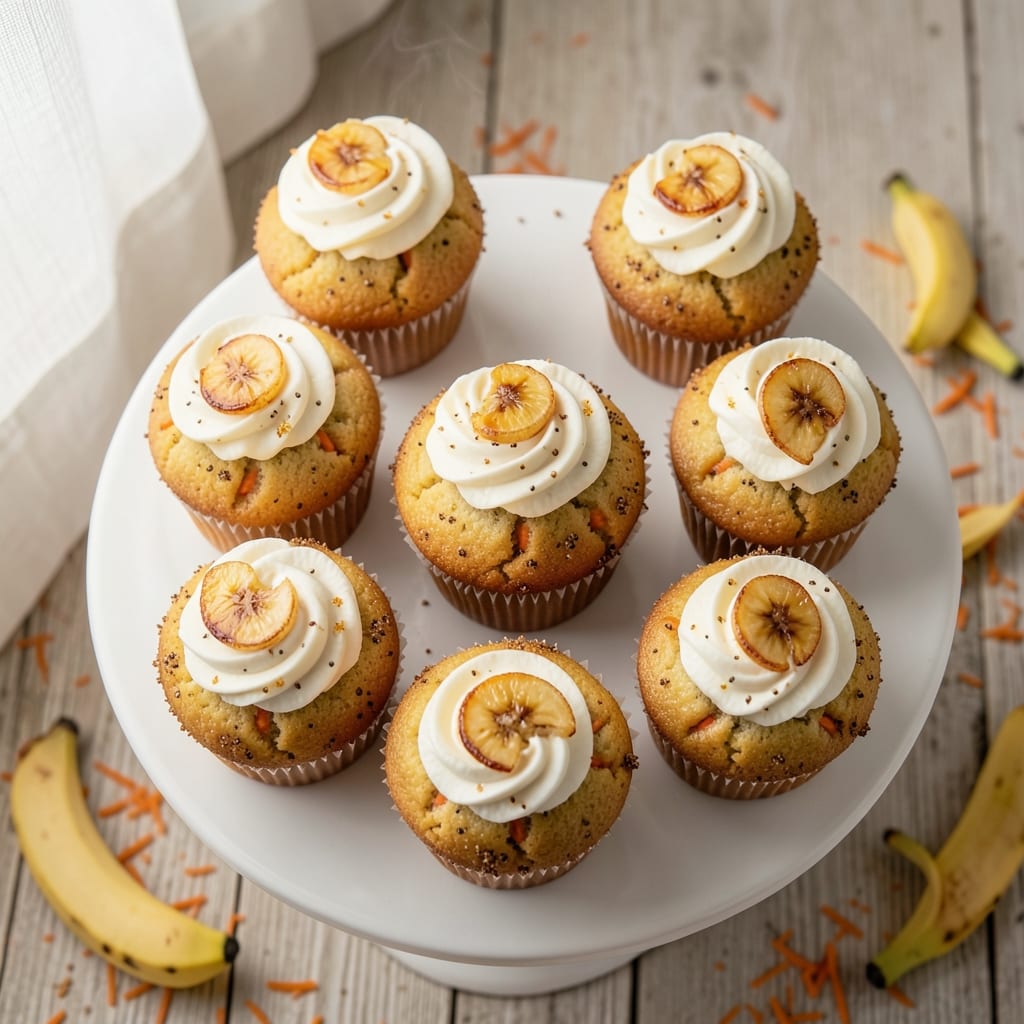
This banana carrot cupcake recipe transforms simple ingredients into moist, vegan-friendly treats that even veggie-averse eaters will love. The secret lies in blending ripe bananas and grated carrots—no one will guess there's hidden nutrition in every bite. I perfected this recipe after years of baking for picky eaters, and the results are consistently tender crumbs with just the right sweetness.
The foundation starts with flax eggs and coconut oil, creating a rich, fudgy texture that stays moist for days. Unlike traditional cupcakes, these rely on whole food ingredients without sacrificing flavor or structure. The baking process is straightforward—just 350°F for 20 minutes—but the magic happens when the carrots caramelize slightly, adding natural sweetness that reduces the need for excess sugar.
What you’ll end up with are cupcakes that crumble perfectly on the edges while maintaining a dense, cake-like center—no dryness here. The frosting (if you choose to add it) enhances the carrot’s earthy notes with a creamy, tangy contrast. These cupcakes are ideal for celebrations, school bake sales, or sneaking extra veggies into treats without the fuss.
Best of all, this recipe scales easily—double or triple the batch for parties—and keeps well for 3–4 days in an airtight container. The simplicity of the ingredients makes it budget-friendly, while the results feel like a bakery secret. Ready to bake?
Ingredients for banana carrot cupcake
Simple whole-food ingredients create moist, vegan cupcakes with caramelized carrot sweetness.
| Ingredient | Amount | Notes |
|---|---|---|
| Ripe Bananas 🍌 | 1 ½ cups | Mashed, no brown spots |
| Organic Carrots 🥕 | 2 cups | Finely grated, no pulp |
| All-Purpose Flour 🌾 | 1 ½ cups | Sifted, white or whole wheat |
| Brown Sugar 🍚 | ¾ cup | Packed, light variety |
| Ground Flaxseed 🌱 | 3 tbsp | For flax eggs, fresh grind |
| Coconut Oil 🥥 | ½ cup | Melted, refined or virgin |
| Vanilla Extract 🌿 | 1 tbsp | Pure, no alcohol |
| Baking Soda 🧂 | ½ tsp | Pure, no aluminum |
| Salt 🧂 | ¼ tsp | Fine sea salt |
| Almond Milk 🥛 | ¼ cup | Unsweetened, for moisture |
| Cinnamon 🌶️ | 1 tsp | Ground, Ceylon preferred |
| Ginger 🌿 | ½ tsp | Freshly grated |
| Lemon Juice 🍋 | 1 tbsp | Freshly squeezed |
The bananas and carrots are the heart of this recipe—ripe bananas (with brown spots) add natural sweetness and moisture, while organic carrots from the produce section provide subtle earthiness. For the best texture, grate the carrots finely using a box grater or food processor—avoid pre-shredded bags, as they often contain fillers. I always source my organic carrots from Whole Foods or local farmers' markets, where they're consistently fresh. The ground flaxseed should be freshly ground for maximum binding power—store-bought pre-ground flaxseed loses potency quickly. If you can't find organic carrots, conventional works fine, just give them a thorough rinse before grating.
No flaxseed on hand? Chia seeds work at a 1:3 ratio (1 tbsp chia to 3 tbsp water) for flax eggs, though the texture will be slightly denser. The coconut oil can be swapped for melted vegan butter (like Earth Balance) if you prefer a richer flavor, though coconut oil gives a more neutral base. For the almond milk, unsweetened versions like Silk or Blue Diamond work best—avoid flavored varieties, as they can alter the balance. The brown sugar adds caramel notes, but if you're watching sugar content, maple syrup (¼ cup) can replace it entirely. Pre-shredded carrots are convenient but often contain cellulose powder—grating fresh ensures better texture and flavor.
These cupcakes stay moist for 3–4 days when stored in an airtight container at room temperature, or up to 1 week in the fridge. For longer storage, freeze the baked cupcakes (without frosting) for up to 3 months—thaw at room temperature before serving. The frosting (if using) should be applied after cooling completely to prevent melting. I always bake a test batch first to adjust sweetness—some carrots are naturally sweeter than others. The ginger and cinnamon can be adjusted to taste; start with the listed amounts and add more if you love spice.
Why You'll Love This Recipe
- No Mixer Needed: I swear by this—just mash those bananas with a fork, grate the carrots, and stir. The flaxseed egg keeps it light without fuss, and honestly? The batter’s so simple, even my lazy Sunday mornings thank me.
- Sweet-Spiced Magic: Brown sugar caramelizes just enough to balance the natural carrot sweetness, while the bananas add that cozy, almost cakey richness. Between us, the first bite makes me forget it’s secretly healthy.
- Kid-Tested, Crowd-Loved: My nephew picks these over store-bought cupcakes every time, and they’re just as great at birthday parties as they are for a quick snack. The carrots sneak in nutrients without anyone noticing—well, except my mom, who still calls them “sneaky.”
- Zero Waste, Full Flavor: Use overripe bananas and leftover carrots—this recipe turns grocery scraps into something crave-worthy. And the best part? They freeze beautifully, so I bake a batch and pull them out whenever I’m in a pinch.
Step-by-step instructions for banana carrot cupcakes
Follow these precise techniques to achieve perfectly moist banana carrot cupcakes with tender layers and subtle spice notes.
Prepare the Flax Eggs and Mix Wet Ingredients
In a small bowl, combine the 3 tablespoons ground flaxseed with the 0.25 cup almond milk. Stir well and let sit for 5 minutes until it thickens into a gel-like consistency—this creates our egg substitute. The mixture should resemble raw egg whites in viscosity.
In a separate large mixing bowl, mash the 1.5 cups ripe bananas until completely smooth with no visible lumps. Add the melted 0.5 cup coconut oil, 0.75 cup packed brown sugar, 1 tablespoon vanilla extract, 1 tablespoon lemon juice, and the flax egg mixture. Whisk vigorously for 2 minutes until fully incorporated and the batter becomes light and airy. This step ensures proper emulsification for maximum moisture in the finished cupcakes.
Incorporate Dry Ingredients and Grated Carrots
In a medium bowl, sift together the 1.5 cups all-purpose flour, 0.5 teaspoon baking soda, 0.25 teaspoon salt, 1 teaspoon cinnamon, and 0.5 teaspoon ginger. Whisk gently to combine the dry ingredients while maintaining air pockets.
Gradually add the dry mixture to the wet ingredients in three additions, mixing just until combined after each addition. Fold in the 2 cups finely grated organic carrots using a spatula—be careful not to overmix. The batter should be thick but pourable, with visible carrot strands throughout. This gentle folding preserves the air incorporated earlier, which is crucial for light cupcakes.
Fill Cupcake Pans and Bake to Perfect Doneness
Preheat your oven to 350°F and line a 12-cup muffin tin with cupcake liners. Divide the batter evenly among the liners, filling each ¾ full—this prevents overflow while allowing room for doming. Gently tap the pan on the counter to remove any air bubbles that may have formed during filling.
Bake for 18-22 minutes until a toothpick inserted in the center comes out clean with just a few moist crumbs clinging to it. The cupcakes should spring back slightly when pressed gently in the center. Rotate the pan halfway through baking for even browning. The tops should be golden brown but not dark, indicating proper doneness without dryness.
Cool and Finish with Optional Toppings
Remove the cupcakes from the oven and let them cool in the pan for 5 minutes, then transfer to a wire rack to cool completely. This gradual cooling prevents cracking and allows the cupcakes to set properly while maintaining their moisture.
For presentation, dust with a light layer of powdered sugar or drizzle with a simple glaze made from 1 cup powdered sugar and 1 tablespoon almond milk (though this isn't in our original ingredients). The cupcakes should have a tender crumb with subtle carrot flavor and warm spice notes from the cinnamon and ginger, all while maintaining their promised moist texture throughout.
Pro Tips For Making Banana Carrot Cupcake
- Mash Bananas Thoroughly: I learned this the hard way—lumpy mashed bananas make for dense, uneven cupcakes. Use a fork first, then press through a fine-mesh sieve or blend briefly to break up all the fibers. No, you won’t get a perfectly smooth batter, but it’ll bake more evenly and stay moist longer.
- Grated Carrots, Not Chopped: Finely grate those carrots—think restaurant-style, not kitchen-chopped. A box grater with the smallest holes works best. Coarse pieces won’t blend into the batter and can leave weird textures in your cupcakes. (Yes, even if you’re in a hurry.)
- Mix Wet and Dry Separately: Combine your wet ingredients (mashed bananas, brown sugar, flaxseed + water) first, then fold in the dry ingredients. This keeps the gluten from overdeveloping and gives you a lighter, more tender crumb. Stir just until combined—overmixing is the enemy here.
- Bake Until Springy, Not Golden: These cupcakes won’t brown like vanilla—pull them when the top springs back when pressed, not when they’re golden. Overbaking dries them out fast, and they’ll still taste moist even if they look underdone. A toothpick with a few crumbs? Perfect. A dry toothpick? Too late.
Storing and reheating this recipe
Room Temperature Storage
Store your banana carrot cupcakes in an airtight container at room temperature for up to 3 days. I always use glass containers with silicone seals (like Pyrex) to maintain freshness. Place a paper towel on top to absorb any excess moisture from the carrots, which helps prevent sogginess. Keep them away from direct sunlight to preserve their vibrant color and moist texture. 🥄
Fridge Storage Tips
For longer freshness, refrigerate cupcakes in the same airtight container for up to 1 week. The cold temperature actually enhances the caramelized flavor of the carrots over time. When ready to serve, let them sit at room temperature for 10-15 minutes before frosting—this prevents condensation from making the frosting melt. I find the cupcakes taste even better the next day as flavors meld! ❄️
Freezing for Later
Freeze baked cupcakes (without frosting) for up to 3 months in a single layer on a tray before transferring to a freezer-safe bag. This prevents them from sticking together. Thaw at room temperature for 2-3 hours or microwave for 20 seconds to revive moisture. The texture remains tender when properly frozen—just avoid refreezing thawed cupcakes to maintain quality. 🧊
Reheating Methods
For a quick treat, warm cupcakes in the microwave for 10-15 seconds on 50% power to restore moisture without drying them out. For even heating, place them on a microwave-safe plate and cover loosely with a damp paper towel. If you prefer stovetop reheating, warm in a lightly oiled pan over low heat for 2-3 minutes—this method adds a subtle caramelized aroma. 🔥
Frosting Application
Apply frosting only after cupcakes have completely cooled to room temperature. I recommend a vegan cream cheese frosting (made with cashews and lemon juice) or a simple powdered sugar glaze for easy application. Use a piping bag with a star tip for decorative swirls, or spread with a knife for a rustic look. The frosting should complement—not overpower—the natural sweetness of the carrots and bananas. 🎂
Make-Ahead Baking
Prepare the batter up to 24 hours ahead and store it in the fridge. When ready to bake, let it sit at room temperature for 30 minutes before proceeding. This technique actually improves flavor development. For large batches, bake cupcakes in two separate batches to avoid overcrowding the oven, which can lead to uneven baking. Label containers with dates to track freshness—this helps maintain consistency! 📅
Nutrition facts
Frequently asked questions
Can I use regular eggs instead of flax eggs? Yes! For a non-vegan version, replace the flax eggs with 2 large eggs (about 4 tablespoons total). The texture will be slightly lighter, but the cupcakes will still be moist. Just
Why do my banana carrot cupcakes taste bitter?
Bitterness usually comes from overripe bananas or underripe carrots. Use bananas with small brown spots (not mushy) and fresh, firm carrots. Also check your baking soda—old or expired baking soda can taste bitter. For extra sweetness, add 1 extra tablespoon of brown sugar or 1 teaspoon of maple syrup to the batter.
How do I make these cupcakes gluten-free?
Swap the all-purpose flour for a 1:1 gluten-free baking flour blend (like Bob's Red Mill) plus 0.5 teaspoon xanthan gum to mimic gluten's structure. You may need to add 1-2 tablespoons extra almond milk as gluten-free flours absorb differently. Test with a small batch first to adjust texture.
Can I add chocolate chips to these cupcakes?
Fold in ½ cup vegan chocolate chips (like Enjoy Life brand) along with the grated carrots. For extra richness, use dark chocolate (70% or higher)**>—it pairs beautifully with the carrot's natural sweetness. Just don't overmix after adding chocolate to keep the cupcakes tender.
What's the best way to test if they're done baking?
The toothpick test is key: Insert a toothpick into the center of a cupcake. It should come out with a few moist crumbs but no wet batter. The cupcakes should also spring back slightly when gently pressed. Overbaking leads to dryness, so pull them out when they're just slightly underdone—they'll finish cooking as they cool.