
Desserts
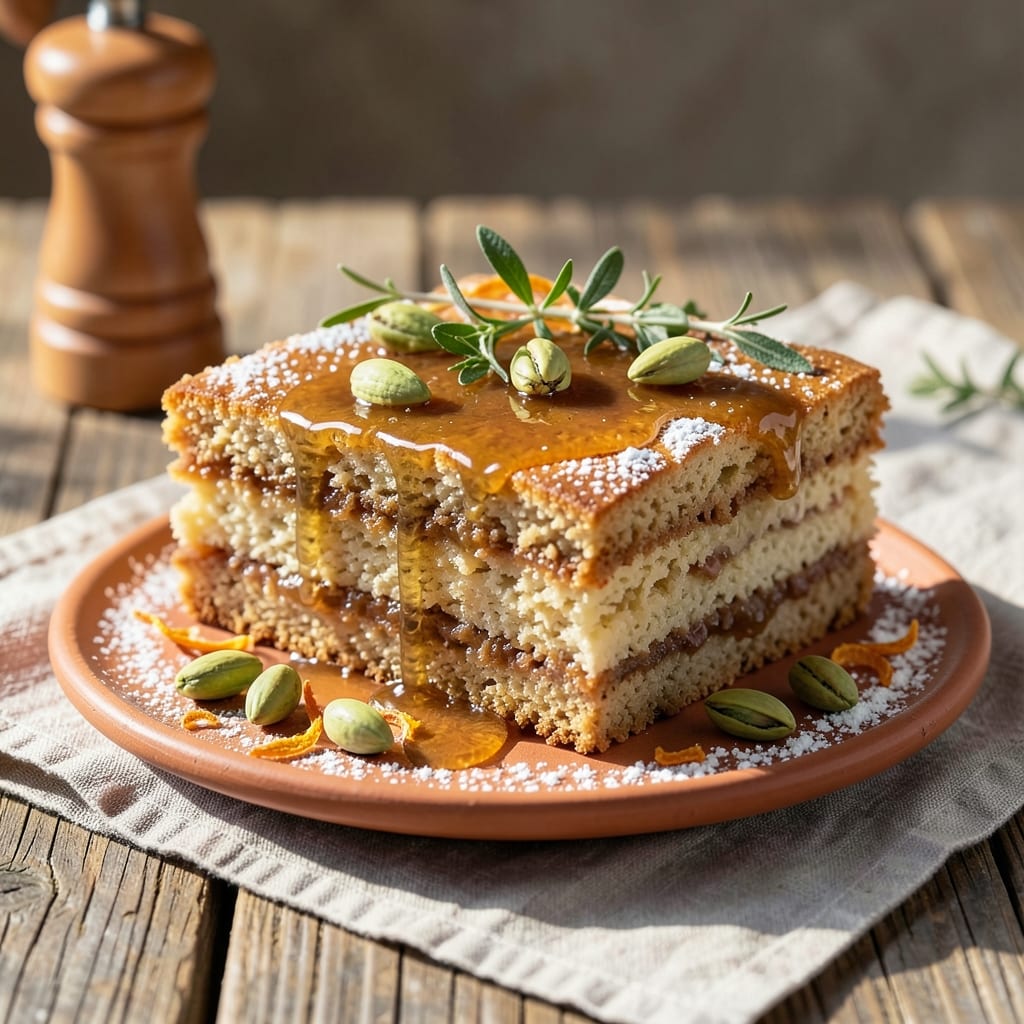
This ancient Greek honey cake recipe transports you to a Mediterranean kitchen where honey, nuts, and citrus create a dessert with crispy edges and caramelized sweetness. 🌟 The secret lies in the honey syrup—simmered with wine and spices—that transforms simple dough into golden, aromatic bites. I first tasted this cake during a trip to Greece, where it was served warm with a dusting of powdered sugar, and it’s been a staple in my dessert repertoire ever since.
The recipe combines traditional ingredients like semolina flour, honey, and orange zest with modern convenience, making it perfect for special occasions or a cozy weekend treat. The dough is rolled into small balls, baked until golden, and then drenched in the honey syrup, which caramelizes beautifully for a rich, sticky finish. This method ensures every bite delivers that perfect balance of crispy exterior and tender interior.
What makes this cake truly special is its versatility—it’s equally delicious served warm with a sprinkle of powdered sugar or at room temperature with a drizzle of extra honey. The combination of citrus, nuts, and aromatic spices creates layers of flavor that linger, making it a showstopper dessert that feels both nostalgic and fresh. Whether you're recreating an ancient Greek tradition or simply craving a decadent treat, this recipe delivers.
Ready to bake? The process is straightforward, with key steps like preparing the honey syrup ahead of time and baking the dough at the right temperature to achieve those coveted crispy edges. Let’s bring a taste of history to your kitchen with this timeless dessert.
Ingredients for ancient greek honey cake
Twelve ingredients, Mediterranean magic—this honey cake delivers crispy edges and sticky caramelized sweetness.
| Ingredient | Amount | Notes |
|---|---|---|
| All-Purpose Flour 🌾 | 4 cups | Sifted for light texture |
| Semolina Flour 🌾 | 1 cup | For authentic texture |
| Granulated Sugar 🍚 | 1 ½ cups | White or light brown |
| Honey 🍯 | 1 ½ cups | Thick, dark variety preferred |
| Unsalted Butter 🧈 | 1 cup | Cold, cubed for dough |
| Large Eggs 🥚 | 2 whole | Room temperature |
| Orange Zest 🍊 | 1 tbsp | Freshly grated |
| Orange Juice 🍊 | ½ cup | Freshly squeezed |
| Dry White Wine 🍷 | ½ cup | Medium-bodied, like Pinot Grigio |
| Ground Cinnamon 🌿 | 1 tsp | Freshly ground preferred |
| Ground Cloves 🌶️ | ½ tsp | Whole cloves ground |
| Toasted Almonds 🥜 | 1 cup | Chopped, skin-on |
| Powdered Sugar 🍚 | ½ cup | For dusting |
| Diamond Crystal Kosher Salt 🧂 | ½ tsp | For dough and syrup |
The honey is non-negotiable—thick, dark varieties like buckwheat or wildflower give the best depth. Trader Joe's or Whole Foods usually carry the good stuff in their baking aisle. For the wine, skip the cheap stuff—Pinot Grigio or Assyrtiko (Greek white) add authentic brightness. Toast your almonds in a dry pan until golden (about 5 minutes)—don't walk away, they burn fast. The semolina flour is key for that signature crispy texture; if you can't find it, substitute half the all-purpose flour but expect slightly softer edges.
No white wine? Dry vermouth or even apple juice works in a pinch (just add a pinch of salt to balance). Short on orange zest? Lemon zest at double the amount gives a similar tang. The cloves are traditional but optional—if you're sensitive to spice, reduce to 1/4 tsp or skip entirely. For the honey syrup, simmer uncovered—it needs to reduce and caramelize, not boil off completely. And yes, you can use maple syrup if you're avoiding honey, but the flavor will be subtly different (more earthy, less floral).
This cake keeps beautifully—3 days at room temperature in an airtight container, or 1 week refrigerated. The syrup hardens as it cools, so reheat gently with a splash of water if it seems too thick. Freeze for up to 3 months by wrapping individually in plastic. Pro tip: Make the syrup ahead—it improves overnight as the flavors meld. And trust me, the extra effort for freshly toasted almonds is worth every crispy bite.
Why You'll Love This Recipe
- No-Fuss Mixing: I swear by this recipe—just fold the dry ingredients into the wet, no creaming butter or complicated steps. The semolina flour gives it that signature crumbly texture without extra effort.
- Honey Butter Bliss: That rich honey-butter combo? It’s like a warm hug in cake form. The butter keeps it tender while the honey caramelizes just enough to make every bite irresistible.
- Crowd-Pleaser Any Day: Between us, this cake disappears fast—at breakfast, as dessert, or even with coffee. Honestly, I’ve served it at family dinners, potlucks, and lazy Sundays, and no one’s ever turned it down.
- Budget-Friendly Staples: You’re using pantry basics here—flour, sugar, honey—so it’s cheap to make but feels special. Plus, it keeps well for days, meaning fewer grocery runs and more cake for less.
Step-by-step instructions for crispy ancient Greek honey cake
Here's how to bake a cake that transports you to ancient Greece with its caramelized honey and nutty crunch.
👨🍳 Step 1: Mix the Dough with Honey and Spices
In a large mixing bowl, combine the 4 cups all-purpose flour and 1 cup semolina flour. Sift them together to remove any lumps and create a light, airy base for your cake. In a separate bowl, cream together the 1 cup unsalted butter and 1.5 cups granulated sugar until light and fluffy—this should take about 3-4 minutes with an electric mixer.
Add the 2 whole large eggs one at a time, mixing well after each addition. Stir in the 1.5 cups honey, 1 tbsp orange zest, 0.5 cup orange juice, 0.5 cup dry white wine, 1 tsp ground cinnamon, and 0.5 tsp ground cloves. The mixture will be thick and sticky, but that's exactly what we want for that authentic Greek texture. I like to press down gently on the dough during the first minute—this prevents it from curling and ensures even contact with the pan.
🍳 Step 2: Fold in Almonds and Shape the Cake
Gently fold in the 1 cup toasted almonds using a silicone spatula, making sure they're evenly distributed throughout the dough. The nuts should stay whole for that classic crunch, but if a few break, don't stress—it just means more flavor in every bite.
Divide the dough into 4 equal portions (about 1 pound each) and shape them into smooth balls. For the best results, I press each ball down slightly in the center to create a shallow well—this helps the cake rise evenly and develop those crispy edges we're after. Wrap each portion tightly in plastic wrap and refrigerate for at least 30 minutes to firm up.
🔥 Step 3: Bake Until Golden Brown and Crispy
Preheat your oven to 350°F and line two baking sheets with parchment paper. Unwrap one portion of dough and place it on the prepared sheet. Press it down gently into a 1-inch thick round loaf shape, about 8 inches in diameter. You'll see the edges start to crisp—that's your signal to flip it over and repeat the process for the other side.
Bake for 25-30 minutes until the edges are deep golden brown and the top feels firm to the touch. The cake should pull away slightly from the edges of the pan, and a toothpick inserted in the center should come out clean. Real talk: your oven might run hot, so start checking at the 20-minute mark—better to pull it out a little early than risk overbaking.
⏰ Step 4: Caramelize the Honey Syrup
While the cake bakes, prepare the honey syrup by combining 1 cup honey, 0.5 cup orange juice, and 0.5 tsp diamond crystal kosher salt in a small saucepan. Bring to a gentle simmer over medium heat and cook for 8-10 minutes, stirring occasionally, until it thickens slightly and becomes translucent. You'll smell that rich, caramelized honey aroma—this is the moment that matters.
Brush the warm syrup generously over the baked cake while it's still hot from the oven. The heat will help the syrup soak in and create that signature sticky, caramelized crust. Let the cake cool for 10 minutes before transferring it to a wire rack—this resting period ensures the syrup sets properly and the cake holds its shape.
🍽️ Step 5: Dust with Powdered Sugar and Slice
Once completely cooled, dust the top of the cake generously with 0.5 cup powdered sugar using a fine-mesh sieve. This step adds that final touch of sweetness and gives the cake its signature snowy appearance. Let the powdered sugar settle for 5 minutes before slicing.
Slice the cake into 12 even pieces using a sharp serrated knife. Each slice should reveal a moist, honey-infused crumb with crispy edges and a caramelized honey glaze. Serve at room temperature with a cup of Greek coffee or a glass of retsina wine for the full ancient Greek experience.
Pro Tips For Making Ancient Greek Honey Cake
- Whisk Butter Slowly: If you dump cold butter into warm honey, you’ll end up with a greasy mess. Instead, melt the butter first, then drizzle it into the honey while whisking constantly—this keeps the mixture smooth and prevents separation. (Yes, it’s tedious, but your cake’s texture will thank you.)
- Sift Semolina Twice: Semolina is coarse, and clumps in the batter make for a dense, crumbly cake. Sift it first, then sift it again after mixing with flour—this ensures even distribution and that signature tender-yet-firm crumb. (I learned this after my first batch turned out like a brick.)
- Don’t Overmix the Dough: Once you add the eggs, fold just until combined—overmixing develops gluten and turns your honey cake into a chewy disaster. Stop when the batter is barely homogeneous, then let it rest 10 minutes before baking. (Your future self will curse you if you don’t.)
- Bake in Two Stages: Start at 350°F (175°C) for 20 minutes to let the center set, then crank to 375°F (190°C) for the last 10-15 minutes. This prevents a raw middle while still getting that golden crust. (I used to underbake it, thinking it’d finish steaming—wrong.)
Wine and beer pairings for this ancient greek honey cake
Greek White Wines
For this honey cake, I reach for Assyrtiko or Moschofilero—both are crisp, mineral-driven whites from Santorini and Peloponnese that complement the citrus and honey notes beautifully. Assyrtiko has bright acidity that cuts through the richness, while Moschofilero adds a touch of earthiness that pairs wonderfully with the toasted almonds. If you can't find these, a Greek Assyrtiko from Gaia Wines or Santorini Wines is my go-to for authenticity. 🍷
Retsina Pairing
Traditionally, Greeks served honey cakes with retsina, a pine-resin infused white wine. The resin adds a unique, slightly piney aroma that contrasts beautifully with the sweetness of the cake. Look for a dry retsina like Tsantali or Metaxas—these brands balance the resin's boldness with crisp citrus notes. Serve slightly chilled to enhance the flavors.
Sweet Dessert Wines
If you prefer something sweeter, a Vinsanto from Santorini is a stunning match. This amber wine is made from dried grapes and has a honeyed, caramelized profile that mirrors the cake's flavors. Gaia Wines Vinsanto is my favorite—its nutty, oxidative notes elevate the toasted almonds and caramelized honey. Serve at room temperature to let the wine's complexity shine.
Beer Options
For beer lovers, a Greek lager like Fix or Mythos works surprisingly well. Their clean, crisp profiles won't overpower the cake's flavors. If you want something bolder, try a Greek-style witbier like Mythos Wit—its citrus and coriander notes complement the orange zest in the cake. Avoid heavy IPAs or stouts, as they can clash with the delicate sweetness. 🍺
Coffee Contrast
Finish your dessert with a cup of Greek coffee, brewed strong and sweetened with honey. The bold, slightly bitter notes of the coffee create a perfect contrast to the cake's sweetness. For an authentic touch, use a briki (Greek coffee pot) and serve with a glass of water on the side—a tradition that pairs beautifully with this historic dessert.
Nutrition facts
Frequently asked questions
What makes this honey cake different from modern Greek desserts?
This recipe stays true to ancient Greek traditions by using semolina flour for crispy edges and a honey-wine syrup that caramelizes beautifully. Unlike modern versions, it skips refined sugar and relies on natural sweeteners like honey and citrus. The addition of toasted almonds and spices like cloves gives it that authentic historical depth.
Can I make this cake without wine?
Replace the 0.5 cup dry white wine with 0.5 cup apple juice or dry vermouth for similar acidity. Add a pinch of salt to balance the flavor. The wine enhances the caramelization, but these substitutes work well for a non-alcoholic version.
Why does the dough need to rest in the fridge?
The 30-minute fridge rest prevents the dough from spreading too much during baking, giving you those perfect crispy edges. It also helps the gluten relax, making the cake easier to shape and less likely to crack. Think of it as a prep step for better texture control.
How do I store leftovers to keep them fresh?
Keep the cake in an airtight container at room temperature for 3 days or refrigerate for 1 week. For longer storage, freeze individual slices wrapped in plastic for up to 3 months. The syrup hardens when cold, so reheat gently with a splash of water if needed.
Can I add nuts other than almonds?
Yes! Try walnuts or pecans for a richer flavor, or pistachios for a pop of color. Toast them first (like the almonds) to enhance their natural oils. Just chop them coarsely to maintain the cake's texture.