
Desserts
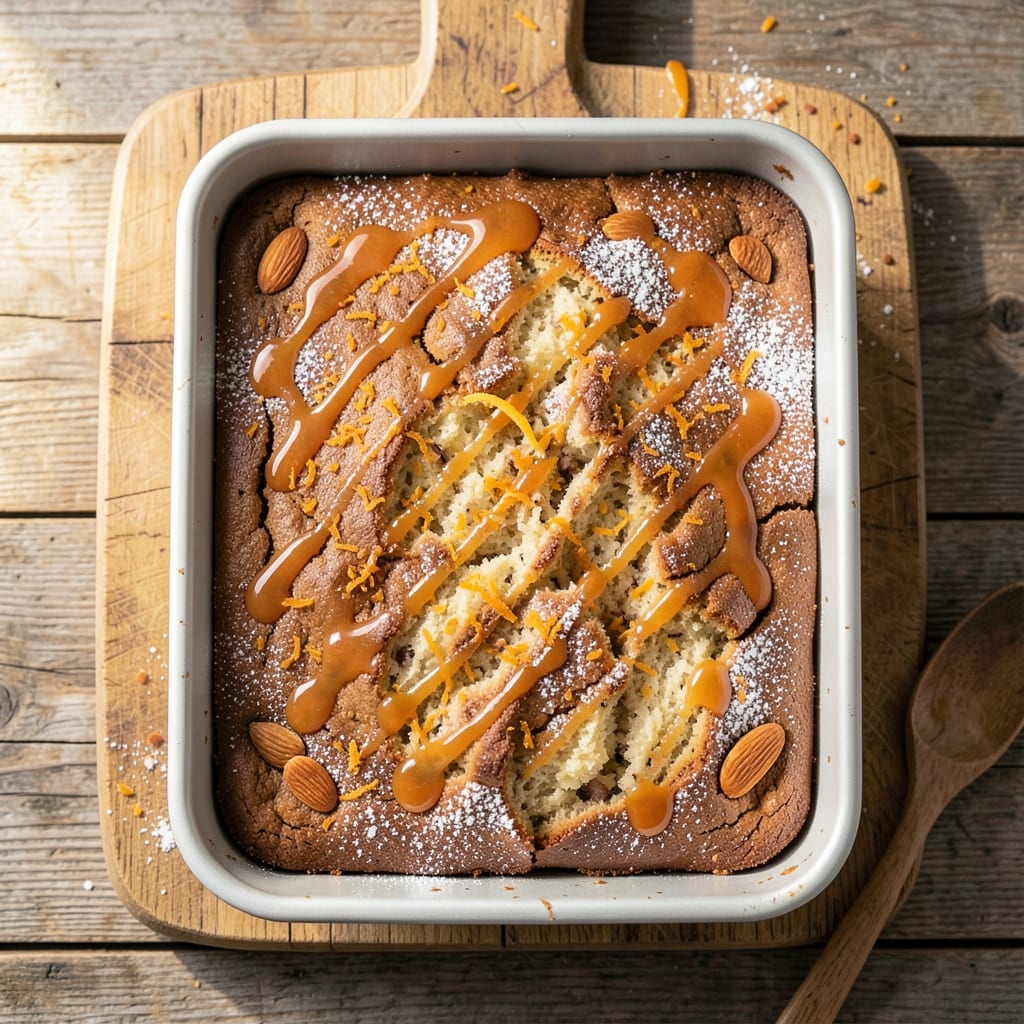
Ann Page's Spanish bar cake delivers the perfect balance of moist citrusy layers, boozy orange liqueur swirls, and a signature crunchy almond topping. This iconic Galician dessert combines traditional Spanish flavors with a modern twist that makes it irresistible. The secret lies in the almond flour crust and carefully layered orange-infused batter, creating a texture that's both tender and satisfying.
The recipe begins with a rich almond base that forms the foundation, followed by layers of citrus-infused cake and orange liqueur swirls that add depth and complexity. What sets this apart is the crunchy almond topping, which provides both texture contrast and that authentic Spanish bar cake flavor. Each component works together to create a dessert that's elegant yet approachable.
What you'll end up with is a stunning cake that looks as impressive as it tastes—golden layers with visible orange swirls and a perfectly textured almond topping. The aroma alone will transport you to Spain, while the flavors deliver a harmonious blend of sweet citrus, nutty almond, and subtle boozy notes. This is the kind of dessert that pairs beautifully with coffee or a glass of Spanish wine.
Perfect for special occasions or as a showstopping dessert for any gathering, this recipe combines tradition with modern techniques. The result is a cake that's both visually stunning and deliciously complex. Let's get started on creating your own Spanish bar cake masterpiece.
Ingredients for ann page spanish bar cake
Here's everything you need to build Ann Page's legendary citrusy, boozy, almond-topped Spanish bar cake masterpiece.
| Ingredient | Amount | Notes |
|---|---|---|
| All-Purpose Flour 🌾 | 3 cups | Sifted for light texture |
| Granulated Sugar 🍚 | 2 cups | Superfine preferred for smooth layers |
| Unsalted Butter 🧈 | 1 ½ cups | Room temperature, cubed |
| Large Eggs 🥚 | 4 whole | Room temperature for even mixing |
| Orange Zest 🍊 | 2 tbsp | From 2 large oranges |
| Orange Liqueur 🍹 | ½ cup | Cointreau or Triple Sec |
| Almond Flour 🥜 | 1 ½ cups | Finely ground for smooth crust |
| Powdered Sugar 🍚 | 1 cup | For dusting layers |
| Baking Powder 🍞 | 1 ½ tsp | Aluminum-free preferred |
| Salt 🧂 | ½ tsp | Fine sea salt |
| Vanilla Extract 🌸 | 1 tsp | Pure vanilla preferred |
| Toasted Sliced Almonds 🥜 | 2 cups | For crunchy topping |
| Ground Almonds 🥜 | ½ cup | For topping texture |
| Melted Butter 🧈 | ¼ cup | For topping binding |
The almond flour is non-negotiable for that signature crunchy topping—Trader Joe's or Bob's Red Mill are reliable sources. For the orange zest, grab bright, thick-skinned oranges (like Navel)—the more vibrant the better. The orange liqueur? Cointreau is the gold standard, but Triple Sec works too. If you're feeling fancy, toast your sliced almonds in the oven with a pinch of sugar until golden—trust me, it makes all the difference. The butter should be room temp but not greasy; if it's too soft, chill it 10 minutes.
No orange liqueur? Grand Marnier or even brandy will work in a pinch (reduce by half to avoid overpowering). Substituting almond flour? Hazelnut flour works, but the flavor profile shifts slightly. Short on sliced almonds? Pistachios or candied pecans add a nice twist. The powdered sugar can be swapped for confectioners' sugar if you're out, but sift it first. For the topping, if you can't find ground almonds, blend whole almonds in a food processor until fine. And if your butter separates when melting, just whisk it back together—no biggie.
This cake keeps beautifully for 3 days wrapped tightly at room temperature, but honestly, it's best enjoyed fresh. The topping stays crisp for 2 days if stored properly, but the layers soften after that. For gifting, slice it into bars and wrap individually with parchment—looks stunning and stays fresh. Freeze any leftovers for up to 1 month, but thaw at room temp before serving. Pro tip: Brush the layers with extra liqueur before adding the topping for maximum boozy flavor.
Why You'll Love This Recipe
- No Mixer Needed: I swear by this recipe because it only requires a bowl and a fork—no stand mixer or fancy equipment. The butter and sugar get mashed together by hand until fluffy, and the eggs just fold right in. Honestly, it’s the kind of recipe that makes baking feel effortless, even on days when I’d rather be scrolling than stirring.
- Citrus Kiss Magic: That orange zest? It’s the secret weapon. The bright, tangy burst cuts through the rich butter and sugar, giving each slice a little zing that feels luxurious. Between us, it’s the reason I always double the zest—once you taste it, you’ll never go back.
- Party or Picnic: This cake is my go-to for birthdays, potlucks, or even a lazy Sunday with coffee. It’s dense enough to slice neatly for finger sandwiches, but sturdy enough to pack in a cooler for a beach day. (Yes, even on a Tuesday night, I’ve been known to make two batches.)
- Budget-Friendly Luxury: Flour, sugar, butter, eggs—it’s all pantry staples, and the orange zest costs pennies. Yet it tastes like you spent hours baking. I’ll be real: my neighbors think I’m some kind of baking genius, but really, it’s just a smart way to stretch a few ingredients into something that feels special.
Step-by-step instructions for Ann Page's Spanish bar cake
Here's how to create this legendary cake with its signature boozy orange swirls and crunchy almond topping.
Prepare the Cake Batter
Preheat your oven to 350°F and grease a 9x13-inch baking pan with butter, then dust with 1.5 cups almond flour. This ensures easy removal and prevents sticking. In a large bowl, whisk together the 3 cups all-purpose flour, 1.5 tsp baking powder, and 0.5 tsp salt. Set aside.
In a separate large bowl, beat the 1.5 cups unsalted butter and 2 cups granulated sugar on medium speed until light and fluffy—about 3-4 minutes. This step is crucial for creating that tender, moist crumb. Add the 4 whole large eggs, one at a time, mixing well after each addition. Stir in the 2 tbsp orange zest, 1 tsp vanilla extract, and 0.5 cup orange liqueur. The mixture should be smooth and slightly thick.
Gradually add the dry ingredients to the wet mixture, mixing on low speed until just combined. Avoid overmixing—stop as soon as the flour disappears. Pour the batter into the prepared pan and smooth the top with a spatula.
Create the Orange-Liqueur Swirls
Here's the fun part—making those signature orange swirls. Mix together 1 cup powdered sugar, 0.5 cup orange liqueur, and 1 tbsp vanilla extract in a small bowl until smooth. This will be your swirl mixture. Using a spoon or small spatula, drop dollops of the mixture over the batter, spacing them evenly.
With a butter knife, gently swirl the mixture into the batter, creating marbled patterns. Don't overwork it—just drag the knife through the batter in a zigzag motion. The swirls will spread slightly as it bakes, giving you those beautiful orange streaks throughout. Bake for 35-40 minutes or until a toothpick inserted in the center comes out clean.
Prepare the Almond Topping
While the cake bakes, prepare the crunchy almond topping. In a small bowl, mix together the 2 cups toasted sliced almonds, 0.5 cup ground almonds, and 0.25 cup melted butter. The butter acts as a binder, helping the almonds stick together and create that signature crunchy layer.
Spread the almond mixture evenly over the top of the warm cake, pressing down gently with a spatula. This ensures the almonds adhere well and create a thick, even topping. Let the cake cool in the pan for 10 minutes, then transfer it to a wire rack to cool completely before slicing.
Rest and Serve
This cake tastes even better the next day, so if you can, let it rest overnight. The flavors meld and the texture improves. When ready to serve, slice into 8 equal pieces—each one will be rich, moist, and packed with that signature orange-licor flavor.
For an extra touch, dust the top with a little extra powdered sugar just before serving. The contrast of the crunchy almond topping and the tender cake makes every bite irresistible. Enjoy with a cup of coffee or a glass of the same orange liqueur used in the recipe!
Pro Tips For Making Ann Page Spanish Bar Cake
- STOP CREAMING THE BUTTER: This cake lives or dies by the butter’s texture—room temperature, not warm. I learned this the hard way when my first batch turned out dense and greasy. Press the butter between two sheets of parchment with a rolling pin for 10 seconds on each side, then let it sit for 30 minutes. No food processor? Use your fingers to press it into a smooth, pliable block. The goal is just soft enough to dent with a finger, not melt like ice cream.
- ZEST FIRST, THEN WARM: Add the orange zest to the dry ingredients before mixing in the wet. I used to toss it in last, and the citrus aroma would vanish into the batter chaos. Plus, the zest blends more evenly when it’s distributed among the flour and sugar. And here’s the kicker: warm the zest in a dry pan for 30 seconds before adding it—this intensifies the flavor without cooking the zest itself. (Yes, it sounds odd, but it works.)
- DON’T OVERMIX THE BATTER: This isn’t a pancake. Once the flour and wet ingredients come together, mix just until combined—about 15 strokes with a spatula. Overmixing develops gluten, and that’s how you end up with a tough, chewy bar instead of a tender, melt-in-your-mouth slice. The batter will look shaggy, but resist the urge to "fix" it. Trust the process.
- BAKE UNTIL THE CENTER HITS 205°F: The recipe might say "until a toothpick comes out clean," but that’s not enough for this cake. The Spanish bar needs to be fully set—aim for an internal temperature of 205°F (96°C) at the center. I used to pull mine out at 190°F, and the bars would stay gummy for days. A few extra minutes in the oven guarantees a slice that holds its shape and doesn’t stick to your fork. (Your future self will thank you.)
Serving suggestions for this ann page spanish bar cake
Classic Coffee Pairing
This Spanish bar cake shines brightest with a cup of espresso or Spanish-style cortado—the bold, slightly bitter notes complement the cake's sweet orange and almond flavors beautifully. For a true Galician experience, try a café con leche (equal parts steamed milk and espresso) to balance the cake's richness. I always serve it with a small demitasse cup of freshly brewed coffee to keep the experience intimate and elegant. ☕
Wine Pairings
A glass of Spanish Moscatel or Pedro Ximénez sherry enhances the cake's citrus and boozy notes perfectly. Moscatel's floral sweetness mirrors the orange liqueur swirls, while Pedro Ximénez's caramel depth contrasts the almond topping. For a lighter option, Albariño from Rías Baixas cuts through the richness with its crisp acidity. Serve chilled for the best experience. 🍷
Seasonal Serving Ideas
In summer, serve slices chilled with a scoop of vanilla bean gelato—the cool contrast highlights the cake's texture. For holiday gatherings, dust with edible gold leaf and pair with sparkling cava for a festive touch. In winter, warm the cake slightly and serve with a spiced rum sauce (mix 2 tbsp rum, 1 tbsp brown sugar, and 1 tsp cinnamon) for extra warmth. ❄️
Garnish Like a Pro
Before serving, brush the almond topping with melted chocolate (use 70% dark chocolate) for a glossy finish. Add orange zest curls on top for a pop of color and extra citrus aroma. For a rustic touch, sprinkle with crushed pistachios—their color matches the cake's golden tones while adding a nutty crunch. A few mint leaves add freshness and balance the richness. 🌟
Make-Ahead Serving
This cake tastes even better the next day, so prepare it 24 hours ahead for optimal flavor development. Store leftovers in an airtight container at room temperature. Reheat slices for 10-15 seconds in the microwave if they lose their crunch. For gifting, wrap individual slices in parchment paper and tie with twine—it looks stunning and stays fresh for 3 days. 💫
Cultural Presentation
In Spain, this cake is often served with a small glass of orange liqueur on the side for dipping. For an authentic touch, arrange slices on a wooden board with fresh figs or dried apricots nearby. Use a gold-rimmed plate to elevate the presentation, and dust with powdered sugar just before serving. The contrast of textures and colors makes it feel like a true Spanish treat. 🗺️
Nutrition facts
Frequently asked questions
Can I make this Spanish bar cake without orange liqueur?
Yes! Swap the 0.5 cup orange liqueur for 0.25 cup Grand Marnier or brandy (reduce by half to avoid overpowering). For a non-alcoholic version, use 0.5 cup fresh orange juice plus 1 tbsp extra vanilla extract to mimic the citrus depth. The swirls will still form beautifully—just adjust the flavor balance to your taste.
How do I prevent the almond topping from turning greasy?
Chill the melted butter in the almond topping mixture for 10 minutes before spreading—this helps it set properly. Press the almonds firmly onto the warm cake (within 5 minutes of baking) so they adhere. If your kitchen is humid, toast the sliced almonds for 5 extra minutes to remove excess moisture before mixing.
Can I bake this in a different pan size?
For a 9x9-inch pan, reduce all ingredients by 25% (bake at 350°F for 30-35 minutes). For an 8-inch round pan, use 75% of the recipe (bake 25-30 minutes). Always adjust baking time based on your pan material—glass takes slightly longer than metal. The key is even heat distribution for consistent swirls.
Why did my cake sink in the middle?
Overmixing the batter or opening the oven door too early are common culprits. Ensure your baking powder is fresh (test by mixing with water—it should fizz). Also, don’t overfill the pan (batter should come 2/3 up the sides). For a 9x13-inch pan, use exactly the recipe as written—any more batter risks sinking. Let the cake cool 10 minutes in the pan before removing.
How do I store leftovers to keep the topping crispy?
Wrap the cake tightly in plastic wrap pressed directly against the almond topping, then place in an airtight container. Store at room temperature for up to 3 days. To revive crispiness, reheat slices for 5-10 seconds in the microwave (cover with a damp paper towel). For longer storage, freeze slices (without wrapping) on a tray, then transfer to a bag for up to 1 month.