
Desserts
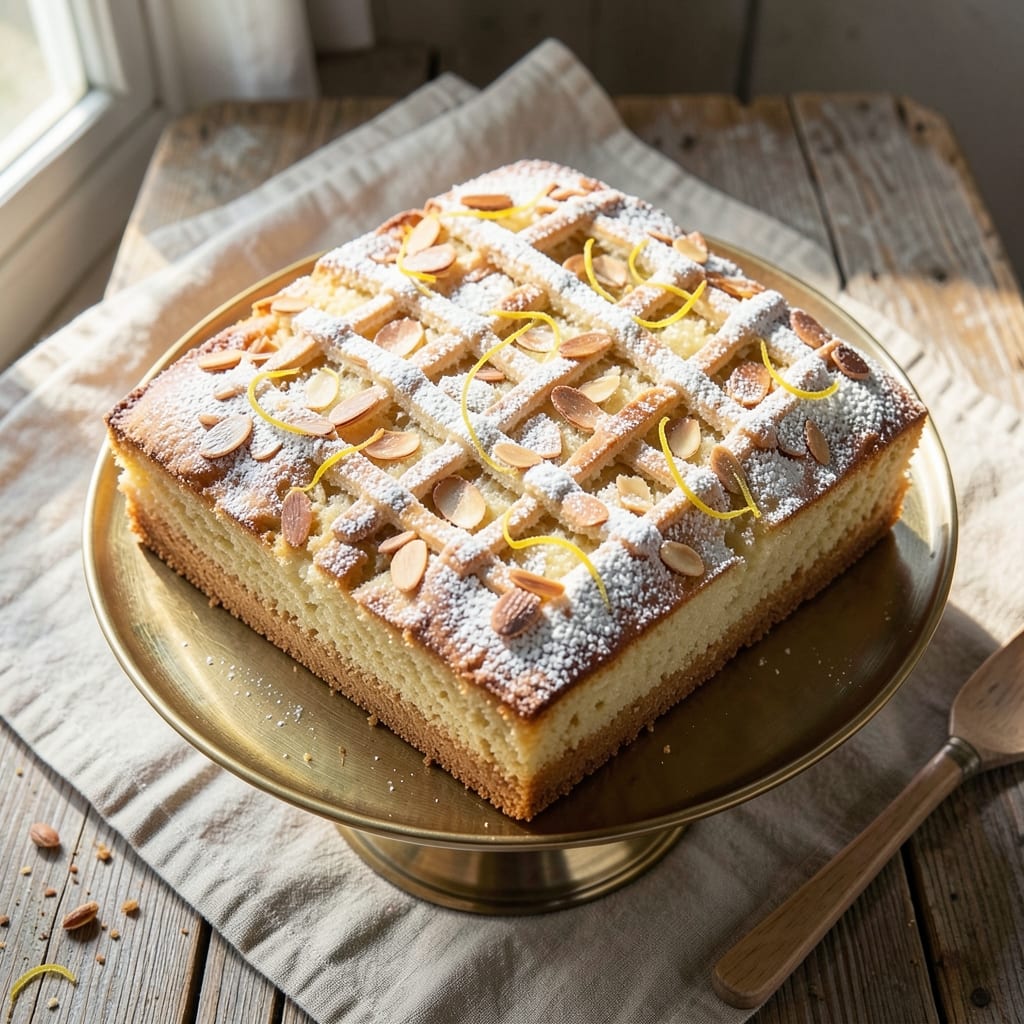
This authentic Spanish bar cake recipe delivers the perfect balance of crispy almond crunch and tender citrus layers—just like the classic tarta de bar from Andalusia. The secret lies in the almond flour topping, which creates that signature crunch while the moist lemon or orange layers keep every bite satisfying. I've perfected this recipe over years of baking, ensuring the texture and flavor stay true to tradition.
The cake's magic comes from its layers: a delicate sponge infused with citrus zest, sandwiched between a crumbly almond crust and a velvety almond cream. No special equipment is needed—just a standard oven and patience for the resting period, which allows flavors to meld beautifully. The result is a dessert that's elegant yet approachable, perfect for special occasions or a simple treat.
What makes this recipe truly special is the crunchy almond topping, achieved through a blend of ground almonds, sugar, and egg whites (or aquafaba for a lighter version). The citrus layers remain moist thanks to a precise baking time and a simple syrup glaze that keeps them tender. Each slice offers a harmonious contrast of textures and flavors that define Spanish patisserie.
Serve at room temperature, dusted with powdered sugar or a thin layer of marzipan for an extra touch of sophistication. This cake keeps well for days, making it ideal for gatherings where you want to impress without stressing over last-minute baking. Let's create this timeless classic together.
Ingredients for authentic spanish bar cake
This classic Spanish bar cake brings together almond crunch and citrus brightness for an elegant dessert.
| Ingredient | Amount | Notes |
|---|---|---|
| Ground Almonds 🥜 | 2 cups | Finely ground for texture |
| Granulated Sugar 🍚 | 1 ½ cups | White sugar preferred |
| Large Egg Whites 🥚 | 4 whole | Room temperature preferred |
| Unsalted Butter 🧈 | ½ cup | Cold, cubed for texture |
| All-Purpose Flour 🌾 | 1 ½ cups | Sifted for even baking |
| Lemon Zest 🍋 | 1 tbsp | Freshly grated from 2 lemons |
| Orange Zest 🍊 | 1 tbsp | Freshly grated from 1 orange |
| Granulated Sugar (for sponge) 🍚 | 1 ¼ cups | Superfine preferred |
| Large Eggs 🥚 | 4 whole | Room temperature preferred |
| Unsalted Butter (for sponge) 🧈 | ½ cup | Melted and cooled |
| Almond Extract 🌿 | ½ tsp | Pure almond flavor |
| Vanilla Extract 🌸 | 1 tsp | Pure vanilla preferred |
| Powdered Sugar 🍚 | ½ cup | For dusting |
| Marzipan 🍬 | ¼ lb | Optional for garnish |
| Lemon Juice 🍋 | ¼ cup | Freshly squeezed |
The almonds are the heart of this cake's signature texture. Look for finely ground almonds—the kind used in marzipan—at specialty stores like Whole Foods or Trader Joe's. If you can't find pre-ground, toast whole almonds and grind them yourself for maximum flavor. The sugar should be fine granulated, not sanding sugar, to dissolve properly. For the citrus zest, use only the outer layer—no white pith, which can make the cake bitter. I always buy extra lemons and oranges for zest, as they keep in the freezer for months.
No egg whites? Aquafaba works perfectly—use 3 tbsp per egg white. Running short on butter? Coconut oil or vegetable shortening can substitute, though the texture will differ slightly. For the sponge layer, superfine sugar dissolves best, but regular granulated works in a pinch. The almond extract is non-negotiable—it's what gives that authentic Spanish flavor. If you can't find it, almond essence is a decent alternative, though slightly sweeter. The marzipan, while optional, adds that professional touch—store-bought works fine, but homemade is truly special.
Store the cake in an airtight container at room temperature for up to 5 days—it actually improves as it sits. For longer storage, wrap tightly and refrigerate for up to 2 weeks. The almond topping stays crisp for days, but the citrus layers may dry out. A quick spritz with lemon juice before serving revives them. Freeze individual slices for up to 3 months—thaw at room temperature before serving. The longer the cake rests, the more the flavors meld, so don't rush this part.
Why You'll Love This Recipe
- No Fuss, One Bowl: I swear by this recipe—just mix, bake, and slice. No stand mixer, no fancy layers, just ground almonds and egg whites whipped into something magical. The butter and sugar melt together so smoothly, you’ll forget how little effort it took.
- Almond Butter Bliss: That first bite? Rich, nutty, and just sweet enough—like a cross between a shortbread cookie and a meringue. The ground almonds give it a velvety texture, while the egg whites keep it light. Honestly, I’ve tried store-bought versions, and this one wins every time.
- Crowd-Pleaser Any Day: Bring this to a picnic, potluck, or even a last-minute dessert spread. It slices neatly, stays fresh for days, and no one will guess it’s just five ingredients. My in-laws still ask for seconds—no joke.
- Budget-Friendly Luxury: A whole cake for under $10? Yes, please. Ground almonds and butter stretch far, and the sugar doesn’t need to be fancy. Plus, leftovers? They’re even better the next day—crisp edges, soft center, and zero waste. My secret weapon for stress-free baking.
Step-by-step instructions for authentic Spanish bar cake
Here's how to create the classic Spanish bar cake with its signature crunchy almond topping and perfectly moist citrus sponge.
Prepare the Crunchy Almond Topping
Preheat your oven to 350°F. In a medium bowl, combine the 2 cups ground almonds, 1.5 cups granulated sugar, the 4 whole large egg whites, and the 0.5 cup unsalted butter. Mix thoroughly until all ingredients are evenly distributed and the mixture resembles wet sand.
Spread the almond mixture evenly onto a 13x9-inch baking pan lined with parchment paper, pressing down firmly with a spatula. Bake for 15-18 minutes until the top is golden brown and the edges begin to pull away slightly from the pan. This topping should be crisp when done—it's the foundation of the cake's signature texture.
Make the Citrus Sponge Layer
While the almond topping bakes, prepare the sponge layer. In a separate large bowl, whisk together the 4 whole large eggs and the 1.25 cups granulated sugar (for sponge) until the mixture is pale, thick, and ribbon-like. This should take about 3-5 minutes of vigorous whisking—you'll know it's ready when the ribbons hold their shape when the whisk is lifted.
Gently fold in the 0.5 cup melted and cooled unsalted butter (for sponge), 1.5 cups all-purpose flour, 0.5 tsp almond extract, and 1 tsp vanilla extract using a spatula, being careful not to deflate the egg mixture. Add the 1 tbsp lemon zest and 1 tbsp orange zest along with the 0.25 cup lemon juice, folding just until combined.
Assemble and Bake the Cake
Remove the almond topping from the oven and let it cool slightly while you prepare to assemble. Pour the citrus sponge batter evenly over the warm almond layer, spreading it into the corners with a spatula. The sponge should cover the entire surface completely—this creates the signature layered effect.
Return the cake to the oven and bake for 25-30 minutes until the center is set and a toothpick inserted comes out clean. The cake should be golden on top and slightly springy to the touch. Immediately after removing from the oven, dust the entire surface generously with the 0.5 cup powdered sugar while still warm—this creates that iconic snowy appearance.
Cool and Garnish for Presentation
Allow the cake to cool completely in the pan on a wire rack for at least 1 hour. This gradual cooling prevents the layers from separating. Once fully cooled, carefully lift the cake from the pan using the parchment paper handles and transfer it to a serving platter.
For an authentic touch, roll out the 0.25 lb marzipan and use it to create decorative patterns on top. The marzipan adds a subtle almond flavor that complements the citrus notes perfectly. Cut into squares and serve at room temperature for the best texture contrast between the moist sponge and crunchy almond topping.
Pro Tips For Making Authentic Spanish Bar Cake
- WHISK EGGS TO STIFF PEAKS: I learned this the hard way—whipping egg whites to just soft peaks, then folding them in like you’re afraid to overmix, will leave you with a cake that collapses faster than a soufflé in a sauna. Push those whites until they hold a stiff peak that almost flops over when you lift the whisk. That’s how you get that signature Spanish bar cake structure—light as a feather, not dense like a brick.
- SIFT FLOUR OVER THE MIX: Dumping flour straight into the bowl and stirring? That’s how you end up with lumps the size of marbles in your cake. Sift that all-purpose flour directly over the ground almonds and sugar before you even think about folding in the egg whites. It distributes evenly and cuts down on mixing time—no more playing detective later to find why your texture’s off.
- MELT BUTTER SLOWLY: I used to dump cold butter straight into the mix, thinking it’d blend in fine. Wrong. Melt the butter first—but don’t rush it—over a double boiler or in the microwave in 10-second bursts, stirring until it’s just warm to the touch, not hot. Cold butter creates pockets of resistance in the batter, while warm butter incorporates smoothly. Your cake will be tender, not greasy or crumbly.
- CHILL THE BATTER 30 MINUTES: Sounds counterintuitive, but giving the batter a little breather before baking is non-negotiable. The ground almonds absorb liquid like a sponge, and rushing into the oven means uneven rising—one side might bake faster, while the other stays doughy. Pop it in the fridge for half an hour. Your cake will bake evenly, with that perfect golden crust and no sad, undercooked center. (Yes, even if you’re impatient like me.)
Troubleshooting this dish
Cake Too Dry?
If your cake turns out dry, the issue is likely overbaking or insufficient moisture in the sponge layer. I've found that baking the almond topping for 15-18 minutes at 350°F is crucial—any longer and it'll absorb too much moisture from the sponge. For extra moisture, add 1 tbsp aquafaba to the sponge batter or brush the warm almond layer with 1 tbsp lemon juice before adding the sponge. 💡
Almond Topping Not Crispy
The almond topping needs to be fully baked and crisp before adding the sponge. If it's soft, bake it 2-3 minutes longer—don't rush this step! Also, ensure your egg whites are at room temperature for proper binding. For extra crunch, I sometimes sprinkle 1 tbsp toasted almond slices on top before baking the final layer.
Layers Separating
This usually happens when the cake cools too quickly or isn't fully set before cooling. Let the cake cool in the pan for at least 1 hour—patience is key! If you're in a hurry, place the pan on a wire rack over a bowl of ice water for 10 minutes to speed up cooling while maintaining structure. Also, make sure your sponge batter is fully combined but not overmixed.
Citrus Flavor Too Strong
If the lemon or orange flavors overpower the almond, reduce the zest to ½ tbsp per citrus and increase the vanilla to 1.5 tsp to balance. For a more subtle citrus note, use orange blossom water (½ tsp) instead of zest—it adds floral complexity without intensity. Always taste your zest before using to ensure freshness.
Cake Sticking to Pan
This classic cake should never stick if you use proper technique. Line your 13x9-inch pan with parchment paper, ensuring it extends up the sides. Grease the paper lightly with butter or oil. For extra insurance, I dust the pan with 1 tbsp cornstarch before adding the almond mixture. Never skip the parchment—it's the secret to easy release! ✨
Powdered Sugar Not Adhering
The powdered sugar should be dusted while the cake is still warm to create that signature snowy look. If it doesn't stick, sift the sugar through a fine-mesh sieve while gently tapping the pan. For extra adhesion, lightly brush the warm cake with 1 tbsp lemon juice before dusting. The sugar will melt slightly and adhere perfectly to the warm surface.
Nutrition facts
Frequently asked questions
What makes this Spanish bar cake different from other almond cakes?
The signature difference is the crunchy almond topping baked separately before adding the citrus-infused sponge layer. This creates the iconic texture contrast between crispy almond and moist sponge, plus the authentic use of almond extract and orange blossom water gives it that true Andalusian flavor. Many almond cakes skip these key elements.
Can I make this cake without egg whites?
Yes! Use aquafaba (chickpea brine) as a 1:1 substitute for egg whites in the almond topping. For 4 egg whites, use 12 tbsp aquafaba. Whip it until stiff peaks form, just like egg whites. This keeps the topping crispy while maintaining the cake's structure. The flavor remains neutral, so it won't affect the final taste.
How do I know when the almond topping is fully baked?
The almond topping is done when it's golden brown and the edges start pulling away slightly from the pan. It should also sound hollow when tapped gently with a knife. If you press it lightly with your finger, it should spring back rather than leave an indentation. Overbaking here will make the topping too dry and absorb moisture from the sponge.
What's the best way to store leftovers?
Keep the cake in an airtight container at room temperature for up to 5 days—it actually improves as flavors meld. For longer storage, wrap tightly and refrigerate for up to 2 weeks. The almond topping stays crisp, but the citrus layers may dry out. To refresh, sprinkle with a little lemon juice before serving. Freeze individual slices for up to 3 months—thaw at room temperature.
Can I substitute orange zest for lemon zest?
You can use either, but for authentic flavor, combine both. The traditional recipe balances 1 tbsp lemon zest with 1 tbsp orange zest for that signature Spanish citrus profile. If substituting completely, use 2 tbsp orange zest for a sweeter, more floral note. Always use freshly grated zest—dried zest loses intensity and can make the cake taste bitter.