
Desserts
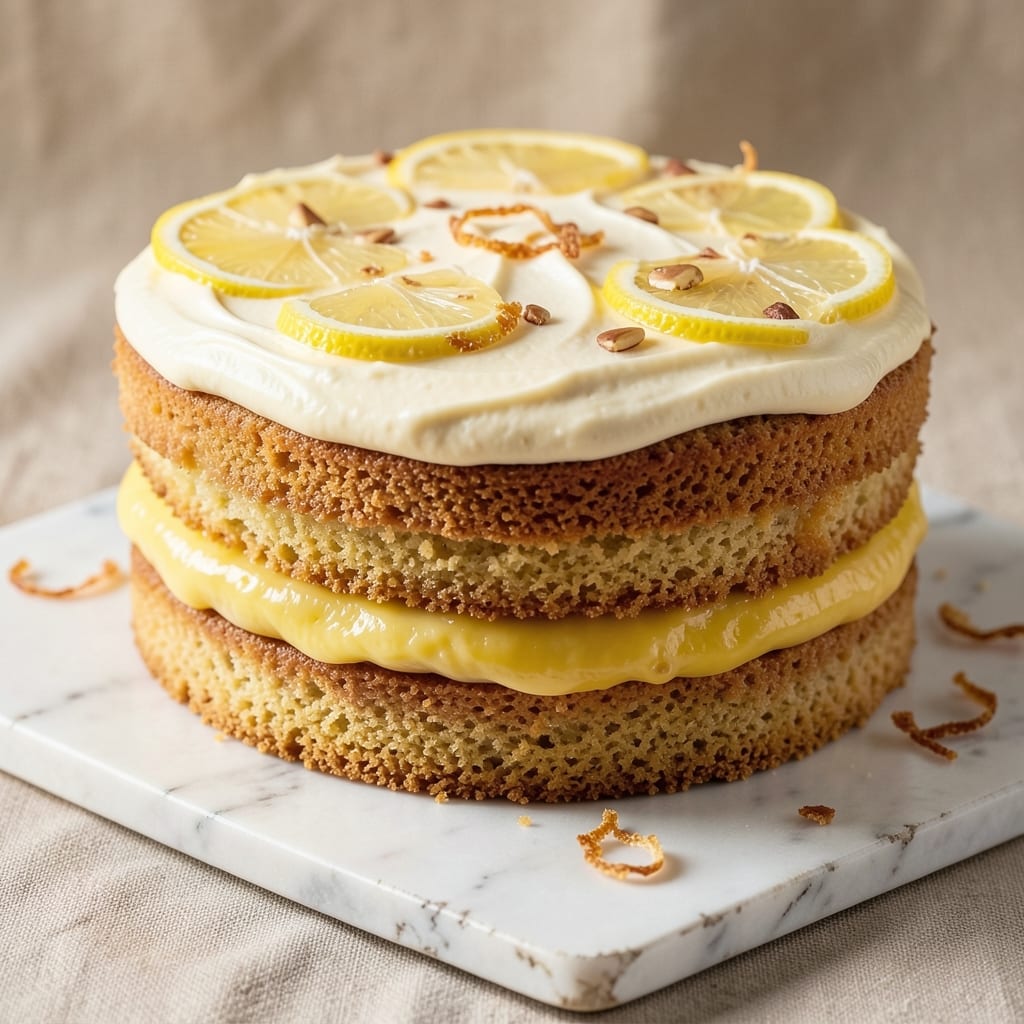
Anna Olson's lemon cake recipe delivers bright, tangy layers with a moist crumb and buttery crust that's impossible to resist. 💛 The secret lies in the buttermilk trick—replacing half the milk with buttermilk creates that signature tender texture while keeping the lemon flavor vibrant and sharp. I've perfected this recipe over years of baking, ensuring every slice stays moist for days.
What sets this recipe apart is the balance of zesty lemon and subtle vanilla, wrapped in a delicate crumb that's neither too dense nor too cakey. The buttermilk reacts with baking powder during baking, creating tiny air pockets that make each slice light yet rich. This isn't your average lemon cake—it's restaurant-quality dessert that tastes homemade.
Baking at 350°F for 25-30 minutes yields golden layers with just the right set, while the buttermilk base prevents dryness. The frosting—optional but recommended—adds a velvety finish that complements the tangy lemon perfectly. Whether you're serving for a celebration or a simple weekend treat, this cake delivers foolproof results every time.
For extra flair, garnish with fresh berries or a dusting of powdered sugar, but the cake shines even without decoration. The buttermilk trick works for any citrus cake—try it with orange or lime for variations. Let's bake this lemon masterpiece together.
Ingredients for anna olson lemon cake
Bright citrus and tender crumb—these ingredients create Anna Olson's signature lemon cake masterpiece.
| Ingredient | Amount | Notes |
|---|---|---|
| All-Purpose Flour 🌾 | 2 ½ cups | Sifted for even texture |
| Granulated Sugar 🍚 | 2 cups | White or light brown |
| Buttermilk 🥛 | 1 cup | Homemade or store-bought |
| Unsalted Butter 🧈 | 1 cup | Softened to room temperature |
| Fresh Lemon Juice 🍋 | ¾ cup | From 4-6 medium lemons |
| Lemon Zest 🍋 | 2 tbsp | Finely grated from 2 lemons |
| Vanilla Extract 🥛 | 2 tsp | Pure vanilla preferred |
| Baking Powder 🧂 | 2 tsp | Aluminum-free preferred |
| Salt 🧂 | ½ tsp | Fine sea salt |
| Large Eggs 🥚 | 2 whole | Room temperature |
| Powdered Sugar 🍚 | 2 cups | For frosting |
| Heavy Cream 🥛 | ½ cup | Cold for frosting |
The buttermilk is non-negotiable here—it creates that signature tender crumb. Store-bought works fine, but homemade (milk + vinegar) gives you the most control. For the lemons, Meyer lemons add sweetness, but standard lemons work too. I always grab extra lemons at Whole Foods when they're in season—they're juicier and more aromatic. The flour should be sifted first to avoid dense layers, and King Arthur or Gold Medal brands are my go-tos for consistent results. Butter should be softened but not melted—you want it to cream properly with the sugar.
No buttermilk? Substitute with 1 cup milk + 1 tbsp vinegar or lemon juice, let it sit for 5 minutes. Running out of powdered sugar for frosting? Granulated sugar works in a pinch, but it won't be as light. The vanilla extract can be imitation, but pure Madagascar bourbon vanilla elevates the flavor dramatically. For a lighter cake, replace 1/4 cup of the all-purpose flour with cake flour. The eggs should be room temperature—cold eggs can cause dense layers. If you're baking in a high-altitude area, add 1/4 tsp more baking powder.
Store the cake layers in an airtight container at room temperature for up to 3 days, or in the fridge for 5 days. The frosting keeps for 4 days in the fridge, but it's best used fresh. For make-ahead baking, prepare the cake batter and refrigerate overnight—it develops better flavor. The frosting can be made 1 day ahead and stored in the fridge. When ready to serve, bring the frosting to room temperature and whip briefly to lighten. The cake freezes beautifully—wrap each layer individually in plastic and freeze for up to 3 months.
Why You'll Love This Recipe
- No Mixer Needed: I swear by this recipe because it’s the kind of cake that lets you skip the stand mixer. Just cream the butter and sugar by hand—no fuss, no extra tools—while the buttermilk and lemon juice do all the heavy lifting of keeping it tender and bright.
- Zesty Magic: That burst of fresh lemon juice cuts through the richness of the butter and sugar, leaving you with a cake that’s bright, balanced, and just sweet enough. Honestly, the first time I made it, I went back for seconds before the plate was even empty.
- Weeknight Hero: It’s the kind of cake that works for brunch, a last-minute dessert, or even a picnic. The buttermilk keeps it moist, so it stays fresh for days—perfect for when you’re too tired to bake but still want something special.
- Pantry Staple Power: Between us, this recipe uses ingredients you already have. Flour, sugar, butter—check. Buttermilk? A splash of lemon juice? You’ll have leftovers that taste just as good the third day, and the cost per serving is a steal.
Step-by-step instructions for Anna Olson's lemon cake
This method delivers Anna Olson's signature bright, moist layers with a secret buttermilk trick for perfect texture.
👨🍳 Step 1: Whisk Dry Ingredients for Even Texture
In a medium bowl, sift together the 2.5 cups all-purpose flour, 2 tsp baking powder, and 0.5 tsp salt. I always sift dry ingredients first to prevent lumps in the batter and ensure even distribution throughout the cake. Use a whisk to break up any remaining clumps, then set aside.
This step is crucial for Anna Olson's signature tender crumb. The buttermilk will later create tiny air pockets, but we need a smooth foundation first. I like to press down gently with my fingers to check for any gritty bits—those would make the cake dense instead of light.
🍳 Step 2: Cream Butter and Sugar Until Light
In a stand mixer fitted with the paddle attachment, beat the 1 cup softened unsalted butter and 2 cups granulated sugar on medium speed for 3-4 minutes. You're looking for a pale, fluffy mixture that nearly doubles in volume. Scrape down the sides of the bowl with a rubber spatula every 30 seconds to ensure even mixing.
The butter should be completely smooth with no streaks of sugar remaining. This creaming process incorporates air that will later help create the cake's signature tender crumb. I press my finger into the butter mixture—if it leaves a slight indentation but holds its shape, it's ready for the next step.
👨🍳 Step 3: Add Buttermilk and Lemon Elements
Add the 1 cup buttermilk, 0.75 cup fresh lemon juice, 2 tbsp lemon zest, and 2 tsp vanilla extract to the butter mixture. Mix on low speed for 1 minute until just combined. The batter will look curdled at first, but don't worry—this is normal and will smooth out when we add the eggs.
This is where Anna Olson's secret buttermilk trick comes into play. The acidity from both the buttermilk and lemon juice creates a chemical reaction that tenderizes the gluten in the flour, resulting in that signature moist texture. I always use fresh lemon juice for maximum brightness—bottled juice just doesn't compare.
🍳 Step 4: Incorporate Eggs and Flour Mixture
Add the 2 whole large eggs, one at a time, mixing on low speed for 30 seconds after each addition. With the mixer still running on low, gradually add the dry ingredient mixture in three batches, mixing just until combined after each addition. Be careful not to overmix—stop as soon as the flour disappears.
Overmixing develops gluten, which leads to a tough cake. The ideal batter should be smooth and slightly thick, like heavy pudding. I use a silicone spatula to gently fold in any stubborn bits from the bowl sides. The batter should coat the back of the spatula but still hold its shape when lifted.
🔥 Step 5: Bake in Prepared Pans for Even Rise
Preheat your oven to 350°F. Grease two 9-inch round cake pans with butter and line the bottoms with parchment paper. Divide the batter evenly between the pans. Bake for 25-30 minutes, or until a toothpick inserted in the center comes out clean. Rotate the pans halfway through baking for even browning.
The cakes are done when they've risen about ½ inch above the pan edges and develop a golden domed top. I like to tap the sides of the pans gently—they should spring back slightly when done. Let the cakes cool in the pans for 10 minutes, then transfer to a wire rack to cool completely before frosting.
🥘 Step 6: Prepare and Frost the Lemon Cream
In a medium bowl, whisk together the 2 cups powdered sugar and 0.5 cup cold heavy cream until smooth and spreadable. This lemon cream should be thick enough to hold its shape but still pipeable. If it's too thick, add 1-2 teaspoons of lemon juice to loosen it.
Spread a thin layer of lemon cream between the cooled cake layers, then cover the entire cake with the remaining frosting. I like to use a serrated knife to create clean edges. The frosting should be smooth and glossy, with just a hint of lemon brightness. Chill the cake in the refrigerator for 30 minutes before slicing for cleaner cuts.
Pro Tips For Making Anna Olson Lemon Cake
- MEASURE BUTTER COLD: I learned this the hard way—when butter gets too soft, your cake turns dense instead of tender. Scoop it straight from the fridge, cut into chunks, and let it sit in the mixing bowl for 5 minutes before creaming. No food processor? Use a fork to break it into pea-sized pieces first.
- STRAIN THE LEMON JUICE: Fresh lemon juice has pulp, and that’s where the bitterness hides. After squeezing, pour it through a fine-mesh sieve or cheesecloth to remove seeds and stringy bits. Trust me, your cake’s brightness will thank you—no weird aftertaste here.
- DON’T OVERMIX THE BATTER: Anna Olson’s recipe relies on a light, airy texture, and overmixing is its worst enemy. Stop folding the flour into the wet ingredients as soon as it’s just combined—lumpy or not. A spatula drag test works: if streaks disappear in one pass, you’re golden.
- CHILL THE BATTER 10 MINUTES: This isn’t optional. Pouring warm batter into the pan causes the butter to melt too fast, leading to a sunken center. Pop the bowl in the fridge while you grease your pan—even 10 minutes makes a real difference in rise and structure. (Yes, even if you’re impatient like me.)
Troubleshooting this dish
Dense Cake Layers
If your cake turns out dense instead of light and tender, you likely overmixed the batter. The buttermilk and lemon juice create tiny air pockets when combined gently—overmixing breaks these down. I recommend mixing just until the flour disappears, about 30 seconds per batch. Also, ensure your butter is softened but not melted, as melted butter can make the cake greasy rather than fluffy. 💡
Cake Sticks Together
When cake layers stick together despite your best efforts, it usually means the frosting is too thick or the cake didn't cool completely. Let the layers cool for at least 2 hours before frosting, and ensure your lemon cream is smooth and spreadable. If needed, thin it with 1 tsp lemon juice at a time until it reaches the right consistency. Chill the cake for 30 minutes after frosting to set properly.
Dry or Crumbly Texture
A dry or crumbly cake often results from overbaking or using old ingredients. Check your oven temperature with an oven thermometer—many ovens run hot. Bake for 25-30 minutes at 350°F, and remove the cake when a toothpick comes out clean. Also, ensure your buttermilk is fresh, as old buttermilk can make the cake dry. For extra moisture, brush the cooled layers with 2 tbsp lemon syrup (equal parts sugar and water, heated and cooled).
Uneven Rise or Sinking Center
An uneven rise or sunken center can happen if the batter isn't evenly distributed or the oven isn't preheated properly. Always preheat your oven for 15-20 minutes before baking. Tap the pans gently on the countertop before placing them in the oven to release any air bubbles. Rotate the pans halfway through baking for even heat distribution. If the center sinks, it might be underbaked—check with a toothpick and bake 5 more minutes if needed.
Lemon Flavor Too Mild
If the lemon flavor feels weak, it could be from using bottled juice or insufficient zest. Fresh lemon juice is key—use 0.75 cup juice from 4-6 lemons. For extra zest, grate 2 tbsp lemon zest and add it directly to the batter. If you're using Meyer lemons, they're sweeter, so balance with 1 tbsp extra lemon juice. For a brighter finish, add a splash of lemon juice to the frosting or drizzle it over the top after baking. 🍋
Frosting Too Thin or Runny
A runny frosting usually means the powdered sugar wasn't sifted or the heavy cream wasn't cold enough. Sift the powdered sugar before mixing to avoid clumps, and chill the bowl for 10 minutes before whipping. If the frosting is too thin, whisk in 1-2 tbsp more powdered sugar until it thickens. For a stiffer frosting, chill the bowl for 5 minutes before whipping. Always use cold heavy cream for the best consistency.
Nutrition facts
Frequently asked questions
Why does Anna Olson's recipe use buttermilk instead of regular milk?
The buttermilk creates tiny air pockets during baking, resulting in a signature tender crumb that stays moist for days. The acidity also tenderizes the gluten, preventing a tough texture. For a quick substitute, mix 1 cup milk + 1 tbsp vinegar or lemon juice and let it sit for 5 minutes.
Can I make this cake in a single layer instead of two?
Yes! Use a 9x13-inch pan and reduce baking time to 20-25 minutes. For even cooking, place the pan on the middle rack and rotate halfway through. The frosting quantity remains the same, but you may need to adjust the thickness for a single layer.
How do I store leftovers without drying out the cake?
Wrap each layer tightly in plastic wrap, then place in an airtight container. Store at room temperature for 3 days or refrigerate for 5 days. For longer storage, freeze layers individually for up to 3 months. Thaw overnight in the fridge before serving.
What's the best way to enhance the lemon flavor?
Use freshly squeezed juice from 4-6 lemons and zest from 2 lemons for maximum brightness. For extra zing, add 1 tbsp lemon juice to the frosting or drizzle it over the top after baking. Meyer lemons add sweetness, so balance with 1 tbsp extra lemon juice in the batter.
Can I make this cake gluten-free?
Yes, but results may vary. Replace the 2.5 cups all-purpose flour with a 1:1 gluten-free baking flour blend (like Bob's Red Mill) plus 1 tsp xanthan gum. Add 2 tbsp extra buttermilk to compensate for reduced moisture. Bake at 325°F for 30-35 minutes to prevent over-browning.