
Desserts
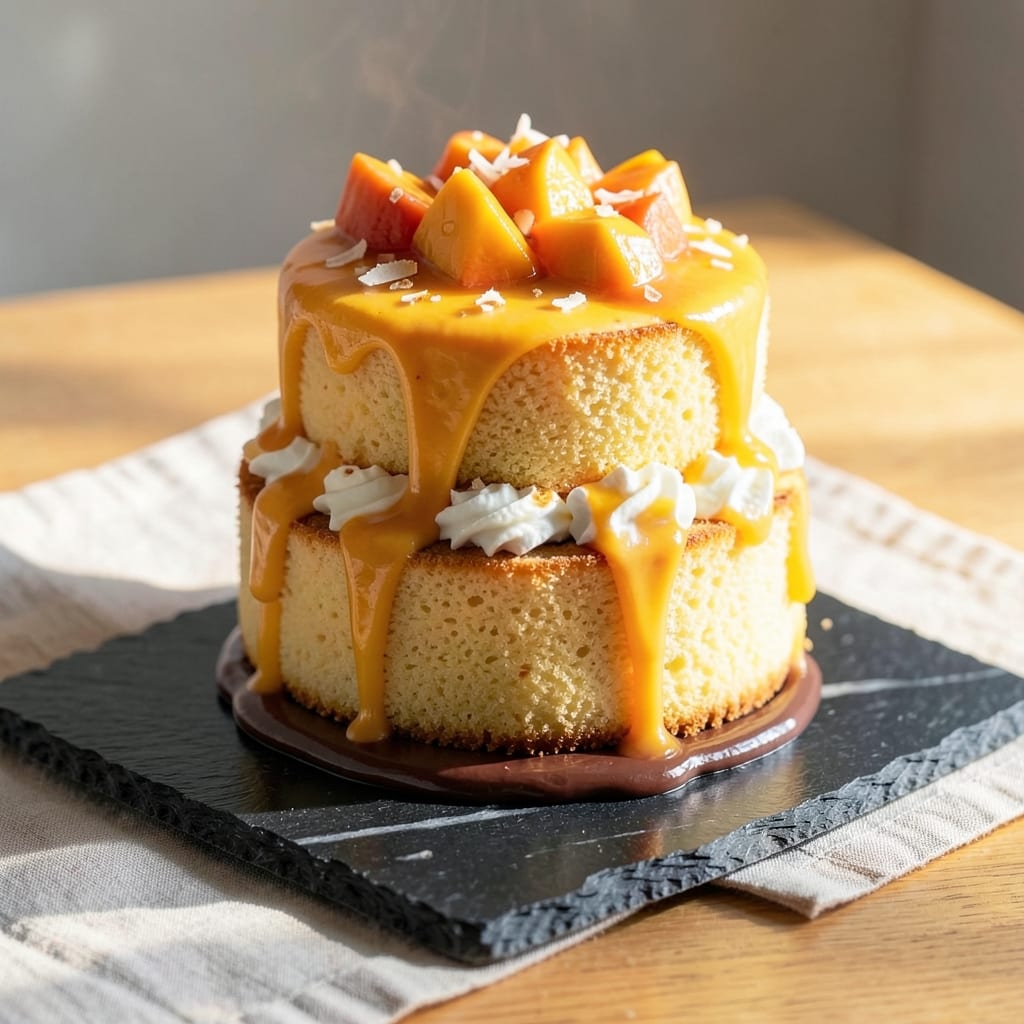
This Asian mango mousse cake delivers layers of tropical perfection—silky mango cream sandwiched between delicate sponge cake, all finished with a vibrant coconut garnish. 🌟 The secret lies in balancing traditional Japanese mille crepe technique with Southeast Asian coconut milk infusion, creating a texture that’s both airy and rich. I’ve perfected this recipe to ensure every slice offers that signature tropical burst of mango flavor without being overly sweet.
The foundation starts with a light, buttery sponge cake that bakes to a golden finish, providing the perfect structure for the mousse layers. Meanwhile, the mango cream—whipped to a velvety consistency—is infused with real mango purée and coconut milk for depth. Chilling between layers ensures clean slices and a professional presentation every time.
What sets this cake apart is the harmony of textures: the crispness of the sponge contrasts beautifully with the silky mousse, while the toasted coconut topping adds a subtle crunch. The result is a dessert that’s elegant enough for special occasions but simple enough to make at home. Each bite delivers that unmistakable tropical flavor, making it a showstopper for any table.
Ready in about 2 hours (including chilling time), this cake requires minimal effort but maximum impact. Whether you’re serving it at a dinner party or treating yourself to a tropical escape, the layers of flavor and texture will leave everyone asking for seconds. Let’s get started on creating this dreamy dessert!
Ingredients for asian mango mousse cake
Light sponge meets velvety mango cream—just eight ingredients for tropical perfection.
| Ingredient | Amount | Notes |
|---|---|---|
| All-Purpose Flour 🌾 | 2 ½ cups | Sifted for light texture |
| Unsalted Butter 🧈 | 1 ½ cups | Room temperature, European style preferred |
| Granulated Sugar 🍚 | 2 cups | Divided for layers |
| Large Eggs 🥚 | 6 whole | Room temperature, separated |
| Baking Powder 🧂 | 1 tbsp | Diamond Crystal preferred |
| Salt 🧂 | ½ tsp | Fine sea salt |
| Vanilla Extract 🌿 | 1 tbsp | Pure Madagascar bourbon |
| Fresh Mango Puree 🥭 | 1 ½ cups | Strained, ripe mangoes only |
| Heavy Cream 🥛 | 2 cups | Cold, full-fat for stability |
| Coconut Milk 🥥 | 1 can | Full-fat, Thai Kitchen brand |
| Powdered Sugar 🍚 | 1 ½ cups | For mousse sweetness |
| Unsweetened Coconut Flakes 🥥 | 1 cup | Toasted for garnish |
| Lime Zest 🍋 | 1 tbsp | Fresh, finely grated |
The butter and eggs are non-negotiable here—European-style unsalted butter melts smoothly for a tender crumb, while room-temperature eggs incorporate perfectly. Whole Foods or local creamery brands work best for the butter, but any good-quality unsalted will do. For the mango puree, ripe but firm fruit is key—overripe mango turns the mousse mushy. I use about 3 large mangoes for the puree, blended and strained through a fine-mesh sieve. If you can't find fresh mangoes, Trader Joe's frozen puree is a solid backup, but fresh is always better.
No vanilla extract? Vanilla bean paste works too, though pure extract gives the cleanest flavor. Short on coconut milk? Substitute with coconut cream—just use half the amount since it's thicker. The heavy cream must be cold for the mousse to whip properly, so chill the bowl and beaters first. For the coconut flakes, toast them in a dry pan for 2-3 minutes until golden—they add that essential crunch. The lime zest brightens everything, so don't skip it, but measure carefully—too much can make the mousse bitter.
The sponge layers keep best in an airtight container with parchment between them for 2 days. The mousse can be made a day ahead and stored in the fridge, but whip it again briefly before assembling. Once fully assembled, this cake stays fresh for 3-4 days in the fridge. For serving, garnish with toasted coconut and lime zest right before cutting—it looks stunning and tastes even better. Freezing isn't recommended, as the mousse texture suffers.
Why You'll Love This Recipe
- Mousse Magic: I swear by the lightness of this cake—the eggs and butter create that silky, almost cloud-like texture that’s so much better than dense pound cakes. No one will guess it’s made with basic pantry staples.
- Tropical Twist: That mango mousse layer? It’s the star. The ripe fruit blends into a velvety swirl, cutting through the buttery cake like a cool breeze on a hot day. (Honestly, I’ve made it with frozen mango in a pinch—still works.)
- Weeknight Wonder: Mix the batter in one bowl, fold in the mousse, and bake—no fancy layers or piping. It’s the kind of dessert that feels impressive but takes less time than deciding what to order for takeout.
- Budget-Friendly Luxury: Flour, eggs, and sugar? This cake costs a fraction of what store-bought desserts do, but it’s the kind of treat that makes guests think you slaved over it. Leftovers? Even better—it keeps for days, and the mousse stays creamy.
Step-by-step instructions for tropical layers with silky mango cream
Master this multi-layered cake with precise techniques for perfect texture and vibrant flavor.
👨🍳 Step 1: Prepare the Mango Puree and Toast Coconut Flakes
Strain the 1.5 cups fresh mango puree through a fine-mesh sieve to remove any fibrous pulp, pressing gently with a spoon to extract all the juice. Set aside in a bowl - you want it completely smooth for that silky texture in the mousse. The puree should be vibrant orange and free of any stringy bits.
In a dry skillet over low heat, toast the 1 cup unsweetened coconut flakes for 3-4 minutes, stirring constantly, until they turn a light golden brown and release their nutty aroma. Watch carefully - they burn quickly. Immediately transfer to a plate to cool completely before using as garnish. The toasted flakes will add crunchy contrast to the creamy layers.
🍳 Step 2: Bake the Two-Layer Sponge Cake
Preheat your oven to 350°F and grease two 8-inch round cake pans with butter, then line the bottoms with parchment paper. In a large mixing bowl, cream together the 1.5 cups unsalted butter and 1 cup granulated sugar until light and fluffy (about 3-4 minutes). Add the 6 whole large eggs one at a time, beating well after each addition.
In a separate bowl, whisk together the 2.5 cups all-purpose flour, 1 tbsp baking powder, and 0.5 tsp salt. Gently fold this dry mixture into the butter-egg combination along with the 1 tbsp vanilla extract, mixing just until combined. Divide the batter evenly between the prepared pans. Bake for 25-30 minutes or until a toothpick inserted comes out clean. Let cool in pans for 10 minutes, then transfer to a wire rack to cool completely.
🥘 Step 3: Create the Mango Mousse Filling
In a chilled mixing bowl, whip the 2 cups heavy cream to soft peaks using a stand mixer. In a separate bowl, combine the 1.5 cups fresh mango puree with 1.5 cups powdered sugar and 1 tbsp lime zest. Gradually fold this mixture into the whipped cream until fully incorporated, creating a vibrant pink mousse with a silky texture.
For the coconut layer, open the 1 can coconut milk and scoop out the thick cream that settles at the top (about ½ cup). Whip this coconut cream to stiff peaks, then gently fold it into the mango mixture. This creates a lighter, airier texture while maintaining the tropical flavor profile. Cover and chill for 30 minutes before assembling.
🍽️ Step 4: Assemble and Chill the Cake
Level the cooled sponge layers if needed, then place one layer on a serving plate. Spread a thin layer of the mango mousse mixture over the cake, then add the second layer. Cover the top and sides completely with the remaining mousse, using a spatula to create smooth sides. Press the toasted coconut flakes into the top layer for decoration.
Refrigerate the assembled cake for at least 4 hours (or overnight) to allow the mousse to set completely. This chilling time is crucial for developing the proper texture - the cake should hold its shape when gently shaken, with no liquid separation. The flavors will also meld beautifully during this time.
Pro Tips For Making Asian Mango Mousse Cake
- Mix Butter and Sugar Slowly: I learned this the hard way—dumping cold butter into sugar at once makes your batter lumpy, and no one wants a mango mousse cake with texture issues. Cream them together for 2-3 minutes until the mixture is light and fluffy, almost like pale whipped cream. That’s when the air gets trapped, and your cake will rise properly.
- Sift Dry Ingredients Together: Yes, even if you’re impatient like me, skip the measuring cups for flour and baking powder. Sifting them together removes clumps and ensures even distribution—especially important for a delicate sponge cake. Just fold them into the wet mix gently with a spatula, or you’ll deflate all that hard work.
- Don’t Overbake the Layers: The second the toothpick comes out clean, pull it. Mango mousse cakes dry out fast, and overbaking turns them into sad, dense bricks. If you’re nervous, check at 3-4 minutes before the recipe’s suggested time—your cake will still hold together when chilled.
- Chill the Cake Before Assembly: This isn’t the prettiest method, but it’s the tastiest. Let the layers cool completely, then refrigerate them for at least 30 minutes before adding the mousse. Cold layers prevent the filling from melting into a soupy mess, and the cake stays firm enough to slice neatly. (Your future self will thank you.)
Serving suggestions for this recipe
Presentation Plating
Serve this cake on a white or gold cake stand to make the vibrant pink mousse pop against the backdrop. I like using a round cake plate with a scalloped edge—it adds a delicate touch that elevates the presentation. For an extra-special look, dust the plate with powdered sugar just before serving to catch the light beautifully. 💫
Garnish Ideas
Fresh mango slices arranged in a circular pattern around the cake add a bright, tropical touch. For a refined finish, sprinkle edible silver leaf or gold leaf on top—just a few pieces go a long way. If you want to keep it simple, a lime zest swirl along the edge adds a zesty aroma that enhances the mango flavor.
Serving Temperature
This cake tastes best served chilled—it’s been refrigerated for at least 4 hours, so it’s perfectly set. Let it sit at room temperature for 10-15 minutes before serving to soften slightly, but never let it warm up completely. The contrast between the cool mousse and the room-temperature cake creates a luxurious mouthfeel. 🌟
Portioning Tips
Use a serrated knife to cut clean slices—dip it in hot water between cuts to prevent crumbs. For a restaurant-style presentation, serve each slice on a small white plate with a mint leaf on the side. If you’re serving a crowd, arrange slices on a large platter with extra toasted coconut flakes scattered around for a festive look.
Pairing Drinks
A sweet iced tea with a hint of jasmine or Earl Grey complements the mango beautifully. For something stronger, a lychee martini or coconut rum cocktail enhances the tropical vibe. If you prefer non-alcoholic options, sparkling mango juice or coconut water with a splash of lime keeps the flavors fresh and light. 🍹
Make-Ahead Serving
Assemble the cake 1 day ahead—it actually tastes better after the flavors meld. Store it in an airtight container in the fridge and bring it to room temperature before serving. For a last-minute touch, garnish with fresh mango slices or coconut flakes just before your guests arrive. The cake keeps well for 3-4 days, so it’s perfect for meal prep or special occasions. ✨
Nutrition facts
Frequently asked questions
Can I substitute fresh mango with canned or frozen mango?
Fresh mango is ideal for that vibrant flavor, but you can use canned or frozen mango puree in a pinch. Drain any excess liquid and strain well to remove fibrous bits. For frozen mango, thaw completely first. If using canned mango, opt for unsweetened varieties to avoid extra sugar. The texture may be slightly less silky, but the tropical taste will still shine through.
How do I fix a mousse that's too runny?
If your mango mousse separates or becomes too thin, don't panic! Chill it for 15-20 minutes to help it firm up. For extra stability, add 1 teaspoon of gelatin dissolved in 2 tablespoons warm water and fold it in gently. Alternatively, whisk in 1 tablespoon of powdered sugar to thicken it slightly. Always fold in a downward motion to maintain airiness.
What's the best way to store leftover cake?
Wrap the cake tightly in plastic wrap, then place it in an airtight container with parchment paper between layers. Store in the fridge for up to 3-4 days. To serve, let it sit at room temperature for 10-15 minutes before slicing. For longer storage, you can freeze the cake (without mousse) for 1 month, but the mousse texture may suffer upon thawing.
Can I make this cake without coconut milk?
Skip the coconut milk entirely and use 2 cups of heavy cream instead for the mousse. For extra flavor, add ½ teaspoon of coconut extract to the mango mixture. The texture will be slightly richer, but still light and airy. If you love coconut flavor, try using ½ cup coconut cream whipped to stiff peaks instead of the coconut milk.
Why did my sponge cake turn out dense?
Dense sponge cake usually happens from overmixing the batter or using cold ingredients. Make sure your butter and eggs are at room temperature and mix just until combined—stop as soon as the flour disappears. Also, check your oven temperature with an oven thermometer (many ovens run 25°F hotter than set). Bake time varies, so start checking at 20 minutes for doneness. A toothpick should come out clean with a few moist crumbs.