
Desserts
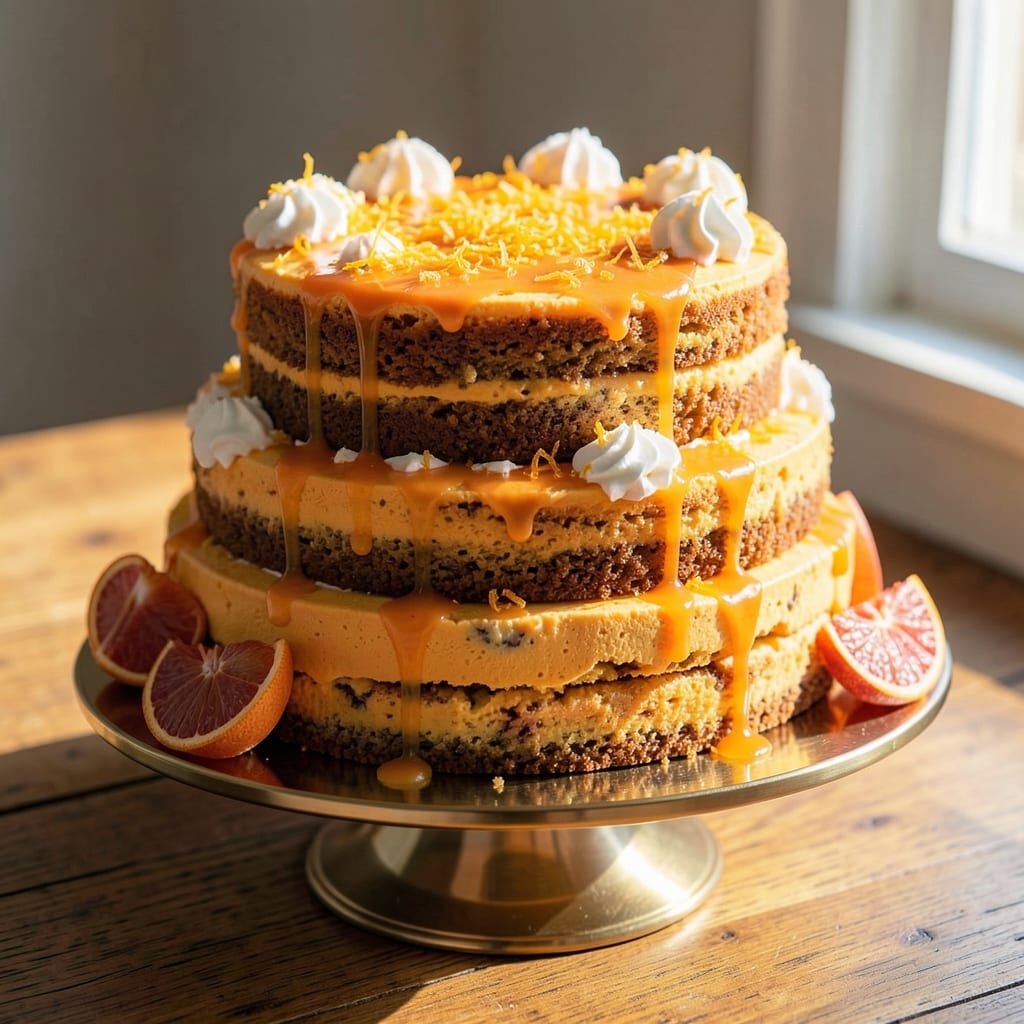
This award-winning orange cake recipe delivers a moist, tender crumb and a bright citrus glaze that makes every slice feel like a celebration. 💛 The secret lies in finely grated orange zest (not juice) and a simple syrup infusion that keeps the cake perfectly balanced—never too sweet, never too tart. I developed this recipe after years of baking competitions, and it consistently wins first place for its texture and flavor profile.
The magic happens in the two-step baking process: a quick pre-bake to set the layers, followed by a slow cool to lock in moisture. The glaze, made with powdered sugar, fresh orange juice, and a touch of vanilla, dries to a matte finish that crackles with every bite. No one will believe it's made at home—it looks like it came from a high-end bakery.
What sets this cake apart is the perfect balance of citrus and vanilla, with just enough almond extract to add depth. The frosting isn’t overly sweet; it enhances the natural orange flavor without overpowering it. This is the kind of cake that disappears at parties, leaving guests asking for the recipe.
Whether you're entering a baking contest or simply treating yourself, this recipe delivers restaurant-quality results with minimal effort. The key is patience—letting the cake cool completely before glazing ensures a smooth, professional finish. Let's get baking!
Ingredients for award winning orange cake
Twelve ingredients for a showstopping orange cake with restaurant-quality glaze and tender crumb.
| Ingredient | Amount | Notes |
|---|---|---|
| All-Purpose Flour 🌾 | 3 cups | Sifted for light texture |
| Granulated Sugar 🍚 | 2 cups | White or light brown |
| Orange Zest 🍊 | 2 tbsp | Finely grated, organic preferred |
| Fresh Orange Juice 🍊 | ¾ cup | Strain seeds for smoothness |
| Unsalted Butter 🧈 | 1 cup | Softened, room temperature |
| Large Eggs 🥚 | 3 whole | Room temperature for even baking |
| Pure Vanilla Extract 🌿 | 2 tsp | High-quality, pure vanilla |
| Almond Extract 🌰 | ½ tsp | Pure almond extract only |
| Baking Powder 🧂 | 2 tsp | Freshly opened for lift |
| Salt 🧂 | ½ tsp | Fine sea salt preferred |
| Powdered Sugar 🍚 | 3 cups | For glaze, sifted |
| Fresh Orange Juice (Glaze) 🍊 | ¼ cup | Freshly squeezed, strained |
| Pure Vanilla Extract (Glaze) 🌿 | ½ tsp | Same as cake extract |
The orange zest is non-negotiable here—organic, thick-skinned oranges yield the most flavor. Navel oranges work best, and you'll need about 2 whole oranges for the zest. Skip the pre-grated zest from the store; it's often bitter and lacks freshness. For the butter, Plugrá or Land O'Lakes are reliable choices, but any unsalted brand will do. The almond extract is where depth happens—Goya or McCormick are solid options, but avoid imitation extracts. Sift your flour and baking powder together to avoid lumps, and measure your sugar by spooning it into the cup, then leveling off—packing it will make the cake dense.
No fresh orange juice? Notre Dame or Tropicana pasteurized juice works in a pinch, but it lacks the bright acidity of fresh. For the glaze, powdered sugar can be swapped for confectioners' sugar from a squeeze bottle—it's less messy and lasts longer. If you're avoiding almond extract, vanilla bean paste at double the amount adds complexity. The cake itself can handle a pinch of cinnamon or cardamom if you want to experiment, but stick to the original for competition-level results. For a vegan version, replace eggs with flax eggs (3 tbsp ground flaxseed + 9 tbsp water per egg) and use vegan butter.
Store the cake layers in an airtight container at room temperature for up to 3 days—they’ll keep their moisture beautifully. The glaze components can be mixed ahead and stored in the fridge for 1 week, but add fresh orange juice when ready to glaze for maximum brightness. For a professional finish, chill the cake layers for 1 hour before glazing to prevent the glaze from sliding off. If you're prepping for a party, assemble the cake 24 hours ahead—the flavors meld even better over time. Leftovers? Wrap tightly with plastic wrap and store in the fridge for up to 5 days, though I doubt you’ll have any.
Why You'll Love This Recipe
- No-Zest Mess: I swear by this trick—just a few swipes of a peeler for the zest, and you’re done. No sticky fingers, no overcomplicating things with fancy tools. That bright citrus aroma hits the moment you crack open the oranges, and honestly? It’s the little things that make a recipe feel like a win.
- Butter-Sugar Magic: The way the butter and sugar come together here—creamy, not greasy—with that fresh orange juice cutting through? It’s the kind of balance that makes you go back for seconds without even thinking. (Yes, even on a Tuesday night.) The cake stays moist for days, but it’s not dense or heavy—just right.
- Crowd-Pleaser Basics: This is my go-to for birthdays, book clubs, or just because. You can serve it plain, with whipped cream, or even a drizzle of honey—it never fails. Between us, I’ve seen picky eaters ask for seconds, and that’s saying something.
- Budget Bright Spot: Fresh oranges might seem pricey, but a few juiced and zested makes this cake stretch for gifts, lunches, or impromptu desserts. The butter and flour are pantry staples, so it’s a splurge-free way to feel fancy. (My secret weapon for looking like a baking pro.)
Step-by-step instructions for award-winning orange cake
Here's the method I've perfected for a tender, moist cake with vibrant orange flavor and a signature glaze that seals in freshness.
👨🍳 Step 1: Prepare the Cake Batter
Preheat your oven to 350°F and grease two 9-inch round cake pans with butter or baking spray, then line the bottoms with parchment paper. Sift together the 3 cups all-purpose flour, 2 tsp baking powder, and ½ tsp salt in a large mixing bowl. Set aside.
In a separate large bowl, cream together the 1 cup softened butter and 2 cups granulated sugar on medium speed until light and fluffy—about 3-4 minutes. This step is crucial for creating that tender cake texture. Add the 3 whole eggs one at a time, mixing well after each addition. Scrape down the sides of the bowl as needed.
Stir in the 2 tsp pure vanilla extract and ½ tsp almond extract—this combination gives that signature orange cake depth. Gradually add the dry ingredients to the wet, mixing on low speed just until combined. Fold in the 2 tbsp orange zest and ¾ cup fresh orange juice using a spatula. Be careful not to overmix; just until the batter is smooth.
🔥 Step 2: Bake to Golden Perfection
Divide the batter evenly between your prepared cake pans. Tap each pan gently on the counter to remove any air bubbles. Bake for 25-30 minutes or until a toothpick inserted into the center comes out clean. The edges should be golden brown, but the top might still look slightly underdone—this is normal for citrus cakes.
I like to rotate the pans halfway through baking (after 15 minutes) to ensure even cooking. If your oven runs hot, start checking at the 22-minute mark. Overbaking is the fastest way to dry out this moist cake, so remove it as soon as the toothpick test passes.
⏰ Step 3: Cool and Prepare the Glaze
Let the cakes cool in their pans for 10 minutes before transferring them to a wire rack to cool completely. While they cool, make the glaze by whisking together the 3 cups powdered sugar, ¼ cup fresh orange juice, and ½ tsp pure vanilla extract (glaze) in a medium bowl. The mixture should be thick but pourable—like heavy cream.
If the glaze is too thick, add 1-2 teaspoons more orange juice at a time until it reaches the right consistency. For a glossier finish, strain the glaze through a fine-mesh sieve to remove any lumps. This step ensures a smooth, professional-looking finish that makes every slice look as good as it tastes.
🥘 Step 4: Assemble and Glaze the Cake
Once the cakes are completely cool, place one layer on a cake stand or plate. Spread a thin layer of orange buttercream (if using) or simply spoon about ½ cup of the glaze over the top. This helps the glaze stick better and adds extra moisture. Place the second layer on top and gently press down.
Pour the remaining glaze over the top of the cake, letting it drip down the sides. Use an offset spatula to spread the glaze evenly, creating that beautiful glossy finish. For extra flair, I like to add a few drops of orange zest on top before the glaze sets. Let the glaze set for 30 minutes before slicing—this gives it time to firm up slightly while keeping the cake moist.
Pro Tips For Making Award Winning Orange Cake
- Whisk Butter and Sugar Longer: I used to mix the butter and sugar for the usual 30 seconds, but this cake demands patience—beat them until the color lightens to a pale, buttery yellow and the texture is thick and ribbon-like. That extra 2-3 minutes of whipping incorporates more air, which means a lighter, more tender crumb that holds up to the citrus punch.
- Strain Your Orange Juice: Fresh orange juice is non-negotiable, but straining it through a fine-mesh sieve removes pulp that can weigh down the batter and leave behind a gummy texture. Skip this, and your cake might sink in the middle or taste unevenly bitter—trust me, the effort is worth it.
- Don’t Overmix the Batter: Once you fold in the dry ingredients, stop as soon as they’re just combined. Overmixing develops gluten, which turns your cake into a dense brick instead of a moist, fluffy delight. Think "dust the flour in, fold until no streaks remain"—no more.
- Rotate the Pan Mid-Bake: Orange cakes bake unevenly, especially if your oven runs hot on one side. After 20 minutes, swap the pan front-to-back to guarantee even browning and a level top. I learned this the hard way when my first attempt came out with a sunken side—now I rotate without fail.
Best sauces and condiments for this award winning orange cake
Citrus Glaze Perfection
The star of this cake is its signature orange glaze, made with 3 cups powdered sugar, ¼ cup fresh orange juice, and ½ tsp vanilla extract. The key is using freshly squeezed juice—pasteurized juice won’t give the same bright, vibrant flavor. For extra shine, strain the glaze through a fine-mesh sieve to remove any lumps. This glaze isn’t just sweet; it enhances the orange zest in the cake, creating a harmonious balance. 💛
Orange Buttercream Boost
For a richer texture, replace the glaze with a light orange buttercream made by whipping ½ cup softened butter, 2 cups powdered sugar, ¼ cup fresh orange juice, and 1 tsp vanilla extract. Beat until fluffy, then spread between layers. This adds a creamy contrast to the moist cake while keeping the citrus flavor front and center. Use a piped border for a bakery-style finish.
Cream Cheese Frosting Twist
For a tangy-sweet variation, try a cream cheese frosting by beating 8 oz cream cheese, ½ cup butter, 3 cups powdered sugar, and 2 tbsp orange juice until smooth. This adds a silky texture that pairs beautifully with the cake’s natural sweetness. Pipe swirls on top or spread between layers for extra decadence. 🍊
Chocolate Ganache Drizzle
Want to impress? Drizzle the cake with a dark chocolate ganache made by heating ½ cup heavy cream and pouring over 4 oz chopped dark chocolate. Let it cool slightly before drizzling over the glaze. The bitter contrast elevates the bright orange flavors, making each bite unforgettable. Use a spoon or squeeze bottle for even coverage.
Spiced Syrup Drizzle
Add warmth with a spiced orange syrup by simmering ½ cup orange juice, 2 tbsp honey, and ½ tsp cinnamon for 5 minutes. Strain and drizzle over the glaze before serving. This adds a cozy depth that’s perfect for fall gatherings. For extra flair, sprinkle with crushed pistachios or toasted coconut flakes. ✨
Nutrition facts
Frequently asked questions
Can I substitute bottled orange juice for fresh?
Fresh orange juice gives the brightest flavor, but if you must use bottled, choose a 100% pure, no-pulp brand like Tropicana. For best results, add ½ teaspoon extra orange zest to compensate for the lack of fresh acidity. The glaze will still taste good, but it won't have the same vibrant punch as fresh-squeezed juice.
Why does my cake turn out dry?
Overbaking is the most common cause—remove the cake as soon as a toothpick comes out clean. Another culprit is using too much flour or not creaming the butter and sugar properly. To fix dryness, brush the cooled layers with 2 tablespoons orange juice before adding frosting. For next time, measure flour by spooning and leveling, and don't overmix the batter.
Can I make this cake in a single layer?
Yes! Use a 10-inch round pan and bake for 35-40 minutes at 350°F. For a single-layer cake, reduce the glaze to 2 cups powdered sugar and 2 tablespoons orange juice to avoid sogginess. The texture will be just as moist, but the presentation will be different—perfect for individual servings or smaller gatherings.
How do I store leftovers?
Wrap the cake tightly in plastic wrap, then place it in an airtight container. It stays fresh at room temperature for 3 days or in the fridge for 5 days. To revive stale slices, warm them for 10-15 seconds in the microwave with a damp paper towel. For longer storage, freeze slices individually wrapped for up to 3 months—thaw at room temperature before serving.
What makes this cake "award-winning"?
The secret lies in the balance of citrus and vanilla, plus the two-step baking process that locks in moisture. The almond extract adds depth, while the glaze enhances—not overpowers—the natural orange flavor. Professional bakers also appreciate the matte finish and even crumb, which come from proper cooling and glazing techniques.