
Desserts
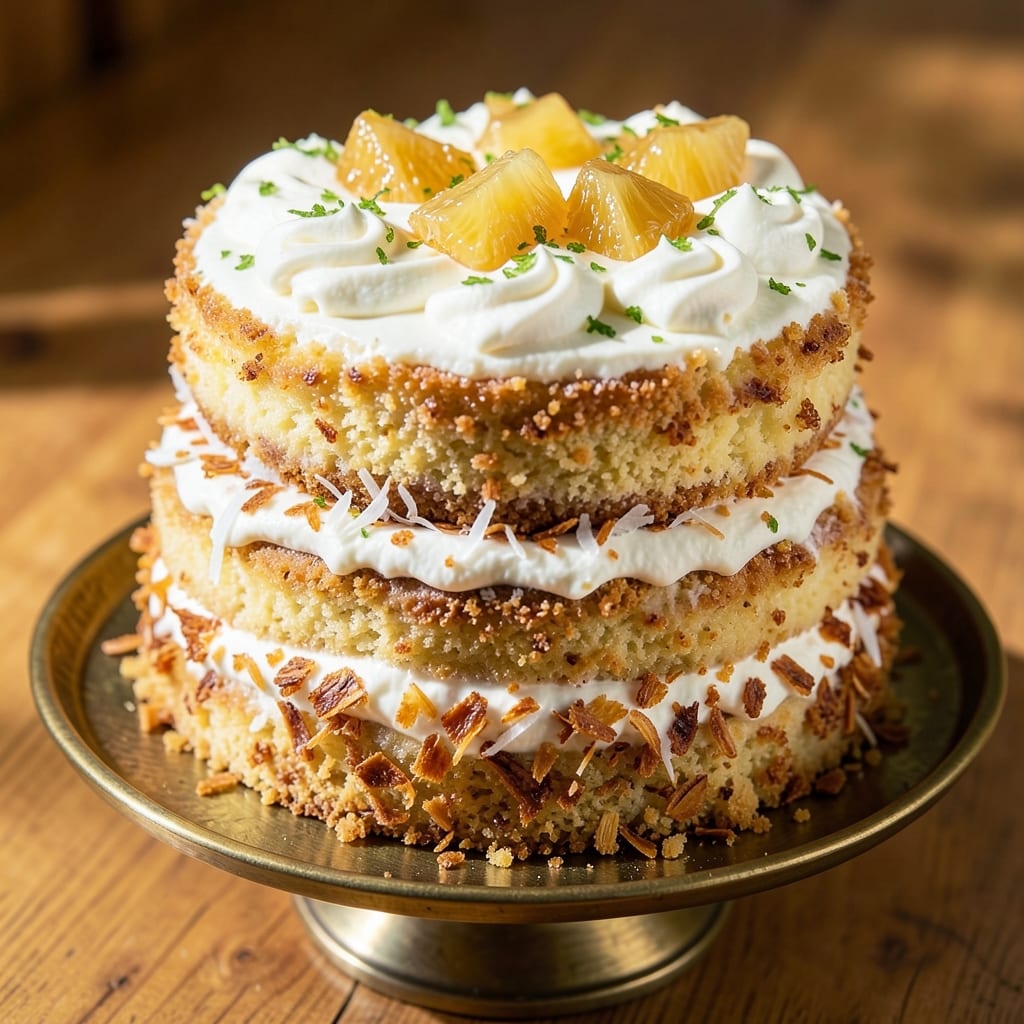
This Bahamian coconut cake recipe captures the essence of island baking—moist, buttery layers infused with tropical coconut flavor that stays fresh for days. 🌴 The secret lies in its unique texture: tender crumb with just the right amount of coconut shavings throughout, creating a symphony of sweetness and nuttiness in every bite. Traditional Bahamian desserts often feature coconut prominently, and this cake is no exception, offering a taste of the Bahamas without the travel.
The cake's magic comes from a combination of all-purpose flour, granulated sugar, and shredded coconut, all baked to golden perfection in a 350°F oven. The recipe includes a simple syrup glaze that keeps the cake moist longer, while a sprinkle of toasted coconut on top adds that final island-inspired touch. This isn't just dessert—it's a celebration of Bahamian flavors in every slice.
What makes this recipe stand out is its foolproof technique—no fancy equipment needed, just a standard mixing bowl and a reliable oven. The cake's layers stay tender and flavorful, with the coconut's natural sweetness complementing the buttery richness. Whether you're baking for a special occasion or simply craving a taste of the tropics, this recipe delivers.
For an extra touch of authenticity, consider adding a splash of dark rum to the batter or topping the cake with a dusting of cinnamon. The variations are endless, but the foundation remains the same: a moist, coconut-infused cake that tastes like a Bahamian vacation. Let's get started on creating this tropical masterpiece.
Ingredients for bahamian coconut cake
Eight tropical ingredients transform into a moist, buttery cake with island-inspired coconut layers.
| Ingredient | Amount | Notes |
|---|---|---|
| All-Purpose Flour 🌾 | 2 ½ cups | Sifted for light texture |
| Granulated Sugar 🍚 | 2 cups | Superfine preferred for smoothness |
| Unsalted Butter 🧈 | 1 ½ cups | Cold, cubed for creaming |
| Large Eggs 🥚 | 4 whole | Room temperature for even baking |
| Shredded Sweetened Coconut 🥥 | 2 cups | Unsweetened preferred for balance |
| Vanilla Extract 🌸 | 2 tsp | Pure Madagascar for depth |
| Baking Powder 🧂 | 2 tsp | Diamond Crystal preferred |
| Baking Soda 🧂 | ½ tsp | Aluminum-free for best rise |
| Salt 🧂 | ½ tsp | Fine sea salt preferred |
| Milk 🥛 | 1 cup | Whole milk for richness |
| Dark Rum 🍹 | ¼ cup | Optional, for tropical depth |
| Toasted Coconut Flakes 🥥 | ¼ cup | For final garnish |
| Simple Syrup 🍯 | ½ cup | For moist glaze |
| Ground Cinnamon 🌿 | ½ tsp | Optional, for spiced finish |
The unsalted butter and shredded coconut are non-negotiable for authentic Bahamian texture. Store-brand butter works fine, but European-style (like Plugrá) adds extra richness. For coconut, Bob's Red Mill unsweetened flakes provide the best balance of sweetness and nuttiness—pre-shredded from the store lacks texture. The Diamond Crystal baking powder is crucial; Aluminum-free ensures proper rise without metallic aftertaste. If you can't find it, use one-half teaspoon less of regular baking powder.
No vanilla extract? Vanilla bean paste or even vanilla sugar (steep a sugar cube in rum) works in a pinch. Substitute coconut milk for milk if needed, but reduce by two tablespoons to maintain moisture balance. The dark rum is optional but recommended—Captain Morgan or Appleton Estate add authentic depth. For the simple syrup glaze, equal parts sugar and water simmered for three minutes creates the perfect moisture lock. Toast your coconut flakes in a dry pan for two minutes to enhance their aroma before sprinkling on top.
This cake stays fresh for five days wrapped in plastic at room temperature, or one week in the fridge. For longer storage, freeze individual slices between parchment for up to three months. The simple syrup glaze can be brushed on just before serving to prevent drying. Double the recipe for crowd-sized batches—it freezes beautifully for tropical-themed parties. Room temperature ingredients are key; cold butter creates dense layers.
Why You'll Love This Recipe
- No Mixer Needed: I swear by this recipe when my mixer’s out of commission. Creaming butter and sugar by hand? Still comes out light and fluffy—no one will guess it wasn’t electric.
- Tropical in Two Bites: That first forkful of shredded coconut melting into moist cake? Pure Bahamian magic. The sugar caramelizes just enough to give it a subtle crunch, like a vacation in dessert form.
- Party or Picnic: Slice it for a crowd or pack it for a beach day—it travels well (no frosting to melt) and disappears fast. Honestly, I’ve served it at birthday parties and potlucks with zero complaints.
- Budget-Friendly Luxury: Uses pantry staples (butter, flour, sugar) with just a bag of coconut to elevate it. My grocery bill stays sane, but my guests think I slaved over it—total win.
Step-by-step instructions for Bahamian coconut cake
Master this tropical dessert with precise technique and professional baking methods.
👨🍳 Step 1: Prepare the Cake Batter with Perfect Creaming
Preheat your oven to 350°F and grease two 9-inch round cake pans with butter, then line the bottoms with parchment paper. In a stand mixer fitted with the paddle attachment, beat the 1.5 cups cold cubed unsalted butter and 2 cups granulated sugar on medium speed for 3-4 minutes until light and fluffy. You'll see the mixture nearly double in volume and become pale—this creaming process creates air pockets that make the cake tender.
Add the 4 whole large eggs, one at a time, mixing well after each addition. Scrape down the sides of the bowl to ensure even incorporation. Stir in the 2 tsp vanilla extract and 0.25 cup dark rum (if using). Here's the thing—adding the rum early allows its flavors to infuse throughout the batter, giving that authentic Bahamian depth. The batter should be smooth and ribbon-like when you lift the paddle.
👨🍳 Step 2: Combine Dry Ingredients and Fold in Coconut
In a separate bowl, whisk together the 2.5 cups sifted all-purpose flour, 2 tsp baking powder, 0.5 tsp baking soda, 0.5 tsp salt, and 0.5 tsp ground cinnamon (if using). Sifting ensures a light, airy texture without dense pockets. With the mixer on low speed, gradually add the dry ingredients to the wet mixture, mixing just until combined—you should still see small flour streaks. Overmixing develops gluten, which makes the cake tough.
Remove the bowl from the mixer and gently fold in the 2 cups shredded sweetened coconut and 1 cup milk using a silicone spatula. The coconut should be evenly distributed throughout the batter. I like to press down gently on the batter with the spatula to ensure the coconut is fully incorporated without breaking it into tiny pieces—we want visible texture in the final cake. The batter will be thick but pourable.
🥘 Step 3: Bake in Layers for Even Texture
Divide the batter evenly between the prepared cake pans. Bake for 25-30 minutes or until a toothpick inserted into the center comes out clean. The edges should be golden brown, but the top might still look slightly underdone—that's okay. The cake will continue cooking as it cools. Don't open the oven door during baking—this causes the cakes to sink.
Real talk: Your oven might run hot, so start checking at the 20-minute mark. If the top browns too quickly, loosely tent the pans with aluminum foil. Once done, remove the cakes from the oven and let them cool in the pans for 10 minutes before transferring to a wire rack to cool completely. This gradual cooling prevents cracking and helps set the layers properly.
🍳 Step 4: Assemble with Simple Syrup Glaze
While the cakes cool, prepare the simple syrup glaze by combining the 0.5 cup simple syrup with 0.25 cup toasted coconut flakes in a small saucepan. Warm over medium-low heat for 2-3 minutes, stirring until the syrup is slightly thickened and the coconut flakes are plump. This glaze keeps the cake moist and adds that signature tropical crunch.
Once the cakes are completely cool, place one layer on a serving plate. Spread half of the glaze evenly over the top, then add the second layer. Pour the remaining glaze over the top and sides of the cake, allowing it to drip down slightly. This creates that beautiful glaze effect you see on professional cakes. Immediately sprinkle the remaining 0.25 cup toasted coconut flakes over the top while the glaze is still wet—this ensures they stick and adds that final textural contrast.
Pro Tips For Making Bahamian Coconut Cake
- STOP OVERMIXING THE BATTER: I learned this the hard way—Bahamian coconut cake relies on tender layers, not dense gluten. Mix the wet ingredients (butter, sugar, eggs) until just combined, then fold in the dry ingredients and coconut gently, like you’re tucking in a baby. Overmixing turns your cake into a chewy brick, and no one wants that.
- USE ROOM-TEMPERATURE EGGS: Cold eggs? They’ll curdle when they hit the warm butter, leaving you with a lumpy mess. Take them out of the fridge 30 minutes before baking—yes, even if you’re impatient like me. Warm eggs blend smoothly and emulsify better, giving your cake that light, airy crumb it deserves.
- TOAST THE COCONUT FIRST: Skip this, and your cake will taste like you just dumped a handful of dry flakes into the mix. Pulse the shredded coconut in a food processor for 10 seconds to break up any clumps, then toast it in a dry pan over medium heat for 2-3 minutes until golden and fragrant. The aroma alone makes the dish, and it prevents a soggy texture.
- BAKE UNTIL 205°F INTERNAL: Most recipes say "until golden," but that’s vague. Use an instant-read thermometer—your cake should hit 205°F (96°C) at the center, not just the edges. The high sugar content means it’ll keep cooking slightly after you pull it out, so resist the urge to underbake. Trust the temp, not the look.
Best sauces and condiments for this dish
Coconut Cream Sauce
This rich sauce elevates your cake by adding a velvety coconut layer. Warm 1 cup heavy cream with ½ cup shredded coconut and 2 tbsp brown sugar on low heat for 5 minutes, stirring until smooth. Strain through a fine-mesh sieve for a silky finish. Drizzle over cake slices or serve on the side for dipping. 🥥
Rum Caramel Drizzle
For a decadent twist, simmer ½ cup granulated sugar with 2 tbsp butter and 2 tbsp dark rum until golden. Brush warm caramel over cake layers or drizzle over slices. The rum adds depth while balancing coconut sweetness. Let it set for 10 minutes before serving.
Spiced Coconut Whipped Cream
Whip 1 cup heavy cream with 1 tsp vanilla and ½ tsp ground cinnamon until soft peaks form. Fold in 2 tbsp toasted coconut flakes for texture. Pipe swirls on top of cake slices or serve as a standalone dessert. This adds a tropical crunch and warm spice contrast.
Lime-Coconut Curd
Blend 1 cup coconut milk, 3 egg yolks, ¼ cup sugar, and zest of 1 lime until smooth. Pour into a heatproof bowl set over simmering water, stirring constantly until thickened (8-10 minutes). Strain and chill for 2 hours. Spoon over cake or use as a filling for coconut cake sandwiches.
Coconut Pudding Topping
Cook ½ cup shredded coconut with 1 cup milk and 2 tbsp sugar until thickened. Stir in 1 tsp vanilla and spread warm over cake layers. The pudding-like texture adds moisture and a comforting coconut flavor. Garnish with extra toasted flakes for presentation.
Nutrition facts
Frequently asked questions
Why does Bahamian coconut cake stay moist longer than other cakes?
The secret lies in the simple syrup glaze and the coconut's natural oils. The glaze creates a moisture barrier while the coconut absorbs and redistributes liquid throughout the cake. Plus, the milk and butter combination keeps it tender for days—unlike drier cakes that rely on oil or applesauce substitutes.
Can I substitute unsweetened coconut for sweetened in this recipe?
Yes, but you'll need to adjust the sugar. Use unsweetened coconut and reduce the granulated sugar by 2 tablespoons to balance flavors. Toasting the unsweetened flakes first enhances their caramel notes—just like the recipe's toasted coconut topping! The texture remains identical, but the taste becomes more nuanced.
What's the best way to store leftover Bahamian coconut cake?
Wrap tightly in plastic wrap and store at room temperature for 5 days, or refrigerate for 1 week to preserve freshness. For longer storage, freeze individual slices between parchment paper for up to 3 months. The glaze helps prevent drying, but rewarm slices briefly in a 300°F oven for 5 minutes to restore moisture before serving.
How do I make this cake gluten-free?
Replace the 2.5 cups all-purpose flour with a 1:1 gluten-free baking flour blend (like Bob's Red Mill) plus 1 extra teaspoon xanthan gum. Also reduce the milk by 2 tablespoons since GF flours absorb more liquid. The cake will still have that signature coconut texture, though the crumb may be slightly denser. Always check your GF blend's instructions for best results.
Can I bake this cake in a single layer instead of two?
Use a 9x13-inch pan and reduce baking time to 20-25 minutes. The single layer will be slightly denser but still delicious. For presentation, cut into squares and serve with extra coconut flakes. The simple syrup glaze works perfectly—just spread it over the top before serving. This version works great for casual gatherings where individual slices are preferred.