
Desserts
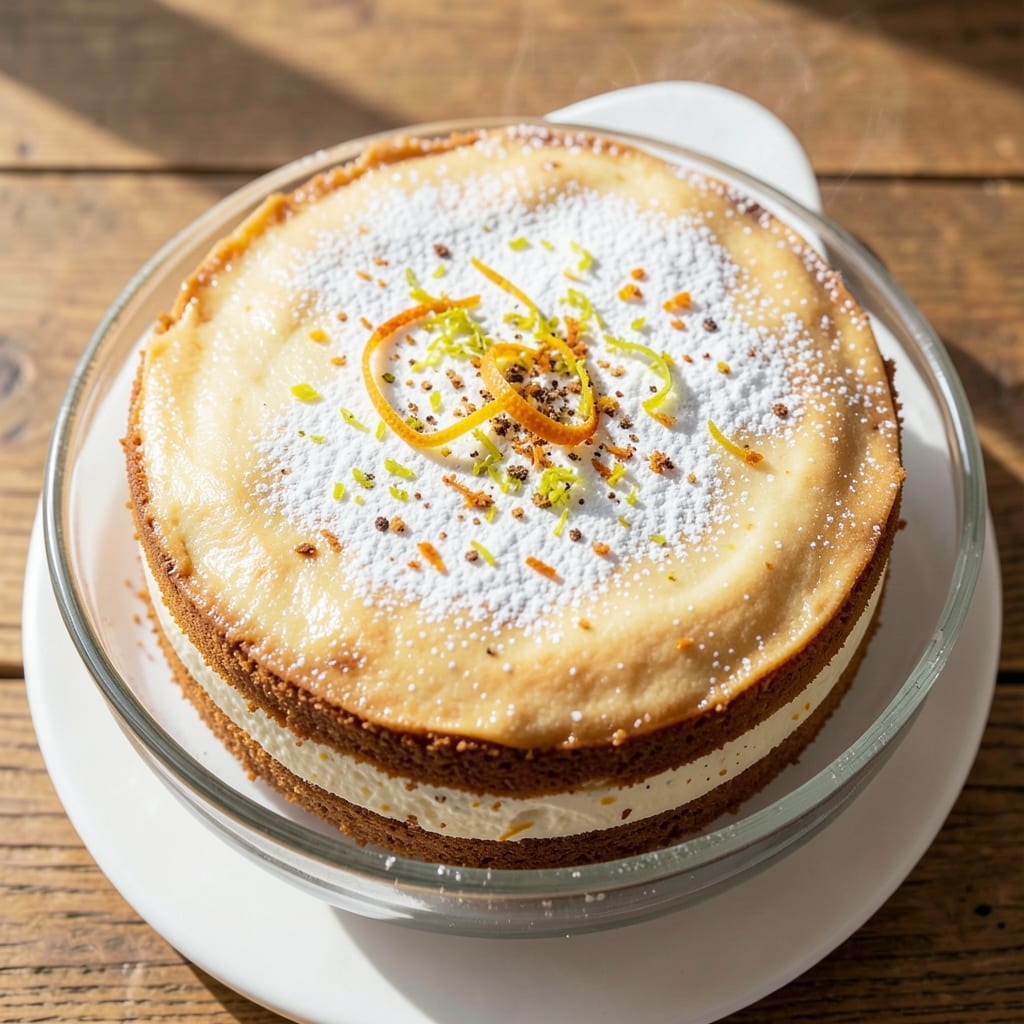
This baked ricotta cake delivers the perfect balance of silky texture and bright citrus notes, transforming a simple dessert into something extraordinary. The secret lies in blending ricotta's natural creaminess with zesty lemon zest and orange juice, creating layers of flavor that linger with every bite. Unlike dense cakes, this version stays moist and tender thanks to a precise baking technique that ensures a delicate crumb without drying out.
The recipe begins with a smooth batter where ricotta replaces some of the butter, adding richness while keeping the texture light. A touch of citrus zest infuses the cake with natural brightness, cutting through the richness for a refreshing finish. Baking at the right temperature—350°F—ensures even cooking, resulting in a golden top and perfectly set layers that hold together beautifully.
What makes this cake truly special is its versatility—serve it plain for an elegant dessert or lightly dusted with powdered sugar for a rustic touch. The citrus twist elevates it beyond traditional ricotta cakes, making it ideal for brunch, afternoon tea, or a celebratory occasion. Each slice offers a harmonious blend of creamy, citrusy, and slightly sweet flavors that feel both indulgent and balanced.
While the recipe is vegetarian-friendly, it’s also adaptable for dietary preferences—swap regular flour for almond flour if needed, or add a hint of vanilla for extra depth. The key to success lies in patience: letting the batter rest before baking ensures a smoother texture, and cooling the cake gradually prevents cracking. This is a dessert that feels like a hug in every bite, perfect for those who love cakes that are as comforting as they are delicious.
Ingredients for baked ricotta cake
Rich ricotta meets bright citrus in this delicate dessert. Eight ingredients transform into layers of silky perfection.
| Ingredient | Amount | Notes |
|---|---|---|
| Whole Milk Ricotta Cheese 🧀 | 16 oz | Full-fat for creaminess |
| All-Purpose Flour 🌾 | 2 cups | Sifted for smooth batter |
| Granulated Sugar 🍚 | 1 ½ cups | White or light brown |
| Unsalted Butter 🧈 | ¾ cup | Room temperature, cubed |
| Large Eggs 🥚 | 3 whole | Room temperature preferred |
| Fresh Lemon Zest 🍋 | 1 tbsp | Fine, bright yellow |
| Fresh Orange Zest 🍊 | 1 tbsp | Fine, vibrant orange |
| Fresh Lemon Juice 🍋 | ¼ cup | Strained, no pulp |
| Vanilla Extract 🌿 | 1 tsp | Pure, high-quality |
| Baking Powder 🧂 | 2 tsp | Aluminum-free preferred |
| Salt 🧂 | ½ tsp | Fine sea salt |
| Powdered Sugar 🍚 | ¼ cup | For dusting, optional |
The ricotta makes this cake special—full-fat is non-negotiable for that signature creaminess. Grab a 20-ounce tub from the dairy case, not the pre-ricotta cakes that often contain stabilizers. For the citrus, organic lemons and oranges from the produce section have more vibrant zest. If you're using conventional produce, wash thoroughly and dry well to avoid excess moisture in your batter. The butter should be at room temperature—press a cube between your fingers; if it leaves a slight indentation, it's ready. For the flour, King Arthur or Gold Medal brands are reliable choices that ensure a smooth texture.
No ricotta? Cottage cheese blended until smooth works in a pinch, though the texture will be slightly different. Running short on zest? Citrus extract at half the amount adds flavor but lacks the visual appeal. The baking powder is crucial—double-check the expiration date to avoid a flat cake. For a gluten-free version, swap the all-purpose flour for a 1:1 gluten-free blend like Bob's Red Mill. The powdered sugar is optional but adds that elegant finishing touch; if you skip it, a light dusting of confectioners' sugar works just as well. The eggs should be at room temperature for even baking, but if they're cold, no need to stress—just let them sit out for 30 minutes before mixing.
This cake keeps beautifully—3 days at room temperature wrapped in plastic, or 1 week refrigerated in an airtight container. For longer storage, slice and freeze individual portions for up to 3 months. The batter can be prepped a day ahead and refrigerated, saving you time on baking day. When serving, let the cake cool completely before slicing to maintain its delicate structure. The citrus flavors intensify slightly after resting, so if possible, let it sit for at least 1 hour before serving for the best experience.
Why You'll Love This Recipe
- No Mixer Needed: I swear by this recipe because it’s a whisk-and-fold situation—just fold the ricotta into the dry ingredients until just combined. No overmixing, no lumps, no stress. That creamy ricotta does all the work for you.
- Creamy Yet Crisp: The butter and eggs give it that golden, slightly crisp top, while the ricotta keeps it tender inside. Honestly, it’s the kind of texture that makes you want to cut yourself a second slice before anyone else even gets a fork.
- Weeknight or Weekend: Make it for breakfast when you’re in a rush, or bake it ahead for a brunch spread. My kids grab slices for school lunches, and I’ve even served it warm with a drizzle of honey—because why not? It’s that adaptable.
- Leftovers That Last: Ricotta’s rich but not heavy, so it reheats beautifully. I’ll bake a whole pan on Sunday, and by Thursday, it’s still the star of my snack drawer. Plus, it’s cheaper than buying pre-made pastries—win-win.
Step-by-step instructions for silky ricotta cake with citrus zest
This method ensures a perfectly moist, tender crumb with vibrant citrus notes.
Whisk Ricotta and Wet Ingredients for Smooth Texture
In a large mixing bowl, combine the 16 oz whole milk ricotta cheese with the 1.5 cups granulated sugar, 3 whole large eggs, 0.25 cup fresh lemon juice, 1 tbsp fresh lemon zest, 1 tbsp fresh orange zest, and 1 tsp vanilla extract. Use a hand mixer or whisk on medium speed for 3-4 minutes until completely smooth and homogeneous.
This step is critical for achieving that signature silky texture. The ricotta should be fully incorporated with no lumps visible. I like to press the mixture through a fine-mesh sieve if any small curds remain—this guarantees an ultra-smooth batter. The citrus zest will dissolve gradually, releasing its aromatic oils that will brighten the final cake.
Sift Dry Ingredients and Fold Gently
In a separate bowl, sift together the 2 cups all-purpose flour, 2 tsp baking powder, and 0.5 tsp salt. Gently fold these dry ingredients into the ricotta mixture using a spatula, being careful not to overmix. The batter should be thick but pourable, with just a few small streaks of flour remaining.
Overmixing develops gluten, which can make the cake dense rather than light and tender. I find it helpful to scrape the sides of the bowl frequently to ensure even distribution. The batter should hold its shape when lifted with a spoon but still flow gently when poured.
Incorporate Room-Temperature Butter
Cut the 0.75 cup unsalted butter into small cubes and add them to the batter. Using a spatula, gently fold the butter pieces into the mixture until they're completely distributed. The butter should melt slightly but maintain some texture, creating pockets that will contribute to the cake's moistness.
This is where the cake gets its rich, tender quality. The butter's fat content creates steam during baking, which keeps the crumb moist. I recommend using butter that's softened to room temperature but not melted—this ensures proper incorporation without making the batter too fluid.
Bake in Prepared Pans for Even Rise
Preheat your oven to 350°F. Grease two 9-inch round cake pans and line the bottoms with parchment paper. Divide the batter evenly between the pans and smooth the tops. Bake for 40-45 minutes or until a toothpick inserted in the center comes out clean and the edges pull away slightly from the pan.
Here's the thing about ricotta cakes—they're delicate and can dry out if overbaked. I check for doneness at the 35-minute mark by inserting a toothpick. If it comes out with a few moist crumbs but no wet batter, that's perfect. The cake should spring back gently when pressed in the center, indicating proper doneness.
Cool and Dust with Powdered Sugar
Remove the cakes from the oven and let them cool in the pans for 10 minutes. Then transfer them to a wire rack to cool completely. Once fully cooled, dust the tops generously with 0.25 cup powdered sugar using a fine-mesh sieve for an elegant finish.
The cooling process is crucial for developing the cake's final texture. If you try to serve it warm, the ricotta's richness can make the cake feel heavy. The powdered sugar not only adds visual appeal but also enhances the citrus flavors with a subtle sweetness. For best results, serve the cake at room temperature with fresh berries or a citrus glaze.
Pro Tips For Making Baked Ricotta Cake
- Preheat Pan First: I learned this the hard way—ricotta cake loves a warm start. Place your greased 8-inch pan in a 350°F (175°C) oven for 5 minutes before pouring the batter. The butter in the batter melts faster, and the edges set evenly instead of spreading into a sad, thin puddle.
- Drain That Ricotta: Skip the watery mess by draining ricotta in a fine-mesh strainer for 10 minutes before mixing. Whole milk ricotta holds more moisture than you’d think, and that extra liquid turns your cake into a dense, gummy brick. (Yes, even if you’re impatient like me.)
- Whisk Eggs Separately: Beat the eggs and sugar together before folding them into the ricotta-flour mix. That extra air prevents a heavy texture—like mixing cake batter with a spoon instead of a whisk. I was skeptical until I tried it; the crumb is noticeably lighter.
- Test Doneness with a Skewer: The cake will look set but might still be wet inside. Insert a skewer near the center—if it comes out clean (or with one moist crumb), it’s done. Overbaking dries out the ricotta, and underbaking leaves it gummy. (Your future self will thank you.)
Common mistakes when making this recipe
Overmixing the Batter
The most common mistake is overmixing the batter after adding the dry ingredients. Ricotta cakes rely on a delicate structure, and overmixing develops gluten, making the texture dense instead of light and tender. I always stop folding when just a few streaks of flour remain—this ensures a silky crumb. Use a spatula and work gently to avoid incorporating excess air, which can cause the cake to collapse during baking. 🥄
Skipping the Resting Time
Many home bakers underestimate the importance of letting the batter rest before baking. Allowing the batter to sit for 15-20 minutes at room temperature lets the ricotta settle and the flour absorb any excess moisture. This prevents cracks and ensures even baking. I often set a timer and let the batter rest while I preheat the oven—it makes a noticeable difference in texture.
Using Low-Quality Ricotta
Not all ricotta is created equal, and using low-fat or pre-ricotta cake versions can ruin your cake. Full-fat whole milk ricotta is essential for that signature creamy texture. I recommend brands like Galbani or Whittier for the best results. If you must use cottage cheese as a substitute, blend it until completely smooth and strain out any excess liquid to avoid a watery batter.
Overbaking the Cake
Ricotta cakes are delicate and dry out quickly if left in the oven too long. The moment the toothpick comes out clean (with just a few moist crumbs) is the perfect time to remove it. I check for doneness at 35 minutes—any longer risks a dry, crumbly texture. The edges should pull away slightly from the pan, but the center should still have a slight bounce when pressed gently.
Ignoring Room-Temperature Ingredients
Cold butter or eggs can cause uneven baking and pockets of uneven texture. Let your butter sit out for 1-2 hours until it's soft but not melted, and bring eggs to room temperature by placing them in warm water for 10 minutes. I always test the butter by pressing a cube between my fingers—it should leave a slight indentation without spreading. Cold ingredients slow down the baking process and can lead to dense spots in the cake.
Not Cooling Properly
Serving ricotta cake warm is a common mistake—it feels heavy and loses its delicate texture. Always let the cake cool completely in the pan for 10 minutes before transferring to a wire rack. The gradual cooling helps set the structure properly. I also recommend waiting at least 1 hour before slicing to allow the ricotta to firm up slightly, which prevents crumbling. Patience here makes all the difference in presentation and texture. ✨
Nutrition facts
Frequently asked questions
Can I make this ricotta cake without citrus zest?
The citrus zest adds that signature bright flavor, but you can substitute with 1 teaspoon each of lemon and orange extract if needed. For a different twist, try 1 teaspoon cardamom or ½ teaspoon cinnamon—both pair beautifully with ricotta's creaminess. Just reduce the vanilla to ½ teaspoon to balance flavors.
How do I store leftover ricotta cake?
Wrap tightly in plastic wrap or store in an airtight container. It stays fresh for 3 days at room temperature or 1 week refrigerated. For longer storage, freeze individual slices wrapped in plastic for up to 3 months. Thaw overnight in the fridge to preserve texture.
Why did my ricotta cake come out dense?
Overmixing the batter or using cold ingredients are common culprits. Always fold dry ingredients gently until just combined, and ensure butter/eggs are at room temperature. Another tip: don't skip the 15-20 minute rest before baking—this helps the ricotta settle properly for a lighter texture.
Can I use this recipe for a gluten-free version?
Yes! Replace the all-purpose flour with a 1:1 gluten-free baking flour blend like Bob's Red Mill. You may need to add ½ teaspoon xanthan gum if your blend doesn't contain it. Keep all other ingredients and measurements the same—just be sure to sift the gluten-free flour thoroughly.
What's the best way to serve this cake?
Serve at room temperature with fresh berries, a drizzle of honey, or a light citrus glaze. For a make-ahead option, slice and freeze portions—just thaw for 1-2 hours before serving. The cake's delicate texture pairs perfectly with Earl Grey tea or espresso for a sophisticated dessert experience.