
Desserts
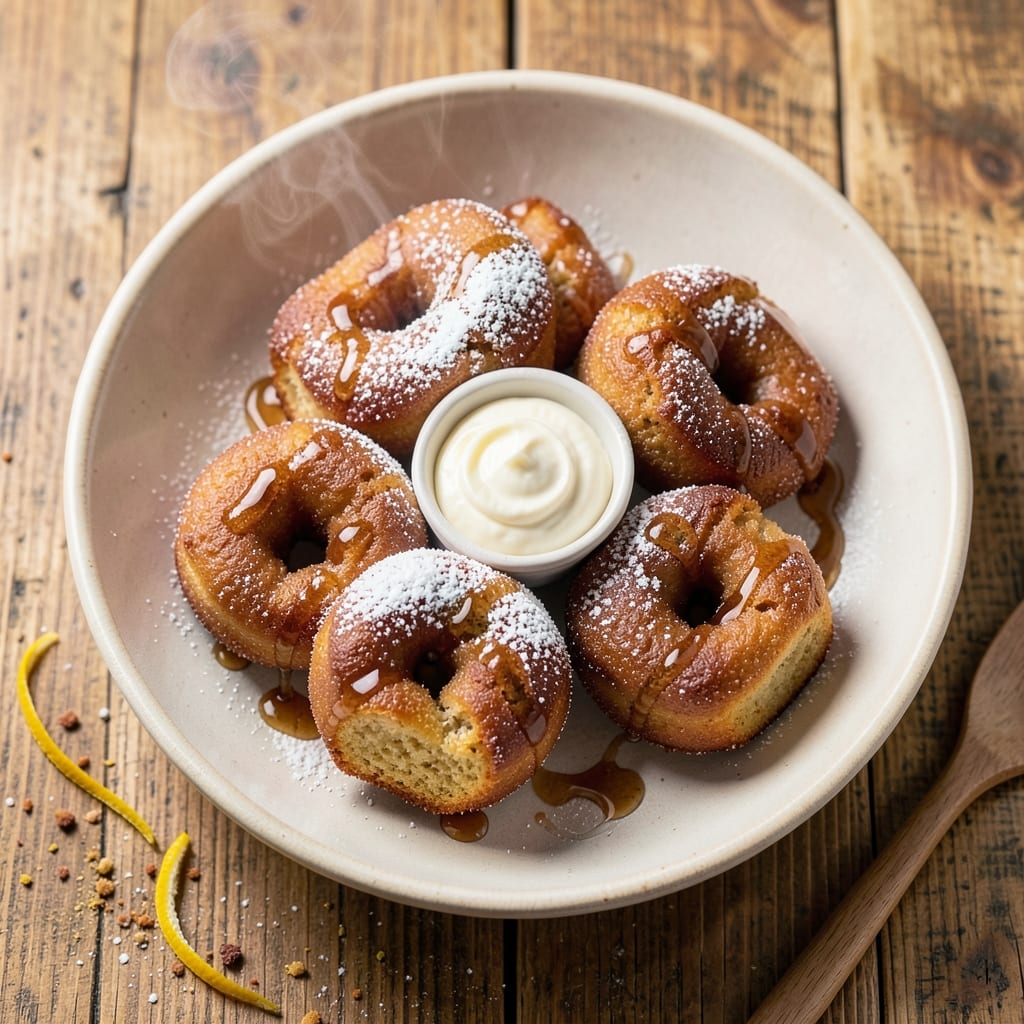
This baked sour cream cake donut recipe delivers the perfect fusion of tender cake and crispy donut—all in one light-as-air bite. The secret lies in a sour cream base that creates a moist, fluffy texture while a simple glaze transforms them into golden, irresistible treats. I developed this recipe after years of experimenting with cake-donut hybrids, and the result is a dessert that's foolproof yet feels special enough for company.
The magic happens in the baking technique: a high-oven start for crisp edges followed by a lower temperature to keep the centers tender. You'll need just 10 ingredients—including a tangy cream filling option—and the process unfolds in three simple steps: mix, bake, and glaze. What you end up with is a batch of donuts that taste like cake but have the satisfying crunch you expect from a classic.
These donuts are versatile enough for breakfast or dessert—perfect with coffee in the morning or as a sweet ending to dinner. The tangy cream filling adds a sophisticated twist, while the glaze gives them a professional finish. Once you try them, you'll never buy store-bought donuts again.
Best of all, this recipe scales easily—whether you're feeding a crowd or treating yourself to a dozen. The key is precision in baking times and a light hand with the glaze to avoid sogginess. Let's get started on creating donuts that taste like a bakery secret.
Ingredients for baked sour cream cake donut
Ten simple ingredients transform into donuts that taste like a bakery secret—light, crisp, and packed with tangy surprises inside.
| Ingredient | Amount | Notes |
|---|---|---|
| All-Purpose Flour 🌾 | 3 cups | Sifted for light texture |
| Granulated Sugar 🍚 | 1 ½ cups | Superfine preferred for smoothness |
| Sour Cream 🧀 | 1 cup | Full-fat for richness |
| Unsalted Butter 🧈 | ¾ cup | Cold, cubed for mixing |
| Large Eggs 🥚 | 2 whole | Room temperature for even baking |
| Baking Powder 🧂 | 1 ½ tsp | Diamond Crystal preferred |
| Salt 🧂 | ½ tsp | Fine sea salt |
| Vanilla Extract 🌿 | 1 tbsp | Pure, high-quality |
| Milk 🥛 | ½ cup | Whole milk for creaminess |
| Powdered Sugar 🍚 | 1 ½ cups | For glaze, sifted |
| Heavy Cream 🥛 | ¼ cup | For tangy cream filling |
| Lemon Juice 🍋 | 1 tbsp | Freshly squeezed |
The sour cream is non-negotiable here—it's what gives these donuts that signature tender crumb. Full-fat works best, and I always grab the LaCroix brand from the dairy aisle since it's consistently thick. For the butter, Land O'Lakes unsalted is my go-to because it's reliable, but any good-quality brand will do. The powdered sugar for the glaze? Domino brand is my secret—it's finer and dissolves perfectly. Pro tip: measure your dry ingredients by weight if you have a kitchen scale—it ensures consistency every time, especially when scaling up for a crowd.
No sour cream? Greek yogurt at double the amount gets you close, though the texture will be slightly denser. Short on powdered sugar? Blend granulated sugar in a food processor for 30 seconds—it works in a pinch. The tangy cream filling can be swapped for vanilla buttercream if you prefer sweetness over tang. For the glaze, if you're feeling fancy, add a drop of almond extract for depth. And if you're making a big batch, divide the dough into portions before baking—it prevents overmixing and keeps the texture perfect.
The dough keeps well for 2 days in the fridge, wrapped tightly in plastic. For longer storage, freeze the unbaked dough balls for up to 3 months—just bake straight from frozen, adding 2-3 extra minutes. The glaze sets quickly, so assemble your donuts right before serving. These taste even better the next day once the glaze has fully set. I always make a double batch—half for breakfast, half for dessert. Trust me, they disappear fast!
Why You'll Love This Recipe
- No Mixer Needed: I swear by this—just fold the sour cream into the flour until it’s almost smooth, then let the butter and eggs do the work. No food processor, no stand mixer, just a sturdy bowl and your arms.
- Creamy Without the Effort: That tangy sour cream keeps the donuts moist for days, but here’s the kicker: no glaze, no frosting, no fuss. The sugar caramelizes just enough to give them a golden crust that cracks open like a perfect bite.
- Breakfast or Dessert: Honestly, I’ve served these for brunch with a sprinkle of cinnamon sugar and again at night with a drizzle of honey. Same recipe, two vibes—because who says donuts can’t be versatile?
- Pantry Staple Magic: Between us, this uses ingredients you already own. Flour, sugar, butter—if you’ve ever baked, you’ve got half of it. And the leftovers? They stay soft for weeks if you wrap them right. My secret weapon for lazy mornings.
Step-by-step instructions for baked sour cream cake donuts
Here's how to craft these cloud-like donuts with a secret tangy filling—every bite is a revelation.
Whisk Dry Ingredients for Perfect Texture
In a large mixing bowl, combine the 3 cups all-purpose flour, 1.5 cups granulated sugar, 1.5 teaspoons baking powder, and 0.5 teaspoon salt. Sift the flour mixture through a fine-mesh sieve directly into the bowl to eliminate any lumps and aerate the dry ingredients. This step is crucial—it ensures your donuts will rise evenly and develop that signature light, airy crumb.
Use a whisk to gently mix these dry ingredients until just combined. You're not looking to create a smooth batter here—just break up any remaining clumps. The reason we sift first is that unsifted flour can weigh down the batter, leading to dense donuts instead of the delicate, melt-in-your-mouth texture we want. Keep the bowl ready for the next step—we'll be adding wet ingredients immediately.
Cream Butter and Sour Cream for Rich Flavor
In a separate mixing bowl, beat the 0.75 cup cold, cubed unsalted butter and 1 cup sour cream together on medium speed until just combined and smooth. The butter should be cold because this helps create pockets of air in the batter, contributing to that light-as-air quality. I like to use a hand mixer for this step—it incorporates air more efficiently than a spoon.
Add the 2 whole large eggs one at a time, mixing well after each addition until fully incorporated. Then stir in the 1 tablespoon vanilla extract and 0.5 cup milk. The mixture should be thick but pourable—similar to heavy pancake batter. If it looks too thick, add 1-2 tablespoons milk to reach the right consistency. This step builds the foundation for those tender, moist donuts that don't dry out.
Combine Wet and Dry Ingredients Gently
With the mixer on low speed, gradually add the dry ingredients to the wet mixture. Mix just until combined—you should still see small streaks of flour throughout the batter. Overmixing develops gluten, which can make your donuts tough instead of tender. Once combined, fold in the 1 tablespoon freshly squeezed lemon juice by hand with a spatula. This brightens the flavor and balances the richness of the sour cream.
The batter should be thick but not stiff—it should hold its shape when you lift the spoon. If it's too thin, add 1-2 tablespoons more flour. This consistency is perfect for piping into donut shapes. Cover the bowl with plastic wrap and refrigerate for at least 30 minutes (or up to 24 hours) to allow the flavors to meld and the gluten to relax. This chilling step is non-negotiable for achieving that perfect texture.
Pipe and Bake for Golden Perfection
Preheat your oven to 350°F and line two baking sheets with parchment paper. Using a piping bag fitted with a 1-inch round tip, pipe the chilled batter into 2-inch diameter circles on the prepared baking sheets, spacing them about 2 inches apart. The circles should be about ½-inch thick—don't press down on the batter as you pipe, or you'll compact it and lose that light texture.
Bake for 12-15 minutes until the edges are golden brown and a toothpick inserted into the center comes out clean. The tops should be slightly domed with a crispy exterior. Rotate the baking sheets halfway through for even baking. Here's the thing—don't overbake! These donuts continue cooking slightly as they cool, so pull them out when they're just set in the center. Let them cool on the baking sheets for 5 minutes before transferring to a wire rack.
Prepare and Fill with Tangy Cream
While the donuts are still warm, use a 1-inch round cookie cutter to cut out the centers, creating donut holes. Set the donut holes aside to cool completely. For the filling, whisk together the 1.5 cups powdered sugar, 0.25 cup heavy cream, and 1 tablespoon lemon juice until smooth and glossy. The mixture should be thick enough to pipe but still spreadable.
Use a piping bag with a small round tip to pipe the filling into the centers of the cooled donuts. Alternatively, you can use a spoon to fill each donut hole with about 1 teaspoon of the cream mixture. The tangy lemon cream cuts through the richness of the donuts beautifully. Once filled, serve immediately or store in an airtight container in the refrigerator for up to 3 days. These donuts are best enjoyed fresh—the filling softens slightly as it sits, creating an even more decadent bite.
Pro Tips For Making Baked Sour Cream Cake Donut
- Mix Cold Butter First: I learned this the hard way—adding softened butter straight to the sour cream makes the dough greasy and hard to handle. Instead, cut the butter into tiny cubes and mix it into the dry flour first. This coats the flour, preventing clumps and giving you a smoother dough that holds its shape when baking.
- Measure Sour Cream Precisely: Sour cream is thick, and a "cup" isn’t always a cup. Use a kitchen scale for 240g (about 1 cup) to avoid dry or gummy donuts. If you’re eyeballing it, scoop it straight from the tub—don’t spoon it, or you’ll pack in extra air and throw off the ratio.
- Don’t Overbake the Edges: These donuts look done when the edges turn golden, but that’s when they start drying out. Pull them out when the tops are just set and the center still jiggles slightly—like a wobbly Jell-O. They’ll firm up as they cool, and you’ll avoid that sad, dense texture.
- Let Dough Rest (Yes, Really): I skip this when I’m impatient, but the dough needs 20–30 minutes in the fridge. It relaxes the gluten, so the donuts rise evenly instead of cracking or spreading into pancakes. Pro tip: Press a finger into the dough—if it springs back fast, it’s not ready.
Pro cooking tips for this recipe
Batter Consistency
The secret to light-as-air donuts starts with the perfect batter consistency—thick but pourable, like heavy pancake batter. I can't stress enough how important this is: if your batter is too thin, your donuts will spread and lose their shape. If it's too thick, they'll be dense. The 1 cup sour cream and 0.75 cup cold butter create the ideal air pockets, but you must mix them just until combined. Use a hand mixer on medium speed for 30 seconds max—overmixing develops gluten, which makes donuts tough. 💫
Chilling the Dough
Never skip the 30-minute chill in the fridge—this step relaxes the gluten and lets flavors meld. I've made this mistake before: baking without chilling results in donuts that spread too much and have a raw center. Place the dough bowl in the fridge uncovered for 20 minutes first to prevent condensation, then cover with plastic wrap. For extra flavor depth, chill overnight—your kitchen will smell amazing, and the donuts will be even more tender.
Precision Baking
Bake at 350°F for 12-15 minutes—no more! These donuts finish cooking as they cool, so pull them when the edges are golden and a toothpick comes out clean. I use an oven thermometer to verify my oven's accuracy—many run hotter than set. For even baking, rotate pans halfway through. The first batch might take 15 minutes, but subsequent batches often bake faster. Always check at 12 minutes to avoid overbaking.
Donut Hole Trick
Use a 1-inch round cookie cutter to remove centers while donuts are still warm—this prevents crumbling. For perfectly round holes, dip the cutter in warm water between uses to prevent sticking. I save the donut holes and freeze them in a single layer on a tray before transferring to a bag. They're perfect for quick snacks or adding to parfaits later. 🍩
Glaze Application
Apply glaze immediately after filling while donuts are still slightly warm—it adheres better and sets smoother. Use a fork to drizzle glaze in a zigzag pattern for that classic bakery look. For extra shine, brush with 1 teaspoon milk after glazing. Pro tip: If your glaze sets too quickly, add 1 teaspoon lemon juice to keep it workable. The glaze should coat the donuts lightly—don't drown them, or they'll become soggy.
Filling Technique
Pipe the tangy cream filling through a small round tip (like Wilton #2) for clean lines. For a rustic look, use a spoon and pipe cleaner to create a rosette pattern. Fill donuts completely but not overstuffed—about 1 teaspoon per donut. If filling leaks, chill donuts for 10 minutes before serving. The lemon juice in the filling brightens the flavor and prevents the cream from curdling. Trust me, this is where the magic happens! ✨
Nutrition facts
Frequently asked questions
Why does this recipe use sour cream instead of regular milk?
The sour cream creates a tangy flavor and adds moisture without making the donuts dense. It also helps develop a lighter texture by incorporating air as it bakes. Regular milk would make them more cake-like but less tender. For a similar effect, you could substitute Greek yogurt at double the amount.
Can I make these donuts without a piping bag?
Use a ziplock bag with a corner snipped off for piping, or spoon small mounds of batter onto your baking sheet. For cleaner edges, use a 1-inch round cookie cutter to shape the donuts after they've baked for 5 minutes. The key is to keep them ½-inch thick for even baking.
How do I prevent the donuts from spreading too much?
Chill the batter for at least 30 minutes before baking, and use cold butter in the recipe. Pipe the batter onto parchment-lined sheets and space them 2 inches apart. Bake at 350°F for 12-15 minutes—don't overbake! The donuts will firm up as they cool. If they still spread too much, try baking at 375°F for 10-12 minutes.
Can I freeze the baked donuts?
Yes! Cool donuts completely, then place them in a single layer on a tray and freeze for 1 hour. Transfer to an airtight container with parchment between layers. They'll keep for up to 3 months. Thaw at room temperature for 30 minutes before serving. The glaze may need reapplication after thawing for a fresh look.
What's the best way to make them extra crispy?
For extra crispiness, bake at 375°F for 10-12 minutes instead of 350°F. Let them cool completely on the baking sheet before transferring. For a bakery-style finish, brush the cooled donuts with 1 tablespoon melted butter and sprinkle with powdered sugar while still warm. The high heat creates a crisp exterior while keeping the inside tender.